
As construction projects push the boundaries of material science and efficiency, the need for innovative reinforcement solutions has never been greater. In response to these evolving demands, SupAnchor, a global leader in geotechnical reinforcement systems, has unveiled its latest product—the SupFRP® GFRP Tie Rod. Designed specifically for formwork applications, this advanced tie rod is manufactured from glass fiber reinforced polymer (GFRP), offering a corrosion-free, non-conductive, and permanent alternative to traditional steel tie rods. With this launch, SupAnchor reinforces its commitment to providing cutting-edge engineering solutions that improve project safety, reduce costs, and support sustainable construction practices.
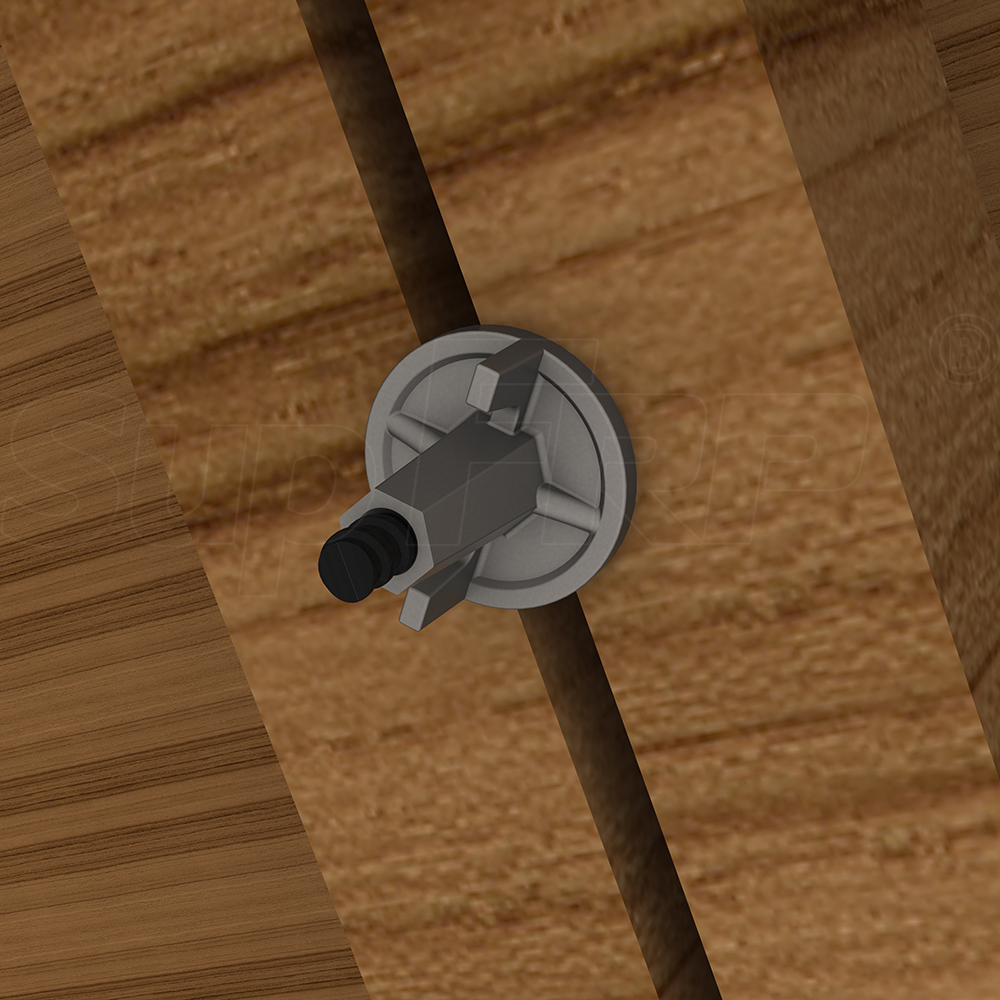
For decades, steel tie rods have been the standard in concrete formwork, but they come with inherent drawbacks: susceptibility to corrosion, labor-intensive removal, and high logistical costs. The SupFRP® GFRP Tie Rod addresses these challenges head-on. Unlike steel, it does not need to be extracted after concrete curing; instead, it remains embedded permanently, eliminating the need for removal, transportation, and storage. This not only streamlines construction workflows but also significantly lowers costs and environmental impact. The tie rod’s thread profile is fully compatible with standard steel rod accessories, meaning that existing wing nuts, plates, and couplers can be used without any modification, facilitating seamless adoption on job sites.
The SupFRP® GFRP Tie Rod boasts a range of performance attributes that make it an ideal choice for modern formwork applications. Its high corrosion resistance ensures long-term durability even in aggressive environments such as marine structures, chemical plants, or underground exposure. The material is electrically non-conductive and non-magnetic, enhancing safety for projects near power lines or sensitive equipment, and opening doors to specialized uses like MRI facilities and laboratory complexes. Additionally, the tie rod offers a strong bond force with concrete and high end-loading capacity, contributing to robust structural integrity.
SupAnchor provides two primary models—T15/130 and T20/250—to meet varying load requirements. The table below summarizes their critical technical parameters:
| Model | Outside Diameter (mm) | Nominal Cross Sectional Area (sq. m) | Guaranteed Tensile Load (kN) | Tensile E-Modulus (GPa) | Ultimate Strain | Weight (kg/m) |
| T15/130 | 17 | 130 | 130 | 45 | 2.0% | 0.37 |
| T20/250 | 22 | 250 | 250 | 45 | 2.0% | 0.71 |
These technical data points demonstrate an impressive strength-to-weight ratio. The waved thread structure on the rod’s surface plays a crucial role: it increases mechanical interlock with concrete, significantly improving bond force and enabling high end-loading capacity. With a tensile modulus of 45 GPa and an ultimate strain of 2.0%, the GFRP material provides adequate elasticity to accommodate concrete thermal and shrinkage movements while reliably carrying design loads. Both models are available in lengths from 2 to 11 meters, giving engineers the flexibility to select the optimal configuration for wall thicknesses and structural demands. Moreover, the lightweight nature—the T15/130 weighs just 0.37 kg/m—reduces manual handling fatigue and improves on-site safety.
Primarily engineered for formwork, the SupFRP® GFRP Tie Rod connects and stabilizes formwork panels during concrete pouring. Once the concrete cures, the protruding ends can be cut flush with the surface, leaving no metal points that could corrode or cause thermal bridges. This makes it exceptionally valuable in infrastructure projects such as bridge piers, dams, tunnels, retaining walls, and high-rise building foundations. The tie rod’s immunity to corrosion virtually eliminates the risk of concrete spalling associated with rusted steel, thereby extending the service life of structures and dramatically reducing maintenance costs over decades.
Beyond conventional formwork, the non-conductive and non-magnetic properties of GFRP unlock applications in sensitive environments. For example, hospitals and research centers with MRI machines require building materials that do not interfere with magnetic fields. Similarly, electrical substations and rail transit systems benefit from non-conductive reinforcements to prevent stray current corrosion and enhance electrical safety. The SupFRP® tie rod fulfills these niche requirements without sacrificing mechanical performance, positioning it as a versatile component in the modern engineer’s arsenal.
Installation is straightforward and familiar. Because the thread profile matches standard steel rod dimensions, contractors can employ the same wing nuts, anchor plates, and couplers without extra training or specialized tools. This backward compatibility accelerates job site adoption and minimizes the learning curve. The tie rod’s cuttability also allows for quick, clean finishing, further reducing post-concrete work. A demonstration video available from SupAnchor illustrates the entire process, highlighting its ease of handling and permanent application.
The launch of the GFRP tie rod aligns with a global construction trend favoring non-metallic reinforcement. Governments and developers increasingly mandate sustainable, long-life structures, driving demand for corrosion-resistant alternatives to steel. SupAnchor’s innovation directly answers this call, delivering a product that not only excels in harsh conditions but also lowers life-cycle costs. By remaining in the structure indefinitely, the tie rod eliminates the labor, energy, and material waste involved in stripping, cleaning, and transporting steel rods. It also negates the need for protective coatings or cathodic protection systems, further reducing environmental footprint.
In tunneling and mining, sectors where SupAnchor has long been synonymous with reliable support, the GFRP tie rod serves as a natural complement to its existing self drilling anchor systems. The company’s portfolio of hollow bar anchors, drill-and-grout bolts, and soil nail systems has been deployed in challenging ground conditions worldwide—from Alpine tunnels to South American mines. By expanding into GFRP formwork components, SupAnchor strengthens its position as a comprehensive ground anchor bolt factory and soil nail system manufacturer, capable of supplying every phase of underground construction. This integrated approach provides project owners with a single, trusted source for both initial ground support and permanent lining solutions.
Environmental and safety regulations are also driving adoption. In Europe and North America, directives aimed at reducing construction waste and improving worker safety align perfectly with the GFRP tie rod’s characteristics. Its lightweight design eases musculoskeletal strain, while the absence of corrosion risks contributes to a healthier, more durable built environment.
SupAnchor has built its reputation on a foundation of relentless research and development, guided by core values of professionalism, innovation, and collaboration. The company’s ISO-certified manufacturing facilities employ rigorous quality control procedures, ensuring that every batch of tie rods meets exacting standards for strength, dimensional accuracy, and durability. With a global footprint spanning dozens of countries, SupAnchor has contributed to landmark projects in transportation, energy, and civil engineering, earning the trust of leading contractors and engineering consultancies.
The SupFRP® GFRP Tie Rod is the fruit of close cooperation with formwork specialists and material scientists. By listening to on-site challenges—corroded rods jamming formwork, costly extraction cycles, safety hazards from protruding metal—the R&D team developed a solution that truly transforms formwork practice. As the industry increasingly turns to composite materials for enhanced performance, SupAnchor stands ready to lead the transition with reliable, high-performance offerings. For project managers and procurement professionals seeking a dependable, permanent formwork solution, the SupFRP® GFRP Tie Rod represents a meaningful step forward in construction efficiency and structural longevity.
SupAnchor continues to push the boundaries of geotechnical and concrete reinforcement technology, driving progress one innovation at a time. Visit the company's website to learn more about the full range of self drilling anchor systems and other advanced products that are building tomorrow's infrastructure.
A major Alpine tunneling project employs SupAnchor's self-drilling anchor system to overcome complex geology, ensuring safety and efficiency in ground stabilization.
SupAnchor’s new Grade 75 self-drilling hollow anchor bars offer superior bond performance and cost-efficiency for slope stabilization, tunneling, and foundation reinforcement. Discover technical specs and industry impact.
SupAnchor’s self-drilling anchor system proved vital in stabilizing a highway tunnel through fractured rock, showcasing advanced geotechnical reinforcement technology for safety and efficiency.
SupAnchor launches the SupFRP® GFRP Friction Bolt, a patented innovation offering high corrosion resistance, lightweight design, and enhanced safety for mining and tunneling projects worldwide.
SupAnchor’s self drilling anchor system provides critical ground stabilization for a major European tunnel project, demonstrating advanced geotechnical reinforcement technology.