
In a landmark infrastructure development that underscores the growing demands of modern tunneling, a highway tunnel project through fractured and water-bearing rock formations has successfully utilized the SupAnchor self‑drilling anchor system. The application of this advanced geotechnical reinforcement system has not only safeguarded construction personnel but also accelerated project timelines, positioning the technology as a benchmark for future underground works.
The tunnel, part of a major trans‑mountain corridor in Western North America, encountered severe geological conditions that threatened the stability of the excavation face. Unpredictable rock masses, coupled with significant groundwater ingress, required an immediate and reliable support solution. Traditional drilling and grouting methods proved time‑consuming and often unreliable in such conditions, prompting engineers to adopt the SupAnchor self‑drilling anchor bolt as the primary ground support element.
The 4.2‑kilometer tunnel traverses a geologically complex zone characterized by highly fractured schists, fault gouge, and localized water inflows exceeding 200 liters per minute. Preliminary geotechnical investigations indicated a rock mass rating (RMR) as low as 25 in certain sections, classifying the ground as “poor” to “very poor.” Conventional support systems, such as passive rock bolts and shotcrete, were deemed insufficient to handle the combination of loose overburden and hydraulic pressure.
Engineers required a reinforcement solution that could be installed rapidly from a safe distance, while providing immediate load‑bearing capacity. The hollow bar anchor design of SupAnchor’s system allowed simultaneous drilling, grouting, and anchoring in a single pass, eliminating the risk of borehole collapse—a common problem in fractured rock. This capability significantly reduced the time the tunnel face remained unsupported, enhancing both safety and productivity.
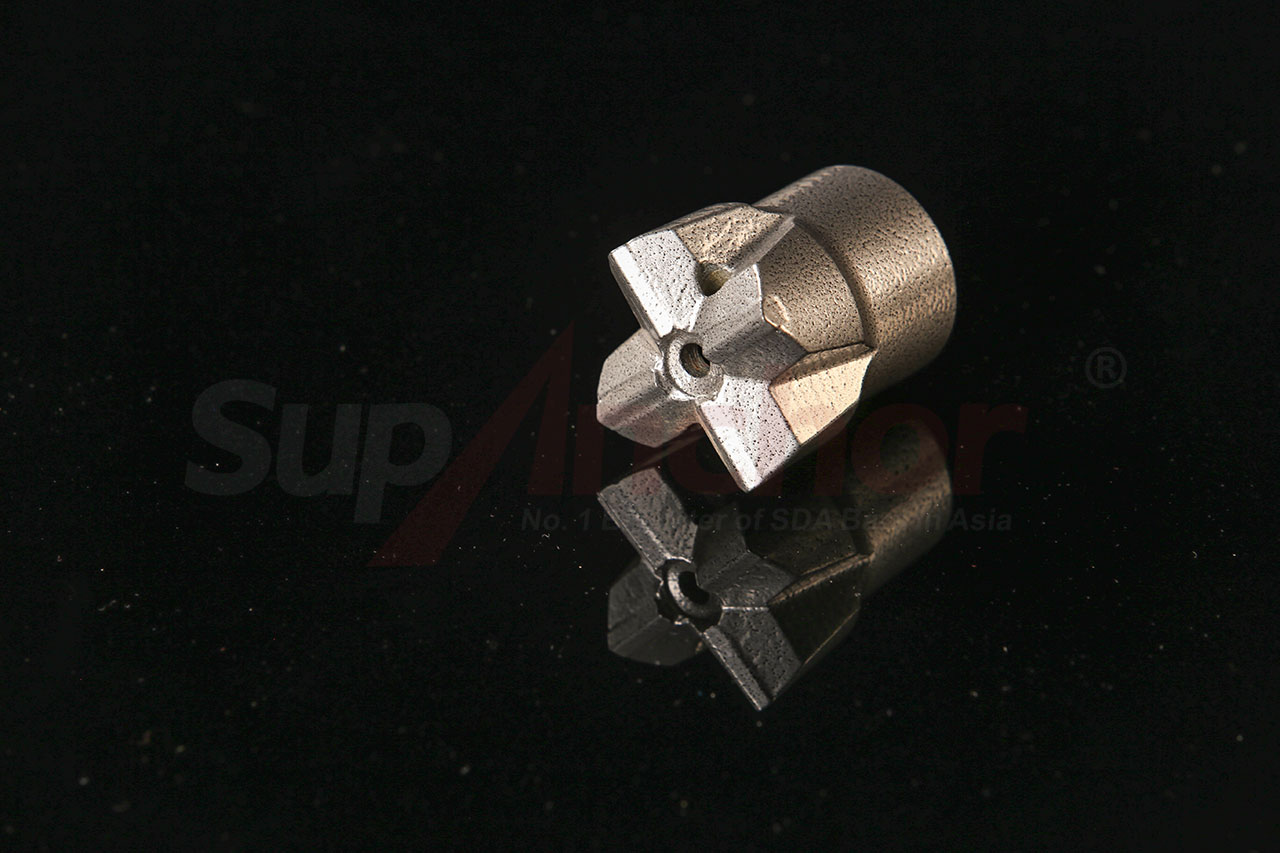
The SupAnchor self‑drilling anchor bolt integrates a hollow steel bar with a sacrificial drill bit, enabling the bolt to advance through unstable ground without a casing. Once the desired depth is reached, cementitious grout is injected through the hollow core, filling the annulus and bonding the bolt to the surrounding rock. This drill‑and‑grout bolt technique creates a full‑column grouted anchor that offers both frictional and shear resistance.
Key performance parameters of the system deployed on this project include:
| Parameter | Specification |
|---|---|
| Bar Outer Diameter | 32 mm |
| Drill Bit Diameter | 51 mm |
| Ultimate Tensile Load | ≥ 660 kN |
| Yield Strength | ≥ 525 MPa |
| Elongation at Fracture | ≥ 8% |
| Corrosion Protection | Hot‑dip galvanized (≥ 85 µm), with optional epoxy coating |
| Standard Lengths | 2 m to 6 m, extendable via couplings |
The high tensile and yield strengths of the SupAnchor ground anchor bolt ensured that each bolt could sustain substantial rock loads immediately after installation. The 32 mm diameter bar, combined with a 51 mm drill bit, created a grout annulus of nearly 10 mm, guaranteeing excellent bond strength even in fractured ground. For long‑term durability, the hot‑dip galvanized coating provided robust protection against aggressive groundwater, and in critical areas, additional epoxy coating was applied.
As a leading soil nail system manufacturer, SupAnchor also supplied specialized accessories, including centralizers and couplers, which maintained the bolt centrally in the borehole and allowed easy extension without compromising structural integrity. The system’s modularity meant that bolts could be tailored on‑site to match the exact depth required, reducing waste and inventory costs.
At the project site, multiple hydraulic drilling rigs operated around the clock, each equipped with SupAnchor self‑drilling anchor bolts. A single operator could complete the entire install‑grout cycle in less than 10 minutes per bolt—a 40% time saving compared to conventional casing‑advance methods. The ability to drill and grout simultaneously meant that the tunnel face was immediately supported, allowing excavation to resume without delay.
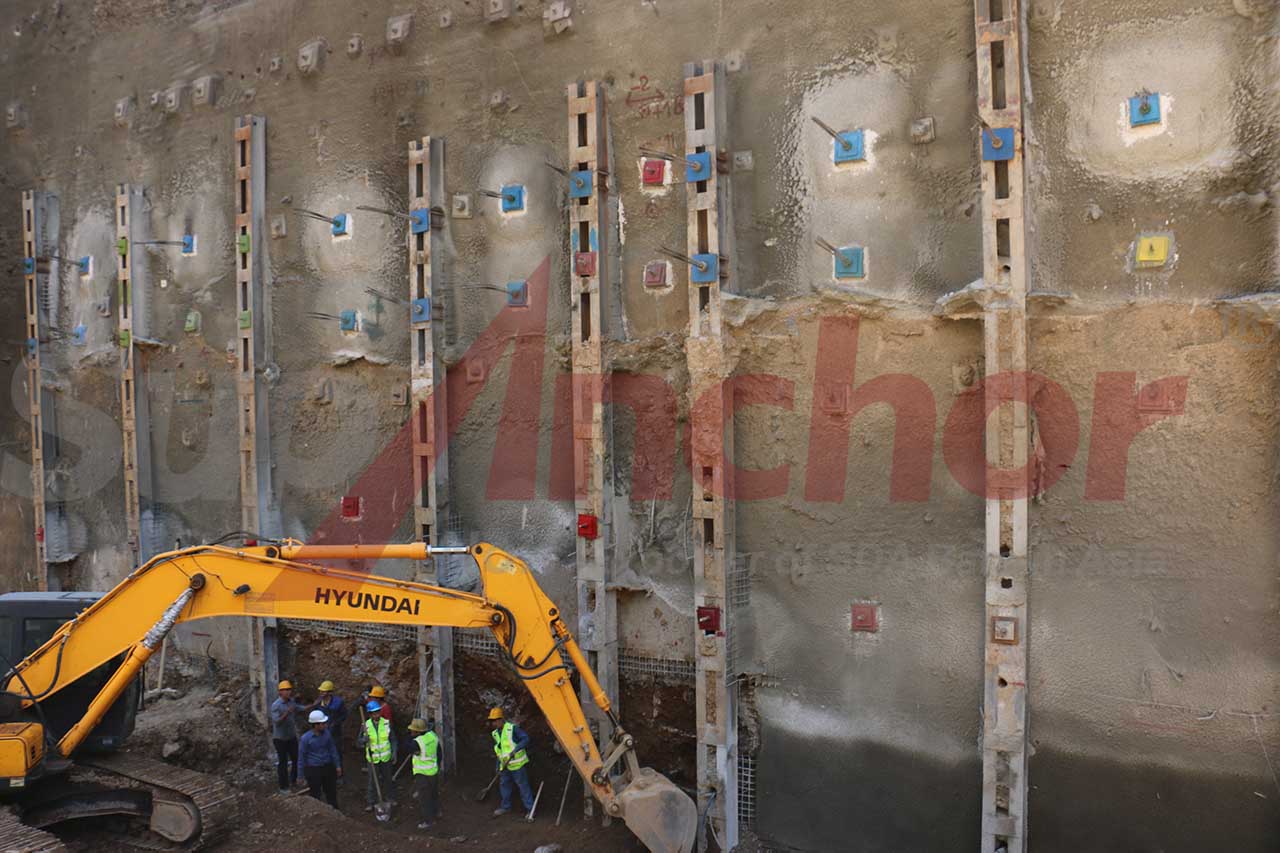
The image captured on‑site (above) vividly demonstrates the application: a rig is seen installing a self‑drilling anchor for retaining walls within the tunnel pilot heading. The hollow bar extends into the freshly exposed rock, with grout hoses connected to the drill head. This seamless process minimized exposure of workers to unsupported ground and dramatically reduced over‑break, saving on shotcrete volumes.
Instrumentation data collected over six months confirmed that the ground stabilization anchor system performed exceptionally well. Load cells on selected anchors recorded forces far below the design capacity, and multi‑point extensometers indicated negligible displacement. Moreover, the micropile hollow bar anchor configuration, used in the tunnel’s portal areas, successfully underpinned the slope above the tunnel entrance, preventing shallow landslides during heavy rainfall events.
This successful application highlights a growing trend in civil engineering: the shift toward versatile, fast‑install ground support technologies. As urbanization pushes infrastructure into more hazardous terrains—mountains, deep water crossings, and unstable slopes—the demand for reliable self‑drilling bolt for civil engineering applications is surging. From North American highway tunnels to European rail expansions, project owners seek solutions that can mitigate risk without compromising schedule or budget.
The geotechnical reinforcement system provided by SupAnchor aligns perfectly with modern construction philosophies that emphasize mechanization and worker safety. The ability to install a rock bolt for underground mining or tunneling from a cab‑operated rig removes personnel from the most dangerous zones. In an era of skilled labor shortages, such efficiency gains are not just economical but essential.
Furthermore, the environmental benefits are notable. The reduced over‑break means less excavated material to be hauled and disposed of, while the high early strength of the grouted bolts often allows thinner shotcrete linings, cutting cement consumption. These factors contribute to a smaller carbon footprint, increasingly important in publicly funded infrastructure projects.
Behind this technological achievement is SupAnchor, a manufacturer that has invested heavily in research and production capabilities. Operating from a state‑of‑the‑art ground anchor bolt factory, the company holds ISO 9001, ISO 14001, and OHSAS 18001 certifications, reflecting its commitment to quality, environment, and safety. Its products, including the anchor bolt system for geotechnical engineering, have been deployed in over 40 countries, supporting mines, dams, bridges, and tunnels.
The company’s philosophy—“Professional, Innovative, Collaborative”—is evident in every aspect of this project. Engineers from SupAnchor worked closely with the construction team to customize bolt lengths, recommend optimal grout mixes, and even adjust drilling parameters to suit the abrasive rock. As a SDA bolt factory direct supply source, the company ensured just‑in‑time delivery to the remote site, avoiding costly delays.
Looking ahead, the lessons learned from this tunnel will inform similar projects worldwide. The proven performance of the self‑drilling anchor system under such harsh conditions serves as a compelling case study for geotechnical engineers confronting difficult ground. As infrastructure spending continues to rise globally, SupAnchor’s innovative geotechnical reinforcement systems are poised to play an ever‑larger role in shaping the safe and sustainable structures of tomorrow.
A major Alpine tunneling project employs SupAnchor's self-drilling anchor system to overcome complex geology, ensuring safety and efficiency in ground stabilization.
SupAnchor’s new Grade 75 self-drilling hollow anchor bars offer superior bond performance and cost-efficiency for slope stabilization, tunneling, and foundation reinforcement. Discover technical specs and industry impact.
SupAnchor’s self-drilling anchor system proved vital in stabilizing a highway tunnel through fractured rock, showcasing advanced geotechnical reinforcement technology for safety and efficiency.
SupAnchor launches the SupFRP® GFRP Friction Bolt, a patented innovation offering high corrosion resistance, lightweight design, and enhanced safety for mining and tunneling projects worldwide.
SupAnchor’s self drilling anchor system provides critical ground stabilization for a major European tunnel project, demonstrating advanced geotechnical reinforcement technology.