
In the heart of a sprawling European transportation corridor, engineers faced a persistent challenge: a sequence of weathered rock and loose overburden that threatened the stability of cut slopes and retaining structures. Conventional drilling methods, which require casing to prevent hole collapse, proved slow and costly. The project team turned to a solution that combines drilling, grouting, and anchoring in a single pass—SupAnchor’s self drilling anchor system.
This geotechnical reinforcement system has become a critical component of modern infrastructure projects, where time, safety, and ground conditions dictate method selection. By integrating a hollow bar anchor with a sacrificial drill bit, contractors can install reinforcement in difficult ground without the need for temporary casing, reducing both schedule and environmental footprint.
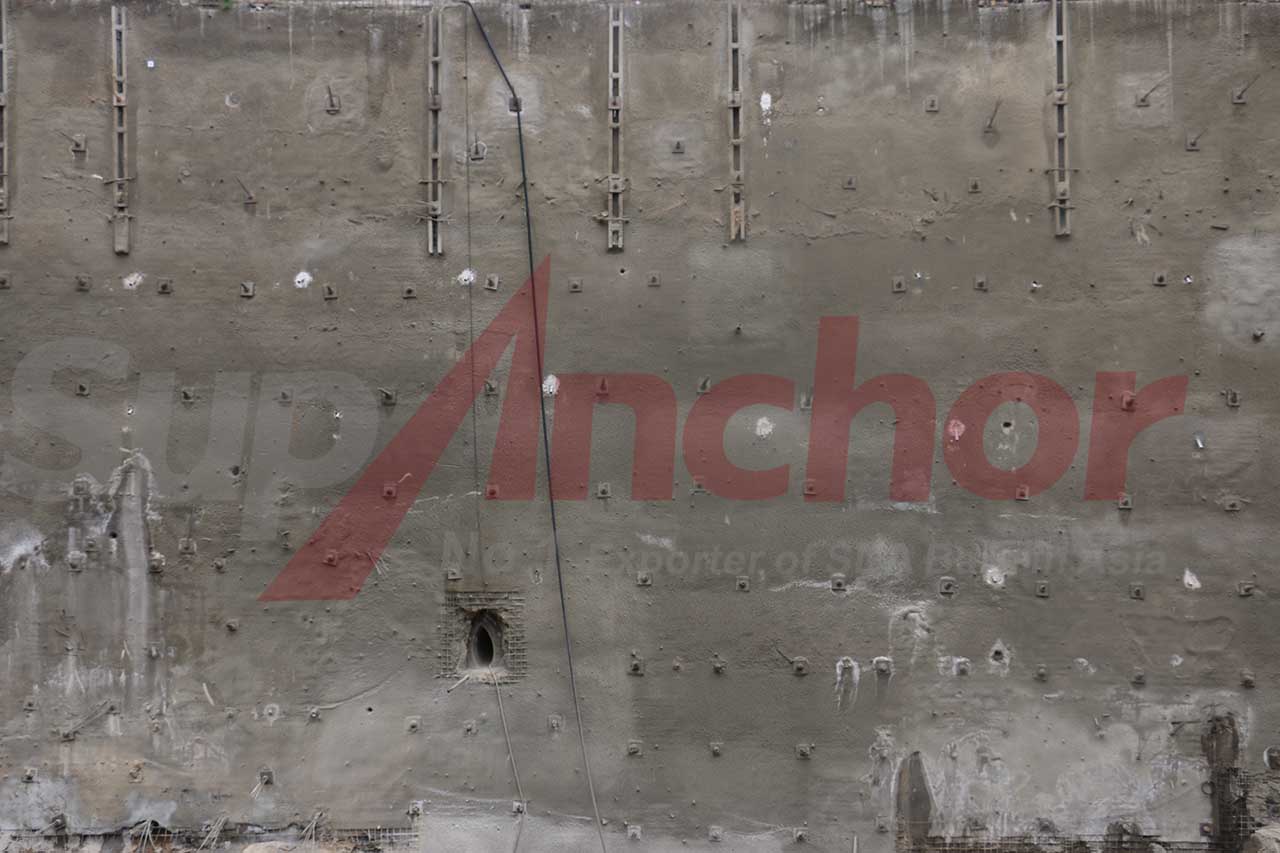
The site photograph captures the essence of this technology: a crawler drill rig positions a self drilling anchor bolt at the face of a freshly cut slope. The operator advances the hollow bar through layers of residual soil and fractured shale, while grout is simultaneously injected through the bore. This drill-and-grout bolt technique ensures immediate bond between the anchor and surrounding ground, providing active support long before the excavation reaches final grade.
The project—a 12-kilometre bypass connecting two industrial regions—required extensive earthworks, including cuts up to 18 metres deep and temporary retention for bridge abutments. Site investigations revealed highly variable ground: colluvium, decomposed granite, and interbedded sandstone/shale with groundwater at shallow depth. Traditional soil nailing using open-hole drilling led to frequent hole collapse and loss of grout, while driven anchors could not achieve required capacity in the hard layers.
SupAnchor, as a leading soil nail system manufacturer and ground anchor bolt factory, provided a tailored hollow bar anchor solution. The self-drilling technology allowed installation through the obstruction-laden overburden without cleaning the hole, and the high-strength steel bar served as both drill rod and permanent reinforcement. This dual functionality eliminated the need for separate casing and bar placement, cutting installation time by nearly 40 per cent compared to conventional methods.
Engineers also appreciated the system's adaptability. The same micropile hollow bar anchor used for slope stabilization could be extended with couplers to reach deeper competent strata, effectively functioning as a small-diameter pile. In areas where retaining walls were required, the self drilling anchor for retaining walls provided a reliable tieback that could be installed from a limited-access bench, reducing the need for large working platforms.
As shown in the image, each anchor installation follows a sequence: set up the rig, align the bar, drill to design depth, inject grout under pressure, and then attach the bearing plate and nut after the grout cures. The self drilling anchor system’s continuous thread allows for easy coupling, and the drill bit can be left in place, contributing to end bearing capacity.
For this project, SupAnchor supplied R32 and R38 hollow bar anchors with the following typical specifications:
| Parameter | Specification |
|---|---|
| Product Type | Self drilling anchor bolt (Hollow Bar Anchor) |
| Outer Diameter | 32 mm / 38 mm (R32, R38 thread) |
| Ultimate Tensile Strength | ≥ 850 N/mm² |
| Yield Strength | ≥ 660 N/mm² |
| Length | 3 m sections, extendable with couplers to 12 m+ |
| Corrosion Protection | Double corrosion protection (hot-dip galvanizing + epoxy coating) available |
| Drill Bit | Carbide cross-cut bit for soil and soft rock |
These parameters address the site’s specific demands. The high tensile strength ensures the anchors can carry the calculated design loads even in zones of loose fill, while the doubled corrosion protection extends service life in aggressive groundwater conditions. The modular sections allow easy handling on narrow benches and speed up installation where headroom is limited.
Field quality control included pull-out tests on sacrificial anchors and grout cube testing to verify compressive strength. Contractors reported that the hollow bar anchor performed exceptionally well in the colluvial layer, where open-hole drilling had previously collapsed. The simultaneous grouting stabilized the borehole immediately, and the continuous thread provided a consistent bond interface.
Installation of the self drilling anchor bolt follows a straightforward yet controlled procedure. First, the anchor bar is fitted with a disposable drill bit and connected to the drill rig’s rotation unit. The rig then drives the bar into the ground while a cement-based grout is pumped through the hollow core at pressures up to 20 bar. This continuous grouting flushes cuttings and fills the annular space, creating a rough, ribbed bond zone along the entire length. Once the design depth is reached, the bar is rotated for an additional 30 seconds to ensure complete grout encapsulation. The rig disconnects, and the bar remains in place. After the grout has set, a bearing plate and nut are installed, and the anchor can be tensioned to the specified load.
Compared to a conventional drilled and grouted tendon, the self drilling anchor system eliminates the steps of drilling with casing, extracting the casing, inserting the bar, and then grouting. This time saving is particularly critical on slopes where each day of open excavation increases the risk of instability. In this project, the contractor installed an average of 18 anchors per shift using two drill rigs, versus just 8-10 anchors per shift with the previous method. The reduction in manpower and fuel consumption also contributed to a lower carbon footprint, aligning with the owner’s sustainability targets.
Quality assurance for the anchor bolt system for geotechnical engineering included multiple stages. Raw material certificates verified the steel’s mechanical properties. Thread dimensions were checked against ISO 10208 standards for fully threaded hollow bars. Pull-out tests—both sacrificial and on production anchors—were performed to validate ultimate bond stress in each ground type. In the weathered shale, pull-out capacities exceeded design requirements by 20 per cent, giving the design team confidence to optimise anchor spacing and length.
The use of a ground stabilization anchor system such as the self drilling anchor system is not limited to this single project. Across Europe and North America, transportation agencies and geotechnical contractors are adopting drill-and-grout bolt technology for slope remediation, tunnel portals, and foundation underpinning. The system’s ability to function as a rock bolt for underground mining as well as a self drilling bolt for civil engineering makes it a versatile tool in the ground engineering toolbox.
Infrastructure resilience is a growing priority as climate change intensifies rainfall and weathering, increasing the frequency of slope failures. Traditional passive systems often require extensive excavation and are difficult to install in urban or environmentally sensitive areas. A self drilling anchor system, by contrast, minimizes disturbance and can be installed from compact rigs, reducing the construction footprint.
From a supply chain perspective, working with an SDA bolt factory direct supply model—as SupAnchor offers—provides project owners with consistent quality, traceability, and cost efficiency. SupAnchor’s manufacturing operations are certified to ISO 9001:2015, and its anchor bolt system for geotechnical engineering has been used on projects ranging from high-speed rail corridors to hydroelectric dams. This global track record underscores the reliability of the anchor bolt system for geotechnical engineering.
The project is expected to complete earthworks within the next two quarters, with the slope stabilization and retaining wall anchors remaining as permanent structural elements. According to the site manager, the decision to switch to SupAnchor’s self drilling anchor system reduced unplanned downtime and improved safety by eliminating open boreholes. 'The hollow bar self drilling anchor bolt is faster and safer than anything we used before,' said the project geotechnical lead.
The adoption of self drilling anchors is further supported by evolving design codes. In Europe, the Eurocode 7 framework now recognises the use of hollow bar anchors for temporary and permanent applications, provided that appropriate corrosion protection and testing are implemented. Manufacturers like SupAnchor work closely with design engineers to provide product data sheets, installation manuals, and project-specific pull-out test programs. This collaborative approach ensures that the geotechnical reinforcement system meets both safety and economic objectives.
Beyond transportation, the same technology is finding applications in urban excavation support, where the self drilling anchor for retaining walls can be installed in limited headroom and close to existing utilities. In mining, the rock bolt for underground mining variant is used for tunnel support in squeezing ground, where immediate load transfer is essential. Even in marine and hydro projects, micropile hollow bar anchor designs provide foundation uplift resistance in weak seabed soils.
SupAnchor remains at the forefront of this evolution, combining manufacturing expertise with field-proven performance. Its self drilling anchor system embodies the company’s core values: professional engineering support, innovative product design, and collaborative project delivery. For specifiers and contractors seeking a dependable ground anchor solution, the evidence from this European infrastructure project demonstrates that self drilling anchor technology is not just an alternative but often the preferred method in challenging ground.
A European infrastructure project has deployed SupAnchor's self-drilling anchor bolts to stabilize weak slopes and secure deep foundations, highlighting advanced geotechnical reinforcement solutions.
SupAnchor launches SupHulk friction rock bolt system, offering high yield loads up to 240 kN and 10% elongation for immediate ground support in tunneling and mining projects.
A major infrastructure project in the European Alps leverages SupAnchor's self drilling anchor system to overcome fractured rock and high groundwater, enhancing slope stabilization and tunneling safety.
SupAnchor's R Thread self-drilling hollow anchor integrates drilling, grouting, and reinforcing in one operation, enhancing efficiency and safety in challenging ground conditions.
A major highway expansion overcomes unstable geology using SupAnchor's self drilling anchor bolts, featuring hollow bar anchor technology and a drill-and-grout bolt for efficient slope stabilization.