
In the rugged terrain of a major hydropower station construction site, engineers faced a formidable challenge: stabilizing a steep, fractured rock slope that threatened to compromise the integrity of the entire project. The geological conditions were among the most demanding in recent memory—loose, decomposed rock layers interspersed with unpredictable fault zones and high groundwater infiltration. Traditional anchoring methods had proven slow and unreliable, often requiring separate drilling, casing, and grouting operations that stretched timelines and inflated costs. It was in this context that SupAnchor, a leading innovator in geotechnical reinforcement systems, supplied its Grade 75 self-drilling hollow anchor bars. These advanced components not only addressed the immediate stabilization needs but also set a new benchmark for efficiency and performance in difficult ground.
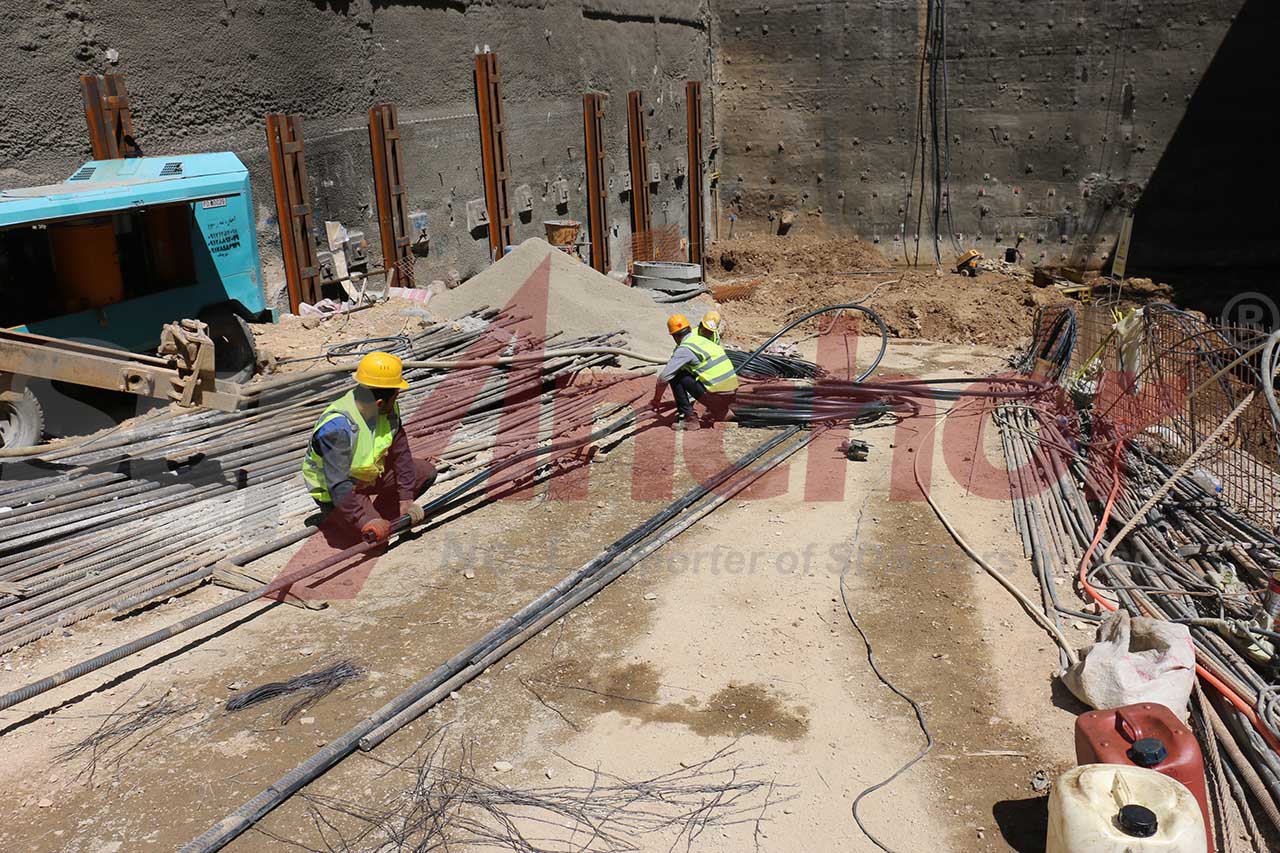
The project, located in a seismically active region, required a solution that could withstand both static and dynamic loads while ensuring long-term durability. SupAnchor's Grade 75 self-drilling anchor bars, manufactured in accordance with ASTM A615 standards, were selected for their superior bond strength, rapid installation capability, and seamless compatibility with the site's existing anchoring infrastructure. The bars' unique continuous T-thread design provides a relatively higher rib area than conventional threaded bars, which significantly enhances the bond performance in concrete and grout. This feature proved critical in the fractured rock mass, where achieving reliable load transfer between the anchor and the surrounding ground is paramount.
The onsite installation process for self-drilling hollow anchor bars is a testament to modern geotechnical engineering. Unlike traditional solid bars, these hollow bars serve simultaneously as the drill rod, casing, and reinforcement element. During installation, the bar is rotated and advanced using a standard drilling rig, while grout is pumped through the hollow core and out through the sacrificial drill bit at the tip. This technique eliminates the need for separate drilling and casing operations, drastically reducing installation time and minimizing disturbance to the surrounding ground. The grout fills the borehole and penetrates into fissures, creating a strong mechanical and chemical bond along the entire length of the anchor.
For the hydropower slope stabilization project, the following key specifications of the Grade 75 bars were instrumental in meeting the engineering requirements:
To illustrate these parameters in a comparative context, the table below summarizes the mechanical properties of the Grade 75 self-drilling hollow anchor bars:
| Property | Value |
|---|---|
| Material Standard | ASTM A615 |
| Thread Type | Continuous T-thread |
| Elongation | ≥ 6% |
| Yield Load | 147 kN (33 kips) |
| Ultimate Load | 196 kN (44 kips) |
| Weight | 2.6 kg/m (1.75 lbs/ft) |
| Thread Orientation | Left-hand |
Each parameter directly addresses a specific challenge encountered on the hydropower slope. The high elongation capacity ensures that the anchor system can accommodate minor rock movements without losing effectiveness. The yield and ultimate loads provide the necessary resistance to both static overburden pressure and dynamic forces from potential seismic events. The relatively light weight per meter reduces the physical burden on workers and equipment, especially on steep slopes where access is limited. The left-hand thread orientation not only enhances safety by preventing loosening but also allows for easy coupling with existing SupAnchor accessories, such as couplers, nuts, and plates, thereby streamlining inventory and reducing project costs.
While this particular hydropower project highlights the effectiveness of Grade 75 bars in slope stabilization, their versatility extends across a broad spectrum of geotechnical applications. In tunneling, these hollow bar anchors are used for face stabilization, radial bolting, and forepoling, where they provide immediate support in soft ground or squeezing conditions. In foundation reinforcement, they serve as micro-piles for underpinning existing structures or for new foundations in confined urban environments. In mining, they are employed for roof and wall support in underground excavations, enhancing both safety and productivity. The self-drilling nature of these bars makes them especially valuable in loose or collapsing ground, where traditional drilling methods would struggle.
The global infrastructure sector is witnessing an unprecedented demand for reliable geotechnical reinforcement systems. Aging infrastructure, urbanization, and the need for sustainable energy sources are driving large-scale projects in challenging terrains. Self-drilling anchor systems, such as the Grade 75 bars from SupAnchor, are increasingly becoming the preferred choice due to their ability to reduce installation time, minimize equipment requirements, and improve overall safety. By combining drilling, anchoring, and grouting into a single operation, these systems cut labor costs by up to 30% and shorten project schedules significantly. Moreover, the enhanced bond strength provided by the T-thread design translates into longer service life and reduced maintenance needs, offering compelling long-term economic benefits.
From a safety perspective, the use of self-drilling hollow bars eliminates the risk of borehole collapse during casing extraction, a common hazard with conventional methods. The continuous grout column ensures full encapsulation of the bar, protecting it from corrosion and providing a robust load transfer mechanism. This is particularly important in hydropower projects where anchors are exposed to fluctuating groundwater levels and aggressive chemical environments. The Grade 75 bars' compatibility with corrosion protection systems, such as epoxy coating or hot-dip galvanizing, further extends their durability in harsh conditions.
SupAnchor has established itself as a premier soil nail system manufacturer and ground anchor bolt factory, serving clients across more than 40 countries. The company's dedication to research and development is evident in its comprehensive product range, which includes self drilling anchor bolts, hollow bar anchors, and drill-and-grout bolts. Adhering to rigorous ISO 9001 quality management standards, SupAnchor ensures that every Grade 75 bar meets or exceeds international specifications. The company's manufacturing facilities are equipped with state-of-the-art automated production lines, enabling consistent quality and high output capacity.
In recent years, SupAnchor has collaborated with leading engineering firms on landmark projects, including high-speed rail tunnels, deep excavation support systems, and complex slope stabilization schemes. The hydropower station slope stabilization project is just one example of how SupAnchor's products are deployed in some of the world's most demanding environments. The company's technical team works closely with clients from the design phase through installation, providing customized solutions and on-site training to ensure optimal performance. This collaborative approach aligns with SupAnchor's core brand message: Professional, Innovative, Collaborative.
Looking ahead, SupAnchor continues to invest in new materials and thread designs to push the boundaries of anchor performance. With a focus on sustainability and digitalization, the company is developing smart anchoring systems that incorporate real-time monitoring sensors, enabling predictive maintenance and enhanced safety. As the global demand for resilient infrastructure grows, SupAnchor's Grade 75 self-drilling hollow anchor bars will undoubtedly play a pivotal role in shaping the future of geotechnical engineering.
By delivering reliable, cost-effective, and technically advanced anchoring solutions, SupAnchor reaffirms its position as a trusted partner for projects where failure is not an option. The Grade 75 bars, with their proven performance and adaptability, stand as a testament to the company's engineering excellence and commitment to building a safer, more sustainable world.
SupAnchor's self drilling anchor system proves effective in stabilizing weak ground for a large European infrastructure project, enhancing safety and efficiency.
SupAnchor's ASTM A615 Grade 75 self-drilling hollow anchor bars provide high bond strength, efficient installation, and compatibility with existing systems for challenging geotechnical projects.
A major infrastructure project used SupAnchor's self drilling anchor system to address complex geotechnical challenges, ensuring safety and efficiency in slope stabilization and foundation support.
SupAnchor introduces SupFRP® GFRP dowel bars, offering 100+ year service life, no-rust performance, and high load transfer efficiency for concrete joints in pavements, embankments, and MSE walls.
A European infrastructure project has deployed SupAnchor's self-drilling anchor bolts to stabilize weak slopes and secure deep foundations, highlighting advanced geotechnical reinforcement solutions.