
In the heart of the European Alps, a critical highway expansion project faced a daunting geotechnical challenge. A 400-meter-long section of the roadway was threatened by an unstable rock slope, where fractured limestone and weathered granite intersected with active groundwater seepage. The slope had a history of minor rockfalls, and with increased traffic expected from the new highway lane, a permanent stabilization solution was urgently needed. After evaluating several options, the project's geotechnical consultants specified the use of SupAnchor's self drilling anchor system, a proven technology for challenging ground conditions. The contract, valued at over €2 million, required the installation of more than 1,200 anchors, each capable of withstanding significant tensile and shear forces.
The decision to adopt SupAnchor's solution was driven by the system's ability to combine drilling, anchoring, and grouting in a single, efficient operation. Traditional anchoring methods would have required separate drilling with casing, removal of the drill string, insertion of a bar, and then grouting—a time-consuming process prone to borehole collapse in fractured rock. The hollow bar anchor, as the core component of this system, eliminates these steps by using the hollow bar itself as the drill rod. This approach, often referred to as a drill-and-grout bolt, allowed the contractor to install anchors at a rate of up to 15 per day, significantly faster than conventional methods.
The highway expansion project is part of a broader initiative to improve connectivity between two major Alpine valleys, reducing travel time and boosting regional economic development. The new lane required widening the existing roadbed, which involved cutting into the adjacent slope. Geotechnical investigations revealed that the slope consisted of highly fractured limestone interbedded with weak shale layers. The presence of groundwater, particularly during spring thaw and heavy rainfall, further destabilized the rock mass, leading to increased risk of planar and wedge failures. Initial designs called for a combination of soil nailing and rock bolts, but the variable ground conditions made conventional methods inefficient and costly.
The project's designers recognized the need for a flexible anchoring system that could adapt to changing subsurface conditions without compromising installation speed or quality. After a competitive tender process, SupAnchor's self drilling anchor system was selected based on its technical merits and the company's track record in similar projects. The system's ability to drill through overburden and fractured rock without the need for casing, while simultaneously grouting, minimized the risk of borehole collapse and ensured consistent grout coverage. This was particularly important in areas where the slope face was heavily weathered and prone to raveling.
Furthermore, the project required a solution that could be installed from a relatively narrow bench, as the existing highway remained open to traffic during construction. The compact drilling equipment used with the self drilling anchor system allowed work to proceed safely without closing lanes, reducing traffic disruption and maintaining public safety. The system's low noise and vibration levels also complied with environmental regulations, which was a key consideration given the proximity to protected natural habitats.
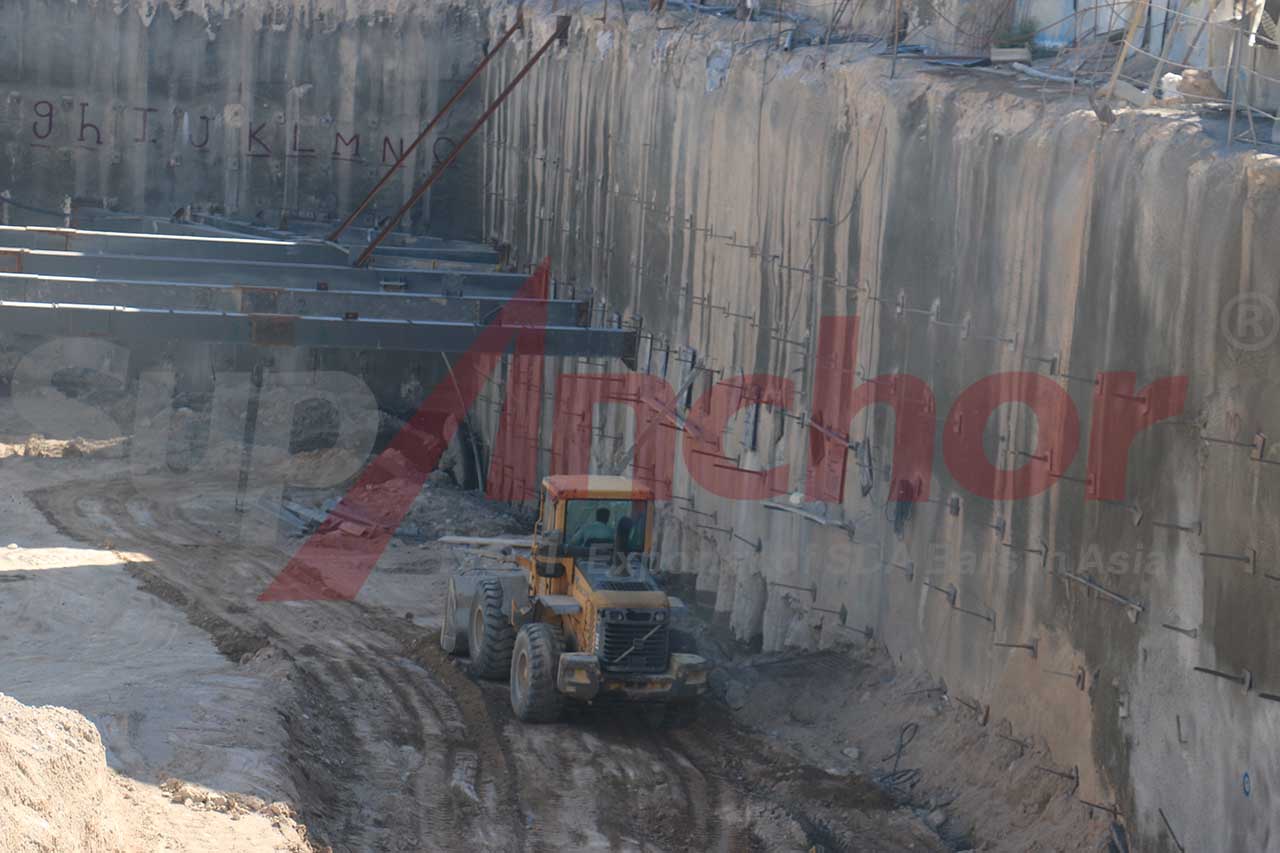
The construction site image captures a typical installation sequence. A compact drilling rig, mounted on a crawler base, is positioned on a narrow bench cut into the slope. The operator guides the self drilling anchor bolt into the rock while a second worker monitors the grout pump and pressure gauge. The hollow bar, visible protruding from the borehole, is equipped with a sacrificial drill bit that remains in place after installation. A grout hose is connected to the bar's end, delivering a cement-based grout that fills the annular space between the bar and the rock, creating a strong bond. This method not only stabilizes the borehole but also enhances load transfer, resulting in a robust geotechnical reinforcement system that can support the slope for decades.
One of the key advantages of SupAnchor's system is its adaptability to varying ground conditions. The project site presented a mix of competent rock and highly fractured zones, with groundwater inflows in some areas. The hollow bar anchor's ability to drill and grout simultaneously meant that the borehole was continuously supported, preventing collapse even in loose material. Additionally, the use of a rotary-percussive drill allowed the bar to penetrate hard rock efficiently, while in softer zones, the grout pressure could be adjusted to prevent over-break. This flexibility was crucial in maintaining the project schedule and ensuring the quality of each anchor.
The technical parameters of the SupAnchor self drilling anchor system were carefully selected to meet the project's demanding requirements. The table below summarizes the key specifications of the hollow bar anchors used on this project.
| Parameter | Typical Specification |
|---|---|
| Nominal diameter | 32 mm (R32) to 52 mm |
| Ultimate tensile strength | Up to 500 kN |
| Anchor length | 3 m to 12 m (customizable) |
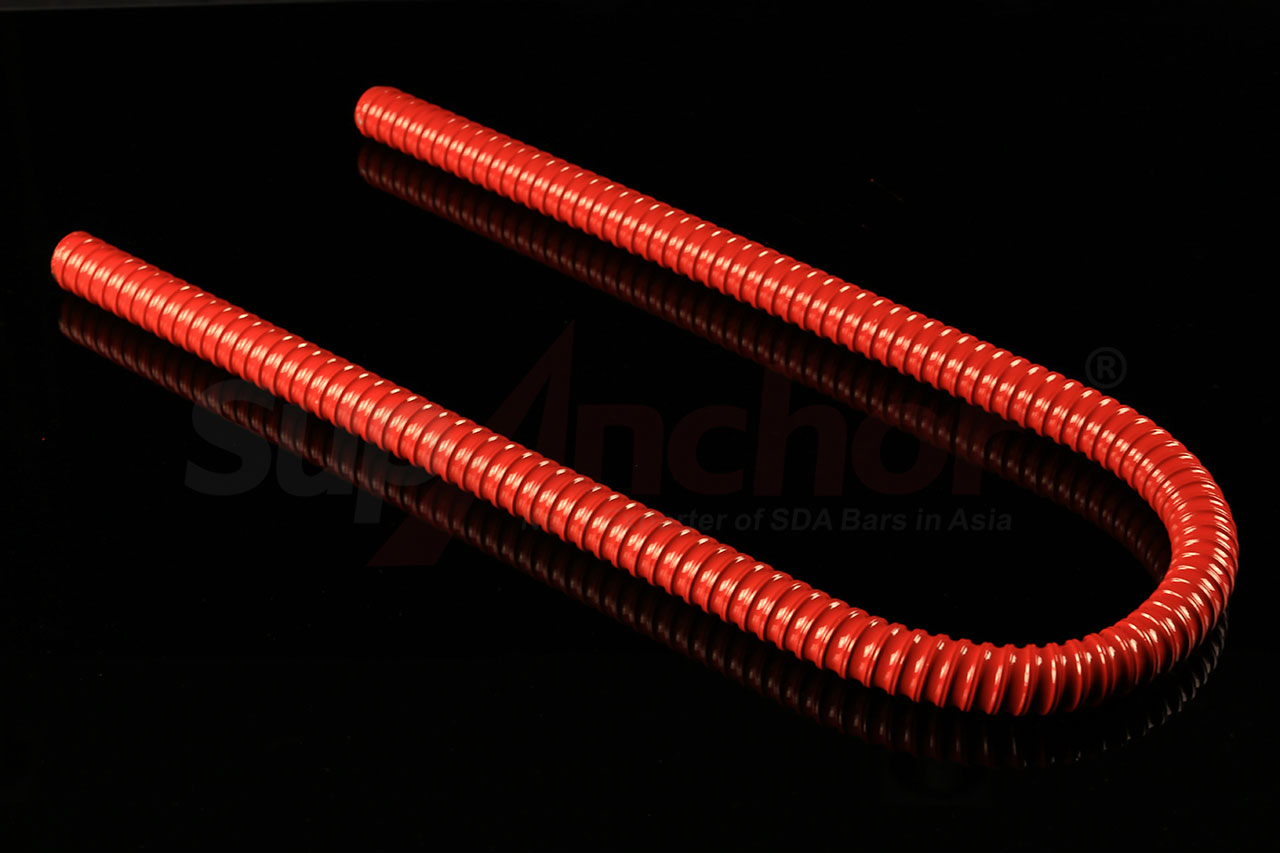
| Corrosion protection | Hot-dip galvanized or epoxy coated |
| Thread type | R-type or T-type |
The installation process typically follows these steps:
The ultimate tensile strength of up to 500 kN ensured that each anchor could withstand the considerable pull-out forces generated by the unstable slope. The 500 kN capacity was verified through rigorous pull-out tests conducted on-site, with all anchors meeting or exceeding the design load. The diameter range of 32 to 52 mm provided flexibility in matching the anchor to the specific ground conditions; larger diameters were used in areas with higher loading or poorer rock quality. The anchor lengths, varying from 3 to 12 meters, were determined based on geotechnical investigations that identified the depth to competent bedrock. In some sections, longer anchors were required to reach stable strata beyond the fractured zone.
Corrosion protection was a critical consideration due to the presence of groundwater and the long design life of the structure. SupAnchor offered both hot-dip galvanized and epoxy-coated options, with the project team selecting hot-dip galvanizing for its proven durability in aggressive environments. The galvanized coating, applied to the hollow bar anchor, provides a sacrificial barrier that protects the steel from corrosion, ensuring the anchor maintains its structural integrity over its 100-year design life. The thread type, either R-type or T-type, allowed for easy connection of extension rods and coupling nuts, facilitating the installation of longer anchors without the need for welding.
Beyond this slope stabilization project, SupAnchor's products have been widely adopted in other demanding applications. The self drilling anchor system serves as an effective rock bolt for underground mining, where speed and reliability are paramount. In foundation engineering, the hollow bar anchor is used as a micropile hollow bar anchor, providing load-bearing capacity in weak soils. For retaining structures, the system functions as a self drilling anchor for retaining walls, offering a cost-effective alternative to traditional tiebacks. Furthermore, the technology is a key component of any comprehensive ground stabilization anchor system, addressing a wide range of geotechnical challenges.
The successful deployment of SupAnchor's self drilling anchor system on this Alpine project highlights a broader industry shift toward more efficient and sustainable geotechnical solutions. As global infrastructure spending continues to rise, particularly in transportation, energy, and urban development, the demand for reliable ground stabilization anchor system technologies is expected to grow. According to industry reports, the global geotechnical engineering market is projected to reach $300 billion by 2030, driven by the need to repair aging infrastructure and build resilient new assets. Self drilling anchor bolts are increasingly favored because they reduce construction time, minimize environmental disruption, and improve worker safety.
In Europe and North America, regulatory frameworks and sustainability goals are pushing project owners to adopt methods that lower carbon footprints and reduce noise and vibration. The self drilling anchor system aligns with these objectives by eliminating the need for temporary casing and reducing the amount of drilling fluid required. Additionally, the ability to install anchors in a single pass lowers fuel consumption and equipment wear, contributing to a smaller environmental impact. Contractors who embrace this technology gain a competitive edge in bidding for public infrastructure projects, where efficiency and sustainability are key evaluation criteria.
SupAnchor, as a recognized soil nail system manufacturer and ground anchor bolt factory, has been at the forefront of this trend. The company's factory direct supply model, often referred to as SDA bolt factory direct supply, ensures competitive pricing and consistent quality, which is particularly attractive for large-scale projects in both developed and emerging markets. By eliminating intermediaries, SupAnchor can offer customized solutions and rapid delivery times, which are crucial for projects with tight schedules. Furthermore, the company's global distribution network ensures that technical support and spare parts are readily available, wherever the project is located.
In the context of civil engineering, the use of self drilling bolt for civil engineering applications has proven invaluable, especially in projects where access is limited or where ground conditions are highly variable. Urban construction sites, for example, often require anchoring systems that can be installed in tight spaces with minimal disturbance to surrounding structures. The self drilling anchor system meets these needs by using compact drilling equipment and producing low noise levels. It has been successfully used in the construction of underground metro stations, bridge abutments, and deep excavations, demonstrating its versatility and reliability.
SupAnchor's reputation as a provider of high-quality anchor bolt system for geotechnical engineering is built on a foundation of professionalism, innovation, and collaboration. The company is ISO 9001 certified, ensuring that every product—from the self drilling anchor bolt to the complete geotechnical reinforcement system—meets rigorous international standards. Additionally, SupAnchor holds CE certification for its products, allowing them to be used in European construction projects without additional testing. With over 20 years of experience and a portfolio of successful projects across Europe, Asia, and the Americas, SupAnchor has earned the trust of contractors, consultants, and government agencies alike.
The collaborative approach taken by SupAnchor on this Alpine project involved close coordination with the design team to optimize anchor spacing, length, and corrosion protection based on site-specific conditions. SupAnchor's engineers provided detailed installation drawings, load-testing protocols, and on-site training for the contractor's crew. This partnership ensured that the final solution was not only technically sound but also cost-effective. The result was a slope stabilization system that will provide long-term safety for the highway, even under extreme weather conditions and seismic events.
Innovation remains a core pillar of SupAnchor's strategy. The company operates a state-of-the-art manufacturing facility equipped with automated production lines and advanced testing equipment. Its research and development team continuously works on improving the performance of the hollow bar anchor, exploring new steel alloys, thread designs, and corrosion protection coatings. Recent innovations include a new generation of self drilling anchor bolts with enhanced fatigue resistance, suitable for dynamic loading conditions such as those found in bridge foundations and wind turbine bases.
SupAnchor's global footprint includes landmark projects such as the Crossrail tunneling in London, where its self drilling anchor bolts were used for temporary tunnel face stabilization, and a deep open-pit mine in Canada, where the hollow bar anchor system provided reliable rock reinforcement in high-stress conditions. These examples demonstrate the company's ability to deliver solutions that perform under the most demanding circumstances.
Looking ahead, SupAnchor continues to invest in research and development, exploring new materials and manufacturing processes to further enhance the performance of its anchor systems. As infrastructure projects become more complex and environmental regulations more stringent, the need for reliable and sustainable ground stabilization anchor system solutions will only increase. SupAnchor is well-positioned to meet this demand, offering not just products but complete engineering support from initial design to final installation. The company's commitment to professionalism, innovation, and collaboration ensures that it remains a trusted partner for geotechnical engineers worldwide.
In conclusion, the successful application of this advanced anchoring technology in the challenging Alpine slope stabilization project underscores the technical excellence and practical value of this anchoring technology. It serves as a testament to SupAnchor's mission: to provide professional, innovative, and collaborative geotechnical solutions that build a safer world.
SupAnchor's self drilling anchor system deployed on an Alpine highway slope stabilization project, enabling fast drilling and grouting in fractured rock while meeting strict safety and environmental standards.
SupAnchor launches a corrosion-resistant GFRP friction bolt, offering lightweight, spark-free ground support for tunneling and mining.
SupAnchor's self drilling anchor system demonstrates superior performance in a challenging slope stabilization project, ensuring safety and efficiency.
SupAnchor introduces Grade 75 self-drilling hollow anchor, enhancing load capacity for critical infrastructure, tunneling, and slope stabilization with 3-in-1 efficiency and high-strength steel.
European infrastructure project deploys SupAnchor hollow bar anchors for soil stabilization and retaining wall support, highlighting technical performance and industry trends.