
In a major infrastructure upgrade along a mountainous transport corridor in central Europe, a self drilling anchor system supplied by SupAnchor has been selected to stabilize a failing cut slope. The project, which includes retaining wall construction and roadway widening, faced difficult ground conditions: highly fractured schist, unconsolidated colluvium, and seasonal groundwater seepage. Conventional drilling methods were ruled out after initial trials revealed severe hole collapse and grout loss. The self drilling anchor system, also known as a hollow bar anchor, provided a reliable alternative by combining drilling, installation, and grouting in a single pass. This approach not only ensured borehole stability but also accelerated the construction schedule by up to 40 percent compared with traditional cased drilling methods.
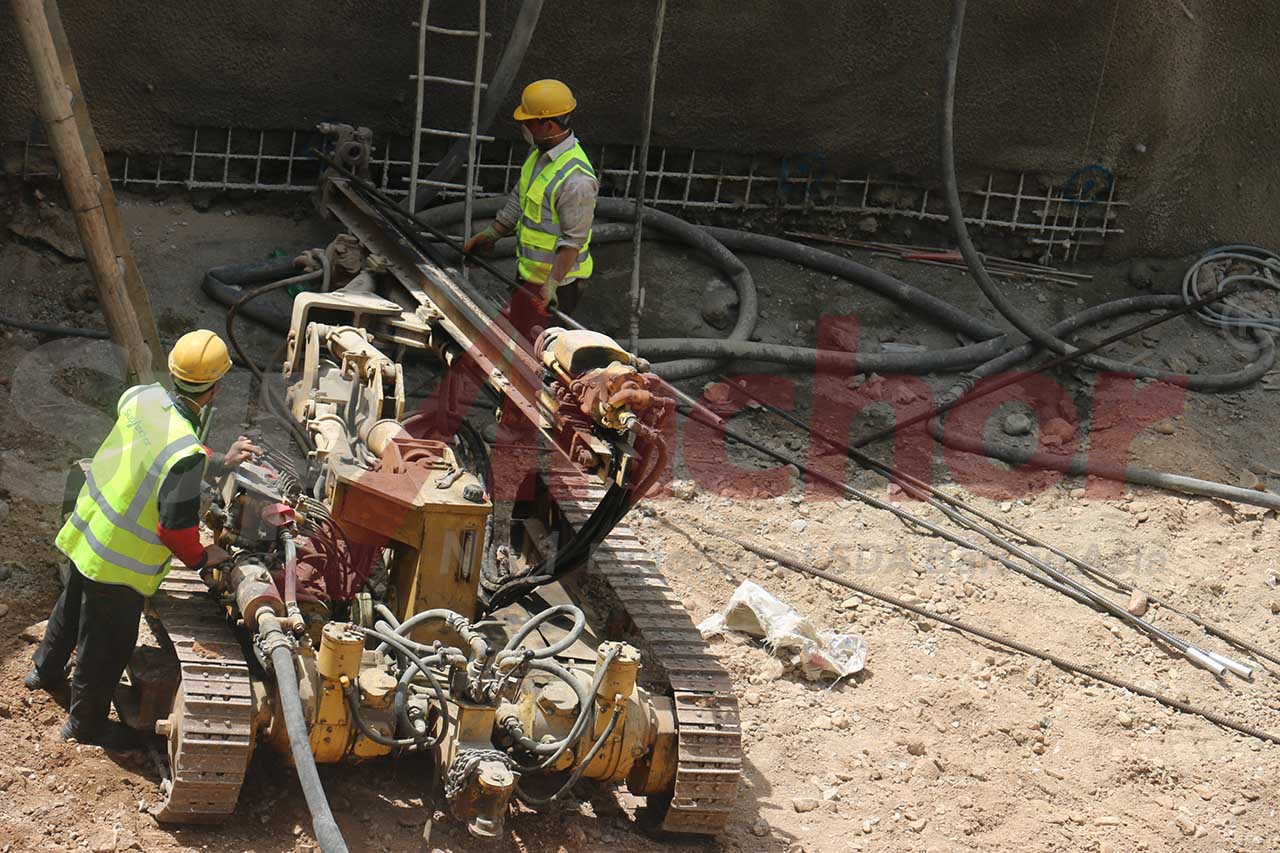
The construction image captured on site shows a crawler-mounted drill rig advancing a self drilling anchor bolt into the weathered rock face. The hollow steel bar, equipped with a sacrificial drill bit, simultaneously displaces cuttings and serves as the reinforcement element. As the grout is injected through the hollow core under pressure, it fills the annular space and penetrates fractures, creating a monolithic ground anchor. This technique is particularly suited to loose or collapsing ground where open-hole drilling is impractical. Project engineers noted that the immediate bond achieved by the pressurized grout allowed tensioning and load transfer to proceed without delay, a critical factor given the tight possession windows for adjacent highway traffic.
The slope stabilization scheme forms part of a wider effort to improve road safety and capacity on a route that carries over 20,000 vehicles per day. The existing cut, originally excavated at a 1:0.5 slope angle, had exhibited progressive ravelling and localized failures following heavy rainfall. Geotechnical investigations revealed a complex profile: a thin mantle of sandy silt overlying a deeply weathered gneiss with abundant clay-filled discontinuities. Groundwater monitoring indicated perched water tables that fluctuated seasonally, reducing effective stress and triggering surface movement. The design called for a permanent ground stabilization anchor system capable of sustaining long-term tensile loads while accommodating movement without loss of integrity.
Initial options considered included conventional soil nails and ground anchors installed with cased boreholes. However, the presence of voids and running ground made casing retrieval difficult, and grout take was unpredictable. The project’s geotechnical consultant recommended a drill-and-grout bolt solution, specifically the SupAnchor hollow bar anchor system. This system uses a continuously threaded hollow bar that acts as both drill rod and tendon. Because the bar remains in place during and after drilling, there is no need to withdraw casing, eliminating the risk of hole collapse. The sacrificial drill bit is left in the ground, and the hollow core allows grout to be pumped under pressure from the toe upward, creating a strong mechanical interlock with the surrounding ground.
The project scope includes approximately 3,500 linear meters of self drilling anchors for the upper slope, plus additional micropile hollow bar anchors to support a new reinforced concrete retaining wall at the toe. The anchors vary in length from 6 to 15 meters and are installed at a 15-degree downward inclination to intersect stable ground behind the potential failure surface. This configuration provides both tensile and shear resistance, improving the global factor of safety from below 1.0 to a design value of 1.5 under seismic loading.
On site, the self drilling anchor bolt installation follows a streamlined sequence. First, the anchor bar is coupled to the drill rig’s rotary head and aligned to the specified inclination and azimuth. The hollow bar, available in standard lengths with threaded couplers, is advanced into the ground using rotary-percussive drilling. As drilling progresses, compressed air or water is flushed through the hollow core to remove cuttings. Once the design depth is reached, cementitious grout is injected through the same hollow core, filling the borehole and surrounding fissures. The drill bit remains in place as a sacrificial component, and the bar is then tensioned against a bearing plate and nut after the grout reaches sufficient strength.
The table below summarizes the key technical parameters of the SupAnchor hollow bar anchor system used on this project:
| Parameter | Specification |
|---|---|
| Bar diameter | R32, R38, R51 (mm) |
| Ultimate tensile strength | ≥ 670 MPa (depending on grade) |
| Yield strength | ≥ 500 MPa |
| Standard length | 2, 3, 4, 6 m (can be coupled) |
| Corrosion protection | Hot-dip galvanized or double corrosion protection (DCP) |
| Grout injection pressure | 0.5–2.0 MPa |
The selected bar diameter of 32 mm was chosen to balance drilling efficiency and load capacity. Each anchor is designed to provide a working load of up to 300 kN, with a safety factor of 2.0 against ultimate tensile failure. The double corrosion protection system, consisting of a corrugated plastic sheath and cement grout cover, ensures a service life exceeding 100 years in aggressive ground conditions. This is particularly important for the retaining wall micropile hollow bar anchors, which are permanently buried and inaccessible for maintenance.
The use of a self drilling bolt for civil engineering applications also addresses the challenge of limited headroom. The project site is constrained by an active highway lane and overhead power lines, restricting the height of conventional drilling equipment. The compact crawler rig used with the hollow bar system can operate within a 4-meter vertical clearance, allowing installation to proceed without full road closure. Night work was scheduled to minimize traffic disruption, and the low noise and vibration of the rotary-percussive drilling met environmental restrictions for nearby residential areas.
The successful implementation of this geotechnical reinforcement system reflects broader trends in infrastructure development. Aging slopes, retaining structures, and tunnels across Europe and North America require rehabilitation to meet modern safety standards. Traditional methods such as shotcrete and rock bolts are often inadequate for weak or water-bearing ground, driving demand for more versatile solutions. The hollow bar anchor, with its ability to combine drilling and grouting, is increasingly specified for slope stabilization, tunnel pre-support, and foundation underpinning. In underground mining, the rock bolt for underground mining segment relies on similar hollow bar anchors to provide immediate support in poor rock conditions, improving worker safety and productivity.
Another factor is the growing emphasis on sustainability and carbon reduction. Self drilling anchors eliminate the need for temporary casing, reduce drill spoils, and use grout volumes more efficiently than open-hole methods. The all-in-one installation process cuts equipment mobilization and fuel consumption, contributing to lower greenhouse gas emissions per installed anchor. For contractors, this translates into direct cost savings and shorter project durations, while asset owners benefit from a long-lasting ground anchor bolt factory product with documented performance.
Furthermore, the demand for soil nail system manufacturer expertise is rising as transportation agencies adopt performance-based design for earth retention. The requirement for passive support systems that can accommodate deformation without brittle failure has led to increased use of self drilling anchor for retaining walls. Their continuous threaded profile allows for easy coupling, making them ideal for restricted-access sites where long bars cannot be transported. The integration of real-time drilling data and grout pressure monitoring also enables better quality control, aligning with digital construction trends.
Behind this project is SupAnchor, a recognized SDA bolt factory direct supply and anchor bolt system for geotechnical engineering specialist. With over two decades of experience, SupAnchor has supplied hollow bar anchor systems to infrastructure, mining, and civil engineering projects in more than 40 countries. The company’s manufacturing facilities are certified to ISO 9001, ISO 14001, and OHSAS 18001 standards, ensuring consistent quality and environmental responsibility. Every batch of hollow bar anchors undergoes rigorous testing for tensile strength, elongation, and thread conformity before shipment.
SupAnchor’s approach is built on three core values: Professional, Innovative, Collaborative. Professionalism is demonstrated through technical support from feasibility studies to on-site training. Innovation drives the development of products such as the self drilling anchor bolt with enhanced thread profiles and improved sacrificial bit designs, reducing installation torque and increasing penetration rates. Collaboration is key in projects like this one, where SupAnchor worked closely with the geotechnical designer and contractor to optimize anchor length, spacing, and grout mix for the specific ground conditions.
As a leading ground anchor bolt factory, SupAnchor offers a comprehensive range of hollow bar anchor systems, including R25 to T76 series, plus accessories such as couplers, centralizers, plates, and nuts. The product line also includes self drilling anchor for retaining walls, micropile hollow bar anchors, and rock bolt for underground mining applications. This breadth of product enables engineers to specify a single, tested system for multiple ground support elements, simplifying logistics and reducing interface risk.
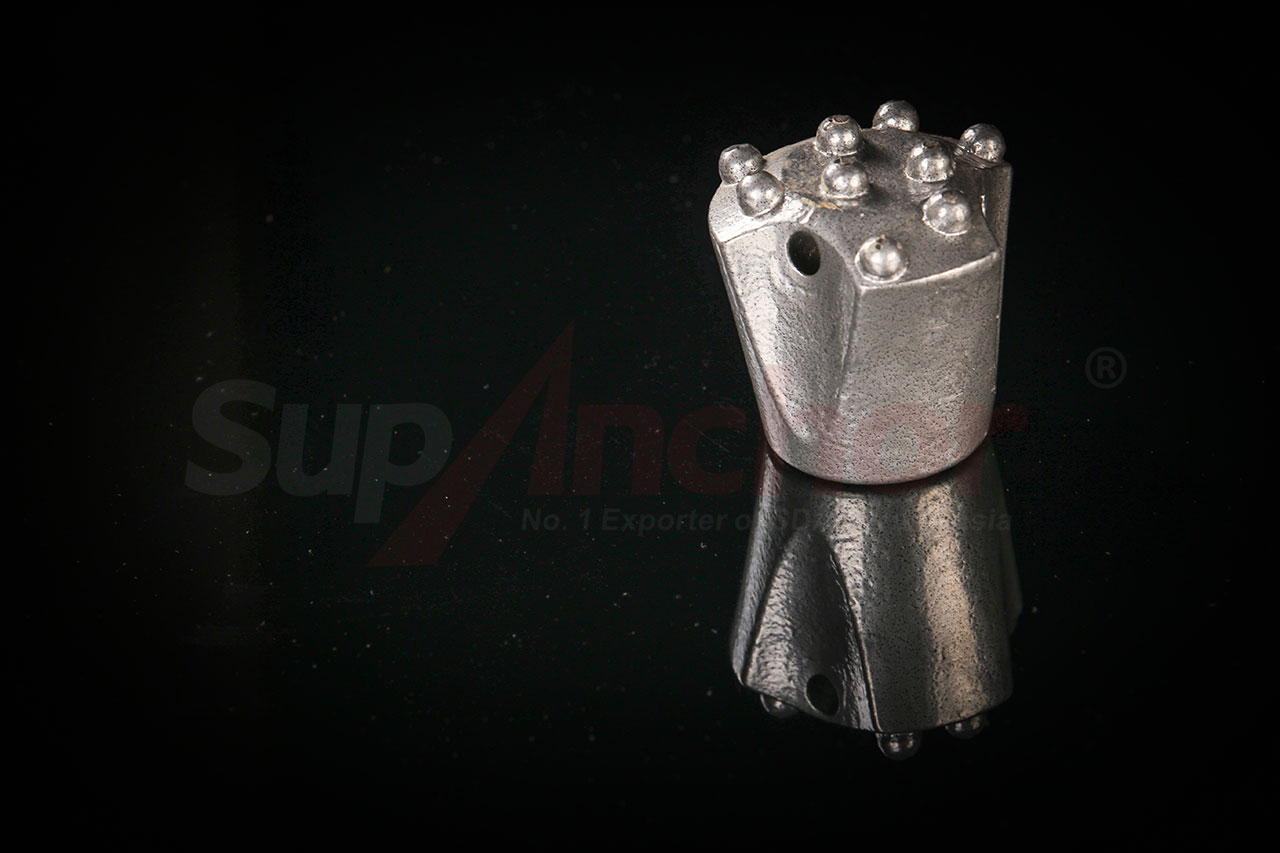
The construction image above not only shows the equipment at work but also the practical benefits of the system: a clean, stable slope face with minimal disturbance, and a disciplined installation pattern that ensures uniform load distribution. The second image below shows a close-up of the SupAnchor anchor bolt product, highlighting the continuous thread and sacrificial drill bit that are central to its performance.
As this project moves toward completion, the slope is already showing signs of stabilization, with monitoring instrumentation recording lateral displacements well below the design threshold. The success of this deployment underscores the value of hollow bar anchor systems in challenging ground and reinforces SupAnchor’s position as a trusted partner for geotechnical reinforcement. With ongoing investment in research and development, SupAnchor is poised to address the next generation of infrastructure challenges, delivering professional, innovative, and collaborative solutions that keep projects on time, on budget, and safe for all stakeholders.
SupAnchor's hollow bar anchor technology stabilizes a critical slope with micropile anchors, overcoming fractured rock and groundwater challenges.
SupAnchor launches SupCT Bolt System, a self-drilling anchor system combining steel and GFRP options with duplex corrosion protection for long-term geotechnical reinforcement.
SupAnchor's self drilling anchor system was recently used in a major European infrastructure project to stabilize deep excavations and retaining walls, overcoming difficult geology with high-performance hollow bar anchors and drill-and-grout bolts.
SupAnchor launches SupFRP GFRP Solid Bolt, a high-strength, corrosion-resistant anchor for slopes, tunnels, and mines. Features lightweight design and long service life.
SupAnchor's advanced self-drilling anchor system supports challenging slope stabilization on a key European highway, demonstrating superior geotechnical reinforcement in difficult ground conditions.