
In an era where aging infrastructure demands longer service life with lower maintenance, corrosion of steel reinforcement remains a persistent challenge. Across Europe and North America, bridge decks, marine structures, and tunnel linings suffer from chloride ingress, carbonation, and stray currents that degrade welded metal mesh. SupAnchor, a manufacturer known for its self drilling anchor systems and geotechnical reinforcement solutions, has introduced the SupFRP® GFRP Mesh—a glass fiber reinforced polymer grid engineered to eliminate corrosion risks while providing high strength and ease of installation.
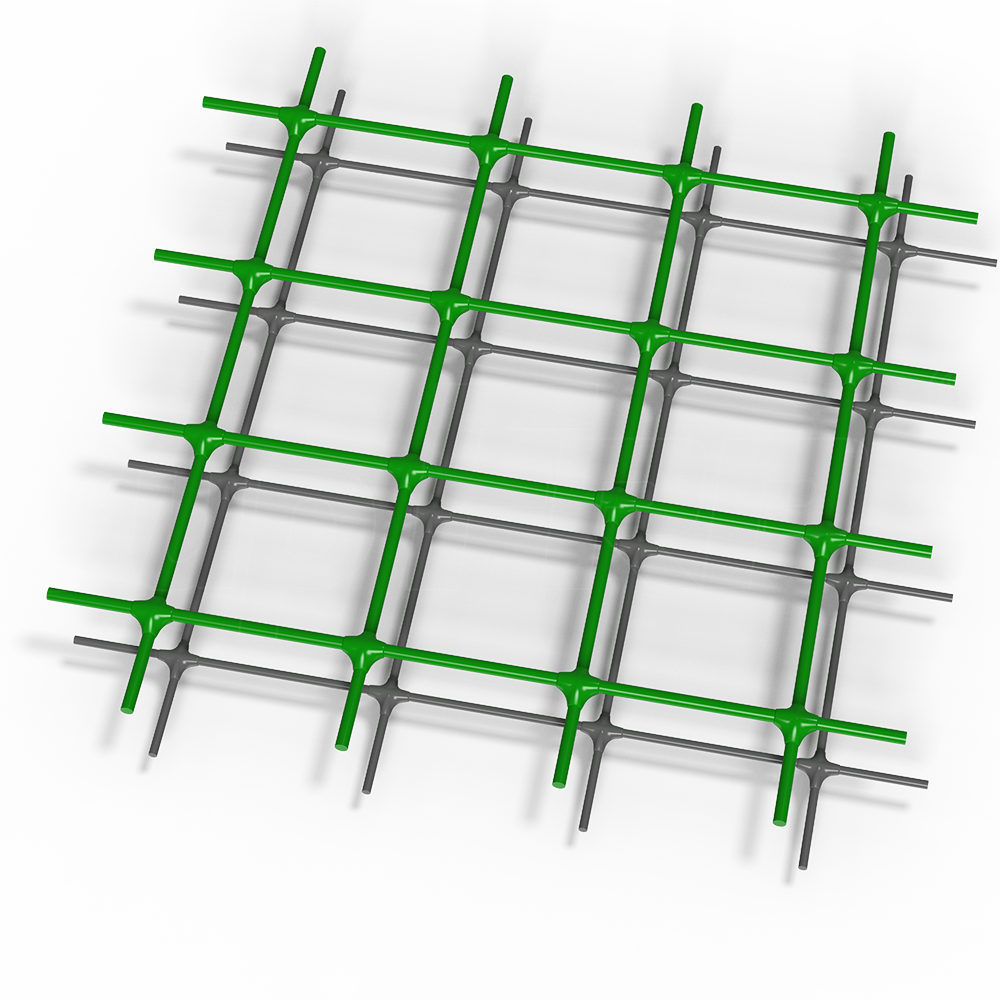
The GFRP mesh is assembled from longitudinal and transverse GFRP rods, with crossing points fixed by impregnated polymer yarn. This design ensures strong, reliable joints without welding, resulting in a product that is electrically non-conductive, non-magnetic, and significantly lighter than steel mesh. For contractors facing difficult access or demanding durability requirements, this mesh offers a practical alternative that reduces labor and extends structural life.
The SupFRP® GFRP Mesh is available in three standard rod diameters—4 mm, 6 mm, and 8 mm—designated M4, M6, and M8. Jointing loads range from 2 kN for M4 to 5 kN for M8, ensuring that the mesh maintains integrity during handling, placement, and concrete casting. Grid sizes of 100 mm × 100 mm and 150 mm × 1500 mm are standard, with custom dimensions available upon request.
| Model | Rod Diameter (mm) | Jointing Load (kN) | Grid Size (mm) |
|---|---|---|---|
| M4 | 4 | 2 | 100×100, 150×1500, custom |
| M6 | 6 | 3 | 100×100, 150×1500, custom |
| M8 | 8 | 5 | 100×100, 150×1500, custom |
These parameters directly address the shortcomings of traditional welded steel mesh. The non-conductive nature of GFRP makes it ideal for applications near electrified railways, MRI facilities, and power plants. Its corrosion resistance eliminates the need for thick concrete cover or protective coatings, allowing thinner sections and reduced material costs. The lightweight nature of the mesh—about one-quarter the weight of steel—simplifies logistics and on-site handling, particularly for overhead or vertical installations.
In tunnel and mining environments, the mesh can be used in combination with SupAnchor’s self drilling anchor bolts and hollow bar anchors to create a complete geotechnical reinforcement system. For example, a drill-and-grout bolt provides immediate support after excavation, while the GFRP mesh serves as permanent surface reinforcement, preventing spalling and rock fall without introducing metallic components that could interfere with monitoring equipment or cause sparking.
The SupFRP® GFRP Mesh is suited for a range of applications including roof and wall protection in underground works, repair of deteriorated concrete structures, flat slab construction, and highway overlays. In coastal regions, where salt spray accelerates steel corrosion, GFRP mesh extends the life of bridge parapets, seawalls, and parking structures. In cold climates, it is unaffected by deicing salts and freeze-thaw cycles.
European infrastructure owners are increasingly specifying non-metallic reinforcement to meet sustainability targets and reduce life-cycle costs. The GFRP mesh contributes to lower carbon footprints by reducing the need for repairs and replacements. Its flexibility allows it to conform to curved profiles and irregular surfaces, an advantage in heritage restoration and complex architectural forms.
Contractors benefit from faster installation. The mesh can be cut with standard tools, requires no welding, and is safer to handle due to its light weight. Its non-magnetic properties eliminate interference with surveying instruments and electrical systems, reducing costly delays.
SupAnchor has built its reputation through rigorous R&D and adherence to international standards, including ISO 9001 quality management and ISO 14001 environmental management. The company’s geotechnical reinforcement systems, including self drilling anchor systems and hollow bar anchors, are used in major infrastructure projects worldwide, from Alpine tunnels to North American highway expansions.
The introduction of GFRP mesh reflects SupAnchor’s strategy to address evolving market demands for durable, non-corrosive materials. By integrating GFRP mesh with its existing product lines, the company offers a one-stop solution for ground support and concrete reinforcement. Engineers can now source both active support elements, such as self drilling anchor bolts, and passive surface reinforcement from a single supplier, ensuring compatibility and streamlined logistics.
As global infrastructure investment accelerates—driven by programs like the European Union’s TEN-T network and the U.S. Bipartisan Infrastructure Law—the need for long-lasting, low-maintenance materials has never been greater. SupAnchor’s GFRP mesh is positioned to play a key role in this transformation, delivering professional, innovative, and collaborative solutions to contractors and asset owners.
For project managers seeking a reliable soil nail system manufacturer or ground anchor bolt factory, SupAnchor’s expanded portfolio now includes advanced GFRP products that meet the highest standards of performance and safety.
SupAnchor's self drilling anchor system proves critical in stabilizing complex geological conditions, highlighting the role of hollow bar anchors in modern infrastructure projects.
SupAnchor introduces GFRP mesh as a non-conductive, lightweight alternative to welded metal mesh, offering high corrosion resistance for concrete repair, flat slabs, and highway overlays.
SupAnchor's self drilling anchor system proves effective in a challenging geotechnical project, providing rapid reinforcement for unstable slopes. The system's high tensile strength and corrosion protection ensure long-term stability.
SupAnchor's new GFRP Mesh offers high strength, corrosion resistance, and lightweight construction for concrete repair, flat slabs, and overlays, complementing its self drilling anchor systems.
A major infrastructure project deploys SupAnchor's self drilling anchor bolts to stabilize fractured rock and loose overburden, reducing installation time and improving geotechnical safety.