
In a major step forward for concrete reinforcement technology, SupAnchor® has unveiled its latest innovation: the SupFRP® Glass Fiber Reinforced Polymer (GFRP) Mesh. Designed to address the long-standing challenges of corrosion and weight in traditional steel mesh, this new product promises enhanced durability, ease of installation, and superior performance in aggressive environments. The launch comes at a time when infrastructure projects worldwide increasingly demand materials that can withstand harsh conditions while reducing maintenance costs.
The GFRP mesh is already being deployed on a critical highway overlay project along the Gulf Coast, where exposure to saltwater and deicing chemicals had caused premature failure of conventional welded wire mesh. Engineers turned to SupAnchor’s solution after extensive testing, citing its corrosion resistance and high strength-to-weight ratio as key deciding factors.
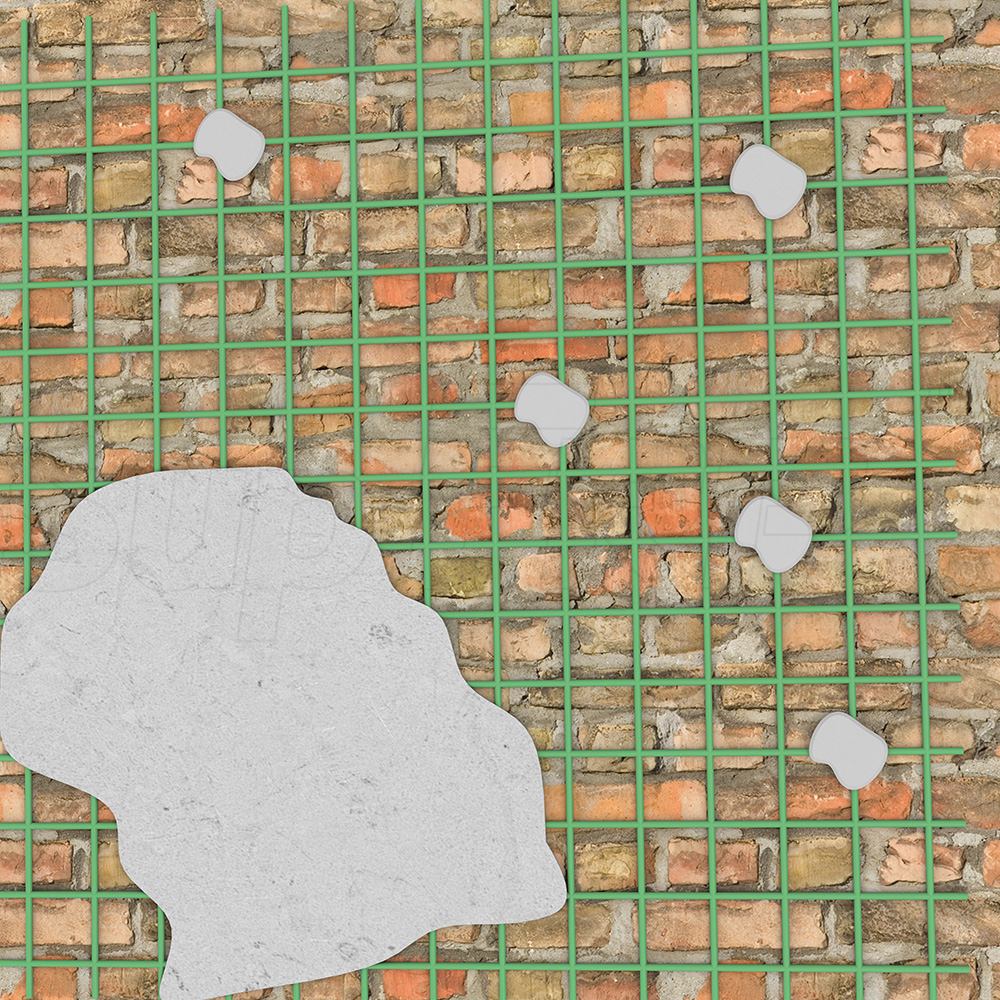
The SupFRP® GFRP Mesh is assembled from longitudinal and transverse GFRP rods, with crossings fixed by impregnated polymer yarn to ensure strong, reliable joints. The grid is available in three standard configurations, each tailored to specific load and spacing requirements:
| Model | Rod Diameter (mm) | Jointing Load (kN) | Standard Grid Sizes (mm) |
|---|---|---|---|
| M4 | 4 | 2 | 100×100, 150×1500 |
| M6 | 6 | 3 | 100×100, 150×1500 |
| M8 | 8 | 5 | 100×100, 150×1500 |
Custom grid sizes are available upon request, allowing engineers to match the mesh precisely to project specifications. The jointing load values—2 kN, 3 kN, and 5 kN for M4, M6, and M8 respectively—ensure structural integrity even under heavy loading. The lightweight nature of the GFRP mesh (approximately one-quarter the weight of steel mesh) significantly reduces transportation and handling costs, while its flexibility allows it to conform to curved surfaces without pre-bending.
The non-conductive and non-magnetic properties of the mesh make it ideal for applications where electromagnetic interference must be minimized, such as near sensitive electronic equipment or in MRI facilities. Additionally, the inherent corrosion resistance eliminates the need for protective coatings or cathodic protection systems, extending service life in marine, chemical, and high-moisture environments.
The SupFRP® GFRP Mesh is designed for a wide range of concrete reinforcement applications, including roof and wall protection, repair of concrete structures, flat slab construction, and highway overlays. In the Gulf Coast project, the M6 mesh with 100×100 mm grid spacing was selected for a 6-inch thick concrete overlay on a 3-mile stretch of highway. The mesh’s high jointing load of 3 kN ensures effective crack control, while its lightweight (approximately 0.5 kg/m²) allowed rapid installation by a smaller crew.
Compared to traditional welded steel mesh, the GFRP alternative offers significant advantages in terms of corrosion resistance, non-conductivity, and ease of installation. Steel mesh in the same environment would typically require a 50 mm cover and epoxy coating to prevent chloride-induced corrosion, adding cost and complexity. With the GFRP mesh, engineers reduced the cover to 25 mm and eliminated the need for coating, cutting material and labor costs by an estimated 20%.
Beyond highways, the mesh is also being evaluated for use in flat slab construction for data centers, where non-conductivity is critical to prevent grounding issues. In repair applications, the lightweight mesh can be adhered to existing concrete surfaces with epoxy, providing a thin overlay that restores structural capacity without adding significant dead load.
The geotechnical reinforcement system market is expected to grow at a CAGR of 7.5% through 2030, driven by aging infrastructure and the need for durable, low-maintenance materials. SupAnchor’s GFRP mesh positions the company as a key player in this expanding sector.
SupAnchor® has long been recognized as a leading manufacturer of geotechnical reinforcement systems, including self-drilling anchor bolts, hollow bar anchors, and drill-and-grout bolts. The company’s commitment to research and development has resulted in a full portfolio of products that meet the highest standards of quality and performance. The new GFRP mesh further extends their offering, providing civil engineers with a comprehensive toolkit for soil and concrete reinforcement.
The company holds ISO 9001 and ISO 14001 certifications and operates a state-of-the-art manufacturing facility equipped with automated pultrusion lines for fiber-reinforced polymer products. Stringent quality control ensures that every batch of mesh meets the specified jointing loads and dimensional tolerances.
SupAnchor’s self-drilling anchor system and ground anchor bolt factory have supplied major infrastructure projects across Europe, North America, and the Middle East. The company’s collaborative approach—working closely with contractors and engineers during the design phase—has been praised for optimizing solutions for challenging ground conditions. For the GFRP mesh, SupAnchor offers technical support to help specify the right grid configuration and installation method.
“We believe in providing professional, innovative, and collaborative solutions to the construction industry,” said a company spokesperson. “The GFRP mesh is a testament to our dedication to solving real-world problems with advanced materials and engineering expertise.”
As infrastructure demands evolve, SupAnchor continues to invest in new technologies that enhance durability, safety, and sustainability. The GFRP mesh is set to become a staple in the toolbox of engineers seeking corrosion-free reinforcement for critical structures.
SupAnchor's self drilling anchor system provides rapid ground reinforcement in challenging geology, reducing installation time and improving safety in a major European highway project.
SupAnchor launches a new GFRP mesh that offers high strength, non-conductivity, and lightweight properties, providing a durable alternative to steel mesh in corrosive environments.
A detailed industry news report on SupAnchor's self drilling anchor bolts used in a challenging tunneling project, highlighting technical parameters, application value, and global trends in geotechnical engineering.
SupAnchor unveils its GFRP hollow injection bolt, featuring high tensile strength and corrosion resistance for slope stabilization and tunneling projects, enhancing global infrastructure safety.
An industry report on how SupAnchor's geotechnical reinforcement system addresses slope stabilization in a large-scale construction project, featuring technical insights and global trends.