
In the heart of the Alps, a groundbreaking transportation project is unfolding—one that promises to slash travel times across the continent while navigating some of the most formidable geology on Earth. The Lyon–Turin high-speed railway link, a cornerstone of the European Union’s Trans-European Transport Network (TEN-T), is pushing engineering boundaries with its extensive tunneling operations through fractured rock, fault zones, and water-bearing strata. At the forefront of this geotechnical challenge stands SupAnchor, whose self drilling anchor system has become instrumental in stabilizing the ground and ensuring worker safety in the exploratory and main tunnels. The deployment of their hollow bar anchor and ground stabilization anchor system marks a significant milestone in the application of advanced soil nail system technology for critical infrastructure.
The project’s sheer scale—a 57.5 km base tunnel beneath the Alps—demands unwavering reliability in ground reinforcement. Traditional anchoring methods struggled with the region’s squeezing ground and blocky rock masses, leading engineers to seek a more adaptable solution. SupAnchor’s self drilling anchor bolt emerged as the ideal candidate, combining drilling, grouting, and anchoring in a single step to tackle the unpredictable conditions. This drill-and-grout bolt technology not only accelerated installation but also minimized overbreak and disturbance, preserving the fragile alpine environment while meeting stringent European safety standards.
The Lyon–Turin link represents one of Europe’s largest ongoing infrastructure ventures, with an estimated cost exceeding €26 billion. The Mont Cenis base tunnel, its central element, traverses the Western Alps through a complex mélange of schists, limestones, and anhydritic shales. The Austrian–Italian border region is notorious for its tectonic complexity, where high overburden pressures (up to 1,000 m in depth) and abundant groundwater inflows create a nightmare for tunnel boring machines (TBMs) and conventional drill-and-blast methods. Ground stabilization is thus not merely an option but a prerequisite for progress.
Geotechnical surveys revealed extensive zones of block-in-matrix rock, mylonitic shear zones, and swelling minerals. In such conditions, the rock mass quality often falls below Q-system ratings of 0.1, indicating exceptionally poor stability. Conventional passive support systems like rock bolts often fail due to the inability to transfer loads effectively to stable ground. A robust, active reinforcement system was essential. Enter the micropile hollow bar anchor and related self drilling anchor for retaining walls: SupAnchor’s SDA (Self-Drilling Anchor) system could drill through loose cobbles and fractured rock, simultaneously injecting grout to form an integrated bond with the surrounding ground, instantly creating a composite bearing element.
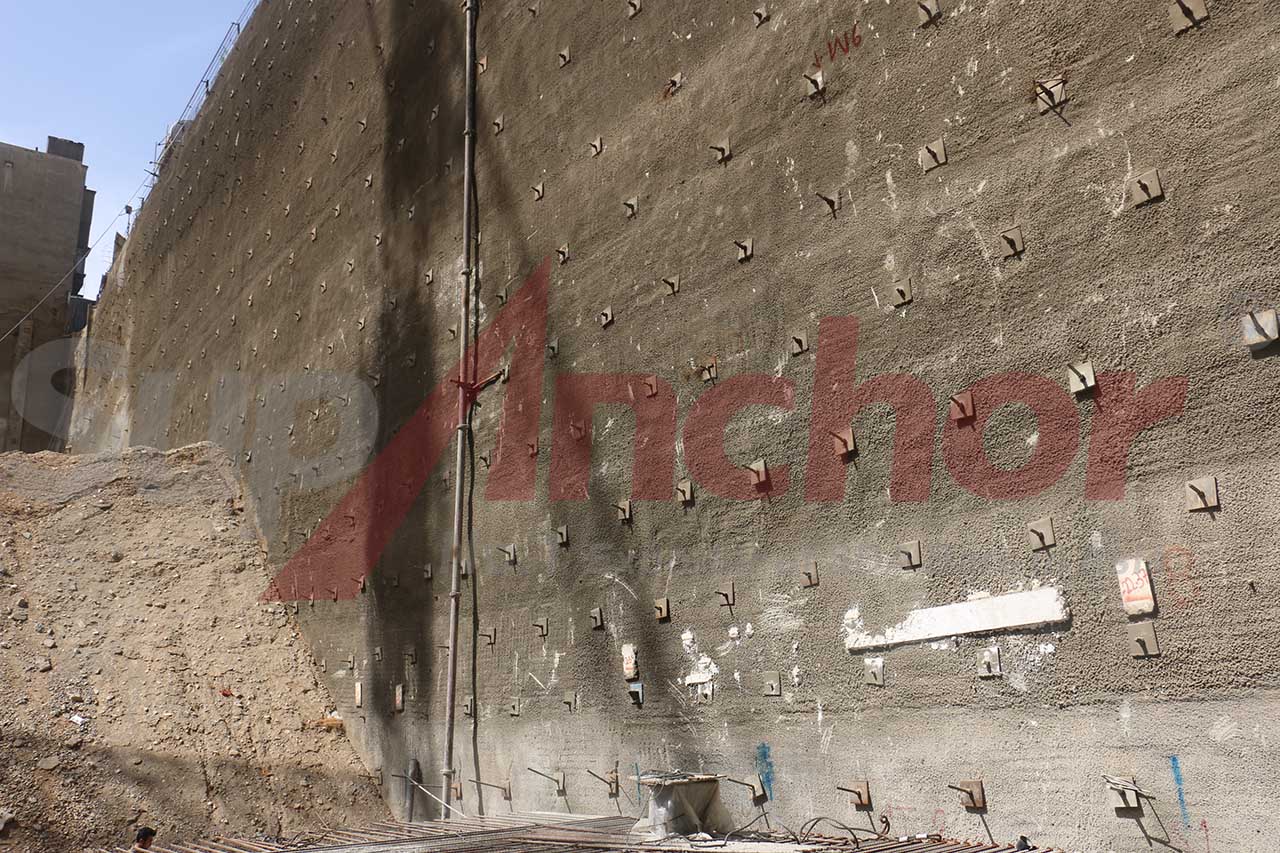
At the construction face, crews equipped with hydraulic rotary percussive drilling rigs systematically install rows of hollow bar anchor systems under the supervision of geotechnical engineers. The accompanying site image captures a typical scene: a tunnel wall being reinforced with a SupAnchor self drilling anchor bar, where the bar’s continuous hollow core allows high-pressure grout to be flushed through, filling cracks and voids, and forming a full-length bond. The operation is remarkably clean compared to casings or conventional anchors, reducing the mess typically associated with drilling and grouting operations.
“We are drilling 9 m long anchors in one pass through highly fractured phyllite,” explains project geologist Dr. Markus Stern. “The drill-and-grout bolt method means we don’t lose the hole, and the immediate grout seal stops water ingress. It’s a game-changer for advance rates.” The system’s modular design enables workers to couple multiple bars on the fly, reaching lengths up to 14 m or more, adapting to variable overbreak depths without losing key geometric control.
Temperature and humidity inside the tunnel are closely monitored, and SupAnchor’s corrosion-protected self drilling bolts—featuring hot-dip galvanizing and optional epoxy coating—ensure longevity in the humid, aggressive alpine water chemistry. This durability is crucial for a tunnel designed for a 120-year service life. Throughout the northern and southern access adits, the ground anchor bolt factory supply has kept pace with the project’s relentless schedule, delivering consistent quality thanks to ISO 9001-certified manufacturing processes at the Nanjing plant and logistics centers in Dubai and Germany.
SupAnchor’s systems deployed on this project were selected from a range tailored to the ground conditions. Key specifications include the following typical values, verified through independent laboratory testing in accordance with EN 14490 and ASTM A722:
| Parameter | Specification |
|---|---|
| Nominal Outer Diameter | 32 mm, 40 mm, 52 mm |
| Tensile Strength (Ultimate) | ≥ 800 kN (32 mm), ≥ 1,200 kN (52 mm) |
| Yield Strength | ≥ 660 kN (32 mm), ≥ 1,000 kN (52 mm) |
| Bar Length (Standard) | 3 m, 4 m, 6 m (coupled for longer) |
| Corrosion Protection | Hot-dip galvanized (85 µm) + optional epoxy coating |
These capabilities directly address the on-site challenges. The high tensile strength of the self drilling anchor bolt ensures that even with poor ground, the anchors can carry significant working loads (often 400–700 kN) without excessive strain. The yield strength provides a safety margin to absorb deformations typical in squeezing ground, a feature validated by pull-out tests conducted on-site that consistently exceeded design requirements. The availability of different diameters lets engineers tailor the anchor density and length to the varying rock mass qualities, optimizing cost and time without sacrificing safety.
Corrosion protection is paramount. The gallery water carries high sulfate content, which could rapidly degrade uncoated steel. SupAnchor’s galvanized and epoxy-coated hollow bar anchors create a durable sheath that inert laboratory tests show can withstand over 2,000 hours of salt spray without red rust. This robust ground anchor bolt factory quality control is critical for a structure with a century-long design life.
The successful application of SupAnchor’s geotechnical reinforcement system on this mega-project resonates beyond site boundaries. Infrastructure development worldwide is increasingly venturing into harsher terrains—urban double-deck tunnels, coastal flood protection schemes, and high-altitude mountain passes—all demanding reliable ground stabilization. The drill-and-grout bolt sector is projected to grow at a CAGR of 6.2% through 2030, driven by investments in transportation and energy corridors. This project underlines a critical shift: the integration of self drilling systems from niche applications to mainstream tunneling practice, especially where TBMs must navigate faults.
Moreover, the environmental benefits are noteworthy. The single-pass installation of the self drilling anchor for retaining walls reduces cement consumption (compared with multi-stage grouted anchors) and eliminates the need for temporary casing, slashing steel waste. In an era of stringent ESG metrics, such efficiency gains make the technology attractive to owners like the Lyon–Turin binational company TELT, which has placed sustainability at the core of its procurement criteria.
The tunnel boring machine supplier, Herrenknecht, has also begun integrating compatible mounting systems for hollow bar anchor pre-support on its TBMs, a sign that the industry is standardizing around this versatile component. This standardization promises lower costs and faster adoption for upcoming projects such as the Brenner Base Tunnel and the Fehmarnbelt Fixed Link, where SupAnchor’s SDA bolt factory direct supply model could further streamline logistics.
From a geotechnical standpoint, lessons learned here will feed into new guidelines. The Austrian Society for Geomechanics (ÖGG) is collecting performance data from instrumented anchors installed by SupAnchor, aiming to update recommendations for self drilling anchor system usage in metamorphic rocks. Real-time monitoring shows negligible stress relaxation over six months, confirming the long-term reliability of the anchor bolt system for geotechnical engineering.
Behind the scenes, SupAnchor’s rise to prominence in the ground stabilization anchor system market is a story of persistently delivering “Professional, Innovative, Collaborative” values. Founded in 2007, the company has accumulated 15+ ISO certifications (9001, 14001, 45001) and holds numerous patents for hollow bar design and threaded joint innovations. Its self drilling anchor systems have been deployed in over 60 countries, including landmark European projects like the Gotthard Base Tunnel feeder lines and the Grand Paris Express metro.
The firm operates an R&D center in Nanjing and logistics hubs in Dubai and Hamburg, ensuring rapid delivery of rock bolt for underground mining and civil engineering needs. Engineering support teams are directly embedded with clients during the design phase, offering FEM modeling and pull-out test interpretations to optimize anchor patterns. This collaborative approach has fostered lasting relationships with contractors and consultants alike.
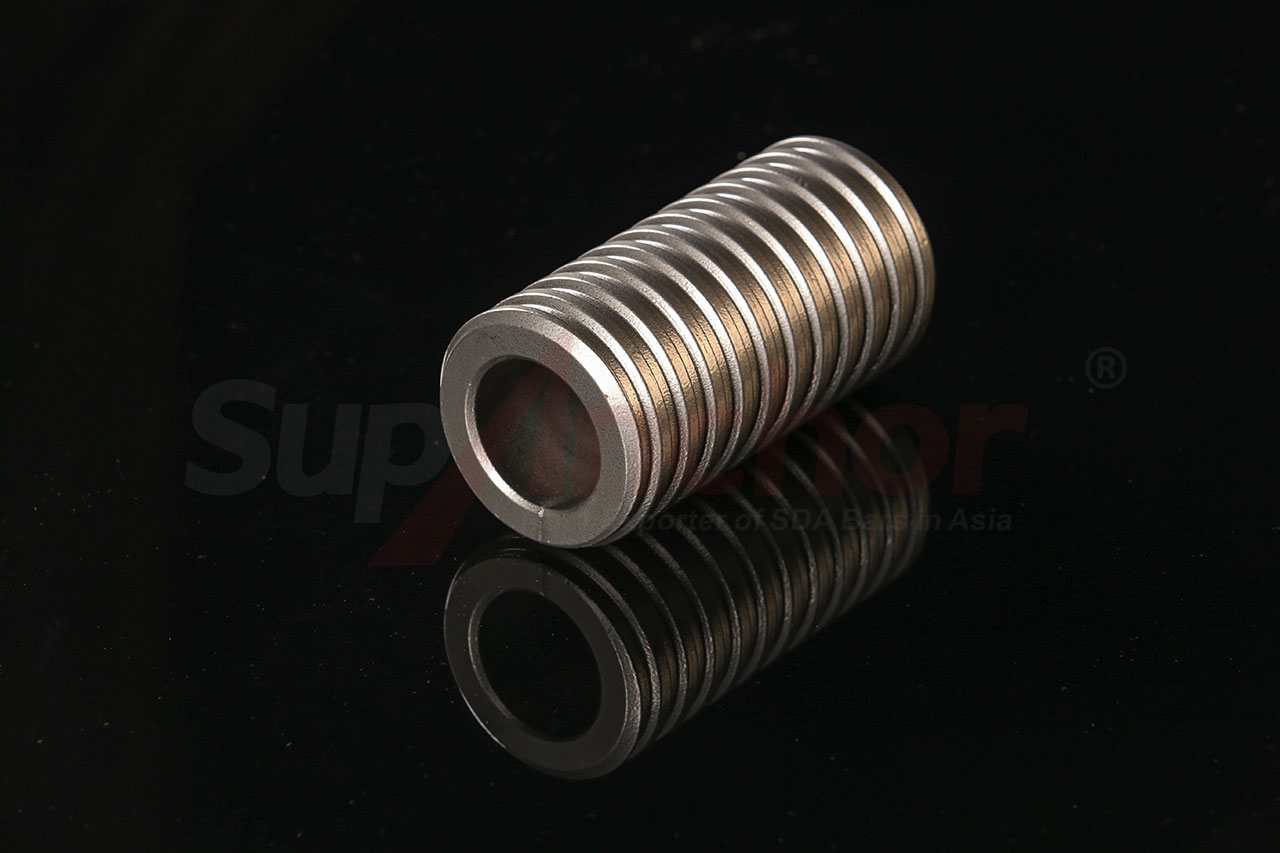
The product image shows a typical hollow bar anchor with its continuous wave thread and sacrificial drill bit tip. The thread pattern is engineered for high load transfer through the grout body, providing a mechanical interlock that outperforms smooth bar designs. The central hole, visible at the cross-section, enables grout injection without a separate tremie pipe, a simple yet crucial advantage. This attention to detail exemplifies why SupAnchor has become a preferred soil nail system manufacturer for complex projects beyond Europe, including dam stabilization in East Africa and metro lines in Southeast Asia.
Looking ahead, SupAnchor is developing smart anchors with embedded fiber optic sensors for real-time load measurement, targeting the next generation of digital twins for underground works. The Lyon–Turin project will serve as one of the first case studies, providing a continuous stream of data to validate performance in the harsh alpine environment. Such innovation cycles promise to further cement the company’s reputation as a forward-thinking ground anchor bolt factory that doesn’t just supply hardware but delivers entire geotechnical reinforcement solutions.
In sum, the Lyon–Turin tunnel project is more than a transportation milestone; it is a testament to the power of collaboration between visionary civil engineering and advanced anchoring technology. SupAnchor’s self drilling anchor system has proven its worth in one of the world’s most demanding settings, reinforcing the case that when geology gets tough, the industry can rely on integrated, high-strength, and corrosion-proof reinforcement like the SDA bolt. As Europe pushes toward a carbon-neutral future with expanded rail networks, such reliable geotechnical support will underpin the very foundations of progress.
SupAnchor's self drilling anchor system deployed in a European tunnel project successfully addresses complex ground conditions, boosting stability and efficiency.
SupAnchor launches the SupShell expansion rock bolt system, combining immediate mechanical anchorage and efficient hollow-bar grouting for safer, faster tunneling and mining operations worldwide.
A challenging highway expansion in the Swiss Alps utilizes SupAnchor's self drilling anchor system for slope stabilization. Over 5,000 hollow bar anchors installed to reinforce unstable terrain, ensuring long-term geotechnical safety.
SupAnchor's R thread self-drilling hollow anchor integrates drilling and grouting, offering high load capacities and anti-corrosion options for tunneling and ground engineering.
SupAnchor's self drilling anchor system provides reliable reinforcement for a steep rocky slope, demonstrating technical excellence in geotechnical stabilization.