
Against the backdrop of ageing infrastructure and the relentless push for durable, low-maintenance solutions, SupAnchor has unveiled its latest innovation: the SupFRP® GFRP Dowel Bar. Designed as a load transfer mechanism across construction joints in concrete slabs, this new product line marks a significant leap forward in pavement engineering, embankment stability, and mechanically stabilised earth (MSE) wall construction.
The launch comes at a time when transportation agencies and civil contractors across Europe and North America are grappling with the hidden costs of corrosion. Traditional steel dowel bars, while widely used, are susceptible to rust-induced deterioration, leading to joint spalling, loss of load transfer efficiency, and ultimately, premature pavement failure. SupAnchor’s answer—a glass fibre reinforced polymer (GFRP) composite—promises to eliminate these concerns entirely, offering a 100+ year service life even in aggressive environments.
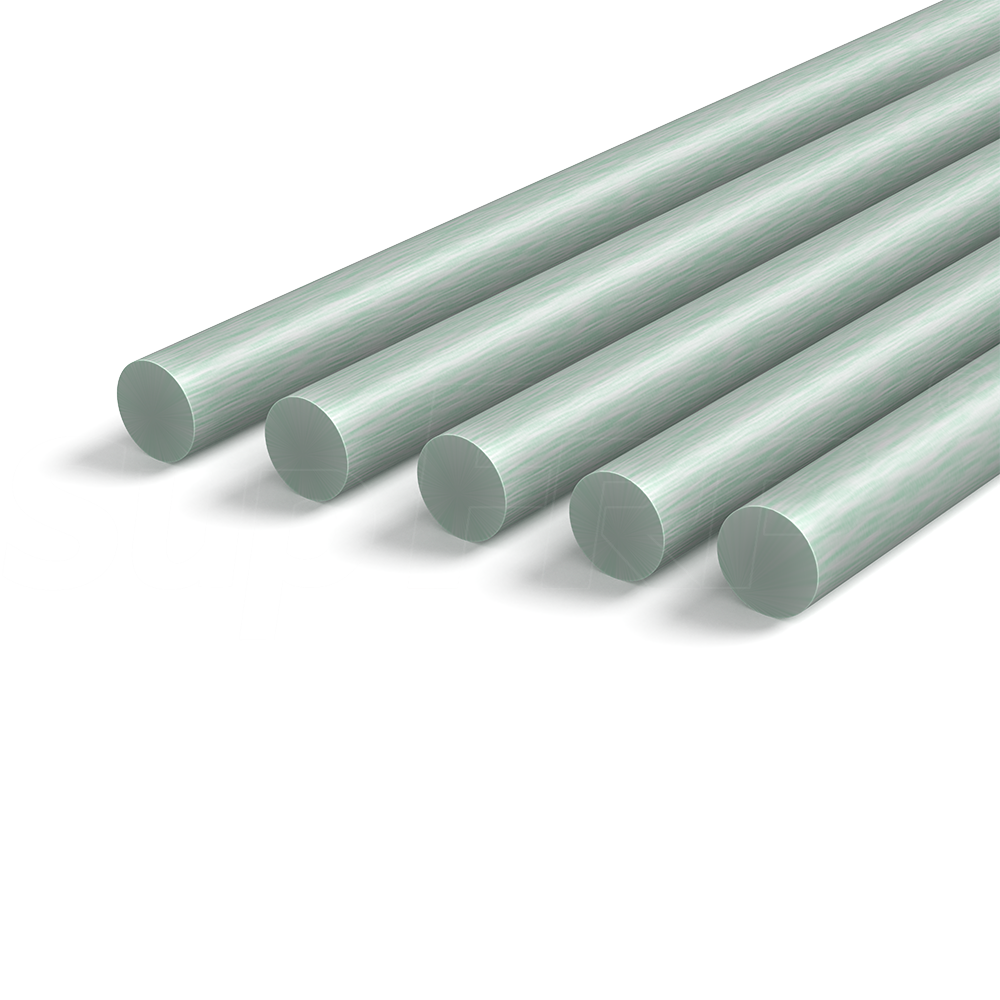
At the heart of the SupFRP® GFRP Dowel Bar is its material pedigree. Manufactured from high-quality E-CR glass fibres embedded in a resilient vinyl ester resin matrix, the bars are inherently non-corrosive, non-conductive, and non-magnetic. This triad of properties opens up applications far beyond standard highway pavements: MRI facilities, power substations, aluminium smelters, and military installations where electromagnetic interference or stray currents are a concern can now benefit from robust joint load transfer without compromise.
“We saw an industry need that had been half-heartedly addressed,” explained a SupAnchor product engineer. “Steel coatings, stainless steel, and even epoxy coatings have been tried, but they all have a finite lifespan or damage susceptibility. Our GFRP dowel fully decouples structural function from corrosion risk. It’s a set-and-forget solution.”
The dowel bars are available in six standard diameters—16 mm, 20 mm, 25 mm, 32 mm, 38 mm, and 45 mm—each tailored to specific load transfer demands and joint spacing. The accompanying technical data (see table below) reveals a linear scaling of transverse shear capacity from 35 kN for the 16 mm bar up to 255 kN for the 45 mm variant, while maintaining a consistent coefficient of thermal expansion of 9–11 x 10⁻⁶/°C, closely matching that of concrete. This compatibility is critical: it ensures that as slabs expand and contract with temperature fluctuations, the dowel bar moves in unison, preserving the mechanical link without inducing internal stresses.
| Model | Outside Diameter (mm) | Transverse Shear Load (kN) | Nominal Cross Sectional Area (mm²) | Coefficient of Thermal Expansion (x10⁻⁶/°C) | Weight (kg/m) |
|---|---|---|---|---|---|
| DB16 | 16 | 35 | 200 | 9-11 | 0.43 |
| DB20 | 20 | 55 | 310 | 9-11 | 0.67 |
| DB25 | 25 | 85 | 490 | 9-11 | 1.05 |
| DB32 | 32 | 130 | 800 | 9-11 | 1.71 |
| DB38 | 38 | 180 | 1130 | 9-11 | 2.41 |
| DB45 | 45 | 255 | 1590 | 9-11 | 3.37 |
All models share a tensile modulus of approximately 40 GPa, ensuring that under repeated traffic loading, the dowel bar flexes enough to accommodate slab movements without brittle failure. The lightweight nature—just one-quarter the weight of equivalent steel bars—eases handling and installation, reducing on-site labour fatigue and crane requirements. Custom lengths can be manufactured to match project-specific joint widths and slab thicknesses.
While the primary application remains jointed rigid pavements—motorways, airport runways, industrial yards, and container terminals—the SupFRP® GFRP Dowel Bar is equally at home in infrastructure where electromagnetic transparency is non-negotiable. For example, in railway tracks near signalling equipment, stray electrical currents from corroded steel can interfere with control systems; GFRP eliminates this hazard outright. Similarly, in embankments and MSE walls, the dowels act as shear connectors between facing panels and reinforced backfill, where soil moisture and de-icing salts would quickly attack conventional steel connectors.
In a recent European highway rehabilitation project, a 12-km section of heavily trafficked dual carriageway was retrofitted with DB25 and DB32 dowels. The design engineers cited the product’s superior load transfer efficiency—exceeding 90% under standard test configurations—as the decisive factor. “The complete immunity to chloride-induced corrosion meant we could eliminate the 50 mm of concrete cover normally required over steel, allowing us to reduce slab thickness and overall material costs,” noted the project lead.
SupAnchor’s self drilling anchor system has long been a staple in geotechnical reinforcement for tunnels and slopes, and the GFRP dowel bar complements that portfolio by addressing horizontal joint dynamics. The company’s drill-and-grout bolt technology already dominates the soil nail system manufacturer space, and this new release reinforces its reputation as a full-service ground anchor bolt factory for complex civil works.
The global push towards sustainable infrastructure—embodied by the EU’s Green Deal and the U.S. Infrastructure Investment and Jobs Act—places a premium on lifecycle cost analysis. By eliminating corrosion-related maintenance cycles, the GFRP dowel bar directly supports these long-term asset management goals. A lifecycle cost comparison for a typical bridge approach slab shows that switching from steel to GFRP can reduce 75-year net present value costs by up to 40%, factoring in reduced repair interventions and traffic disruption.
Moreover, the non-conductive property dovetails with growing electrification of transport networks. As inductive charging lanes and embedded sensors become common, the electrical neutrality of GFRP dowels will prevent stray current corrosion and signal distortion. SupAnchor has already initiated discussions with several smart highway pilot projects in Scandinavia and the Netherlands.
Behind this product lies a decade of R&D investment in fibre-reinforced polymers. SupAnchor’s ISO 9001 and ISO 14001 certified manufacturing facilities now produce a full range of hollow bar anchors, self drilling anchor bolts, and GFRP structural profiles. The company’s collaborative approach—working directly with consulting engineers and international contractors to tailor solutions—has positioned it as a preferred supplier for landmark projects, from Alpine tunnels to Middle Eastern metro systems.
“Our geotechnical reinforcement system expertise tells us that joints are the weak links,” said a company spokesperson. “With the new dowel bar, we’re not just strengthening those links; we’re making them immortal.” Looking ahead, SupAnchor plans to expand the product line to include pre-bent GFRP tie bars and epoxy-bonded threaded connections for seamless integration with existing self drilling anchor systems, creating a unified anchoring platform for the most demanding subsurface conditions.
For civil engineers and procurement managers seeking reliable, future-proof load transfer solutions, the SupFRP® GFRP Dowel Bar represents a tangible commitment to quality and innovation. As infrastructure demands grow, so too does the need for materials that can match the ambition of modern construction—and SupAnchor is clearly at the forefront.
A deep dive into how SupAnchor’s advanced self-drilling anchor bolt technology tackled complex geotechnical conditions, highlighting the system’s technical parameters and industry significance.
SupAnchor introduces GFRP dowel bars—rust-free, 100+ year service life, high-strength load transfer devices for concrete joints. Ideal for rigid pavements, MSE walls, and electromagnetic-sensitive areas. Full technical specs and industry impact.
A Pacific Northwest highway expansion project leverages SupAnchor's hollow bar anchor systems to overcome unstable geology, highlighting advances in geotechnical reinforcement.
SupAnchor’s new Sup2000 and Sup5000 grout pumps deliver up to 6000 L/h with 120 m range, designed for demanding injection, anchoring, and backfilling in tunnels, mines, and excavations.
SupAnchor's self drilling anchor bolts provide efficient geotechnical reinforcement for a critical construction site, demonstrating advanced hollow bar anchor technology in challenging ground conditions.