
As urbanization and infrastructure renewal accelerate worldwide, engineers confront unstable ground conditions that challenge traditional anchoring methods. In tunneling through mixed-face geology, stabilizing steep slopes, or securing deep excavations in soft soils, the demand for rapid, reliable support has never been greater. SupAnchor’s T thread self-drilling hollow anchor system directly addresses these needs, combining drilling, grouting, and reinforcement into a single, efficient operation. This integrated drill-and-grout bolt is gaining traction across Europe, the Americas, and Asia for its ability to reduce project timelines while enhancing geotechnical safety.
Recently, a major railway tunnel upgrade in the Swiss Alps employed over 12,000 SupAnchor T30 and T40 series anchors to stabilize advancing headings in weathered marl and fractured limestone. The project’s lead geotechnical engineer reported that the self-drilling anchor system eliminated separate casing and reduced installation time by nearly 35%, allowing the team to maintain critical excavation cycles. “We could drill and grout simultaneously, even in running ground that would have collapsed with conventional methods,” he noted. This performance exemplifies the practical value SupAnchor brings to complex subsurface projects.
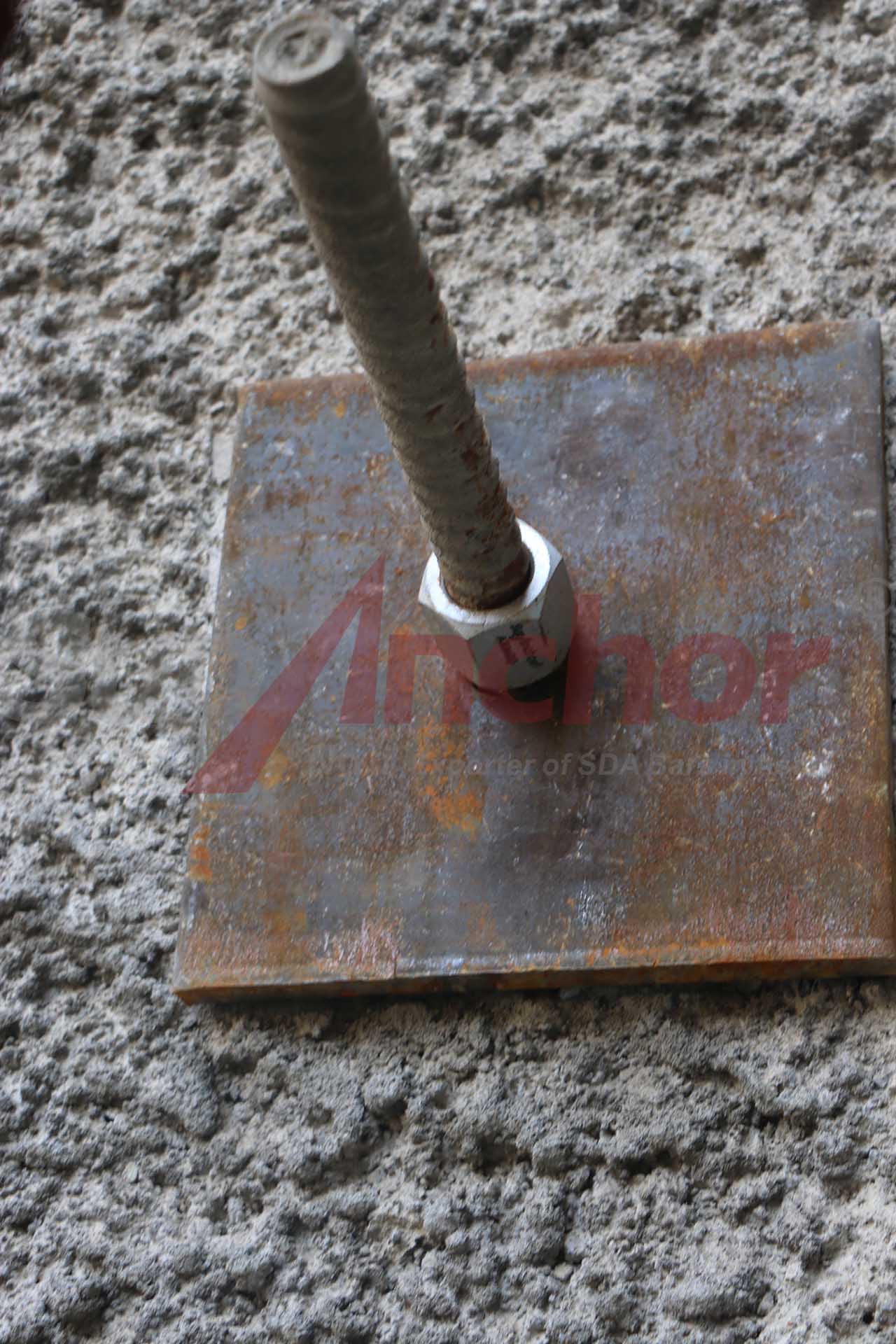
At the core of the T thread anchor is the proven 3-in-1 principle: a single, ribbed hollow bar functions as a sacrificial drill rod, an injection tube, and a permanent reinforcing element. This hollow bar anchor design streamlines site logistics—contractors need only one system instead of three separate components—and avoids the delays and risks of installing temporary casing. By enabling drilling and pressure grouting in a continuous operation, the anchor forms a strong bond with the surrounding soil or rock immediately after installation. For ground anchor bolt factories and contractors alike, this reduces inventory complexity and on-site handling time.
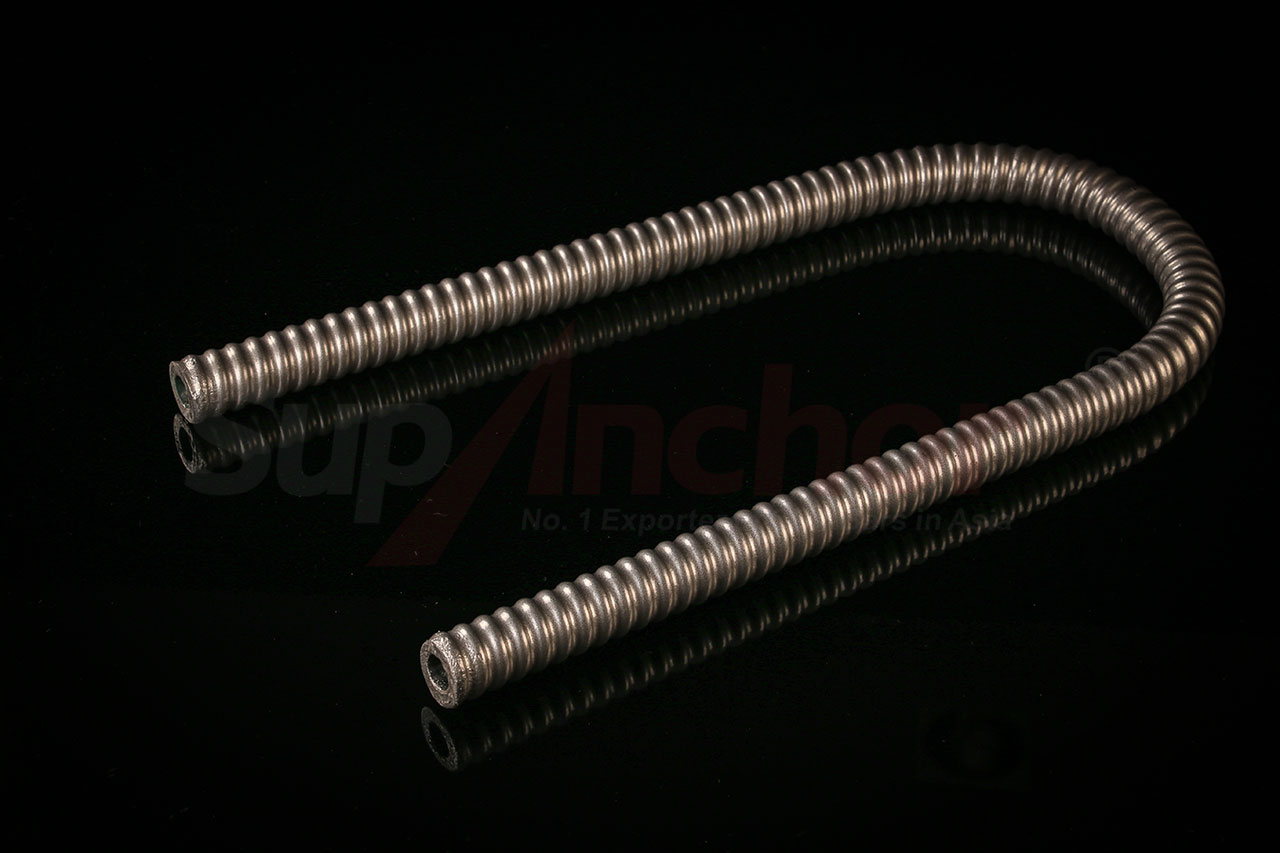
The T thread profile is precision-engineered to maximize load transfer. Unlike conventional steel bars, the relative rib area (fR) is tightly controlled between 0.21 and 0.33, a range that extensive testing identifies as optimal for grout bonding. The ribs themselves are angled at 45°, which directs radial splitting forces more tangentially into the ground. At maximum tensile load, crack widths in the grout body remain below 0.1 mm, preserving the anchor’s long-term integrity. This rib geometry also ensures compatibility with left- or right-hand rotary percussive drilling equipment commonly available on site, making the self drilling anchor bolt universally deployable.
Standardization under the T International Standard further simplifies adoption. Thread specifications, torque requirements, and dimensional tolerances are consistent across the product family, allowing quick connection using standard nuts, couplers, and bearing plates. The result is a geotechnical reinforcement system that minimizes installation errors and accelerates training for crews. As a leading soil nail system manufacturer, SupAnchor keeps all components in ready inventory, so project delays due to custom parts are virtually eliminated.
The T thread series covers a broad performance envelope to meet varying load requirements. The table below lists three representative models frequently specified in global infrastructure projects. All bars are available in stock lengths of 2, 3, 4 meters (and up to 6 meters for larger diameters), and cut-to-length options can be requested for large orders.
| Model | Outer Dia. (mm) | Inner Dia. (mm) | Cross Section (mm²) | Ultimate Load (kN) | Yield Load (kN) | Weight (kg/m) | Typical Length (m) |
|---|---|---|---|---|---|---|---|
| T30/16 | 30 | 16 | 343 | ≥220 | ≥180 | 2.70 | 2 / 3 / 4 |
| T30/11 | 30 | 11 | 406 | ≥260 | contact factory | ~3.3 | 2 / 3 / 4 |
| T40/16 | 40 | 16 | 913 | ≥660 | ≥525 | 7.17 | 2 / 3 / 4 / 5 / 6 |
Note: Heavy-duty models such as T76/1400, T103/3034, and T114/3450 extend the range for large-scale tunnel support and deep foundations.
Long-term durability is critical for both permanent and temporary works. SupAnchor offers three grades of corrosion protection, selectable based on site aggressiveness. Hot-dip galvanizing provides a cost-effective barrier for dry or mildly humid soils commonly found inland. For industrial areas, damp ground, or semi-coastal conditions, the proprietary SupCoating (hot-dip galvanizing plus epoxy layer) delivers enhanced resistance to moisture, chlorides, and chemical attack. In the most demanding environments—coastal projects, saline soils, chemical plants, and marine geotechnics—stainless steel anchors deliver premium corrosion resistance, ensuring a service life that matches the structure’s design life. This layered approach means the self-drilling anchor system can be precisely tailored to the geotechnical reinforcement system’s exposure without over-engineering.
The T thread anchor has proven itself in a wide array of conditions. In tunneling, it is routinely used for face support and forepoling; the fast installation cycle helps maintain advance rates even through running or squeezing ground. The high bond strength developed by the optimized ribs enables immediate load transfer, so crews can apply follow-up shotcrete or steel sets without waiting for grout curing. On a metro expansion in Southeast Asia, T40/16 anchors installed as forepoling allowed safe passage through a 60-meter stretch of completely decomposed granite with less than 15 mm of surface settlement.
For slope stabilization, particularly along highways, railways, and open-pit mines, the hollow bar anchor excels because it can be drilled through loose fill and weathered rock without collapse. A highway widening project in Norway’s fjord region used T30/11 anchors to reinforce a 30-meter-high cut in glacial till. The contractor achieved a design bond stress of over 0.8 MPa after just 24 hours of grout curing, enabling safe excavation of the next bench ahead of schedule. Similarly, a retaining wall project in California employed T30/16 anchors with SupCoating to resist salt spray from nearby coastal fog, demonstrating the system’s adaptability to harsh microclimates.
Foundation and underpinning works also benefit. In soft cohesive soils where driven piles cause vibration or ground heave, self-drilling anchors can be installed with minimal disturbance. A historic building underpinning in Prague used low-vibration T40/16 anchors to transfer loads to a deeper gravel layer, preserving the integrity of the 18th-century superstructure. “The combination of small-diameter drilling and immediate grouting protected the foundations while giving us excellent load capacity,” said the supervising engineer. Such versatility explains why the self-drilling anchor bolt is increasingly specified as a primary reinforcement element in urban environments.
International design codes, including Eurocode 7 and the US FHWA Geotechnical Circular No. 4, now explicitly recognize hollow-bar anchor systems for ground improvement. As project owners and insurers demand greater reliability and shorter construction windows, the market for integrated geotechnical reinforcement systems is projected to grow at over 6% annually through 2030. SupAnchor, as the largest manufacturer and exporter of self-drilling anchors in Asia, is strategically positioned to serve this demand with a complete catalog of T thread, R thread, and specialty anchors.
The company’s commitment to R&D is evident in its ISO 9001-certified production lines and its continuous refinement of rib geometries and anti-corrosion coatings. By maintaining large stock levels and offering technical support from project conception through installation, SupAnchor acts as a true partner rather than just a ground anchor bolt factory. Its global logistics network ensures that even remote sites in South America, Africa, and Oceania receive timely deliveries of certified materials.
Looking ahead, SupAnchor is expanding its product range with larger diameters like T76/2200 and TR51/930 to accommodate the mega-tunnel and deep-basement projects that define modern mega-infrastructure. By staying at the forefront of anchor technology, the company not only meets current engineering demands but also helps shape the future of safe, efficient underground construction. As cities grow denser and geotechnical challenges multiply, the T thread self-drilling hollow anchor will remain a cornerstone technology—reliable, cost-effective, and engineered for the world’s toughest ground.
The Brenner Base Tunnel project in the Alps employed SupAnchor's self drilling anchor bolts to overcome fractured rock and water inflows, demonstrating the value of advanced geotechnical reinforcement systems.
SupAnchor's T thread self-drilling hollow anchor system integrates drilling, grouting, and reinforcement in one step, delivering high load capacity and corrosion resistance for tunnels, slopes, and foundations worldwide.
A major infrastructure project in the Alps successfully utilized SupAnchor's self-drilling anchor system to overcome fractured rock conditions, enhancing geotechnical safety and project efficiency.
SupAnchor launches a high-performance GFRP hollow injection bolt combining rock bolting and grouting, offering superior tensile load, pressure resistance, and corrosion protection for challenging geotechnical projects.
SupAnchor's self-drilling anchor system is being used in a critical slope stabilization project on a major Alpine highway expansion, overcoming difficult geology and ensuring long-term safety and infrastructure resilience.