
In a landmark infrastructure development in central Europe, engineers faced one of the most demanding ground conditions in recent memory. The project, a major transit interchange and retaining structure, required deep foundation support in highly fractured rock, loose overburden, and elevated groundwater levels. Traditional anchoring methods proved inadequate due to hole collapse and difficult drilling conditions. The solution came from SupAnchor, a leading manufacturer of self drilling anchor systems, whose advanced hollow bar anchors and drill-and-grout bolts enabled stable, cost-effective installation while maintaining high safety standards. This article examines the project, the technical parameters of the deployed system, and the broader industry value of such geotechnical reinforcement systems.
The site, located in a region known for complex geology, presented a combination of soft clay layers, weathered rock, and sudden transitions to hard basalt. Groundwater was encountered at shallow depths, complicating open-hole drilling. Conventional post-grouted anchors required the use of temporary casing to prevent hole collapse, significantly increasing time and cost. Moreover, the project's tight schedule and stringent environmental regulations demanded a solution that minimized disturbance and vibration.
The geotechnical investigation revealed that the bearing stratum was located at variable depths, ranging from 8 to 15 meters below ground level. The upper layers consisted of loose sands and silts with very low stand-up time, while the underlying bedrock was moderately fractured and highly abrasive. Design loads for the retaining wall anchors were specified at 400 kN working load with a factor of safety of 2.0, requiring anchor capacities of up to 800 kN. Micropiles for foundation support needed to transfer loads of 600 kN through the weak overburden into competent rock.
Several alternative methods were evaluated. Conventional driven piles were rejected due to noise and vibration restrictions in the urban environment. Post-grouted anchors with casing were deemed too slow and expensive. The project team ultimately selected a self drilling anchor system because it offered a single-pass installation that combined drilling, anchoring, and grouting, eliminating the need for temporary casing and reducing construction time by an estimated 40%.
SupAnchor's self drilling anchor system was specified after a detailed technical review. The system integrates drilling, anchoring, and grouting into a single operation. The hollow bar anchor serves as both the drill rod and the tendon, with grout injected through the hollow core during drilling. This method stabilizes the borehole immediately, preventing collapse even in loose or water-bearing soils. The result is a faster, more reliable installation that meets the project's technical and economic requirements.
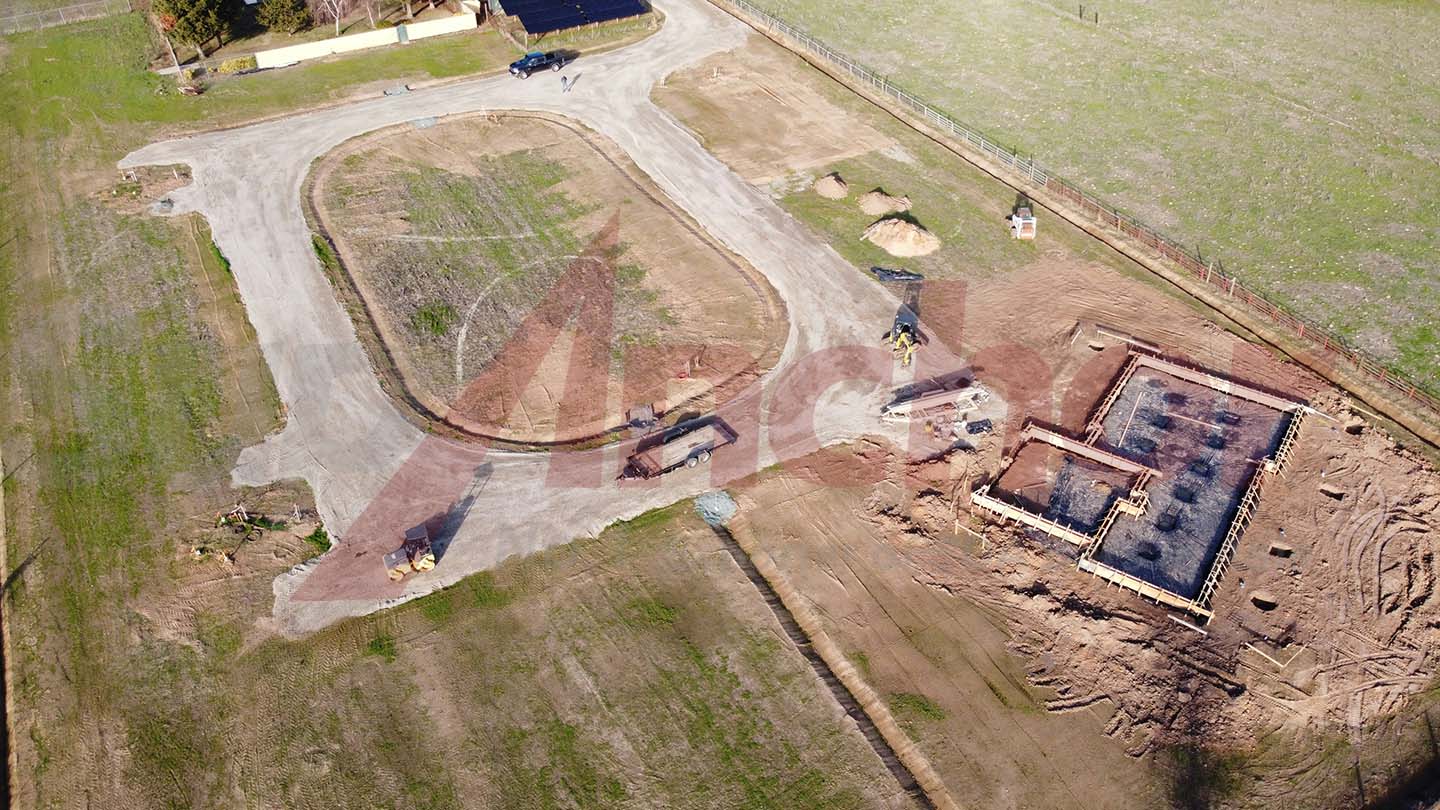
At the construction site, crews used SupAnchor self drilling anchor bolts to install vertical micropiles for foundation support and inclined anchors for retaining wall stabilization. The image above shows a typical section of the works where a hollow bar anchor is being installed with a hydraulic drill rig. The process begins with the anchor being rotated into the ground while a cementitious grout is pumped through the central hole. The grout flows out through ports near the bit, mixing with the surrounding soil and rock to form a reinforced zone. Once the desired depth is reached, the anchor is left in place to cure, providing immediate load-bearing capacity.
The installation procedure followed strict quality control protocols. Each anchor was tested for alignment and grout flow before installation. During drilling, the operator monitored torque and penetration rate to detect any changes in ground conditions. After reaching the design depth, the anchor was grouted continuously until clean grout returned at the surface, ensuring complete encapsulation. Post-installation, selected anchors underwent load testing to verify capacity and bond strength. The results consistently exceeded the specified requirements.
The key technical parameters of the SupAnchor anchor system used on this project are summarized in the table below. These specifications were selected to match the design loads and ground conditions.
| Parameter | Specification | Benefit |
|---|---|---|
| Anchor Type | Self drilling hollow bar anchor | Combines drilling and grouting, no casing required |
| Diameter | 32 mm to 50 mm | Offers appropriate cross-section for load transfer |
| Length | 6 m to 12 m, with couplers for extension | Allows adaptation to variable depth to reach competent strata |
| Tensile Strength | Up to 660 kN (depending on diameter and steel grade) | Withstands high pull-out forces in retaining walls |
| Corrosion Protection | Hot-dip galvanized or epoxy coated, plus cement grout cover | Ensures long-term durability in aggressive soils |
These parameters enabled the project team to achieve the required factor of safety while optimizing anchor spacing and depth. The use of a drill-and-grout bolt allowed simultaneous drilling and grouting, reducing the risk of borehole collapse and improving the bond between the anchor and the ground. In areas with high groundwater, the grout pressure and continuous flushing effectively sealed the borehole and prevented water ingress, a critical advantage over traditional methods.
In addition to the standard anchors, the project utilized micropile hollow bar anchors for underpinning an adjacent existing structure. These micropiles were installed at close spacing to create a continuous cut-off wall, effectively controlling groundwater seepage and preventing settlement of the neighboring building. The self drilling bolt for civil engineering proved its versatility in this dual role, serving both as a structural element and as a ground improvement technique. The site also employed a ground stabilization anchor system to reinforce temporary excavation slopes, further demonstrating the adaptability of SupAnchor's product line.
The successful deployment of SupAnchor's self drilling anchor system on this project underscores a broader shift in geotechnical engineering toward more efficient and reliable ground stabilization methods. Infrastructure investment worldwide is growing, driven by urbanization, transportation expansion, and the need to upgrade aging assets. In Europe and North America, projects such as high-speed rail networks, metro systems, and deep basements require robust foundation solutions that can handle complex subsurface conditions. Self drilling anchor bolts have become the preferred choice for many consulting engineers because they reduce installation time, minimize environmental impact, and provide predictable performance.
According to a recent market analysis, the global ground anchor market is expected to grow at a compound annual growth rate of 5.2% over the next five years. This growth is fueled by increased spending on infrastructure resilience, particularly in regions prone to landslides and seismic activity. Geotechnical reinforcement systems, including self drilling anchors, are essential for stabilizing slopes, retaining walls, and tunnel portals. The hollow bar anchor, in particular, has gained popularity because of its ability to be installed in difficult ground without the need for casing, which reduces both cost and environmental footprint. The self drilling anchor for retaining walls is a prime example of an innovation that directly addresses the need for safe, fast, and economical slope stabilization in congested urban areas.
As a soil nail system manufacturer and ground anchor bolt factory, SupAnchor is at the forefront of this trend. The company's product range includes micropile hollow bar anchors, self drilling anchors for retaining walls, and ground stabilization anchor systems. These products are used not only in civil engineering but also in mining and tunneling, where rock bolts for underground mining must withstand dynamic loads and corrosive environments. The versatility of the self drilling bolt for civil engineering applications makes it an essential tool for modern construction.
In addition, the growing emphasis on safety and sustainability in construction aligns perfectly with the advantages of hollow bar anchors. Because the system eliminates the need for temporary casing and reduces spoil generation, it lowers the carbon footprint of foundation works. The ability to install anchors in limited-access areas and on slopes without heavy equipment further contributes to its appeal. Many regulatory bodies now recommend self drilling anchors for projects in environmentally sensitive areas due to their minimal disturbance and reduced noise levels.
SupAnchor has built a reputation as a trusted partner for complex geotechnical projects across the globe. With ISO 9001 and ISO 14001 certifications, the company adheres to rigorous quality and environmental management standards. Its products are manufactured in a state-of-the-art facility and undergo strict testing to ensure compliance with international specifications such as EN 14490 and ASTM. As a direct supply factory, SupAnchor offers SDA bolt factory direct supply, providing cost-effective solutions without compromising quality. The company's commitment to innovation is evident in its continuous development of anchor bolt systems for geotechnical engineering. By collaborating closely with contractors and design engineers, SupAnchor tailors its products to meet specific project needs, whether it is a deep excavation support, slope stabilization, or foundation underpinning. This collaborative approach, combined with professional engineering support, has made SupAnchor a preferred supplier for major infrastructure projects worldwide.
In conclusion, the project described here demonstrates the technical value and reliability of SupAnchor's self drilling anchors. As the construction industry continues to face challenging ground conditions and tight schedules, the demand for efficient geotechnical reinforcement systems will only grow. SupAnchor's self drilling anchor bolts and drill-and-grout bolts are well positioned to meet this demand, delivering professional, innovative, and collaborative solutions for the infrastructure of tomorrow.
SupAnchor's self drilling anchor system and hollow bar anchors deliver reliable ground stabilization for a challenging infrastructure project, ensuring safety and efficiency.
SupAnchor introduces the SupCT Bolt System, a corrosion-resistant combination bolt with steel and GFRP options for tunneling, mining, and geotechnical reinforcement.
A major infrastructure project in Europe utilizes SupAnchor's self drilling anchor system to overcome difficult geological conditions, ensuring stability and safety.
SupAnchor unveils corrosion-resistant SupFRP® GFRP Mesh with non-conductive, lightweight design, integrated with self drilling anchor system for tunneling, mining, and infrastructure repair.
SupAnchor's self drilling anchor system, a hollow bar anchor, successfully stabilizes a challenging slope on a major infrastructure project, demonstrating rapid installation and high performance in difficult ground conditions.