
SupAnchor®, a global leader in geotechnical reinforcement solutions, has unveiled its new line of SupFRP® Glass Fiber Reinforced Polymer (GFRP) rebars. Designed to replace traditional steel reinforcement in concrete, these rebars offer exceptional corrosion resistance, high tensile strength, and non-conductive properties, making them ideal for demanding infrastructure projects in Europe and North America.
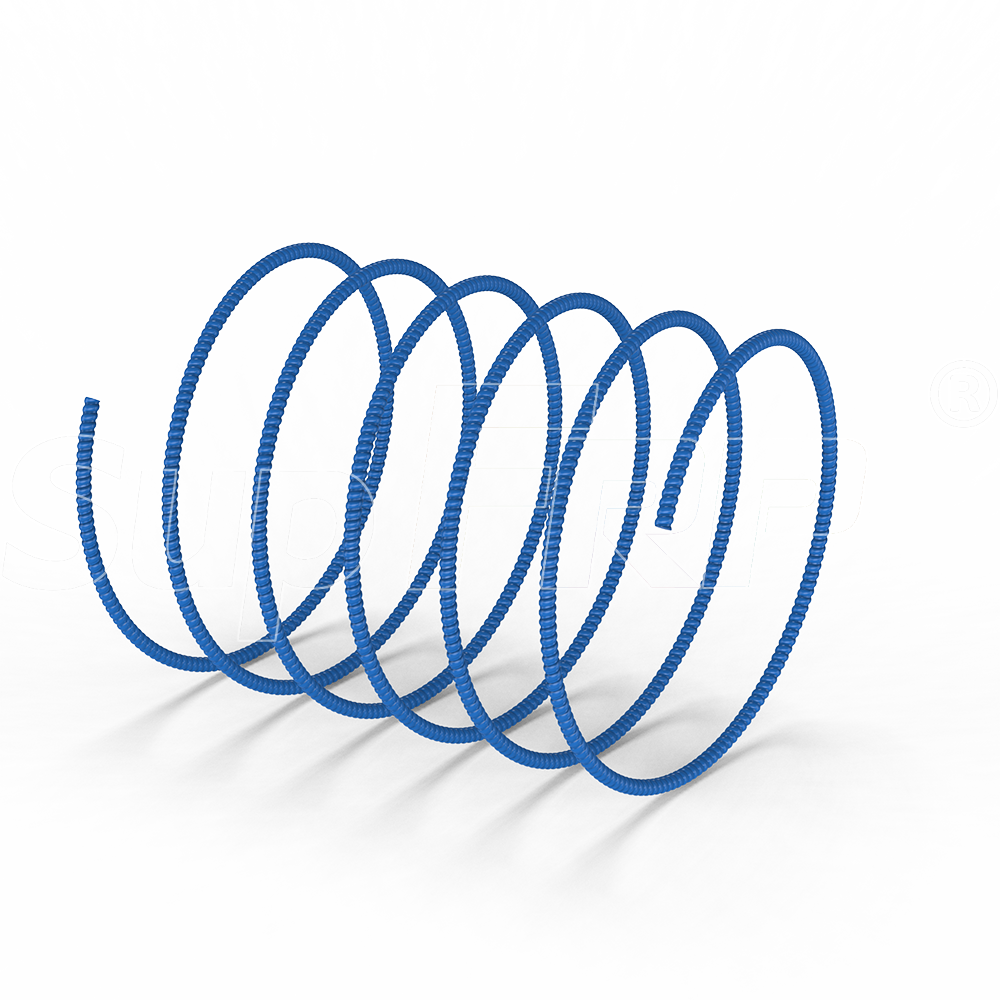
The SupFRP® GFRP rebar is manufactured using high-quality corrosion-resistant resin and fiberglass, resulting in a lightweight yet strong reinforcement. The product line includes diameters from 9 mm to 45 mm, with tensile strengths ranging from 800 to 1000 MPa and a tensile E-modulus of 50 GPa. The rebars feature a waved thread structure for excellent bonding with concrete, and they are non-magnetic and non-conductive, offering advantages in sensitive environments such as MRI facilities or electrical substations.
| Designation | Outside Diameter (mm) | Guaranteed Tensile Load (kN) | Tensile Strength (MPa) | Weight (kg/m) |
|---|---|---|---|---|
| ReB-8 | 9 | 50.3 | 1000 | 0.125 |
| ReB-10 | 11.5 | 79 | 1000 | 0.2 |
| ReB-12 | 14 | 113 | 1000 | 0.28 |
| ReB-16 | 18 | 201 | 1000 | 0.50 |
| ReB-25 | 28 | 491 | 1000 | 1.20 |
| ReB-32 | 36 | 720 | 900 | 2.00 |
| ReB-40 | 45 | 1006 | 800 | 3.10 |
The lightweight nature (up to 75% lighter than steel) and easy cutting reduce installation costs, while the high tensile strength ensures structural integrity. These properties make the GFRP rebar a superior choice for projects where corrosion is a concern, such as marine environments, chemical plants, and de-icing salt exposure.
The GFRP rebar is specifically designed for infrastructure projects including bridge decks, sea walls, port aprons, precast elements, and soft-eye excavation in tunneling. Its non-conductive and non-magnetic properties also make it suitable for electrical sensitive areas. As aging steel-reinforced concrete structures face corrosion challenges, the demand for durable alternatives is growing. SupAnchor's GFRP rebar offers a cost-effective solution with a service life exceeding 100 years in corrosive environments.
In the tunneling industry, the rebar is used for temporary works like soft-eyes, reducing the need for removal due to its easy cuttability. For precast elements, the consistent quality and factory-controlled shapes ensure precise fit and reduced labor.
SupAnchor's R&D team continuously innovates to meet the evolving needs of the construction sector. The company holds ISO certifications and has supplied reinforcement solutions for major global projects. By combining high-performance materials with engineering expertise, SupAnchor positions itself as a trusted partner in geotechnical reinforcement systems. The launch of this GFRP rebar line underscores the company's commitment to professional, innovative, and collaborative solutions.
Contractors and engineers seeking a reliable corrosion-resistant reinforcement can now turn to SupAnchor's proven product range. For more information, visit www.supanchor.com.
A major highway tunnel upgrade in Switzerland deploys advanced self-drilling anchor systems to overcome difficult geology. SupAnchor’s hollow bar anchors provide rapid installation, high load capacity, and long-term corrosion protection.
SupAnchor's T thread self-drilling hollow anchors, adhering to the T International Standard, streamline tunnel face support and slope stabilization with integrated drilling, grouting, and reinforcing functions.
A major infrastructure project benefits from SupAnchor's innovative self-drilling anchor system, combining drilling and grouting into one efficient step for enhanced slope stabilization.
SupAnchor introduces the SupUTS self-drilling hollow anchor, with enhanced tensile strength up to 930 kN, designed for deep foundations, tunnels, and slopes. This integrated system streamlines construction in unstable soil.
A major high-speed rail tunnel in the Swiss Alps deploys SupAnchor's self drilling anchor system to overcome fractured rock and water inflow, ensuring long-term stability and construction safety.