
In a landmark infrastructure upgrade through the rugged Carpathian foothills, a major European highway expansion project has turned to an advanced self drilling anchor system to safeguard steep slopes and ensure long-term stability. The project, involving the widening of a key transport corridor, faced severe geotechnical challenges including fractured rock, loose overburden, and groundwater ingress. Contractors needed a rapid, reliable ground reinforcement method that could be installed in difficult access conditions without compromising structural integrity. SupAnchor’s self drilling anchor bolt technology emerged as the preferred solution, enabling simultaneous drilling and grouting in a single pass, dramatically reducing installation time and enhancing bond strength in variable ground.
The €120 million initiative, funded by national transport authorities and EU cohesion funds, aims to replace an aging two-lane carriageway with a modern four-lane expressway. Slopes exceeding 45 degrees and weathered schist geology posed significant landslide risks, threatening both construction safety and future operational resilience. Traditional anchor techniques would have required multiple steps—pre‑drilling, casing, grouting—often leading to hole collapse and poor grout distribution. In contrast, SupAnchor’s geotechnical reinforcement system integrates drilling, anchoring, and grouting, eliminating these risks while delivering immediate load-bearing capacity.
The highway section, traversing a deep valley near the Slovak‑Romanian border, presented a complex subsurface profile. Borehole investigations revealed alternating layers of highly fractured phyllite, clayey silt, and water‑bearing seams. During the rainy season, pore‑water pressures would rise rapidly, triggering shallow slips in previous excavations. The design brief called for a permanent retaining structure capable of withstanding lateral earth pressures of up to 300 kPa, with a service life of 100 years. Engineers had to consider both static and seismic loads, as the region lies in a moderate seismicity zone.
After evaluating several alternatives—including soil nailing, ground anchors with separate drilling, and reinforced concrete walls—the project team specified a hollow bar anchor system. The decision was driven by the need to install anchors through loose overburden into competent bedrock without hole collapse. Traditional drilling with casing would have been too slow and costly; a drill‑and‑grout bolt approach using a sacrificial drill bit could accomplish the entire operation in one working phase. SupAnchor, as a recognized soil nail system manufacturer, provided a customized design combining high‑tensile hollow bars with advanced bit configurations to penetrate mixed ground.
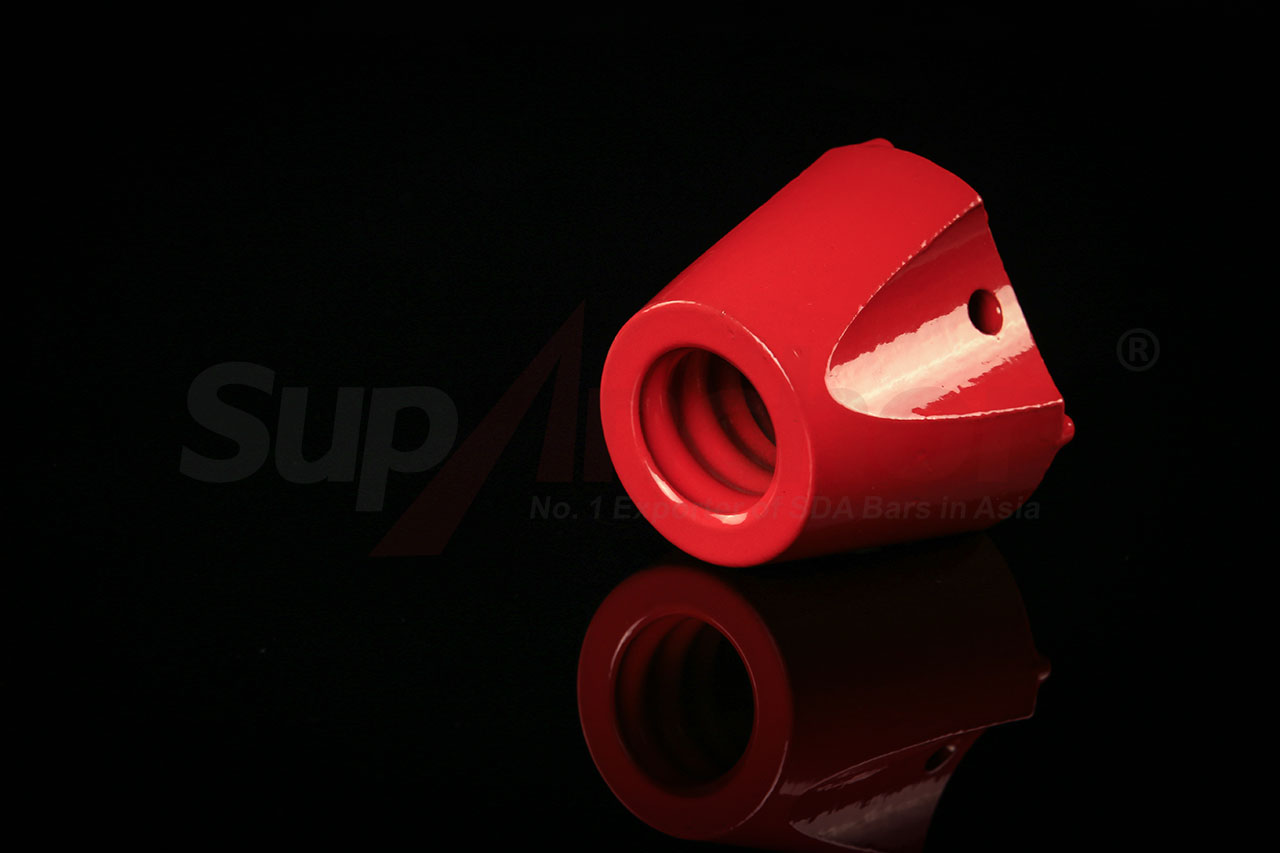
SupAnchor’s self‑drilling anchor (SDA) system is a versatile anchor bolt system for geotechnical engineering that has been proven in tunneling, mining, and slope stabilization worldwide. For this project, the company supplied its 40‑mm‑diameter hollow bar anchors, manufactured from high‑grade steel with a minimum tensile strength of 660 MPa and a yield strength of 500 MPa. Each anchor was coated with a hot‑dip galvanized layer (≥85 µm) supplemented by a duplex epoxy coating at the exposed sections, ensuring corrosion resistance in the aggressive soil environment. The anchors function as both drill rod and reinforcement, using a lost carbide bit that remains in place after drilling.
The table below summarizes the key technical parameters of the SupAnchor SDA system employed:
| Parameter | Specification |
|---|---|
| Anchor type | Self‑drilling hollow bar (SDA) |
| Steel grade / tensile strength | St 660/500; min. tensile 660 MPa, yield 500 MPa |
| Outer diameter | 40 mm (custom 32–63 mm available) |
| Inner diameter | 20 mm (for grout flow) |
| Anchoring length (max.) | 12 m (segments coupled on‑site) |
| Corrosion protection | Hot‑dip galvanized (≥85 µm) + epoxy duplex on exposed threads; double corrosion layer option |
| Grout bond strength | >2.5 MPa (with standard cement grout) |
| Drill bit | Lost carbide button bit, suitable for hard rock up to 150 MPa |
| Installation speed | Typical 2–4 m per hour in mixed ground |
The selection of this ground anchor bolt factory supplied system hinged on its ability to deliver a continuous grout column with excellent bonding along the entire anchor length. The hollow bar allows grout to be injected through the anchor itself, filling any voids and consolidating the surrounding ground. This technique transforms the anchor into a micropile hollow bar anchor, capable of carrying both tension and compression loads—a critical requirement for stabilizing the slope toe where bearing capacity was poor. Moreover, the one‑step installation eliminated the need for temporary casing, reducing the risk of ground disturbance and speeding up the construction schedule.
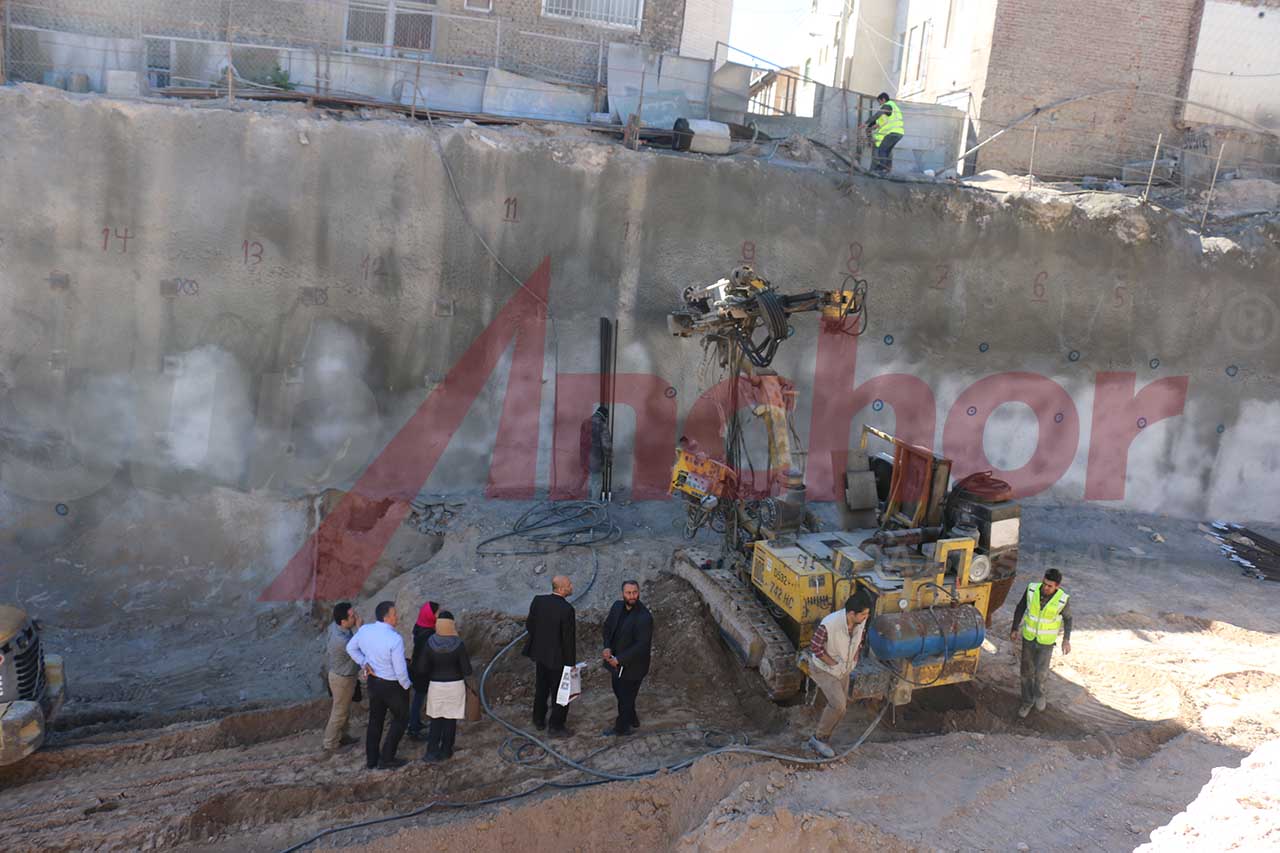
At the construction crest, crews employed hydraulic rotary‑percussive drilling rigs fitted with automated grout pumps. A typical anchor assembly consisted of a 3‑m starter bar with sacrificial bit, coupled to extension bars as depth increased. After drilling to design depth, neat cement grout (w/b ratio ≈0.4) was injected at pressures up to 2 MPa, flushing cuttings and creating a compacted grout‑ground interface. This self drilling bolt for civil engineering was then left in place, serving as permanent reinforcement. Daily output reached 25–30 anchors per rig, far exceeding the 10–12 achievable with conventional pre‑drilling methods.
Pull‑out tests conducted on ten randomly selected anchors confirmed an average ultimate load capacity of 520 kN, surpassing the 450‑kN design requirement. Strain gauges embedded in selected anchors showed uniform load transfer along the bonded length, indicating superior grout‑to‑ground contact. The project’s geotechnical engineer noted, “The ground stabilization anchor system performed exactly as modeled. It not only controlled slope deformations during excavation but also provided an immediate factor of safety above 1.5 in the most critical sections.”
Environmental considerations also played a role. The sacrificial bit method eliminated cuttings handling and reduced spoil disposal volumes. Because the anchors are fully encapsulated in grout, the risk of groundwater contamination from corrosion products is minimized. This aligns with EU directives on sustainable construction practices.
The success of this highway project underscores a broader shift in civil engineering toward faster, safer, and more economical ground reinforcement methods. As infrastructure networks expand into challenging terrains—alpine corridors, flood‑affected valleys, and urban underground spaces—demand is soaring for sophisticated rock bolt for underground mining and civil works that streamline logistics and enhance worker safety. Self‑drilling anchor systems are increasingly specified for tunneling portals, bridge abutments, and self drilling anchor for retaining walls in congested urban sites where shallow headroom and limited access preclude traditional techniques.
Market analysts predict that the global geotechnical reinforcement market will grow by 6.5% annually through 2030, fueled by urbanization in developing economies and the renewal of aging infrastructure in Europe and North America. Products like the SDA bolt factory direct supply from SupAnchor are gaining traction because they reduce the number of site operations and the dependency on skilled drillers. This trend is accelerated by the industry’s digital transformation, where real‑time monitoring of drilling parameters (torque, penetration rate, grout flow) is integrated into the anchor system, enabling data‑driven quality control.
Behind this project’s on‑time delivery stands SupAnchor, a company that has built a reputation as a reliable ground anchor bolt factory with a global footprint. Certified to ISO 9001, ISO 14001, and ISO 45001, SupAnchor operates out of a state‑of‑the‑art manufacturing facility in China, complemented by regional distribution centers in Europe, the Americas, and Australia. The company’s R&D team continuously refines its product portfolio, which includes standard and custom anchor bolt system for geotechnical engineering solutions for rockfall protection, slope stabilization, and underground excavation support.
In recent years, SupAnchor has supplied self‑drilling anchor systems for high‑profile projects such as the Brenner Base Tunnel exploratory adit, the Doha Metro deep excavations, and a series of hydro‑power dam reinforcements in the Andes. Its collaborative approach—working directly with design engineers, contractors, and testing laboratories—ensures that the most appropriate geotechnical reinforcement system is applied to each unique site. “We don’t just sell anchors; we deliver engineered solutions,” says the company’s European technical manager. “Every project starts with a detailed ground investigation and a rock‑anchor design review to optimize the bolt geometry, grout mix, and installation sequence.”
As the industry pushes toward net‑zero construction, SupAnchor is also helping contractors reduce their carbon footprint. The SDA system’s elimination of casing reduces steel consumption by up to 30% per anchor, and the faster installation cycle cuts diesel consumption of drilling rigs. Furthermore, the company’s duplex coating technology extends anchor service life, minimizing future maintenance and material replacement needs.
Looking ahead, the integration of fiber‑optic sensors into anchors for real‑time strain and temperature monitoring is on SupAnchor’s innovation roadmap. Such intelligent anchors will enable asset owners to remotely monitor slope health and trigger early warnings, transforming passive retention systems into active infrastructure management tools.
For this Carpathian highway project, the final acceptance tests are now nearing completion. With over 12,000 self‑drilling anchors installed across six retaining structures, the slopes are behaving exactly as predicted, with total displacements of less than 5 mm recorded over six months. Regional transport authorities have praised the accelerated construction timeline, which saw the slope stabilization phase finish three months early, allowing for subsequent tunnel works to begin ahead of schedule. The project stands as a testament to how a well‑chosen soil nail system manufacturer’s technology can deliver safety, speed, and sustainability in one package.
A European highway project overcame fractured rock and groundwater challenges using SupAnchor's self drilling anchor system. The hollow bar anchors provided rapid installation and high load capacity, showcasing innovation in geotechnical reinforcement.
SupAnchor introduces the SupFRP® GFRP Friction Bolt, a world-first corrosion-resistant, lightweight, and non-conductive ground support solution for mining and tunneling.
A major mountain highway expansion in the European Alps utilized SupAnchor's self drilling anchor system to overcome fractured rock and loose soil, ensuring long-term slope stability and construction safety.
SupAnchor's Grade 75 self-drilling hollow anchor bars deliver high bond strength, ASTM A615 compliance, and full compatibility with R/T thread systems for demanding geotechnical projects.
A self drilling anchor system from SupAnchor has been deployed in a challenging mountain infrastructure project, overcoming fractured rock and unstable slopes while reducing installation time and improving long-term ground stabilization.