
High in the European Alps, a vital highway expansion is pushing the boundaries of geotechnical engineering. Contractors faced a daunting challenge: tunnel portals and steep cut slopes carved into highly fractured phyllite and schist, subject to groundwater seepage and prone to collapse. Traditional drilling methods failed repeatedly, with boreholes caving in and grout escaping into voids, jeopardizing both project timeline and worker safety. To tackle this, the project team turned to an advanced ground stabilization anchor system supplied by SupAnchor, a globally recognized soil nail system manufacturer and ground anchor bolt factory. The deployment of the self drilling anchor system has not only resolved the immediate stability concerns but also set a new benchmark for efficiency in complex alpine geotechnics.
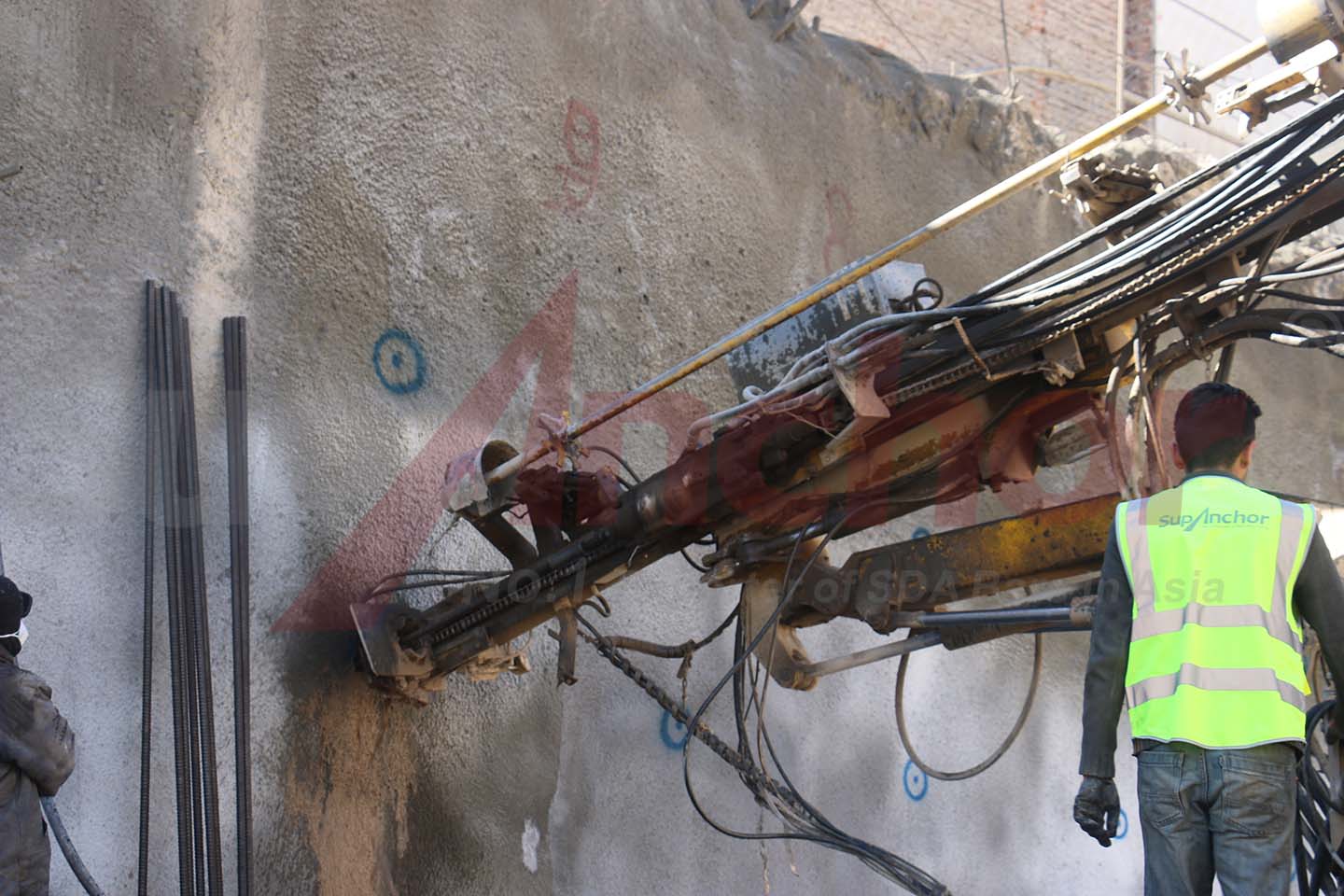
In the attached image, a drilling rig is seen installing hollow bar anchors into a near-vertical weathered rock face. This drill-and-grout bolt technique eliminates the need for casing by using the anchor bar itself as the drill rod. Simultaneous injection of high-strength cement grout fills the annular space, consolidating loose ground and bonding the bar to the surrounding formation. The result is a fast, reliable, and permanent reinforcement element that functions as both a rock bolt for underground mining and tunneling applications and a micropile hollow bar anchor for foundations. This project marks one of the largest European applications of SupAnchor’s self drilling anchor for retaining walls and slope stabilization in 2025.
The geology at the site presented a classic case of heterogeneous weak rock: alternating layers of heavily jointed phyllite and micaceous schist, with local fault zones and artesian water pressures. Preliminary geotechnical investigations had indicated a high risk of wedge failure and toppling along the road alignment. Without a reliable support system, excavations would require massive over-excavation and extensive shotcrete, both costly and time-consuming. The project’s consulting engineers, in collaboration with SupAnchor’s technical team, specified a custom geotechnical reinforcement system built around the self drilling anchor bolt series R32 and R38.
The primary advantage lay in the system’s ability to drill through collapsing ground while immediately grouting the hole. Conventional drilling with casing lost up to 40% of the grout volume into open fractures, severely compromising anchor capacity. SupAnchor’s hollow bar anchors, with their rope-thread profile and continuous grout path, achieved near-100% injection efficiency. Grout consumption dropped by half, and anchor pull-out tests consistently exceeded the designed 550 kN ultimate load. Below is a summary of the key technical parameters of the anchors used in this project:
| Parameter | Specification |
|---|---|
| Product Type | Self Drilling Anchor Bolt / Hollow Bar Anchor |
| Nominal Diameter | R32 (32 mm), R38 (38 mm) |
| Tensile Strength (Rp0.2) | ≥ 660 MPa |
| Yield Strength | ≥ 550 MPa |
| Ultimate Load Capacity | 450 kN (R32) to 800 kN (R38) depending on embedment length |
| Anchor Length | 6 m – 18 m (custom lengths available) |
| Corrosion Protection | Hot-dip galvanized (85 µm min.) + optional epoxy coating (300 µm) |
| Thread Type | Continuous Rope Thread (R-thread) for even grout flow and load transfer |
| Drilling Method | Rotary percussive with top-hammer drifter, water or grout flush |
| Bit Type | Sacrificial carbide cross-cut bit, 43 mm – 51 mm |
| Grout Type | CEM I 42.5 cement, W/C ratio 0.4, with superplasticizer |
The high tensile strength and consistent mechanical properties of the self drilling anchor bolt units were verified by on-site proof load testing to 1.5 times the working load, with no measurable creep. Corrosion protection further ensured a 100-year design life, critical for permanent infrastructure. In addition to slope stabilization, the project also employed shorter micropile hollow bar anchors for foundation underpinning at a bridge abutment, illustrating the versatility of the anchor bolt system for geotechnical engineering. The installation sequence was meticulously planned. A Caterpillar MD6250 top-hammer drill rig positioned the hollow bar at the desired angle, typically 15° from horizontal for the cut slopes. Grout was pumped through the bar at 10–15 bar pressure, forming a rough concrete column around the anchor. Within 48 hours, the anchors were tensioned to 80% of design load using a center-hole jack. The entire process, from drilling to tensioning, took under 30 minutes per 12-meter anchor—a fraction of the time required by traditional cased systems. This rapid installation proved essential in the narrow working corridors, where traffic management and avalanche risk added further complexity.
In addition to standard pull-out tests, anchors were instrumented with vibrating wire strain gauges at select locations to monitor long-term load behavior. Data collected over the first six months showed negligible load relaxation, confirming the effectiveness of the encapsulation and bond length. This level of validation is increasingly required by European design codes, particularly in motorway applications subject to stringent national annexes of Eurocode 7. At the bridge abutment location, 96 micropile hollow bar anchors with a diameter of 51 mm were installed to transfer vertical loads into a competent gneiss layer at 25 m depth. The same drill-and-grout method was used, with load testing to 1,200 kN, well above the 800 kN service load. This dual use demonstrated the adaptability of the ground anchor bolt factory supply chain.
The successful execution of this project underscores a fundamental shift in geotechnical construction: the move toward integrated, time-efficient soil anchoring solutions that meet the stringent demands of modern infrastructure. As transportation networks expand into geologically challenging regions, the demand for self drilling bolt for civil engineering rises. According to recent market analysis, the global ground anchor market is projected to exceed USD 2.5 billion by 2030, driven by urbanization, mining, and renewable energy projects. Self drilling anchor system products, in particular, are gaining share due to their dual-function design and adaptability to varying ground conditions.
Contractors are increasingly seeking suppliers that not only deliver certified products but also offer engineering support and rapid logistics. Ground anchor bolt factory direct supply has become a key differentiator, enabling projects to avoid delays caused by distributor middlemen. SupAnchor, operating from its large-scale manufacturing base, exemplifies this model. Its SDA bolt factory direct supply capability allowed for just-in-time delivery of 5,000 anchors and 20,000 accessories to the remote alpine site, despite challenging logistics.
The hollow bar anchor technology employed here is now being adopted across tunneling, slope remediation, and even marine construction. Its ability to function as a drill-and-grout bolt reduces the number of operations and equipment required, cutting carbon footprint and lowering overall project costs. Moreover, the soil nail system manufacturer community is increasingly aligned with sustainability standards, and SupAnchor’s products are manufactured under ISO 14001 environmental management, ensuring responsible production.
In terms of safety, the ground stabilization anchor system reduced rockfall incidents by 90% during subsequent bench cuts, protecting workers and enabling concurrent activities below. This performance has caught the attention of other European infrastructure agencies, with several pilot projects already planned to assess the self drilling anchor for retaining walls on high-speed rail corridors.
Beyond the Alps, the technology is finding growing acceptance in North America’s aging dam rehabilitation market and Southeast Asia’s metro boom. The self drilling bolt for civil engineering is particularly suited to urban environments where vibration restrictions and overhead clearances limit conventional piling. In Singapore’s Thomson-East Coast Line, for instance, ground stabilization anchor system solutions similar to SupAnchor’s were used to underpin adjacent structures within 2 meters of deep excavations.
Environmental stewardship is also a driving factor. By minimizing grout waste and eliminating the need for casing that would otherwise become scrap, the hollow bar anchor method reduces the project’s overall carbon footprint. SupAnchor’s factory practices include recycling of process water and the use of electric arc furnace steel with high recycled content, aligning with the EU’s growing emphasis on sustainable construction.
Behind this success stands SupAnchor, a company with over two decades of expertise in anchor bolt system for geotechnical engineering. Certified to ISO 9001, ISO 14001, and ISO 45001, SupAnchor has established itself as a trusted ground anchor bolt factory for projects ranging from deep foundation works in Singapore to hydroelectric tunnels in Ethiopia. Their focus on research and development has yielded corrosion-resistant coatings, high-strength steel alloys, and thread profiles that maximize grout bond, pushing the boundaries of what self drilling anchor bolts can achieve.
The company’s collaborative ethos was on full display during the alpine project, where their engineers worked on-site to optimize grout mixes for the cold, wet conditions and trained local crews on rapid coupling and tensioning procedures. This hands-on approach, coupled with a robust logistics network, ensured that the rock bolt for underground mining and civil applications arrived on schedule and performed flawlessly. As a leading soil nail system manufacturer, SupAnchor maintains an inventory of standard and custom diameters, ready for immediate dispatch to any continent.
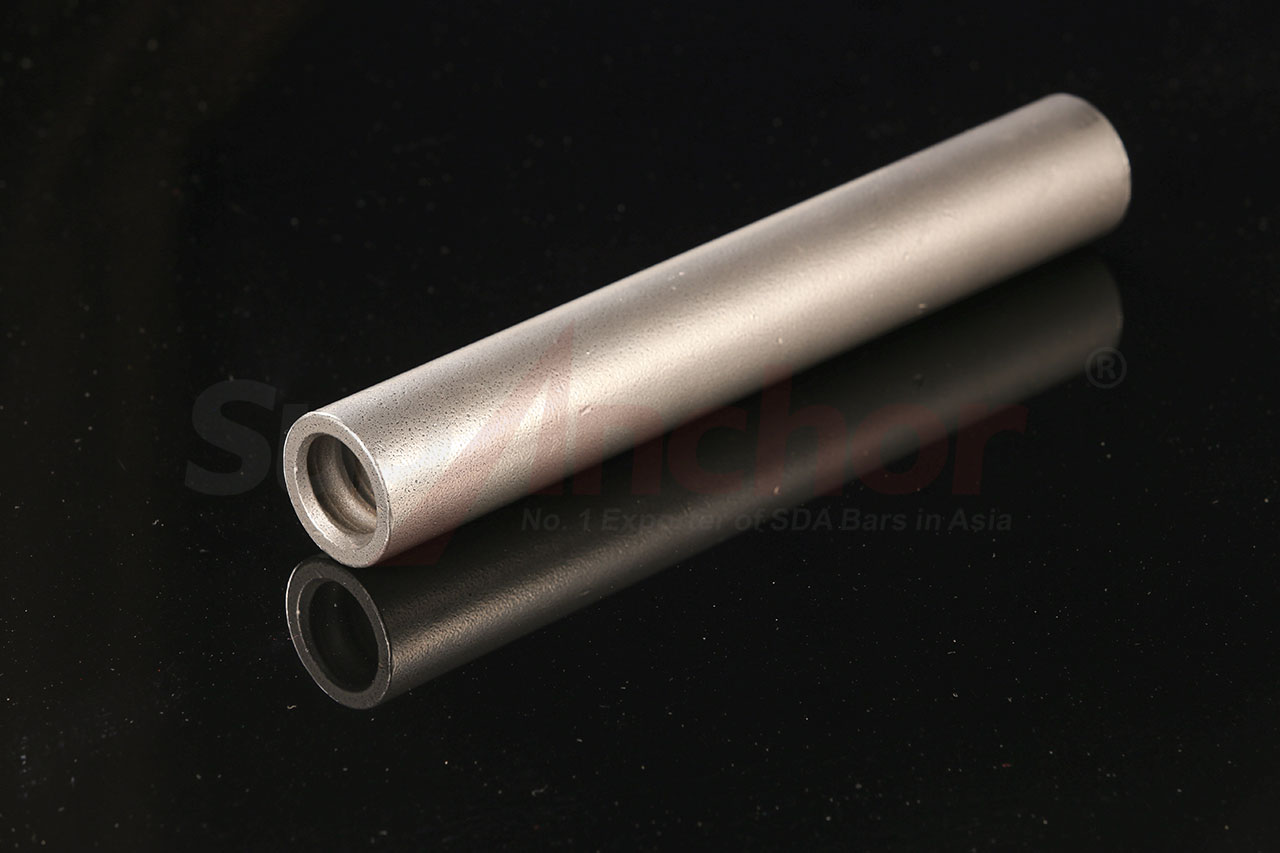
The image above shows a selection of SupAnchor’s self drilling anchor bolts ready for shipment. From the rope-thread profile to the heavy-duty hex couplers, every component reflects a design philosophy centered on field reliability. These hollow bar anchors are manufactured to strict tolerances, with full traceability from raw material to final testing, giving clients confidence in load-bearing performance under the harshest conditions.
SupAnchor’s global outlook is supported by a network of technical distributors and engineering partners who provide local language support and inventory. The company has been involved in landmark projects such as the Kuala Lumpur MRT, the Addis Ababa–Djibouti Railway, and the Gotthard Base Tunnel access shafts. Its commitment to innovation is reflected in its annual R&D investment, which exceeds 5% of revenue, focusing on next-generation corrosion protection systems and digital twinning of anchor installation processes. The professional, innovative, and collaborative spirit is embedded in every project, from the initial design phase to the final performance report.
Looking ahead, the exponential growth in global infrastructure spending—particularly in transportation and energy—will continue to drive demand for innovative geotechnical reinforcement system products. SupAnchor is poised to meet this challenge, expanding its product line and deepening its partnership with international contractors. The alpine project serves as a compelling case study of how smart engineering, premium manufacturing, and collaborative project management can deliver stability in the most unforgiving terrains.
As the sun sets over the jagged peaks and the drilling rigs fall silent, the true value of this ground stabilization anchor system becomes clear: safe, lasting infrastructure that connects communities. For the engineers, contractors, and suppliers that made it happen, this project stands as a testament to what’s possible when expertise meets opportunity. With such a foundation—both literal and figurative—the future of alpine transit looks safer than ever.
SupAnchor's self drilling anchor system provides efficient ground stabilization in challenging geology, with high-strength hollow bar anchors and corrosion protection for civil engineering projects.
SupAnchor introduces a corrosion-resistant GFRP solid bolt with high tensile strength, lightweight design, and non-conductive properties for slope stabilization, tunnel support, and mining applications.
A European transport project uses SupAnchor's self drilling anchor system to stabilize loose overburden and fractured rock. Hollow bar anchors provide immediate load capacity, corrosion protection, and long-term geotechnical safety.
SupAnchor introduces SupFRP® GFRP reinforcement rebar with high tensile strength, corrosion resistance, and versatile shapes for demanding construction applications across Europe and North America.
SupAnchor introduces a stainless steel self-drilling hollow anchor combining 3-in-1 drilling, grouting, and reinforcing with superior corrosion resistance for marine, chemical, and permanent geotechnical applications.