
As infrastructure investment surges across the United States, transportation departments are tackling long-overdue expansions in some of the nation's most challenging terrain. The Interstate 70 corridor west of Denver, Colorado, is undergoing a massive realignment and widening to accommodate growing traffic and improve safety. The steep cuts required into the Front Range mountains have exposed highly variable geology, ranging from massive granite to deeply weathered schist and loose colluvial slopes. Traditional soil nailing methods were deemed inadequate due to persistent hole collapse and slow installation cycles, prompting the design team to specify an advanced self drilling anchor system from SupAnchor. This geotechnical reinforcement system allows simultaneous drilling, grouting, and anchoring, dramatically reducing construction time and enhancing overall stability.
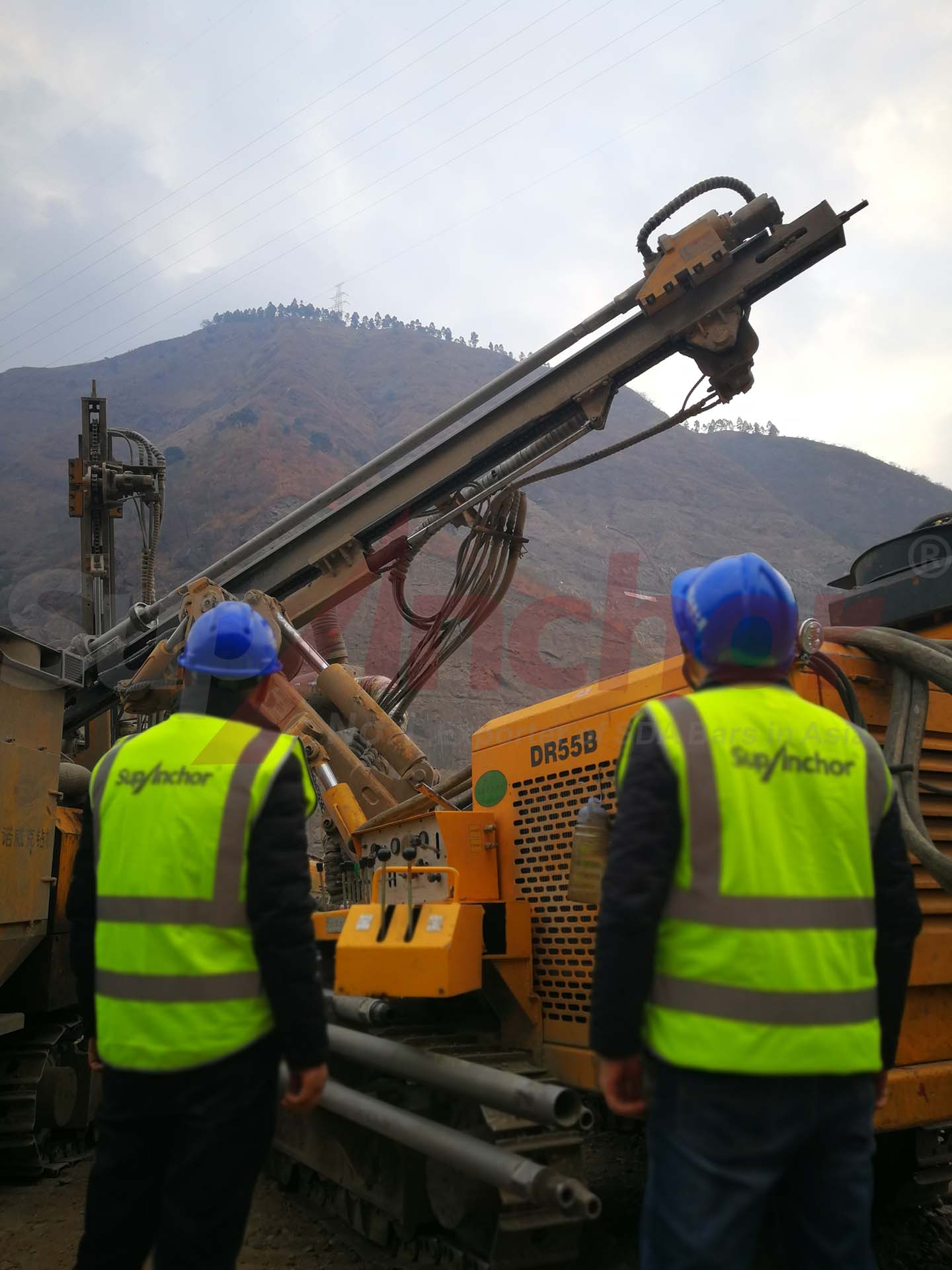
The image captures a typical scene from the project: a tracked drill rig advancing a 32 mm diameter hollow bar anchor into a near-vertical cut. The bars, equipped with sacrificial drill bits, penetrate the ground while cement grout is injected through the hollow core, filling voids and bonding the anchor to the surrounding strata. This drill-and-grout bolt technique eliminates the need for temporary casing, as the grout stabilizes the borehole immediately. According to the site supervisor, "With the self drilling anchor bolt, we can install up to 20 anchors per shift, even in fractured rock, which simply wasn't possible with conventional methods."
The expansion involves cutting a 1.2-mile section through a mountain pass, creating slopes up to 80 feet high. Geotechnical investigations revealed three distinct zones: upper colluvium (loose sandy gravel with cobbles, SPT N-values as low as 4), intermediate weathered granite (RQD 20–50%, with open joints and clay infill), and lower fresh granite (RQD >80%, but with high in-situ stress). Groundwater seepage was encountered at multiple levels, adding to the instability and raising concerns about long-term pore pressure buildup behind the retaining structures. The slope stabilization design utilized a combination of ground stabilization anchor systems and reinforced shotcrete facing. The anchors had to achieve a minimum pull-out capacity of 200 kN in the upper zone and 350 kN in rock, with a factor of safety of 1.5. SupAnchor's technical department performed detailed calculations and recommended a customized hollow bar anchor solution with high-tensile steel and double corrosion protection to withstand the aggressive mountain environment, which includes freeze-thaw cycles and acidic runoff.
To validate the design, six sacrificial test anchors were installed and pulled to failure. The average ultimate capacity reached 420 kN in the weathered granite, far exceeding the required 350 kN, with grout-ground bond strengths averaging 1.2 MPa. The self drilling anchor bolt demonstrated consistent performance across variable conditions, giving the owner confidence to proceed with full-scale production.
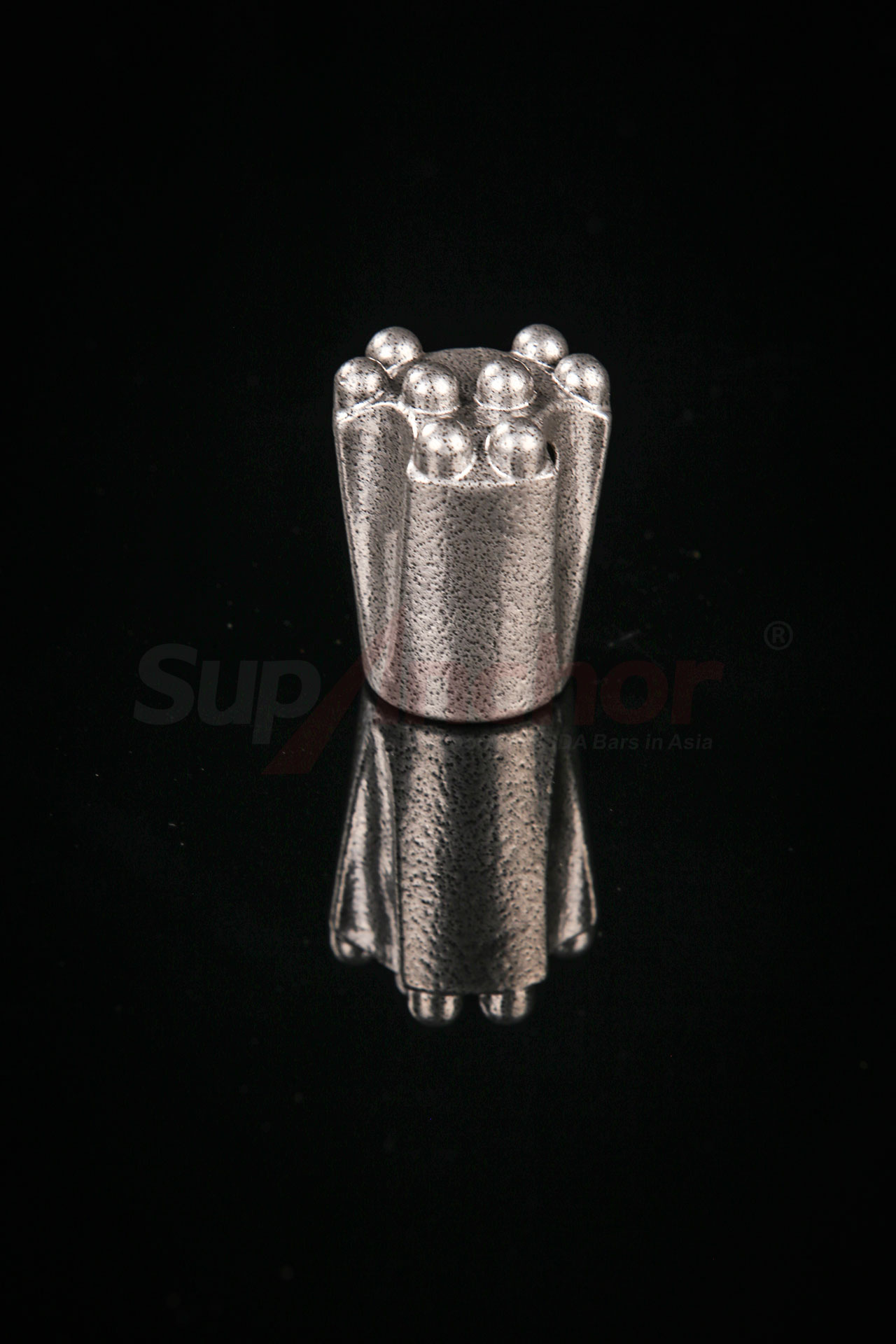
The self drilling anchor for retaining walls is installed using standard hydraulic drilling equipment, a key advantage over specialized systems. The process begins by positioning the rig at the required inclination, typically 15° to the horizontal. The hollow bar, fitted with a cross-cut drill bit, is rotated and percussed into the ground. As drilling progresses, cement grout with a water-cement ratio of 0.4–0.5 is pumped through the bar at 20–30 bar pressure. The grout exits through the bit flush holes, mixing with in-situ soil and rock fragments to form a continuous root zone of enhanced diameter. Once the target depth is reached, the drill rig is detached, and a bearing plate and nut are installed to apply a small preload, typically 10% of the design load. The entire cycle takes less than 15 minutes per anchor, dramatically accelerating the pace of construction. In total, over 3,000 linear meters of self drilling anchors were installed in the first phase alone, with zero lost holes and no grout takes exceeding 10% of theoretical volume—a testament to the method's reliability.
SupAnchor's self drilling anchor bolts are manufactured from high-strength steel tubes conforming to EN 10025 and EN 10210 standards. The threading is produced through cold rolling, which enhances fatigue resistance and reduces stress concentrations. Key mechanical properties of the 32 mm bar used on this project include:
| Property | Value | Standard |
|---|---|---|
| Ultimate Tensile Strength | ≥ 670 MPa | ASTM A615 / EN 10080 |
| Yield Strength | ≥ 500 MPa | ASTM A615 |
| Elongation | ≥ 12% | ASTM A370 |
| Corrosion Protection | Epoxy coating ≥ 200 µm + cement grout cover ≥ 10 mm | ASTM A934 / EN 14490 |
| Thread Type | ISO left-hand rope thread | ISO 10208 |
| Coupler Strength | Exceeds bar ultimate capacity | Pull-tested to 1.1× UTS |
The bars are supplied in 2 m and 3 m lengths, joined on-site by threaded couplers that achieve full load transfer without reduction in cross-sectional area. Extensive quality control measures include ultrasonic testing of base metal, X-ray fluorescence for coating thickness, and batch pull-testing of every production lot. This SDA bolt factory direct supply chain ensures traceability from raw material to installation.
The use of rock bolt for underground mining and civil tunneling has laid a robust foundation for modern slope reinforcement. In North America, the soil nail and anchor market is projected to grow by 5.2% annually through 2030, driven by highway expansions, urban excavations, and renewable energy projects such as wind farm foundations. The self drilling bolt for civil engineering is gaining traction because it offers a safer and faster alternative to traditional tieback anchors, especially in urban environments where vibration and noise must be minimized. As a leading soil nail system manufacturer, SupAnchor has supplied thousands of kilometers of hollow bar anchors for projects ranging from the California High-Speed Rail corridor to deep excavations in downtown Vancouver. The company's SDA bolt factory direct supply model ensures that project timelines are met without compromising quality. "When we needed 500 anchors in two weeks, SupAnchor delivered custom lengths ahead of schedule," noted the project procurement manager. This reliability is critical as contractors increasingly adopt just-in-time delivery to minimize site storage and weather exposure.
Another industry driver is the growing adoption of performance-based design in geotechnical engineering. The anchor bolt system for geotechnical engineering must meet stringent load-deflection criteria, and the self drilling system's integrated nature simplifies quality verification. On this project, every anchor borehole was logged using a drill-parameter recorder, providing real-time data on penetration rate and grout pressure, which correlated well with subsequent pull-out tests. Such digitalization, combined with high-productivity installation, positions the self drilling anchor system as the preferred choice for future infrastructure.
Beyond technical performance, the drill-and-grout bolt method significantly reduces the environmental footprint. No drilling spoils are generated because cuttings are incorporated into the grout column, eliminating the need for spoil handling and disposal—a significant advantage in environmentally sensitive mountain regions where transportation and containment are costly. Additionally, the lower noise and vibration levels compared to impact-driven tiebacks improve relations with nearby communities and reduce wildlife disturbance. Dust suppression is also enhanced because the drilling is confined within the borehole. The economic case is equally compelling: the self drilling anchor system reduced overall support costs by an estimated 25% compared to the originally designed prestressed strand anchors. This saving stems from faster installation, less material waste, reduced equipment mobilization, and minimal temporary works. When factoring in the 75-year design life enabled by the double corrosion protection, the life-cycle cost advantage is even greater.
SupAnchor has been at the forefront of geotechnical reinforcement system innovation since its founding. With ISO 9001, ISO 14001, and OHSAS 18001 certifications, the company operates a state-of-the-art ground anchor bolt factory in China, supplying projects in over 30 countries. Its product range includes hollow bar anchors, micropile hollow bar anchors, and SDA bolts, all backed by rigorous in-house testing and international approvals such as CE Marking and UK CA Marking. The company's philosophy—Professional, Innovative, Collaborative—drives it to work closely with contractors and consultants to solve complex ground stabilization challenges. "Every anchor bolt system for geotechnical engineering we deliver is tailored to the project's specific geology and load requirements," says SupAnchor's chief engineer. "That's why major infrastructure projects trust our products."
For the Interstate 70 project, SupAnchor provided not just materials but comprehensive technical support, including anchor design software, grout mix optimization, and on-site training for the drilling crews. The company's engineers conducted pull-out tests and analyzed the drill-parameter data to confirm that each micropile hollow bar anchor met the performance benchmarks. This collaborative approach exemplifies the future of ground stabilization anchor system supply, where the manufacturer becomes a true partner in project success.
As the Interstate 70 project progresses, the successful application of SupAnchor's self drilling anchor system is being monitored by several state DOTs and featured in industry publications. The ground stabilization anchor system not only secures the highway for decades but also sets a benchmark for future rockfall mitigation and retaining wall designs. For civil engineers worldwide, the message is clear: combining innovative anchor technologies with collaborative supply chains is the key to overcoming nature's toughest challenges while adhering to tight budgets and schedules.
SupAnchor's self drilling anchor system provides efficient ground stabilization in challenging geology, with high-strength hollow bar anchors and corrosion protection for civil engineering projects.
SupAnchor introduces a corrosion-resistant GFRP solid bolt with high tensile strength, lightweight design, and non-conductive properties for slope stabilization, tunnel support, and mining applications.
A European transport project uses SupAnchor's self drilling anchor system to stabilize loose overburden and fractured rock. Hollow bar anchors provide immediate load capacity, corrosion protection, and long-term geotechnical safety.
SupAnchor introduces SupFRP® GFRP reinforcement rebar with high tensile strength, corrosion resistance, and versatile shapes for demanding construction applications across Europe and North America.
SupAnchor introduces a stainless steel self-drilling hollow anchor combining 3-in-1 drilling, grouting, and reinforcing with superior corrosion resistance for marine, chemical, and permanent geotechnical applications.