
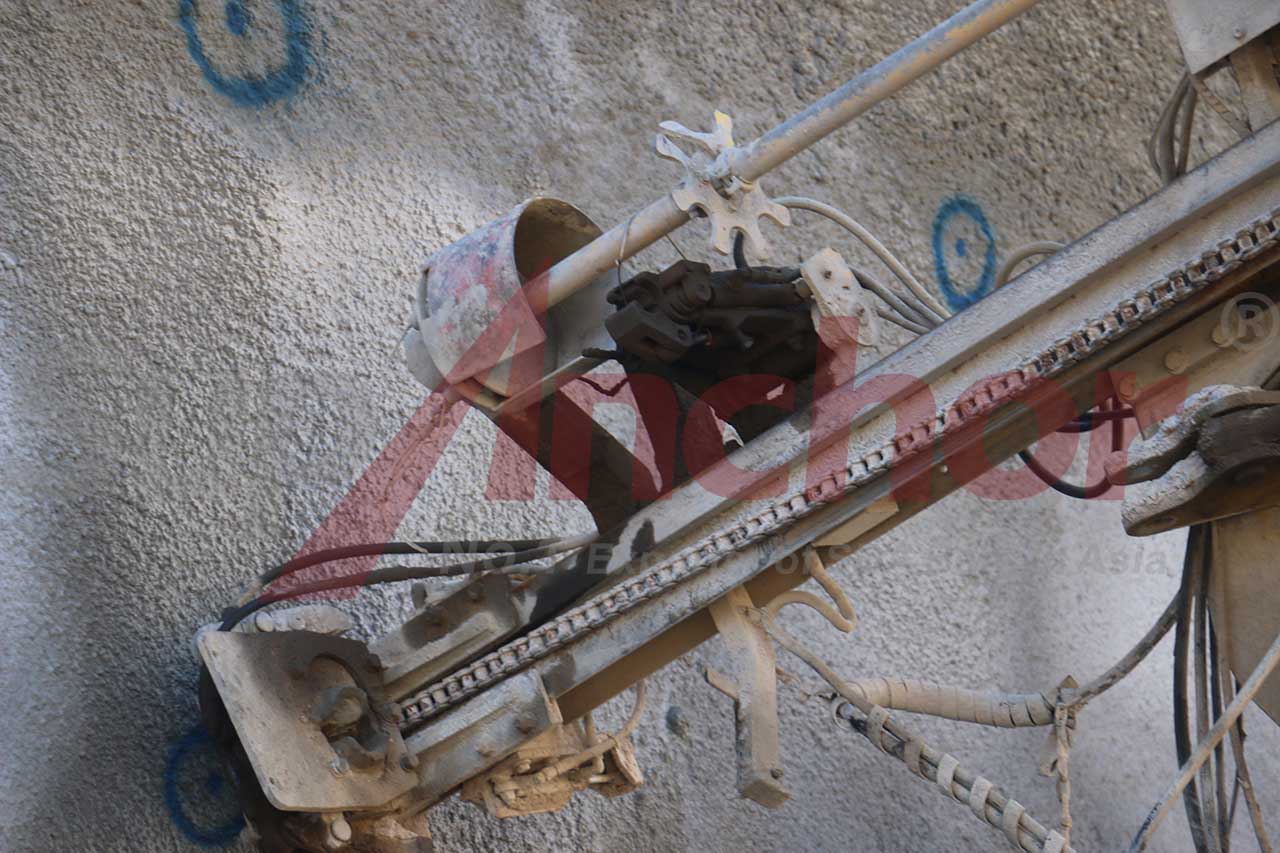
In the heart of a major European tunneling project through water-bearing, fractured rock, engineers faced a familiar dilemma: how to install ground support quickly and safely without risking collapse or excessive downtime. Traditional cased drilling methods were proving slow and costly, and the risk of borehole instability threatened the schedule. The solution arrived in the form of a self drilling anchor system from SupAnchor, Asia’s leading manufacturer of geotechnical reinforcement solutions. Using its T thread self-drilling hollow anchor, the site achieved remarkable installation speeds, eliminated temporary casing, and maintained rigorous safety standards—all while meeting the demanding durability requirements of the project’s 100-year design life.
The SupAnchor T thread self-drilling hollow anchor is engineered for exactly these conditions. As a core component of the self-drilling anchor bolt range, it embodies a “3-in-1” principle: the ribbed hollow bar acts simultaneously as a sacrificial drill rod, an injection tube, and a permanent reinforcing tendon. This integrated drill-and-grout bolt design enables single-pass installation, dramatically reducing construction time and costs. Whether in tunneling, slope stabilization, or foundation reinforcement, the system has proven its value across a spectrum of global geotechnical challenges.
At the European tunnel site, the geology varied from soft, squeezing ground to hard, abrasive rock—a classic scenario where a hollow bar anchor excels. The T thread self-drilling hollow anchor was deployed for face stabilization and forepoling, with the hollow bar being drilled and grouted in one continuous operation. “By eliminating separate casing and drilling steps, we cut our cycle time by nearly 40%,” noted the project’s lead geotechnical engineer. “The immediate bond achieved through simultaneous grouting also gave us early support, which was critical for controlling ground deformation.”
This efficiency is rooted in several key design features. First, the hollow bar’s thread profile adheres to the T International Standard, ensuring compatibility with standard rotary percussive drilling rigs and simplifying on-site handling. Second, the relative rib area (fR) of the bar is optimized between 0.21 and 0.33, a range proven to maximize bond strength with cement grout. Third, the rib surfaces are angled at 45°, significantly reducing splitting forces in the surrounding ground; crack widths at maximum load remain below 0.1 mm, preserving the structural integrity of the rock mass.
The T thread series is available in multiple diameters and load capacities, allowing engineers to match the anchor to specific project demands. Below are key specifications for three popular models, taken from the product line:
| Model | Outer Dia. (mm) | Inner Dia. (mm) | Cross-sectional Area (mm²) | Ultimate Load (kN) | Yield Load (kN) | Weight (kg/m) |
|---|---|---|---|---|---|---|
| T30/16 | 30 | 16 | 343 | ≥220 | ≥180 | 2.70 |
| T30/11 | 30 | 11 | 406 | ≥260 | ≥210* | ~3.2 |
| T40/16 | 40 | 16 | 913 | ≥660 | ≥525 | 7.17 |
* Yield load estimated from series data
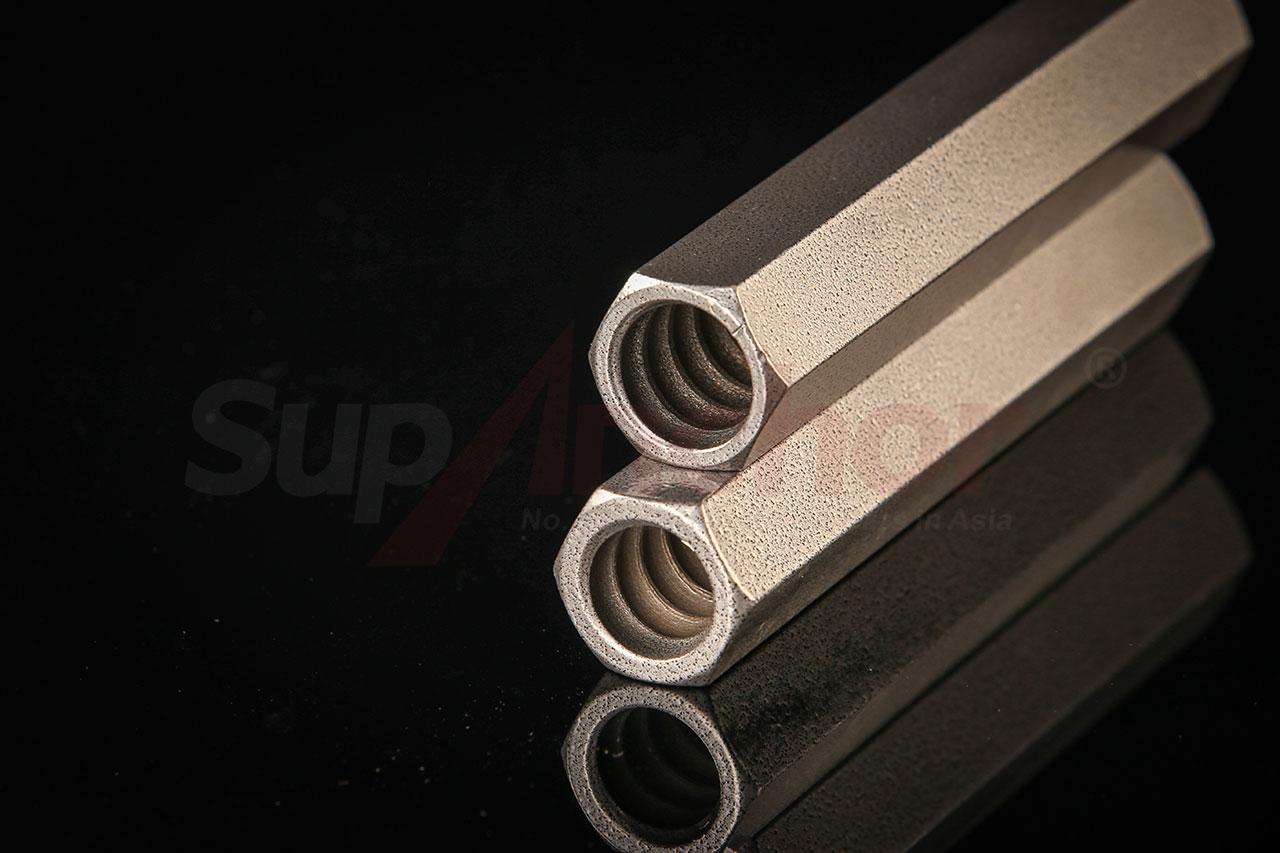
Typical lengths for these models range from 2 to 4 meters, extendable with couplers, and the T thread system includes matching nuts, couplers, and plates for rapid assembly. For the T30 series, the anchor nut size is SW46/L35 and the coupler is D38/L105; for the T40 series, larger plates (200 x 200 x 20 mm) accommodate higher loads. This standardized compatibility ensures that components from different batches—or even different projects—can be reliably connected, simplifying logistics and inventory management.
Durability is critical in geotechnical engineering, and the T thread self drilling anchor bolt is available with three levels of corrosion protection:
On the European tunnel project, the moderately aggressive groundwater prompted the selection of SupCoating, balancing cost and life expectancy. Engineers reported that the coating withstood handling and installation without damage, and initial inspection after one year showed no signs of corrosion. “The anti-corrosion performance gives us confidence in the 100-year design life,” said the project’s materials specialist. “It’s a critical factor in permanent support applications.”
The patented hollow bar anchor technology embodied by the T thread series has far-reaching implications for global infrastructure. Tunneling projects, from metro systems in busy cities to long-distance water conveyance tunnels, benefit from faster advance rates and reduced down-time. In slope stabilization, the system is used to reinforce natural and man-made slopes, preventing landslides along highways and mining sites. Foundation and retaining structures in soft or cohesive soils gain load-bearing capacity without the need for extensive dewatering or excavation support. Even in temporary works, the anchors can be installed quickly and, when used with removable tendon technology, recovered and reused—a sustainable advantage.
The COVID-19 pandemic and subsequent supply chain disruptions highlighted the value of reliable, standardized systems. SupAnchor’s adherence to the T International Standard means that components are interchangeable and readily available, reducing dependency on scarce specialized parts. In one recent Asian high-speed rail project, the entire ground anchor system was sourced from a single soil nail system manufacturer—SupAnchor—ensuring consistent quality and just-in-time delivery, which kept the project on schedule despite global logistics challenges.
SupAnchor has earned its reputation as the No.1 manufacturer and exporter of self-drilling anchors in Asia through continuous innovation and rigorous quality control. The company’s R&D team works closely with engineering consultants and contractors to refine product designs, while its manufacturing facilities are certified to ISO 9001, ISO 14001, and OHSAS 18001. Every batch of self drilling anchor bolts undergoes tensile and dimensional testing, and the company maintains a comprehensive traceability system.
Beyond the T thread series, SupAnchor offers a full portfolio of geotechnical reinforcement systems, including R thread anchors, multi-strand anchors, and rock bolts, supported by a global distribution network. Its factory-direct approach ensures competitive pricing and technical support, making it a preferred partner for many international ground anchor bolt factory buyers. “We’re not just selling products; we’re providing engineering solutions that improve safety and efficiency on some of the world’s most demanding construction sites,” said a SupAnchor senior engineer. “The T thread self-drilling hollow anchor is a perfect example of how our expertise translates into real-world value.”
As the geotechnical industry pushes toward automation and reduced environmental impact, the self drilling anchor system stands out as a forward-looking technology. Its ability to combine drilling, grouting, and reinforcement into a single, efficient step lowers fuel consumption, minimizes waste, and reduces the overall carbon footprint of construction. With the T thread series, SupAnchor continues to set the standard for professional, innovative, and collaborative ground engineering worldwide.
A major highway expansion overcomes unstable geology using SupAnchor's self drilling anchor bolts, featuring hollow bar anchor technology and a drill-and-grout bolt for efficient slope stabilization.
SupAnchor introduces the SupFRP® GFRP Tie Rod, a corrosion-resistant, high-strength alternative to steel tie rods for formwork. With permanent application and easy handling, it reduces costs and enhances project efficiency.
A major infrastructure project overcame difficult geological conditions using SupAnchor's self drilling anchor system. The hollow bar anchors provided reliable ground reinforcement, ensuring long-term stability and safety.
SupAnchor's SupUTS self-drilling hollow anchor offers ultimate loads up to 930 kN, integrating drilling, grouting, and reinforcement for high-load geotechnical projects.
Industry report on SupAnchor's self drilling anchor system used in a challenging slope stabilization and foundation support project, highlighting technical parameters and global geotechnical trends.