
In the demanding realm of civil engineering, where infrastructure projects increasingly push into geologically hostile terrain, the need for reliable ground stabilization anchor systems has never been greater. This was precisely the case during a recent major highway expansion in the mountainous regions of southern Europe, where SupAnchor’s self drilling anchor system played a pivotal role in securing a critical 3-kilometer retaining wall and slope reinforcement section. The project, designed to widen a vital transportation artery connecting two major economic zones, confronted engineers with loose alluvial soils, highly fractured rock masses, and the constant threat of slope failure due to seasonal rainfall and seismic activity.
The original geological survey revealed that the hillside comprised alternating layers of silty clay and weathered granite, with groundwater seepage exacerbating instability. Traditional anchoring methods, such as driven piles or pre-drilled grouted anchors, risked borehole collapse, lengthy installation times, and excessive cement consumption. The project team turned to the self drilling anchor bolt, specifically the hollow bar anchor offered by SupAnchor, which integrates drilling, injection, and anchoring into a single continuous process. This drill-and-grout bolt technique eliminated the need for temporary casing and allowed immediate load transfer, significantly reducing construction time and enhancing safety on the steep, confined work platforms.
The decision to adopt SupAnchor’s self drilling anchor system was based on an extensive value engineering analysis conducted by the principal contractor, a multinational consortium with expertise in large-scale earthworks. The alternatives, including conventional tieback anchors with pre-drilling and temporary casing, would have required larger drill rigs that could not safely operate on the 45-degree slopes, and the risk of borehole collapse in the fractured rock would have led to high grout take and costly delays. By contrast, the hollow bar anchor technique allowed one-pass installation, immediate load transfer, and real-time grout pressure monitoring to verify continuity. This not only reduced the project schedule by an estimated six weeks but also cut cement usage by nearly 40 percent, aligning with the client’s sustainability targets.
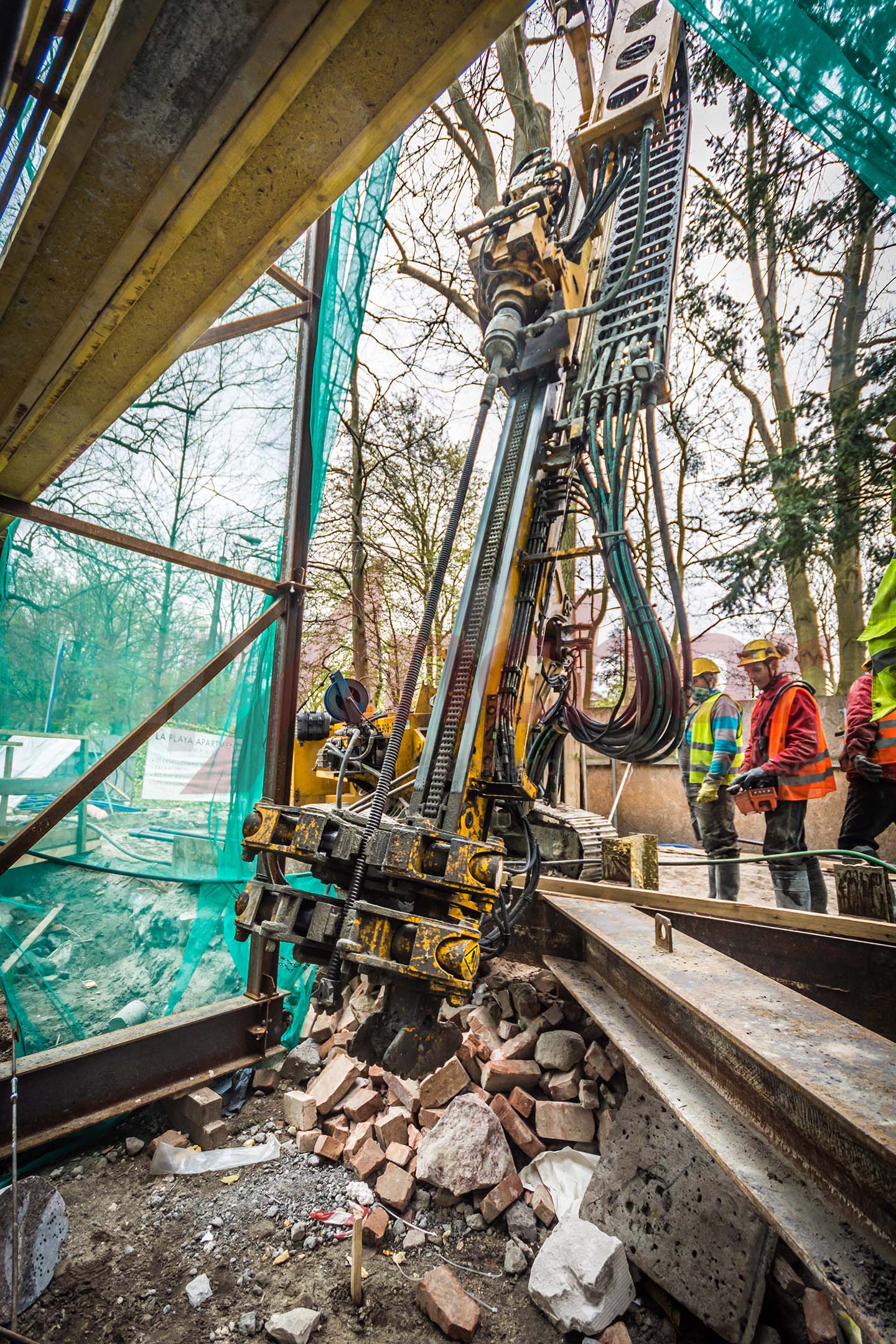
From an industry perspective, the adoption of such a geotechnical reinforcement system reflects a broader shift toward advanced soil nail and micropile technologies that deliver both speed and sustainability. SupAnchor, recognized as a premier soil nail system manufacturer and ground anchor bolt factory, supplied the entire anchor bolt system directly, ensuring full traceability and compatibility. The on-site image captures workers operating a hydraulic rotary-percussive drill rig, installing a self drilling anchor for retaining walls. The equipment is compact enough to maneuver on narrow benches, and the continuous threaded bar allows coupling with standard drill steels, enabling deep anchorage without any weld joints. The bright zinc coating of the bar is clearly visible, signifying robust corrosion protection that is vital for the 100-year design life mandated by European codes.
The construction sequence began with precise positioning of each anchor point according to the design layout, with typical spacings of 1.5 to 2.0 meters. In the construction photograph, an operator guides a crawler-mounted drill rig equipped with a rotary-percussion head. The self drilling anchor bolt, equipped with a sacrificial carbide cross-cut drill bit, was rotated and percussed into the ground while a neat cement grout was simultaneously pumped through the hollow center. A grout swivel at the rear connects to a high-pressure pump that delivers a 0.4 water-cement ratio grout at up to 2 MPa. This pressure flushes drill cuttings upward and outward, while simultaneously filling the annulus and soaking into the permeable soil matrix. A packer at the collar prevents grout return, ensuring full encapsulation. The process is completed within three to five minutes per meter, meaning a 12-meter anchor is installed in under an hour.
This pressurized grout not only stabilized the borehole but also permeated the surrounding soil, creating an enhanced bond zone. As seen in the site photograph, the anchor’s threaded interface allowed for immediate connection of bearing plates and nuts once the design depth was reached, enabling the application of a pre-tensioning load within hours rather than days. The ability to tension the bar shortly after installation was a critical advantage in this phased project, as it allowed subsequent excavation lifts to proceed without waiting for full grout curing.
To illustrate the robust engineering behind this solution, the following table outlines the key technical parameters of the SupAnchor SDA series as applied in this project:
| Parameter | Specification |
|---|---|
| Bar Diameter | 32 mm, 38 mm, 51 mm (standard for this project: 38 mm) |
| Thread Type | Rope Thread, ISO 10208 compliant |
| Tensile Strength | ≥ 700 MPa |
| Yield Strength | ≥ 500 MPa |
| Elongation at Break | ≥ 8% |
| Length | 3.0 m / 4.0 m / 6.0 m sections (coupled lengths up to 30 m) |
| Corrosion Protection | Hot-dip galvanized ≥ 550 g/m², plus optional epoxy coating / DCP system |
| Drill Bit Configuration | Cross-cut or button type, carbide-tipped, sacrificial |
The 38 mm diameter hollow bar anchor selected for the majority of the installation provided an ultimate tensile capacity exceeding 790 kN, more than sufficient to counter the lateral earth pressures computed for the 12-meter-high cut slopes. Corrosion protection was a critical consideration given the aggressive soil chemistry; the hot-dip galvanized coating, supplemented by a cementitious grout cover of at least 25 mm, assures a 100-year service life according to European standards. For sections with particularly high sulfate concentrations, a double corrosion protection system was employed, wrapping the bar in a corrugated plastic sleeve filled with grout. This DCP system added an extra barrier against chemical attack, and its use was validated through accelerated corrosion testing per ISO 22477-1.
Quality assurance tests performed on-site included pull-out tests on sacrificial anchors to confirm the ultimate bond stress exceeded the design value of 850 kPa in the weathered granite layer. Over 50 sacrificial anchors were tested, with the lowest result achieving 920 kPa, a comfortable margin above the specified minimum. Strain gauges installed along selected bars confirmed uniform load distribution with no evidence of debonding, validating the effectiveness of the corrugated grout body. Such rigorous testing underscores why this geotechnical reinforcement system is trusted for critical infrastructure; it combines high-strength steel with a proven bond mechanism that consistently outperforms theoretical predictions.
These technical attributes underline why such hollow bar systems are increasingly specified for rock bolt for underground mining, micropile hollow bar anchor applications, and general self drilling bolt for civil engineering. The ability to function as both a drill rod and a permanent structural member makes the hollow bar anchor a uniquely efficient tool for ground stabilization anchor system requirements in remote or environmentally sensitive areas. For civil applications, the self drilling bolt for civil engineering provides a versatile alternative to driven piles and drilled shafts in constrained sites. In this highway project, the anchor bolt system for geotechnical engineering not only stabilized the cut but also allowed construction to proceed through the wet season, a testament to its all-weather capability.
Several key statistics from the project illustrate the operational gains achieved with the SupAnchor self drilling anchor system:
The single-pass construction technique also minimized spoil disposal, as the grout mixed with drill cuttings was recycled as fill material for the road embankment. This circular approach was highly praised by the environmental consultant and contributed to the project achieving a BREEAM ‘Excellent’ rating.
This highway project is illustrative of a global infrastructure trend: the push to build increasingly complex transportation networks through difficult terrain. Governments and private developers are investing heavily in roadways, rail lines, and tunnels that demand high-performance geotechnical reinforcement systems. The International Tunnelling and Underground Space Association reports a 7% annual growth in demand for advanced anchor technologies. SupAnchor’s anchor bolt system for geotechnical engineering delivers a cost-effective, rapid-installation alternative to conventional methods, reducing total project schedules by up to 30% and cement usage by 40% compared to pre-drilled anchors.
Beyond transportation, the self drilling anchor for retaining walls has found extensive use in urban excavation support, landslide repair, and stabilization of existing structures. The United States Federal Highway Administration has long recognized the value of such systems in its Geotechnical Engineering Circulars, particularly for permanent soil nail walls in expansive clay environments. The drill-and-grout bolt technology also facilitates installation in low-headroom conditions, making it ideal for underpinning and tunneling applications where traditional rigs cannot operate. In mining, the rock bolt for underground mining applications spans from shaft reinforcement to ore pass support, where the self drilling anchor bolt excels due to its ability to be installed through fractured ground without hole collapse.
Manufacturers like SupAnchor are not merely component suppliers; they act as collaborative partners throughout the project lifecycle. With a factory direct supply model, SupAnchor provides consistent quality and rapid logistics to sites worldwide. The company’s inventory of SDA bolt factory direct supply includes a wide range of diameters and corrosion protection options, enabling engineers to tailor the system to specific geotechnical conditions. Their technical teams offer on-site training and design support, ensuring that contractors can maximize the performance of the geotechnical reinforcement system. For this project, SupAnchor dispatched a senior field engineer for two weeks to train the local crew and optimize the drilling parameters, a move that was instrumental in achieving the high installation rates.
SupAnchor’s involvement in this project reflects the company’s core values of being Professional, Innovative, and Collaborative. Established as a specialized ground anchor bolt factory, SupAnchor has earned ISO 9001:2015 certification and rigorous third-party testing accreditations for its entire product portfolio. The self drilling anchor system is manufactured from high-grade alloy steel sourced from ISO-certified mills, and every production batch undergoes tensile, yield, elongation, and corrosion resistance testing at the company’s state-of-the-art laboratory in China.
The company’s global footprint spans more than 40 countries, with landmark projects including tunnel reinforcement for the Alpine high-speed rail, mine roof support in Australian zinc mines, and slope stabilization along the Pan-American Highway. SupAnchor remains at the forefront of research, developing next-generation hollow bar anchors with enhanced grout-flow geometries and higher fatigue resistance for seismic applications. Their patented thread design improves load transfer and reduces stress concentrations, a feature that proved advantageous in the dynamic loading conditions of this highway, where heavy truck traffic induces constant vibration.
As a proactive participant in the civil engineering community, SupAnchor regularly contributes to technical journals, sponsors industry conferences, and collaborates with academic institutions on refining soil nail system manufacturer methodologies. Their open approach to sharing knowledge has positioned them as a trusted voice in the field of ground stabilization anchor systems. In the words of the project’s lead geotechnical engineer, “Partnering with SupAnchor gave us access to not just a product, but a complete engineering solution. Their willingness to adapt logistics and provide just-in-time delivery was crucial for our aggressive schedule.”
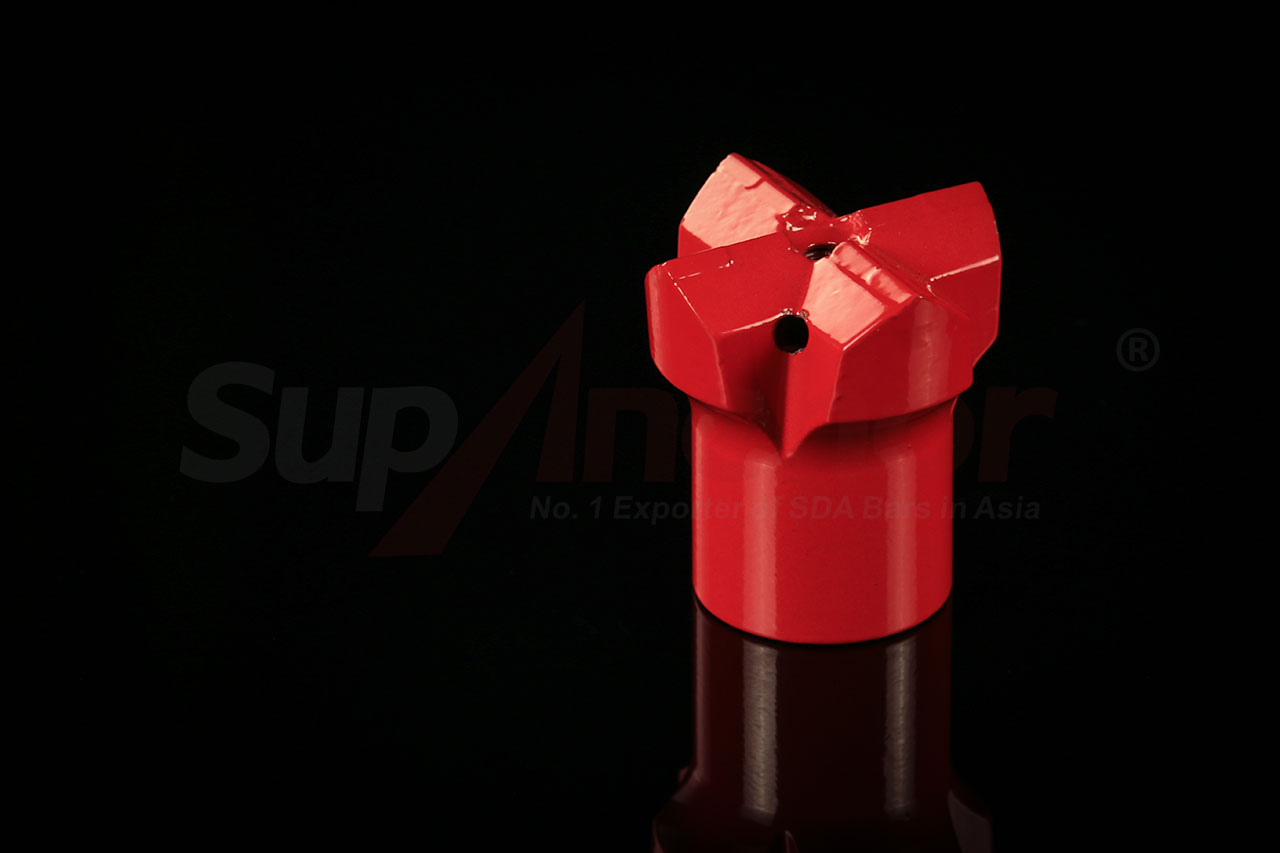
The product image above showcases the precision engineering of the SupAnchor self drilling anchor bolt. The continuous rope thread, uniform galvanized coating, and robust coupler design are evident, reflecting the quality that underpins every project. For the highway expansion described, such reliability directly translated into reduced downtime and enhanced safety margins. The couplers, machined from the same high-strength steel, maintain full cross-sectional strength at joints, ensuring that the coupled assembly behaves as a single monolithic tendon.
In conclusion, the successful deployment of SupAnchor’s self drilling anchor system in this challenging European highway project demonstrates the technology’s maturity and versatility. As infrastructure demands escalate, the reliance on innovative SDA bolt factory direct supply solutions will only intensify. From micropile hollow bar anchor applications to rock bolt for underground mining, this technology has proven itself an indispensable tool in the modern geotechnical engineer’s arsenal. SupAnchor’s relentless drive for improvement and close collaboration with global partners will continue to push the boundaries of what is achievable in ground stabilization anchor system design and implementation. The project stands as a testament to how smart engineering and trusted partnerships can build a safer, more connected world.
A major highway expansion overcomes unstable geology using SupAnchor's self drilling anchor bolts, featuring hollow bar anchor technology and a drill-and-grout bolt for efficient slope stabilization.
SupAnchor introduces the SupFRP® GFRP Tie Rod, a corrosion-resistant, high-strength alternative to steel tie rods for formwork. With permanent application and easy handling, it reduces costs and enhances project efficiency.
A major infrastructure project overcame difficult geological conditions using SupAnchor's self drilling anchor system. The hollow bar anchors provided reliable ground reinforcement, ensuring long-term stability and safety.
SupAnchor's SupUTS self-drilling hollow anchor offers ultimate loads up to 930 kN, integrating drilling, grouting, and reinforcement for high-load geotechnical projects.
Industry report on SupAnchor's self drilling anchor system used in a challenging slope stabilization and foundation support project, highlighting technical parameters and global geotechnical trends.