
In a major infrastructure upgrade project along a busy European highway corridor, engineers faced a persistent challenge: concrete pavement joints were deteriorating prematurely due to steel dowel bar corrosion and thermal stress. To address this, the project team turned to SupAnchor, a global leader in geotechnical reinforcement systems, and deployed its newly launched SupFRP® GFRP Dowel Bar line. The result: enhanced load transfer efficiency and a projected service life exceeding 100 years, even under harsh environmental conditions.
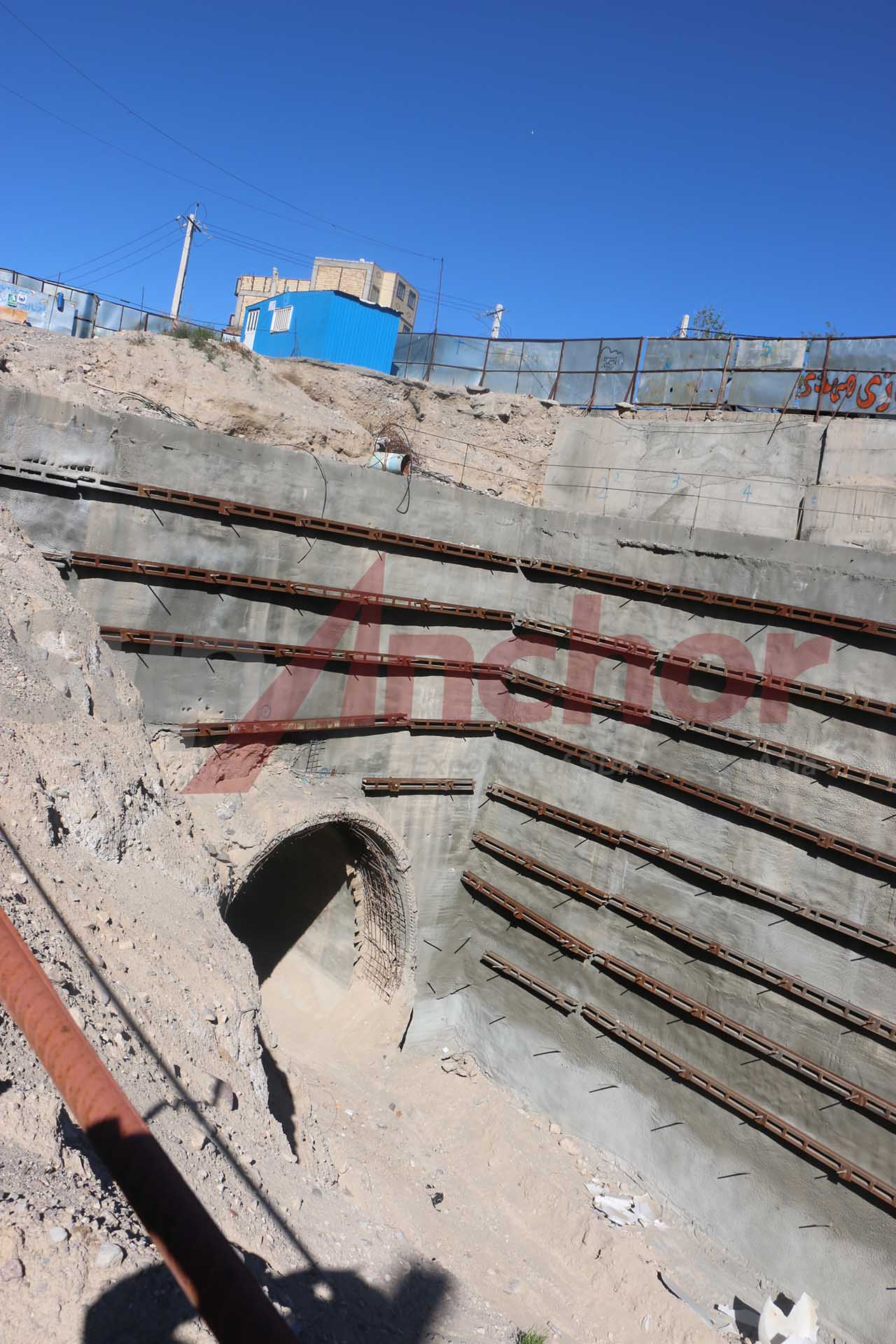
The highway expansion, spanning 42 kilometers of jointed rigid pavement, required a reliable load transfer solution at every transverse construction joint. Traditional steel dowels, while common, posed risks of rust-induced joint faulting and required costly maintenance. SupAnchor's glass fiber reinforced polymer (GFRP) dowel bars offered a revolutionary alternative: they are completely non-corrosive, non-conductive, and non-magnetic, making them ideal for both standard pavements and sensitive areas such as toll plazas, MRI facilities, and electric vehicle charging lanes.
The project's location near a coastal region exposed the pavement to salt spray and high humidity, conditions that accelerate steel corrosion. By specifying GFRP dowel bars, the design team eliminated the need for epoxy coatings or stainless steel, reducing both initial cost and long-term maintenance. Additionally, the lightweight nature of the bars simplified handling and placement, cutting installation time by nearly 30% compared to conventional steel dowel assemblies.
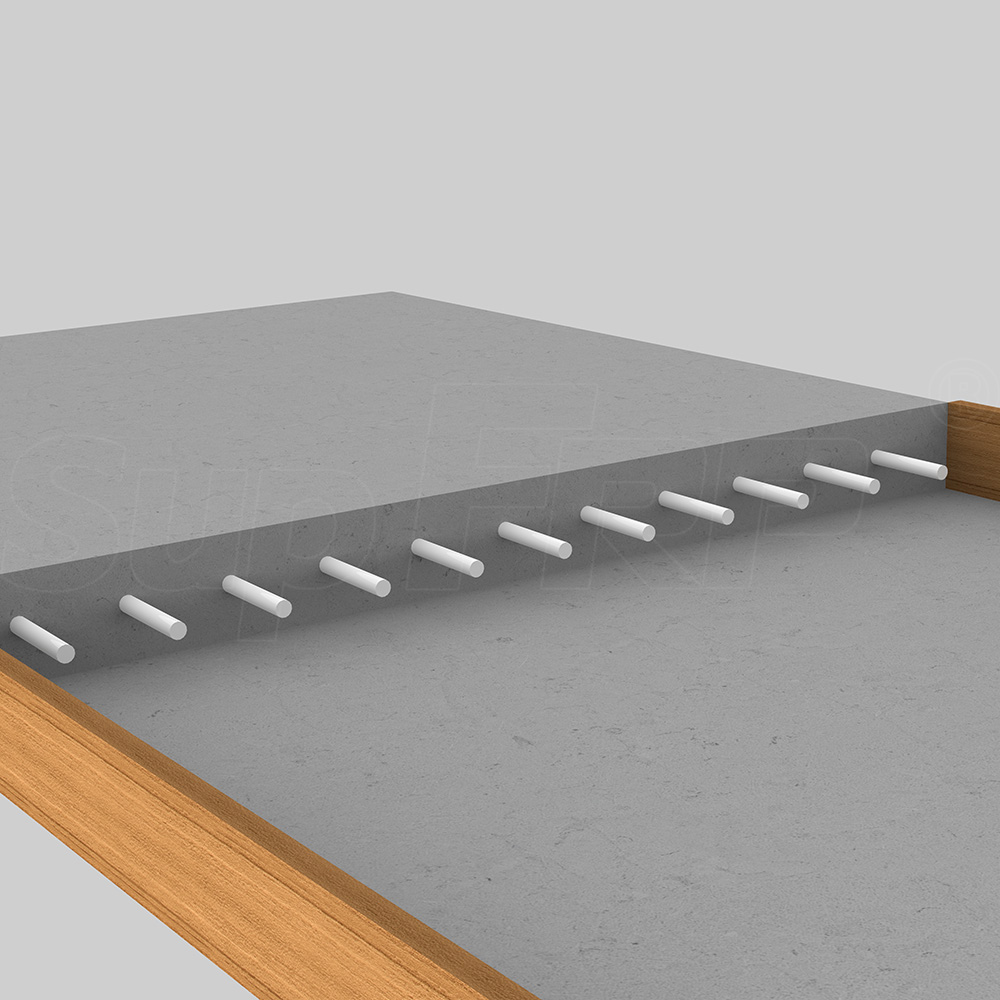
Concrete pavements expand and contract with temperature fluctuations. Without an effective load transfer mechanism, adjacent slabs can move vertically, leading to faulting, cracking, and unsafe driving conditions. Steel dowel bars have long been the standard, but they are vulnerable to chloride attack, moisture ingress, and de-icing salts, especially in coastal or cold regions. SupAnchor's GFRP dowel bars, manufactured from high-quality E-glass fibers and vinyl ester resin, eliminate these failure modes. They provide a mechanical link that transfers shear loads across joints while accommodating horizontal slab movements, ensuring structural stability for decades.
The product line includes six standard diameters, each engineered for specific traffic loads and slab thicknesses. Key technical parameters include transverse shear load capacities ranging from 35 kN to 255 kN, and a coefficient of thermal expansion of 9–11 x 10⁻⁶/°C, which closely matches that of concrete. This compatibility minimizes internal stresses and prevents joint spalling. Furthermore, the dowel bars are non-conductive and non-magnetic, making them safe for use in areas with electromagnetic interference concerns, such as hospital driveways or laboratories housing sensitive equipment.
SupAnchor also offers customization options, including different lengths, surface treatments, and dowel configurations (e.g., round or square sections) to meet specific project demands. This adaptability ensures that the dowel bars can be integrated into both new construction and rehabilitation projects, from thin overlays to heavy-duty industrial floors.
The table below summarizes the main specifications of SupAnchor's GFRP dowel bars, demonstrating their scalability for light to heavy-duty applications:
| Model | Outside Diameter (mm) | Transverse Shear Load (kN) | Nominal Cross Sectional Area (mm²) | Coefficient of Thermal Expansion (x10⁻⁶/°C) | Weight (kg/m) |
|---|---|---|---|---|---|
| DB16 | 16 | 35 | 200 | 9-11 | 0.43 |
| DB20 | 20 | 55 | 310 | 9-11 | 0.67 |
| DB25 | 25 | 85 | 490 | 9-11 | 1.05 |
| DB32 | 32 | 130 | 800 | 9-11 | 1.71 |
| DB38 | 38 | 180 | 1130 | 9-11 | 2.41 |
| DB45 | 45 | 255 | 1590 | 9-11 | 3.37 |
These dowel bars are manufactured under strict quality control and can be customized to project-specific lengths and coatings. Their low weight (e.g., DB16 weighs only 0.43 kg/m) reduces handling and installation costs compared to steel dowels of equivalent strength. The high shear load capacities ensure that even the smallest diameter can support residential driveway loads, while the largest diameter handles heavy freight corridors and airport taxiways.
SupFRP® GFRP dowel bars are ideally suited for jointed rigid pavements, construction joints in industrial floors, embankments, mechanically stabilized earth (MSE) walls, and work areas with electromagnetic sensitivities. For instance, airports, hospitals, and scientific research facilities often require non-conductive and non-magnetic materials to avoid interference with sensitive equipment. The dowel bars' non-metallic nature also eliminates the risk of stray current corrosion in electrified railway or tramway crossings.
Key application highlights include:
In the context of global infrastructure renewal, the demand for durable, low-maintenance materials is rising. According to industry analysts, the global FRP rebar and dowel market is projected to grow at a CAGR of over 8% through 2030. SupAnchor's product line directly addresses this trend, offering a 100+ year service life that reduces lifecycle costs and environmental impact. Unlike steel, GFRP does not require cathodic protection or periodic replacement, aligning with sustainability goals and circular economy principles. A lifecycle cost analysis for a typical highway project shows that using GFRP dowels can reduce 50-year maintenance expenses by up to 40% when compared to epoxy-coated steel.
Although this article focuses on dowel bars, it is worth noting that SupAnchor is also a leading manufacturer of self drilling anchor systems and hollow bar anchors. These geotechnical reinforcement systems are widely used in tunneling, slope stabilization, and foundation support. The same engineering rigor and material science that go into those products ensure the reliability of the GFRP dowel bars. As a trusted soil nail system manufacturer and ground anchor bolt factory, SupAnchor leverages its extensive R&D capabilities to deliver innovative solutions for complex infrastructure challenges.
SupAnchor's journey began with self drilling anchor bolt technology, which revolutionized ground support by combining drilling, grouting, and anchoring in a single operation. Building on that expertise, the company has expanded its portfolio to include drill-and-grout bolts, soil nails, and now GFRP dowel bars. All products are manufactured in ISO 9001, ISO 14001, and ISO 45001 certified facilities, ensuring consistent quality and environmental responsibility.
The GFRP dowel bars undergo rigorous testing for shear strength, durability, and alkali resistance. Accelerated aging tests simulate 100 years of service in aggressive environments, confirming the material's long-term performance. SupAnchor's engineers work closely with clients to customize products for specific project requirements, from high-altitude mountain passes to coastal highways. This collaborative approach has earned the company a reputation for professionalism and technical excellence across more than 60 countries.
Recent projects showcasing SupAnchor's expertise include a metro tunnel in Southeast Asia, a hydroelectric dam in South America, and several highway rehabilitations across Europe. In each case, the company's geotechnical reinforcement systems and structural products delivered reliable performance under demanding conditions. With the introduction of GFRP dowel bars, SupAnchor continues to push the boundaries of material innovation, offering infrastructure owners a future-proof solution for concrete pavements.
As infrastructure owners and contractors seek to reduce maintenance burdens and extend asset life, SupAnchor's GFRP dowel bars provide a forward-looking solution. Whether for a new airport runway, a port pavement, or a highway rehabilitation project, these dowel bars deliver the performance and longevity that modern engineering demands.
For more information on SupAnchor's product range, including self drilling anchor systems and geotechnical reinforcement solutions, visit supanchor.com.
SupAnchor's self drilling anchor bolt technology proves essential in a European geotechnical reinforcement project, combining hollow bar anchors, micropiles, and ground stabilization systems to overcome difficult geology.
SupAnchor launches its GFRP dowel bar line with 100+ year service life, no-rust performance, and superior load transfer for concrete pavements. Ideal for harsh environments and electromagnetic-sensitive areas.
A European highway project overcame fractured rock and groundwater challenges using SupAnchor's self drilling anchor system. The hollow bar anchors provided rapid installation and high load capacity, showcasing innovation in geotechnical reinforcement.
SupAnchor introduces the SupFRP® GFRP Friction Bolt, a world-first corrosion-resistant, lightweight, and non-conductive ground support solution for mining and tunneling.
A major mountain highway expansion in the European Alps utilized SupAnchor's self drilling anchor system to overcome fractured rock and loose soil, ensuring long-term slope stability and construction safety.