
A major transportation infrastructure project in Central Europe has successfully employed a self drilling anchor system to stabilize a steep cut slope along a newly widened highway corridor. The project, located in a region known for complex geology and variable groundwater conditions, required a reinforcement solution capable of withstanding high lateral earth pressures while minimizing disturbance to surrounding terrain. SupAnchor, a globally recognized soil nail system manufacturer and ground anchor bolt factory, supplied its advanced self drilling anchor bolt range for the works. The decision to adopt this technology followed extensive geotechnical investigation and a rigorous value engineering process that compared multiple stabilization methods, including soil nailing, ground anchors with casing, and retaining walls. The project serves as a benchmark for future highway upgrades in the region and demonstrates the practical benefits of combining advanced anchoring technology with rigorous construction management.
The 2.3-kilometer slope stabilization site sits at the interface between weathered flysch and underlying limestone. Initial site investigations revealed highly fractured rock, lenses of soft clay, and seasonal water inflow. Conventional drilling methods using casing or pre-grouting were ruled out due to hole collapse and slow progress. The engineering team specified a geotechnical reinforcement system that could drill, grout, and anchor in a single pass. The hollow bar anchor technology offered by SupAnchor met these requirements, enabling crews to install anchors through unstable overburden without the need for temporary casing. Additionally, the system's ability to inject grout under pressure improved the surrounding ground's strength, reducing the risk of further movement during excavation.
The project forms part of a broader national effort to improve east-west connectivity, with the highway upgrade designed to accommodate increasing freight traffic. However, the alignment traverses a valley with slopes exceeding 45 degrees in places, and historical landslides have occurred after heavy rainfall. To ensure long-term stability, the design included multiple rows of self drilling anchor for retaining walls, combined with shotcrete facing and drainage measures. The construction sequence required careful staging to maintain two-way traffic on the existing roadway, further emphasizing the need for a fast and reliable anchoring method.
Geotechnical modeling indicated that the upper 8 to 10 meters of the slope were prone to translational failure. The presence of boulders and irregular bedrock made it difficult to predict drilling conditions. A conventional drill-and-grout bolt approach would have required separate drilling and grouting stages, increasing the risk of borehole collapse in the loose zones. The self drilling anchor system eliminated this issue by using the hollow bar anchor as both the drill string and the injection conduit. This reduced installation time by approximately 30% compared to conventional methods. Field pull-out tests confirmed that the installed anchors achieved design bond stresses with a safety factor exceeding 1.5.
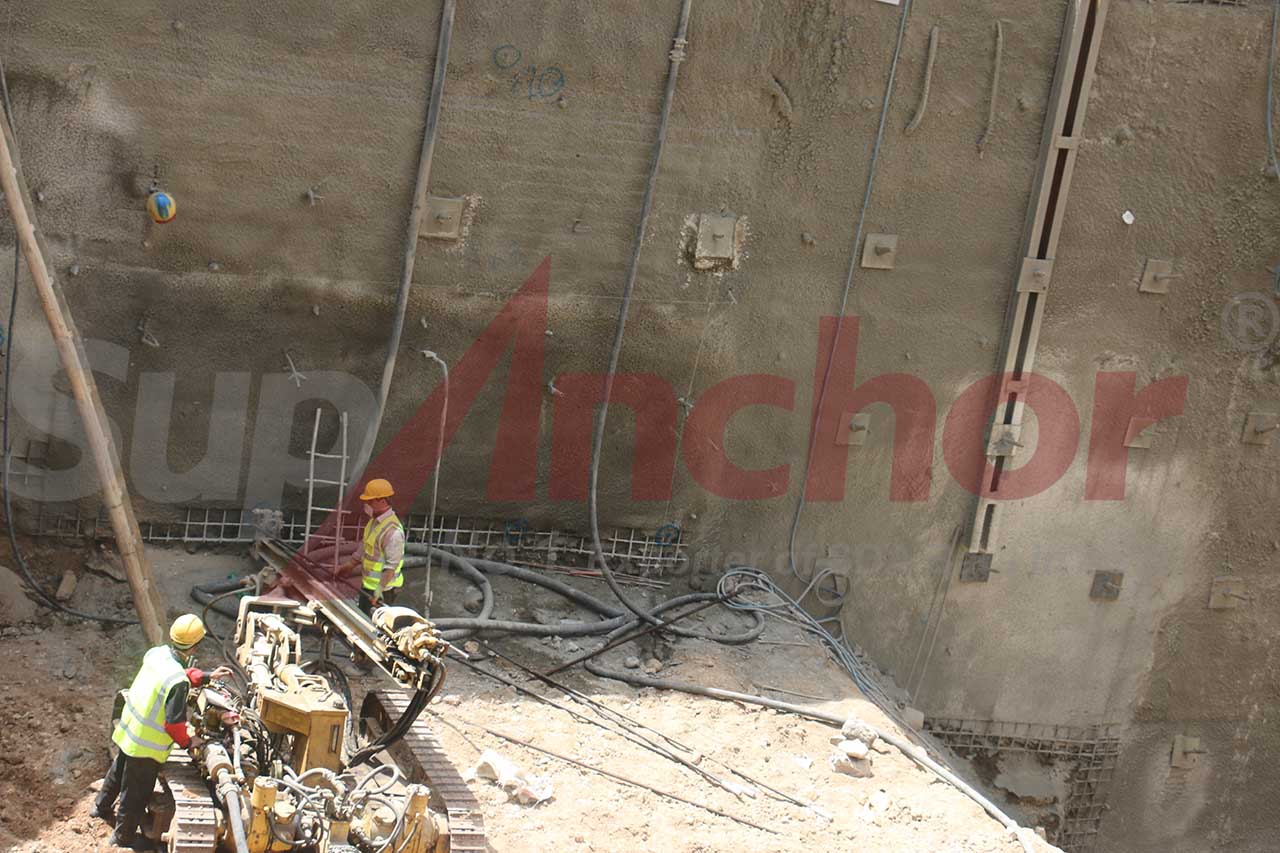
At the work face, excavators prepared benches while drilling rigs fitted with rotary-percussive heads installed the anchors. Each self drilling anchor bolt was advanced through the overburden using a sacrificial drill bit, with grout injected continuously through the hollow core. The grout filled the annular space and permeated the surrounding ground, creating a bond zone that transferred tensile loads to stable strata. The construction site photograph shows the anchors protruding from the slope face in a regular grid pattern, awaiting subsequent shotcrete application. Quality control procedures included daily grout cube testing and anchor load testing on 5% of the installed anchors.
| Technical Parameter | Specification | On-Site Relevance |
|---|---|---|
| Nominal Diameter | 25 mm, 32 mm, 38 mm, 51 mm | Available sizes matched variable drilling conditions and required load capacity |
| Length | 3 m to 12 m (customizable) | Reached beyond the failure plane into competent rock |
| Tensile Strength | 660 MPa to 1,050 MPa | Withstood design loads up to 450 kN per anchor |
| Thread Profile | R32, R38, T51 | Provided efficient energy transfer and consistent grout flow |
| Corrosion Protection | Hot-dip galvanized or duplex coating | Ensured 100-year service life in aggressive groundwater |
These technical parameters were critical to addressing the site's challenges. The 51 mm diameter anchors with 1,050 MPa tensile strength were used in the most heavily loaded lower benches, while 32 mm and 38 mm anchors were installed in the upper zones. The availability of a ground stabilization anchor system in multiple diameters allowed the contractor to optimize material usage without compromising safety. In sections where the slope face had to remain vertical for retaining wall construction, the self drilling anchor for retaining walls provided immediate load transfer, enabling rapid progression of the wall construction behind the anchors. The corrosion protection was especially important because groundwater samples showed elevated sulfate and chloride concentrations, which can rapidly degrade unprotected steel.
The use of a hollow bar anchor as a micropile hollow bar anchor also proved valuable in the transition zones where the slope met bridge abutments. Here, the anchors were installed at steeper angles to act as micropiles, supporting vertical loads in addition to lateral earth pressure. This dual functionality reduced the need for separate foundation elements, streamlining the construction sequence. The same drilling rigs and crews were able to install both slope anchors and micropiles with minimal changeover, saving time and reducing mobilization costs.
Environmental considerations also played a role in the selection of the self drilling anchor system. Because the method generates less spoil than conventional drilling and does not require temporary casing, the volume of waste material sent to landfill was reduced by 40%. Noise and vibration levels were kept within regulatory limits, which was essential given the proximity of residential areas. The project's environmental monitoring report highlighted the reduced disturbance to local wildlife habitats during construction.
The successful deployment of self drilling anchor systems on this project reflects a broader shift in geotechnical practice toward integrated drilling and anchoring technologies. Infrastructure owners and contractors are under pressure to accelerate schedules while maintaining rigorous safety standards. Self drilling bolt for civil engineering offers a reliable method for slope stabilization, tunnel pre-support, and foundation underpinning, particularly in urban environments where vibration and noise must be controlled. Its ability to combine drilling, grouting, and anchoring in one operation reduces the need for multiple specialty subcontractors and simplifies site logistics.
In underground mining and tunneling, rock bolt for underground mining applications have long employed similar principles, but recent advancements in thread design and corrosion protection have expanded their use in civil infrastructure. The same SDA bolt factory direct supply model that serves mining clients is now delivering high-quality anchor bolt system for geotechnical engineering to highway, railway, and water projects across Europe and North America. This crossover demonstrates the maturity and adaptability of hollow bar anchor technology.
The global market for geotechnical reinforcement systems is projected to grow steadily, driven by aging infrastructure, climate resilience requirements, and urbanization in challenging terrains. Self drilling anchor systems are particularly well suited to emergency slope repairs because they can be installed quickly with minimal site preparation. In this project, the ability to mobilize SupAnchor's products within two weeks of order was a decisive factor. The broader adoption of such systems is also supported by updated design codes that recognize the benefits of pressure-grouted anchors in difficult ground.
SupAnchor has established itself as a trusted partner for complex geotechnical projects. The company operates a modern ground anchor bolt factory equipped with automated thread rolling and heat treatment lines, ensuring consistent quality across high-volume orders. Its self drilling anchor bolt products are tested in accordance with EN 14490 and ASTM standards, and the company holds ISO 9001, ISO 14001, and ISO 45001 certifications. European Technical Assessments (ETA) for selected systems provide additional assurance for designers. These credentials are essential in European infrastructure projects where traceability and compliance are non-negotiable.
Beyond product supply, SupAnchor's engineering team collaborated closely with the project's geotechnical consultant to optimize anchor lengths and patterns based on real-time drilling data. This collaborative approach, combined with a commitment to professional execution, exemplifies the company's core values of Professional, Innovative, Collaborative. The project owner noted that the technical support provided by SupAnchor helped reduce design iterations and avoided costly over-excavation. Such partnerships are increasingly valued in an industry where risk allocation and performance-based specifications are becoming the norm.
The company's global portfolio includes highway tunnels in the Alps, metro stations in North America, and slope stabilization works in Scandinavia. Each project benefits from SupAnchor's ability to customize thread types, lengths, and corrosion protection to match local conditions. As a leading soil nail system manufacturer, SupAnchor continues to invest in research and development, exploring new alloys and coatings to extend service life in aggressive environments. This dedication to innovation ensures that the next generation of ground anchor systems will meet even more demanding performance criteria.
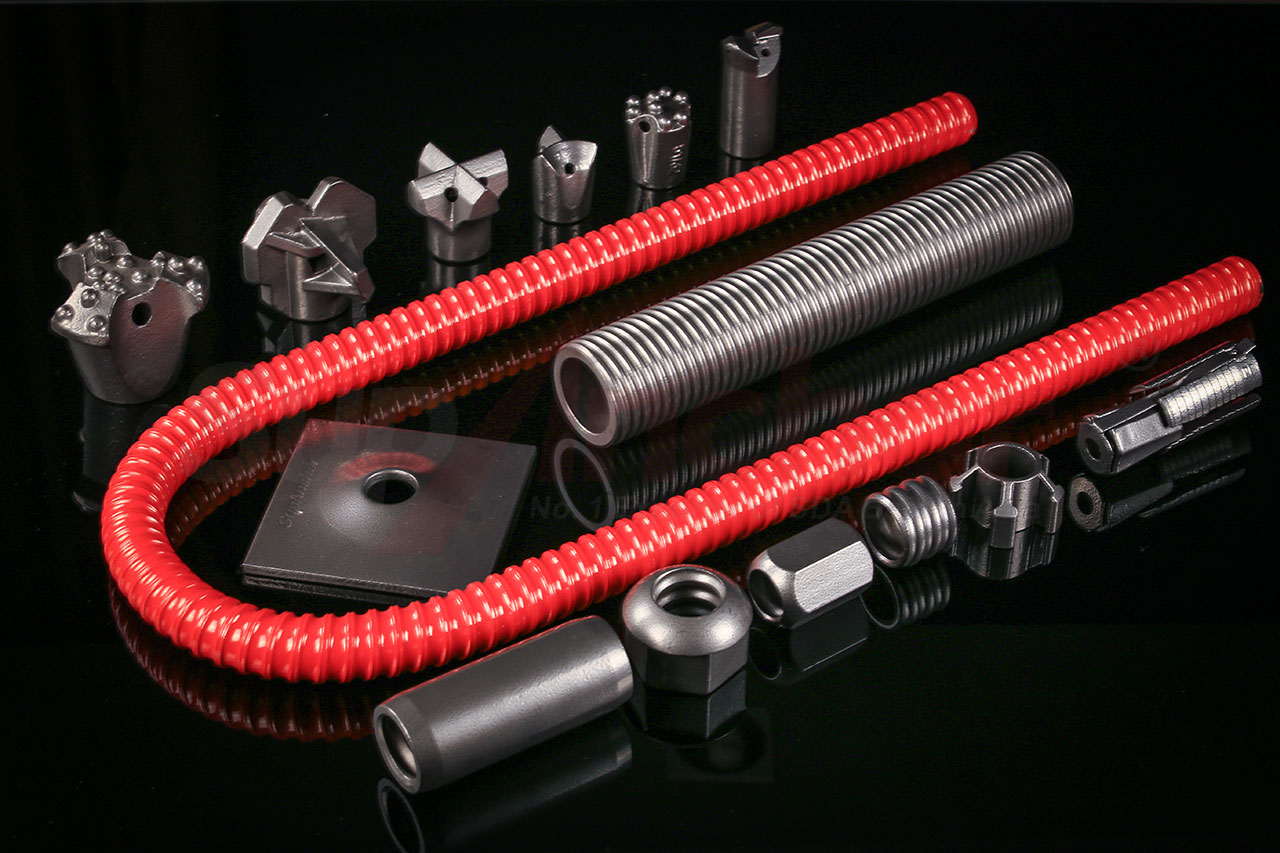
SupAnchor's self drilling anchor bolt range, featuring hollow core and sacrificial drill bit, ready for dispatch. The same system was used on the European slope stabilization project.
A European highway project uses SupAnchor's self drilling anchor system to stabilize a steep cut slope with complex geology, featuring high-strength hollow bar anchors and integrated drilling and grouting.
SupAnchor's SupPump Sup2000 and Sup5000 grout pumps demonstrate exceptional performance in a major Alpine tunnel project, offering high-pressure precision and robust durability for challenging geotechnical reinforcement.
SupAnchor's self drilling anchor bolt technology proves essential in a European geotechnical reinforcement project, combining hollow bar anchors, micropiles, and ground stabilization systems to overcome difficult geology.
SupAnchor launches its GFRP dowel bar line with 100+ year service life, no-rust performance, and superior load transfer for concrete pavements. Ideal for harsh environments and electromagnetic-sensitive areas.
A European highway project overcame fractured rock and groundwater challenges using SupAnchor's self drilling anchor system. The hollow bar anchors provided rapid installation and high load capacity, showcasing innovation in geotechnical reinforcement.