
As aging concrete structures across Europe and North America grapple with steel corrosion, the demand for non-metallic reinforcement has surged. In response, SupAnchor has expanded its geotechnical reinforcement system portfolio with the launch of SupFRP® GFRP Reinforcement Rebar—a glass fiber reinforced polymer bar engineered to deliver permanent corrosion resistance in the harshest environments. The product was officially introduced following successful deployments in several coastal and underground projects, marking a significant step forward in durable construction technology.
From sea walls battered by saltwater to bridge decks exposed to de-icing chemicals, traditional steel reinforcement often succumbs to rust, leading to costly repairs and reduced service life. SupAnchor's new GFRP rebar addresses this challenge head-on, offering a lightweight, non-conductive, and non-magnetic alternative that maintains structural integrity for decades. The rebar is manufactured using high-quality corrosion-resistant resin and fiberglass, and can be factory-formed into various shapes to meet diverse construction needs.
The SupFRP GFRP rebar is available in diameters ranging from 8 mm to 40 mm, with guaranteed tensile loads from 50.3 kN up to 1006 kN. All bars up to 32 mm diameter boast a tensile strength of 1000 MPa, while larger diameters provide 900 MPa (28–32 mm) and 800–850 MPa (36–40 mm). The tensile modulus remains consistent at 50 GPa across all sizes, and ultimate strain is 2%. These specifications position the product as a robust solution for structural reinforcement where steel is unsuitable due to corrosion or electromagnetic interference.
| Model | Outside Diameter (mm) | Guaranteed Tensile Load (kN) | Tensile Strength (MPa) | Weight (kg/m) |
|---|---|---|---|---|
| ReB-8 | 9 | 50.3 | 1000 | 0.125 |
| ReB-12 | 14 | 113 | 1000 | 0.28 |
| ReB-16 | 18 | 201 | 1000 | 0.50 |
| ReB-20 | 23 | 314 | 1000 | 0.79 |
| ReB-25 | 28 | 491 | 1000 | 1.20 |
| ReB-32 | 36 | 720 | 900 | 2.00 |
| ReB-40 | 45 | 1006 | 800 | 3.10 |
The waved thread structure on the bar surface enhances bonding with concrete, ensuring excellent load transfer and reducing the risk of slippage. Unlike steel, the GFRP rebar is completely immune to chloride-induced corrosion, making it ideal for marine structures, bridge decks, and industrial plants where chemical exposure is common. Its non-conductive and non-magnetic properties also make it suitable for sensitive environments such as MRI facilities, railway tracks, and power plants.
Key advantages of SupFRP GFRP rebar include:
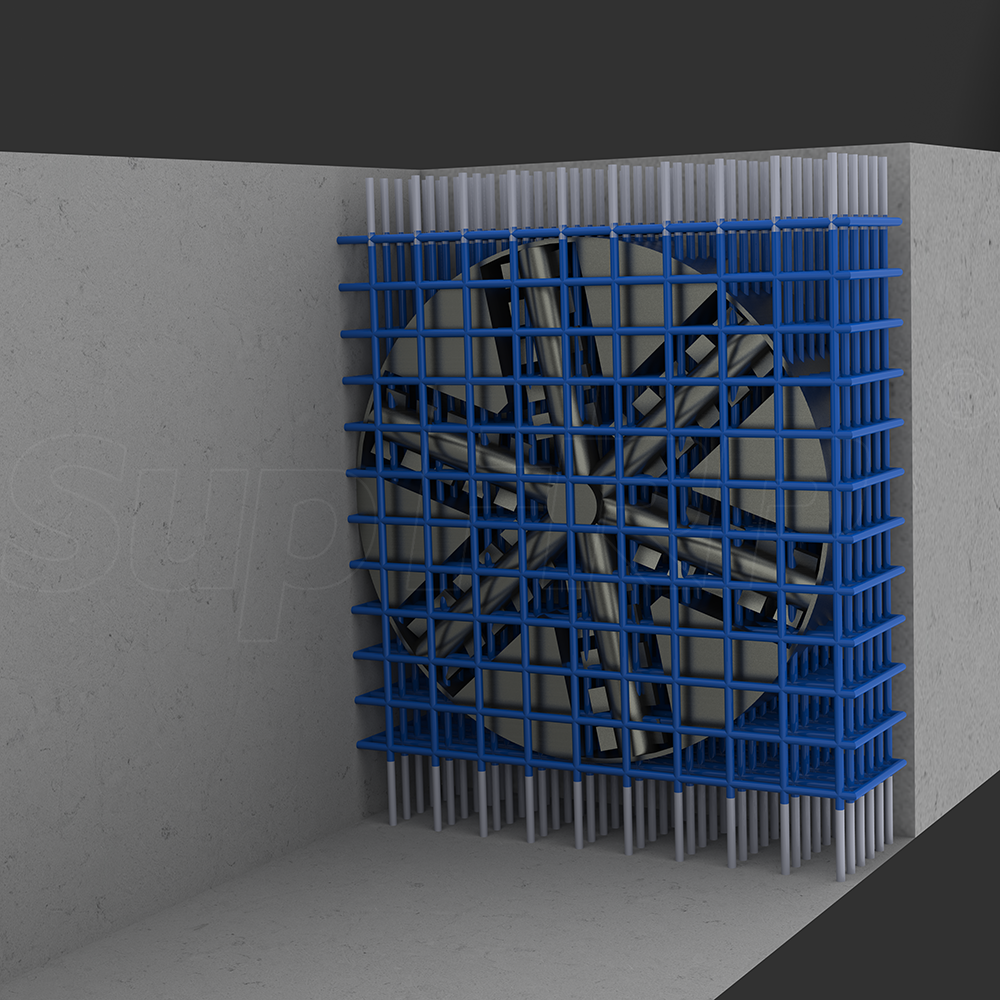
The product's versatility is demonstrated across multiple sectors. In soft-eye excavation for tunneling, the rebar's lightweight nature simplifies handling in confined spaces while its corrosion resistance eliminates concerns about groundwater aggressiveness. For sea walls and port aprons, the GFRP rebar withstands constant saltwater exposure without degradation, extending the lifespan of coastal defenses. Precast concrete manufacturers benefit from the material's ease of cutting and shaping, as well as its reduced weight, which lowers transportation costs and simplifies installation.
SupAnchor's self drilling anchor system has long been a trusted solution for ground support in challenging geological conditions. The introduction of GFRP rebar complements this lineup, offering engineers a complete geotechnical reinforcement system that covers both active and passive reinforcement needs. In projects where a hollow bar anchor is used for initial ground stabilization, the non-corrosive GFRP rebar can serve as permanent reinforcement, eliminating the need for secondary corrosion protection measures. This integrated approach streamlines construction and reduces long-term maintenance burdens.
The rebar's compatibility with drill-and-grout bolt applications further enhances its value in tunneling and mining. By combining the benefits of a self drilling anchor bolt for immediate support with the durability of GFRP for permanent structures, contractors can achieve both safety and longevity in a single operation. This synergy is particularly relevant for urban infrastructure projects where minimizing disruption and maximizing asset life are top priorities.
From a market perspective, the global push toward sustainable and resilient infrastructure is driving adoption of composite materials. Governments and private developers are increasingly specifying non-corrosive reinforcement to reduce life-cycle costs and meet stringent durability requirements. SupAnchor's GFRP rebar, with its factory-controlled quality and consistent mechanical properties, provides a reliable alternative that meets these evolving standards.
SupAnchor has built a reputation as a soil nail system manufacturer and ground anchor bolt factory with a strong focus on innovation and quality. The company's R&D efforts have resulted in a comprehensive range of products that address the most demanding geotechnical and structural challenges. ISO-certified manufacturing processes ensure that every batch of GFRP rebar meets rigorous performance criteria, giving engineers confidence in design assumptions.
With projects spanning over 50 countries, SupAnchor's technical support teams provide tailored solutions for complex site conditions. The launch of SupFRP GFRP rebar is a testament to the company's commitment to advancing construction technology and supporting clients in achieving safer, longer-lasting infrastructure. As the industry continues to embrace composite materials, SupAnchor is poised to play a leading role in shaping the future of corrosion-resistant construction.
In conclusion, the SupFRP GFRP Reinforcement Rebar represents a significant advancement in reinforcement technology. By combining high strength, superior corrosion resistance, and ease of handling, it offers a compelling solution for modern infrastructure projects. SupAnchor's integration of this product into its broader geotechnical reinforcement system underscores the company's dedication to professional, innovative, and collaborative engineering practices.
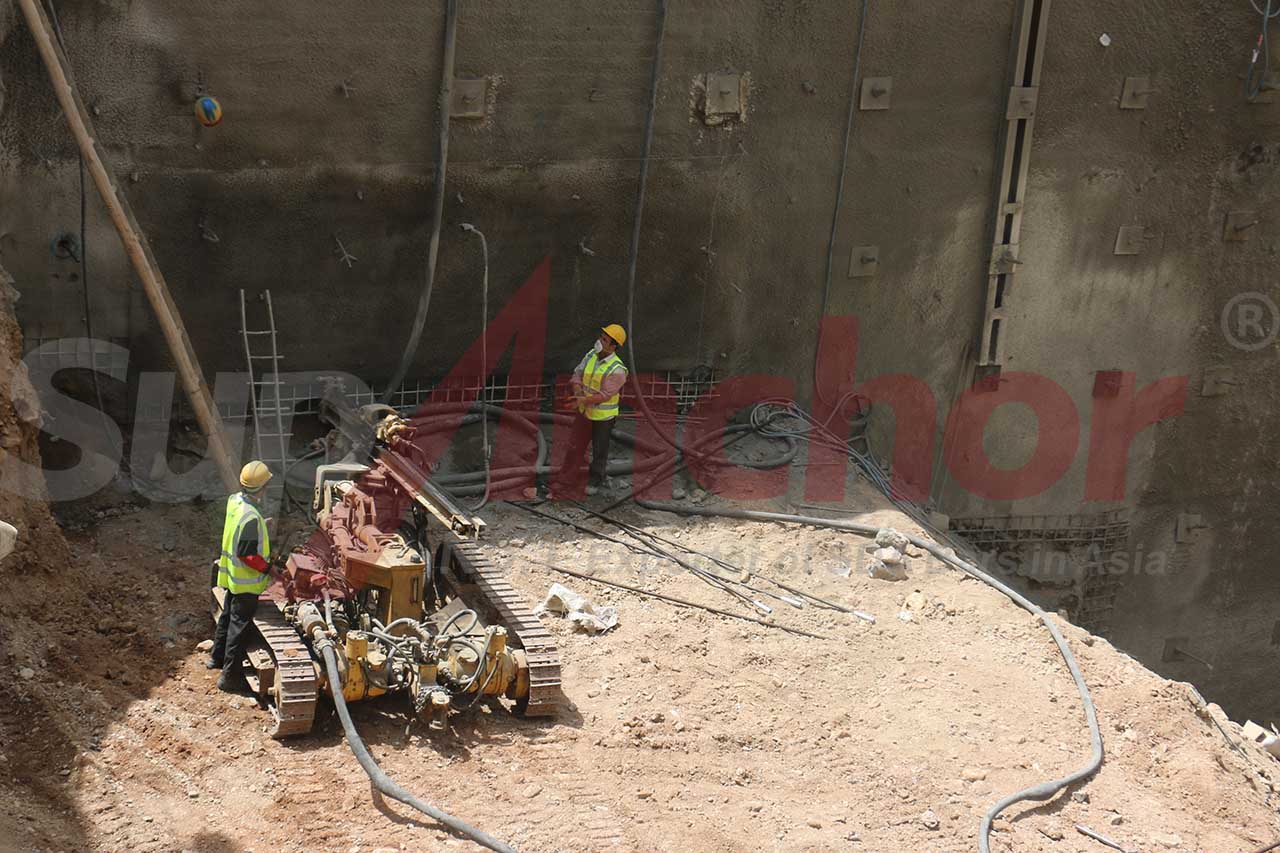
SupAnchor's self drilling anchor system and hollow bar anchors provide effective geotechnical reinforcement in a demanding construction project, showcasing innovation and reliability.
SupAnchor introduces SupFRP GFRP rebar with 1000 MPa tensile strength and superior corrosion resistance for marine, underground, and infrastructure projects.
SupAnchor's self drilling anchor system deployed on an Alpine slope stabilization project, showcasing efficient installation and high-performance geotechnical reinforcement in challenging conditions.
SupAnchor's Grade 75 self-drilling hollow anchor bars deliver ASTM A615 performance, continuous T-thread bonding, and proven reliability for hydropower slope stabilization projects.
SupAnchor's self drilling anchor system deployed on an Alpine highway slope stabilization project, enabling fast drilling and grouting in fractured rock while meeting strict safety and environmental standards.