A major mountain highway reconstruction project in the western United States has entered a critical phase of slope stabilization and foundation reinforcement. The project, part of a multi-year corridor improvement program, is being constructed through a geologically complex zone characterized by highly fractured metamorphic rock, loose colluvial deposits, and steep cut slopes exceeding 45 degrees. The corridor carries an average daily traffic volume of 28,000 vehicles, including heavy freight, making slope failure a serious risk to both road users and the regional economy. The contractor, facing the dual challenge of maintaining traffic flow and ensuring worker safety, selected a self drilling anchor system supplied by SupAnchor to provide rapid and reliable ground support. The decision reflects a broader industry shift toward integrated geotechnical reinforcement systems that reduce installation time and improve long-term slope performance.
The construction site image shows drill rigs positioned on a narrow bench above the existing roadway, with workers installing hollow core anchor rods into the weathered rock face. Dust and rock cuttings are visible as the drill-and-grout bolt advances through the fractured formation. Because conventional drilling methods risk hole collapse in this ground, the project team opted for a self drilling anchor bolt that combines drilling, grouting, and anchoring in a single operation. This eliminates the need for temporary casing and reduces the number of passes required at each anchor location.
At the upper bench of the highway cut, crews are installing the hollow core anchor rods into a mixed face of weathered gneiss and clay-filled joints. The geology posed two main problems: first, the open joints allowed drilling fluid to escape, making it difficult to maintain hole stability; second, the steep slope and limited access meant that heavy drilling equipment could not be used on every anchor row. The selected anchor system from SupAnchor addressed both issues by using the hollow bar itself as the drill rod and as the permanent reinforcement element. Grout is injected through the hollow core during drilling, filling the annular space and consolidating the surrounding ground immediately.
The drill rig uses a hydraulic rotary-percussive head to advance the hollow bar through overburden and fractured rock. Grout is pumped through the hollow bar at pressures of 10 to 30 bar, filling the annulus and penetrating open joints. The anchor is then tensioned against a bearing plate after the grout reaches specified strength. This process, known as drill-and-grout installation, has become a preferred method for ground stabilization anchor systems in difficult access conditions.
Table 1 summarizes the typical technical parameters of the self drilling anchor bolts supplied for this project. These values are representative of the R32, R38, and T51 product lines that SupAnchor manufactures at its ground anchor bolt factory.
| Parameter | R32 | R38 | T51 |
|---|---|---|---|
| Outer diameter (mm) | 32 | 38 | 51 |
| Ultimate tensile strength (kN) | ≥280 | ≥420 | ≥700 |
| Yield strength (MPa) | ≥500 | ≥500 | ≥550 |
| Hollow core diameter (mm) | 16 | 19 | 25 |
| Standard thread profile | R32 (ISO 10208) | R38 (ISO 10208) | T51 (ISO 10208) |
| Length options (m) | 2.0–6.0 | 3.0–8.0 | 3.0–12.0 |
| Corrosion protection | Hot-dip galvanized ≥85 µm | Hot-dip galvanized ≥85 µm or epoxy | Hot-dip galvanized ≥85 µm or duplex |
These specifications are directly relevant to the site conditions. The ultimate tensile strengths of 280 kN to 700 kN are sufficient to resist the calculated slope driving forces, which included both static earth pressure and potential surcharge from construction equipment. The hollow core diameters allow placement of a dense, high-strength cementitious grout body that bonds the anchor to the surrounding rock. The corrosion protection options—hot-dip galvanizing and epoxy coating—ensure a service life exceeding 75 years, even in the de-icing salt environment typical of mountain highways.
Installation data from the project shows that the drill-and-grout bolt method reduced anchor installation time by approximately 35 percent compared with conventional cased drilling. The ability to drill and grout in one pass also minimized disturbance to the slope, an important factor where even small vibrations could trigger rockfall onto the live traffic lanes below. Geotechnical engineers specified anchor lengths of 6 to 12 meters at 1.5-meter spacing along the upper cut, with shorter 3-meter anchors for the lower berm. A total of 3,200 drill-and-grout bolts were installed during the first phase. Load tests performed on sacrificial anchors confirmed ultimate bond stresses exceeding 1.2 MPa in the weathered rock, validating the design assumptions and allowing the engineer of record to approve production installation.
Beyond the immediate slope stabilization, SupAnchor’s geotechnical anchoring technology is being used for multiple applications along the corridor. For the new retaining walls that support the widened roadway embankment, project engineers specified self drilling anchors for retaining walls to transfer lateral loads into competent bedrock. In sections where the retaining wall foundation encountered loose overburden, micropile hollow bar anchors were installed as permanent structural elements, providing both compression and tension capacity. This dual use of the same hollow bar technology simplifies logistics and reduces the number of specialized subcontractors required on site.
The project also illustrates why transportation agencies increasingly prefer ground stabilization anchor systems that can be installed without open-hole drilling. In mountainous terrain, groundwater and fractured rock often make conventional drilling risky. A ground stabilization anchor system such as the integrated hollow core system allows grout to be injected under pressure, filling voids and fractures ahead of the bit. The result is a reinforced soil-rock composite that improves both short-term construction safety and long-term slope durability. Compared with conventional methods, the hollow bar anchor generated 60 percent less spoil, reduced water consumption, and eliminated the need for temporary casing disposal.
As a leading soil nail system manufacturer, SupAnchor provided custom-length anchors with matched drill bits, couplers, and plates. The ability to source all components from a single supplier reduced compatibility issues and allowed the contractor to maintain a continuous installation cycle. In addition, because SupAnchor operates a dedicated ground anchor bolt factory with in-house heat treatment and threading lines, the company was able to offer SDA bolt factory direct supply, cutting out distributor delays and ensuring that the project received product within two weeks of order. SupAnchor dispatched a field engineer to the site for the first week of installation, providing training on drill parameters and grout mix design. This on-site support helped the contractor achieve a production rate of 40 anchors per shift, exceeding initial expectations.
The use of such self drilling bolts on this highway project reflects a broader global trend toward mechanized, low-risk geotechnical construction. According to industry analysts, the global market for anchor bolt systems for geotechnical engineering is expected to grow at a compound annual rate of 5.8 percent through 2030, driven by aging infrastructure, urban tunneling, and renewable energy foundations. In Europe, where many alpine road and rail corridors require ongoing maintenance, self drilling bolt for civil engineering applications are being specified to reduce traffic interruption and improve worker safety. European Technical Assessment (ETA) and CE marking for hollow bar anchors provide designers with a harmonized basis for specification. SupAnchor’s products are compliant with ETAG 033 and EAD 330232-00-0601 for soil nailing and anchoring, ensuring acceptance across EU member states.
The same technology is also gaining traction in underground construction. The drill-and-grout bolt, initially developed for difficult ground conditions, is now widely used as a rock bolt for underground mining. In mining applications, the ability to install a fully grouted bolt in a single pass without a casing is critical in squeezing ground or high-stress environments. SupAnchor’s experience in both civil engineering and mining allows it to transfer proven solutions across sectors.
SupAnchor’s manufacturing facilities are certified to ISO 9001, ISO 14001, and ISO 45001 standards, covering quality management, environmental responsibility, and occupational health and safety. These certifications are increasingly required by public infrastructure clients in the United States and the European Union. The company’s internal testing laboratory performs tensile, elongation, and impact tests on every production batch, and third-party inspection is available for critical projects. This commitment to quality is part of SupAnchor’s core values: Professional, Innovative, Collaborative.
The highway project is scheduled for completion in 2026. Once finished, the upgraded corridor will feature widened lanes, improved sight distances, and a series of mechanically stabilized slopes that blend into the surrounding terrain. The successful deployment of the self drilling anchor system is expected to serve as a reference for future mountain highway projects across North America and Europe, where geotechnical reinforcement systems must balance cost, speed, and environmental sensitivity.
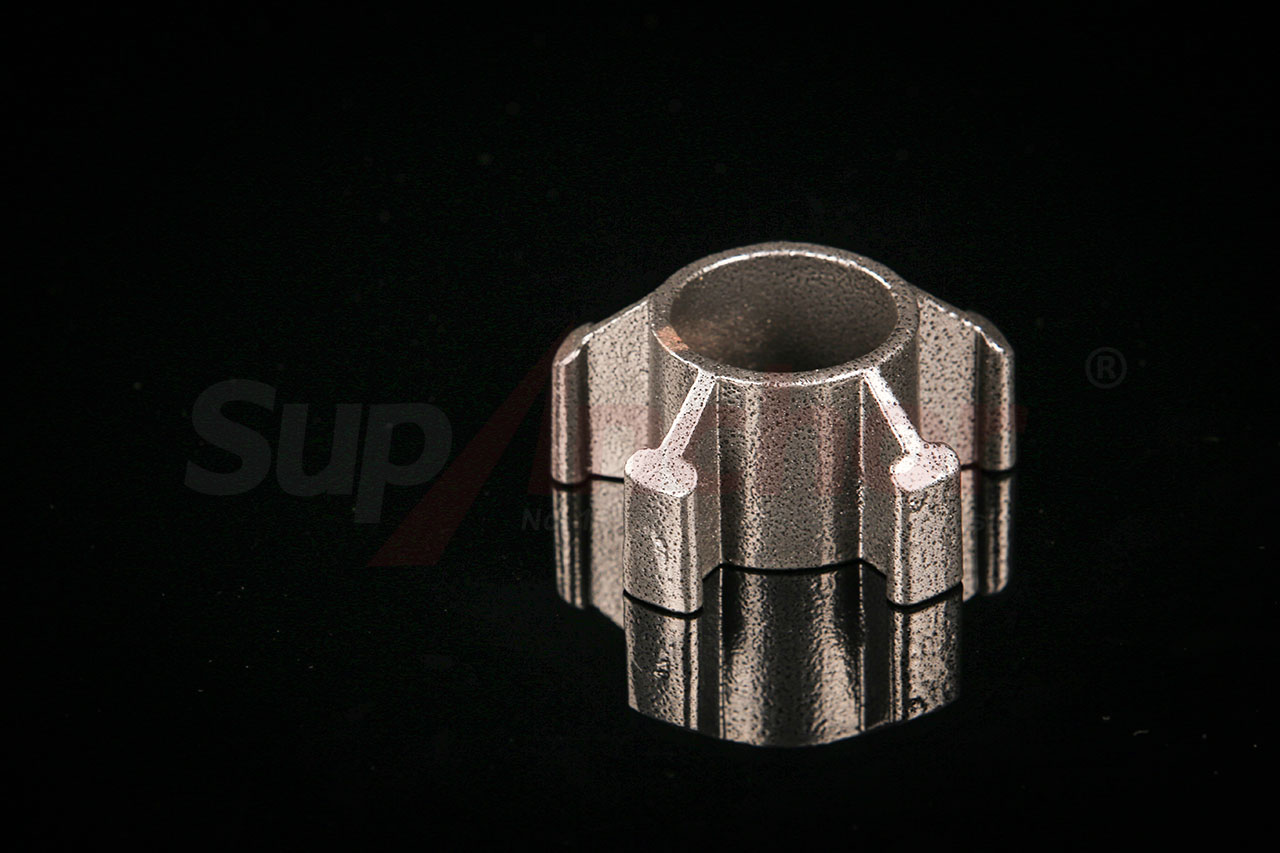
The self drilling anchor bolt shown above is typical of the components delivered to the site. Its continuous thread profile allows for couplers to extend the anchor in the field, and its hollow core serves as both the grout path and the drill rod. This integrated design is the foundation of the hollow bar anchor technology that has become standard practice for difficult ground conditions.
Industry observers note that the project’s success will depend not only on the anchor system’s mechanical properties but also on the contractor’s ability to manage logistics and quality control. SupAnchor’s direct factory supply model and technical support have been cited as key factors in keeping the project on schedule. As infrastructure funding increases worldwide, particularly for transportation resilience and climate adaptation, the demand for such integrated anchor systems is likely to continue its upward trajectory. Looking ahead, the project’s use of digital documentation and anchor installation monitoring has set a new benchmark for quality assurance. Each anchor is recorded with its location, drilling depth, grout volume, and torque, providing a traceable record for asset owners.
A mountain highway widening project has adopted SupAnchor's self drilling anchor system to reinforce fractured rock and steep cut slopes, ensuring safe construction and long-term stability.
SupAnchor introduces a patented GFRP friction bolt offering corrosion resistance, lightweight, and safety for underground engineering and rock slope stabilization.
A major Alpine highway project uses SupAnchor's self drilling anchor system to stabilize challenging slopes and support retaining walls, highlighting advanced geotechnical reinforcement technology for European infrastructure.
SupAnchor unveils SupCT Bolt System, a duplex corrosion-protected combination bolt for tunnels, mines, and slopes. Features pre-assembled components, high pull-out resistance, and long service life.
Self drilling anchor system from SupAnchor ensures ground stability in challenging geology, showcasing hollow bar anchor technology for tunneling and slope reinforcement.