In a rugged European mountain corridor, a critical highway expansion faced severe geotechnical hurdles. The project, part of a transnational transport network upgrade, required stabilizing steep slopes composed of fractured schist and weathered granite, interspersed with groundwater seepage. Conventional anchor installation methods proved time-consuming and unreliable, prompting the project consortium to adopt a self drilling anchor system from SupAnchor, a leading manufacturer of advanced ground reinforcement technologies.
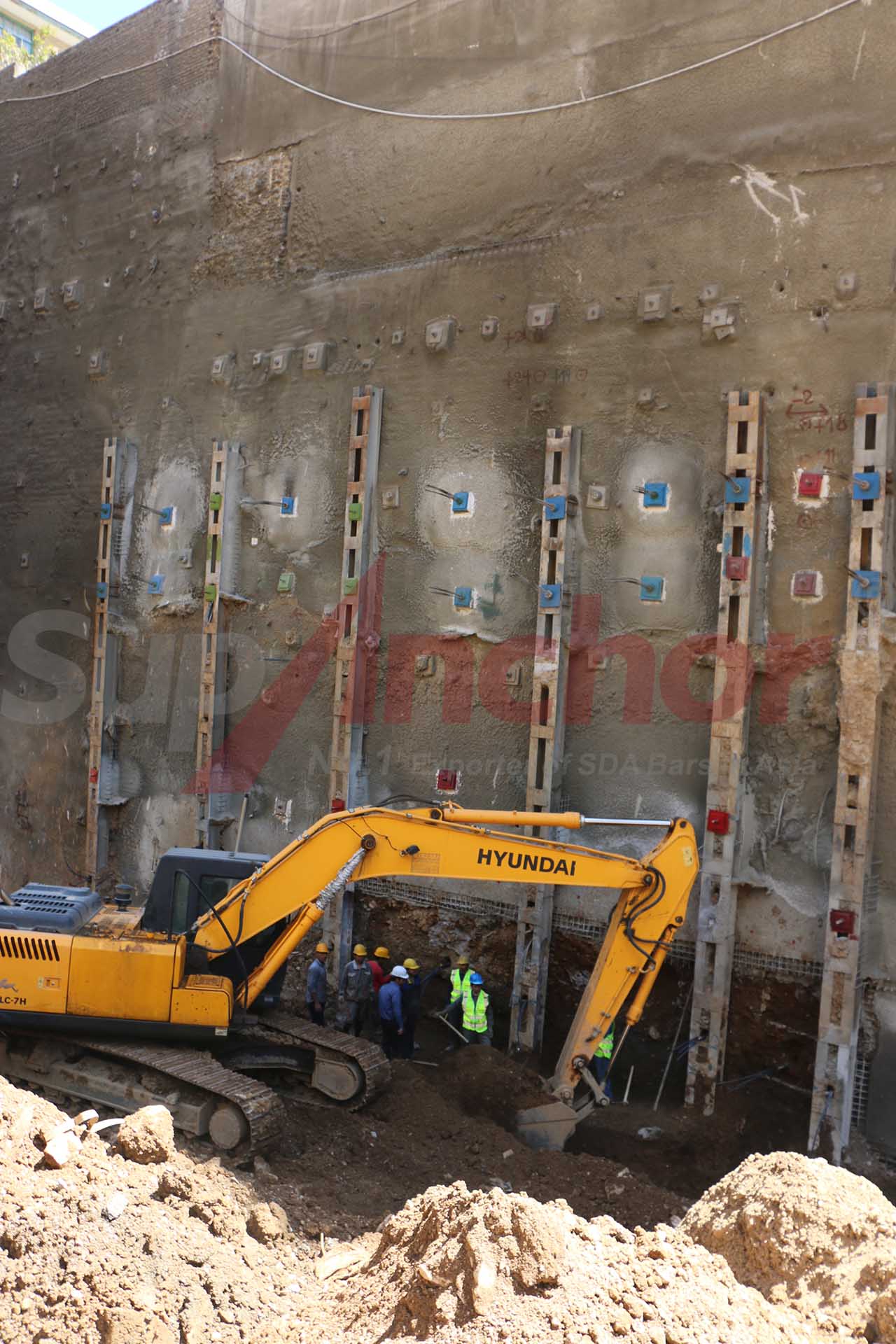
SupAnchor’s self drilling anchor bolts served as the primary geotechnical reinforcement system for the slope stabilization works. The project required over 12,000 linear meters of anchoring across multiple retaining structures, with installation depths ranging from 6 to 15 meters. The harsh terrain and variable geological conditions demanded a robust, versatile anchoring solution that could drill, grout, and reinforce in a single pass. The region's history of landslides and rockfall made slope stability a critical safety concern, and the project owners sought a solution that would provide long-term reliability with minimal maintenance.
The construction site, as depicted above, shows the steep, forested slopes where crews worked on narrow benches cut into the hillside. Access roads were limited, and the use of large drilling rigs was constrained. SupAnchor’s self drilling anchor bolts, with their slim profile and integrated drilling capability, allowed for efficient installation using compact equipment. The hollow bar anchor design enabled simultaneous drilling and grouting, which not only reduced the number of drilling steps but also improved the bond between the anchor and the surrounding ground by pressurizing the grout into fissures.
The slope itself extended over a 2.5-kilometer stretch, with heights up to 40 meters. Historical records indicated multiple shallow slides in the past, and the new alignment required cutting into the toe of the slope, further reducing stability. The design called for a grid of anchors at 2.5-meter spacing, each capable of carrying a working load of 300 kN. Given the fractured nature of the rock, traditional post-grouted anchors were rejected because the boreholes would collapse before grout could be injected. The self drilling anchor system eliminated this problem by using the hollow bar as both drill rod and grout pipe.
The selection of the appropriate anchor system was guided by a detailed geotechnical investigation. Borehole samples revealed alternating layers of highly fractured rock and soft, water-bearing soils. To address these conditions, SupAnchor’s engineers recommended a hollow bar anchor system with the following key parameters:
| Parameter | Value | Application Benefit |
|---|---|---|
| Nominal Diameter | 32 mm / 38 mm | High bending stiffness for drilling through fractured rock |
| Tensile Strength (Ultimate) | 660 kN (for 32 mm) | Adequate load capacity for slope stabilization |
| Yield Strength | 520 kN | Ductile failure mode, avoiding sudden collapse |
| Length | 6–12 m (custom lengths available) | Adaptable to varying soil/rock depths |
| Corrosion Protection | Hot-dip galvanized to EN ISO 1461 (min. 70 µm) | Durability in aggressive ground and water conditions |
The chosen self drilling anchor for retaining walls offered a unique combination of drilling, grouting, and anchoring in one operation. Unlike conventional methods that require a separate casing and post-grouting, the drill-and-grout bolt injects cement grout through the hollow core during drilling. This process stabilizes the borehole immediately, preventing collapse in loose or water-charged ground. The result is a ground stabilization anchor system that achieves high load transfer efficiency and reduces installation time by up to 40%.
On site, the installation process was carried out using crawler-mounted hydraulic drills fitted with rotary-percussion heads. The self drilling bolts for civil engineering were coupled together to reach the required depths, with the thread profile ensuring a continuous load path. The image above shows the initial stage of anchor installation, with the bar being driven into the slope at a predetermined angle. The grout mix, designed by SupAnchor’s technical team, had a water-cement ratio of 0.4 and a 28-day compressive strength of 40 MPa, ensuring long-term durability.
Quality control was stringent: every anchor was tested for load capacity using hydraulic jacks, and a random sample underwent pull-out tests to verify bond strength. The data confirmed that the anchor bolt system for geotechnical engineering exceeded design requirements, providing a safety factor of 2.0 against ultimate failure.
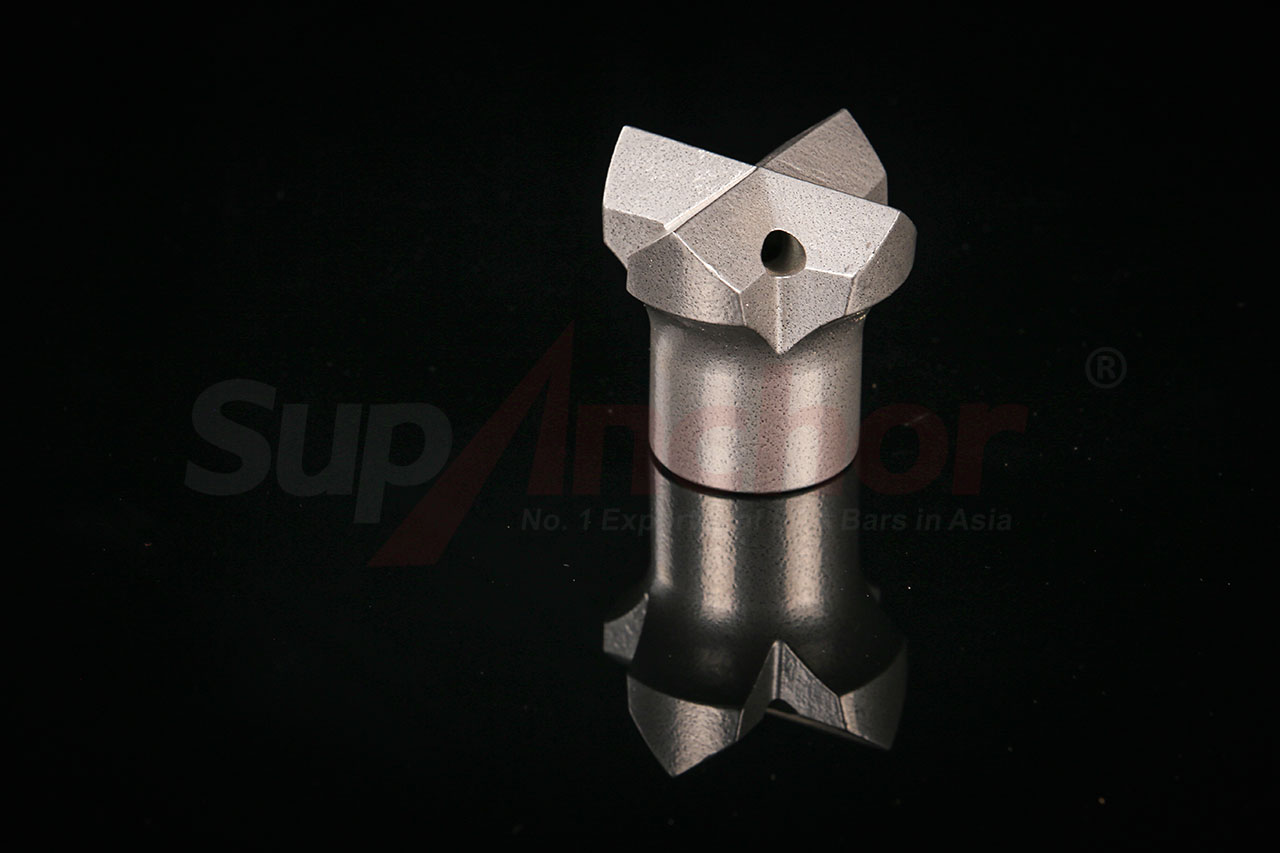
The hollow bar anchor's continuous thread also allowed for easy coupling, enabling crews to achieve total lengths exceeding 18 meters in areas with deep failure planes. The drill bit, a sacrificial cross-cut or button bit, was selected based on the ground conditions, and the grout was injected at pressures up to 20 bar to ensure penetration into surrounding voids. This technique created a reinforced zone around the anchor, significantly increasing the overall stability of the slope.
This project exemplifies the growing importance of advanced geotechnical reinforcement systems in modern infrastructure. As European countries invest in upgrading transport corridors, the need for reliable slope stabilization and foundation support becomes paramount. SupAnchor’s self drilling anchor system reduces environmental impact by minimizing drilling spoils and using smaller equipment, aligning with sustainable construction practices.
Beyond slope stabilization, SupAnchor’s product range addresses a wide array of geotechnical challenges. As a soil nail system manufacturer, the company supplies hollow bar anchors that are ideal for soil nailing and micropile applications. For instance, micropile hollow bar anchors are used in foundation underpinning and retrofitting of existing structures, providing high capacity in limited access areas. In tunneling and mining, SupAnchor’s rock bolt for underground mining offers rapid installation and immediate support, ensuring worker safety in underground excavations.
The economic benefits of the system were evident in this project. The use of SDA bolt factory direct supply eliminated intermediaries, reducing material costs by 15%. Additionally, the faster installation reduced labor hours and equipment rental, contributing to an overall 20% cost reduction compared to traditional anchoring methods. The project is expected to save the taxpayer approximately €1.2 million over its lifecycle due to reduced maintenance needs.
Furthermore, the project has drawn attention from neighboring regions facing similar geological challenges. Transportation authorities in Austria, Switzerland, and northern Italy have expressed interest in adopting the same self drilling anchor system for their upcoming highway and railway projects. The success of this project demonstrates that modern anchor bolt systems for geotechnical engineering can deliver both performance and economy, even in the most demanding environments.
SupAnchor’s involvement in the project extended beyond product supply. The company’s engineers provided on-site technical training and support, ensuring that the contractor’s crew could optimize installation parameters. This collaborative approach reflects SupAnchor’s commitment to professionalism and innovation. The company holds ISO 9001:2015 for quality management and ISO 14001:2015 for environmental management, and its products carry CE marking, meeting the stringent requirements of European regulations.
“We are proud to contribute to such a vital infrastructure project,” said a SupAnchor spokesperson. “Our self drilling anchor bolts are designed to perform in the most challenging conditions, and this project demonstrates their reliability and efficiency.” The company’s global footprint includes projects in over 40 countries, spanning highways, railways, hydropower, and mining. As a ground anchor bolt factory, SupAnchor maintains rigorous quality control at every production stage, from raw material inspection to final thread rolling.
Looking forward, the global market for anchor bolt systems for geotechnical engineering is expected to grow at a CAGR of 5.2% from 2023 to 2030, driven by urbanization and climate adaptation needs. SupAnchor continues to invest in R&D, exploring new materials such as duplex stainless steel for highly corrosive environments and developing smart anchors with integrated sensing capabilities. The company’s self drilling anchor system remains at the forefront, offering a versatile solution for both temporary and permanent applications.
In conclusion, the European highway slope stabilization project highlights the critical role of advanced anchoring technologies in ensuring infrastructure safety and longevity. SupAnchor’s self drilling anchor bolts delivered a robust, cost-effective solution, reinforcing the company’s position as a trusted partner in geotechnical engineering. As the industry evolves, SupAnchor’s dedication to quality and innovation will continue to drive progress in ground stabilization and foundation support.
For more information about SupAnchor products and projects, visit www.supanchor.com.
SupAnchor's self drilling anchor bolts provide reliable geotechnical reinforcement for a European highway slope stabilization, overcoming fractured rock and water ingress.
SupAnchor's new GFRP dowel bars provide corrosion-free load transfer in concrete slabs, offering 100+ year service life and superior performance for pavements and infrastructure.
SupAnchor's self drilling anchor system proved its technical value in a complex geotechnical project, combining rapid installation with high load capacity for foundation and slope stabilization.
SupAnchor introduces SupFRP GFRP Mesh, a corrosion-resistant, non-conductive grid for roofs, walls, flat slabs, and highway overlays. Lightweight and high-strength.
SupAnchor's Grade 75 self-drilling hollow anchor bars deliver ASTM A615-compliant performance for hydropower slope stabilization, combining high bond strength, system compatibility, and rapid installation.