On a rugged construction site in a mountainous region, a major transportation infrastructure upgrade is progressing despite some of the most challenging ground conditions encountered in recent years. The project, which includes a new highway alignment, bridge foundations, and extensive retaining structures, faced early setbacks due to fractured rock, loose colluvium, and high groundwater. Traditional drilling methods resulted in frequent borehole collapse and slow installation rates, threatening the overall schedule. To overcome these obstacles, the project team turned to SupAnchor, a recognized soil nail system manufacturer and ground anchor bolt factory, to supply a self drilling anchor system capable of installing through unstable ground without pre-drilled casing.
The site geology consists of alternating layers of silty clay, sand, and highly weathered shale, with groundwater seepage at multiple elevations. Contractors initially attempted open-hole drilling with temporary casing, but the process proved time-consuming and often failed in the most fractured zones. The switch to a ground stabilization anchor system based on hollow bar technology allowed crews to drill, reinforce, and grout in a single continuous operation. This geotechnical reinforcement system has not only restored schedule but also improved overall slope stability and foundation reliability.
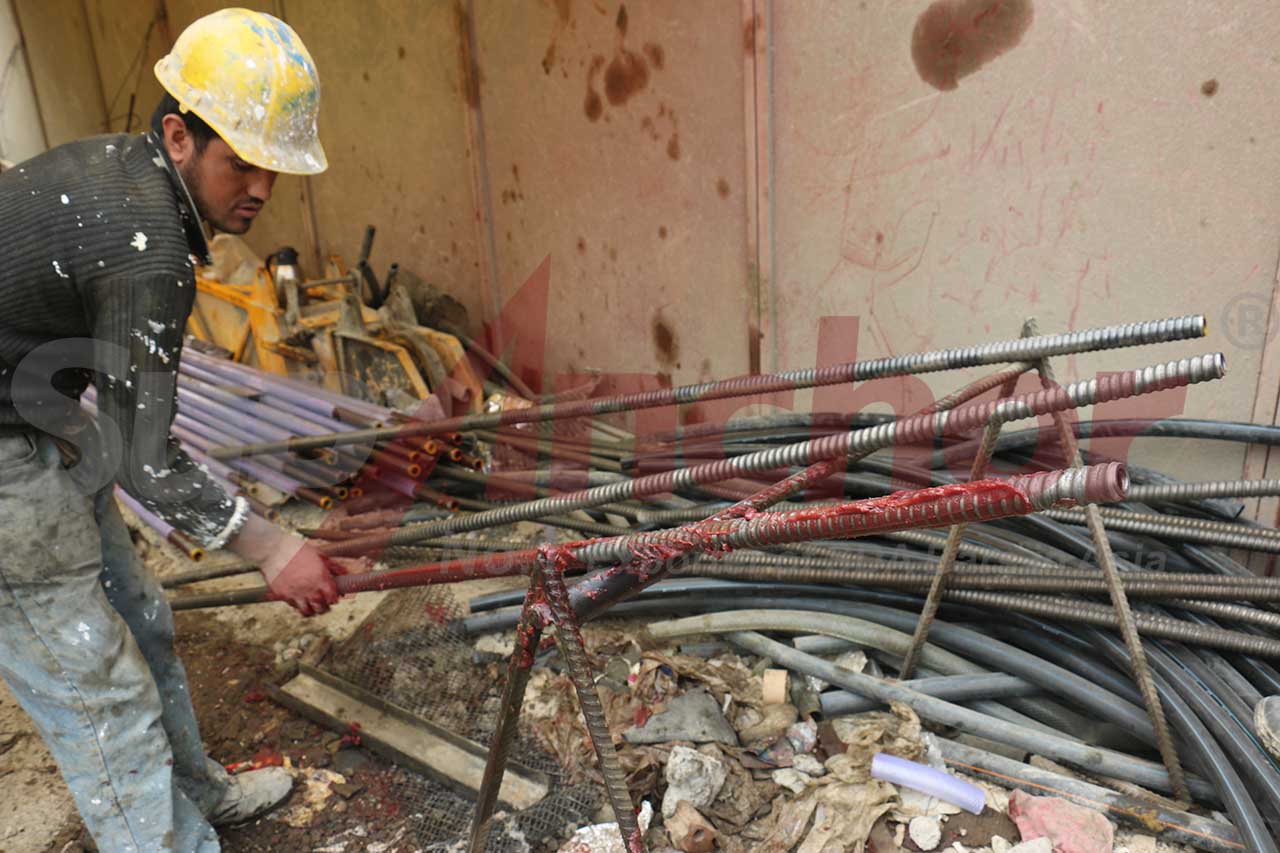
The construction site image shows a hydraulic drilling rig installing a self drilling anchor bolt into a steep cut slope. The hollow bar, visible at the drill mast, rotates under high torque while cement grout is injected through its central hole. This drill-and-grout bolt method eliminates the need for separate drilling and casing passes, reducing equipment moves and labor costs. Because the hollow bar serves as both drill rod and reinforcement, the installation is faster and more reliable, particularly in collapsing or water-charged ground.
According to the geotechnical engineer on record, the project required more than 10,000 linear meters of anchors for slope stabilization, retaining wall support, and foundation micropiles. The selection of a self drilling anchor for retaining walls was driven by the need to maintain progress through loose overburden and fractured rock without open boreholes. The SupAnchor self drilling anchor system was deployed in multiple configurations, including systematic soil nailing on the cut face and high-capacity micropile hollow bar anchor installations beneath bridge abutments.
The hollow bar anchor used on this project features a continuous left-hand thread along its entire length, allowing couplers, nuts, and plates to be installed at any point. The internal hole is smooth to minimize grout pressure loss, and the thread profile is optimized for both drilling efficiency and bond strength. Key technical parameters for the bars supplied are summarized in the table below.
| Parameter | Value |
|---|---|
| Bar diameter | 32 mm, 38 mm, 51 mm (custom up to 63 mm) |
| Tensile strength | >= 670 MPa |
| Yield strength | >= 500 MPa |
| Ultimate load capacity (typical) | 220 kN (R32), 360 kN (R38), 630 kN (R51) |
| Standard length | 3 m, 4 m, 6 m (extendable with couplers) |
| Corrosion protection | Hot-dip galvanized, epoxy coated, or duplex system |
These specifications enabled the design team to select a micropile hollow bar anchor solution for foundation elements requiring high tensile capacity. The 51 mm diameter bars were used for bridge abutment micropiles, where ultimate loads reached 630 kN per bar. The 32 mm bars served as systematic soil nails across the slope face, spaced at 1.5 m centers to provide a continuous reinforcement mat. The ability to couple bars meant that anchors could be installed to depths exceeding 15 m without sacrificing thread strength or grout continuity.
At the installation site, workers guide the self drilling anchor bolt into the drill mast as the rig operator monitors torque and penetration rate. A grout plant supplies a water-cement mixture at a controlled pressure, typically 1-2 MPa, through the hollow core. Once the bar reaches design depth, grouting continues until clean grout returns at the collar, confirming complete encapsulation. The grout fills voids and fractures in the surrounding ground, creating a rough, interlocked bond zone that transfers tensile loads effectively. The entire process for a 12 m anchor takes approximately 15-20 minutes, excluding mobilization.
Prior to production installation, test anchors were installed and subjected to pull-out tests to verify bond capacity. The results confirmed that the nominal bond strength exceeded design assumptions, allowing the engineer to optimize anchor spacing. Daily installation rates averaged 80-120 linear meters per rig, depending on ground conditions.
In addition to slope stabilization, the same geotechnical reinforcement system is being used for foundation micropiles beneath a bridge abutment. Here, the bars are installed vertically or at a slight batter to support compressive and lateral loads. The speed of installation helped the project recover two weeks of schedule lost to early drilling problems. Load tests on representative anchors confirmed performance exceeding design requirements, with minimal creep under sustained load. Worker safety improved significantly with the self drilling anchor for retaining walls because the need for manual handling of casing was eliminated. The rig operator remains inside a protected cab, and the grout is delivered through hoses, reducing exposure to dust and falling debris.
The successful deployment of a ground stabilization anchor system on this project reflects a broader shift in geotechnical engineering practice. As infrastructure ages and new construction pushes into marginal lands, owners and contractors demand faster, more reliable foundation solutions. The system addresses these needs by combining drilling, reinforcement, and grouting into a single operation, reducing equipment mobilization, labor costs, and environmental disturbance.
In tunneling, a self drilling bolt for civil engineering can be used for pipe roof support or face stabilization in soft ground. In mining, a rock bolt for underground mining provides immediate support in development headings. The versatility of the hollow bar anchor makes it a preferred choice for contractors working across multiple sectors. Industry analysts project steady growth in the global market for geotechnical reinforcement systems, driven by transportation, energy, and urban development projects. Compared to conventional drilled and grouted anchors, the hollow bar anchor can reduce installation time by up to 50 percent in difficult ground. This efficiency translates into lower overall project costs and earlier facility opening. For public infrastructure, the long-term durability of the system minimizes future maintenance and inspection burdens.
The project's reliance on a single anchor bolt system for geotechnical engineering highlights the value of integrated design. Instead of sourcing separate drill rods, casing, and anchors, the contractor procured a complete package from SupAnchor, including bits, couplers, nuts, and plates. This approach simplified logistics and ensured compatibility across all components. Public agencies also benefit from the use of a self drilling anchor for retaining walls, which offers long-term performance with minimal maintenance. The grouted body acts as a permanent structural element, resisting corrosion and load relaxation. Another advantage is the reduced environmental footprint. Traditional drilling generates significant spoil and requires large casings, whereas the self drilling anchor system produces less disturbance and can be used in environmentally sensitive areas. On this project, the avoidance of open boreholes reduced the risk of groundwater contamination and slope instability during construction.
SupAnchor, as a soil nail system manufacturer and ground anchor bolt factory, has built a reputation for delivering high-quality anchoring products to projects in more than 40 countries. The company's ISO 9001 and ISO 14001 certifications attest to its commitment to quality management and environmental stewardship. Its production facilities employ automated threading and heat treatment processes to ensure consistent mechanical properties in every bar. SupAnchor's global footprint includes landmark projects such as highway tunnels in Europe, dam stabilization in South America, and mining support in Australia. Each project benefits from the company's rigorous quality control, which includes 100 percent dimensional inspection and destructive testing of sample bars from every heat. This commitment to excellence is why major contractors specify SupAnchor as their preferred soil nail system manufacturer.
In this project, SupAnchor's engineers collaborated closely with the design team to optimize anchor lengths, spacing, and grout mix. This collaborative approach reflects the company's core values of professionalism, innovation, and partnership. By offering SDA bolt factory direct supply, SupAnchor can provide cost-effective solutions without intermediaries, ensuring timely delivery to remote sites. The availability of various drill bits—cross-cut, chisel, and button—allows the bars to penetrate everything from soft clay to hard rock.
The use of a micropile hollow bar anchor for foundation support is not new, but continuous improvement in steel chemistry and thread design has expanded its load range. SupAnchor's self drilling anchor system now covers ultimate loads from 160 kN to over 1000 kN, meeting the demands of heavy civil structures. The company is actively investing in research to improve grout bond strength and corrosion resistance, ensuring that the anchor bolt system for geotechnical engineering remains at the forefront of the industry. Looking ahead, the project team expects to install over 12,000 linear meters of self drilling anchor bolt by the end of the season. Data collected from load tests will inform future designs and potentially reduce anchor lengths through better bond stress understanding. SupAnchor plans to host a technical seminar to share these findings with local geotechnical engineers. The success of this project reinforces the value of a reliable ground stabilization anchor system in overcoming difficult ground conditions.
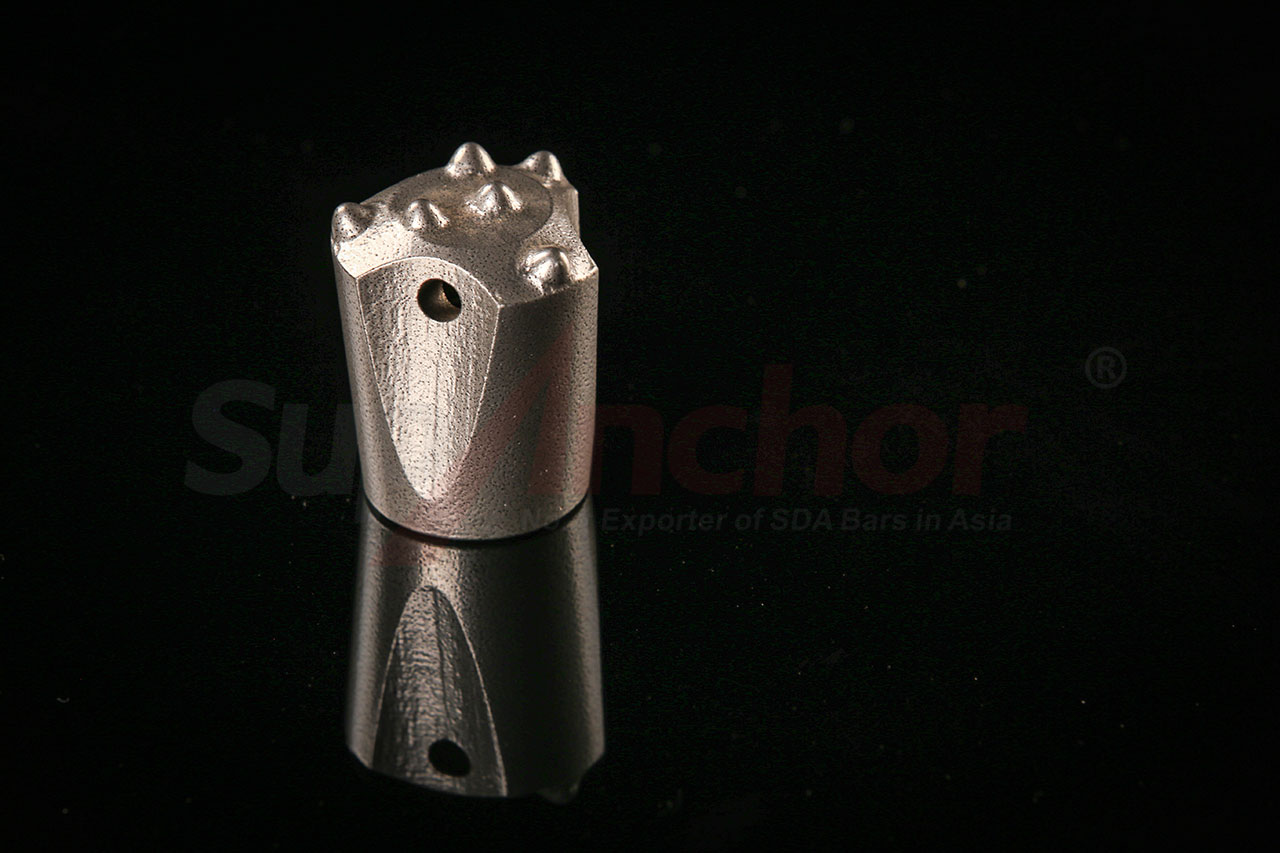
The product image above shows the product with its continuous thread and hollow core. The thread profile is designed for maximum grout flow while providing strong mechanical interlock with couplers and nuts. The bar's internal hole is smooth to reduce grout pressure loss, and the external left-hand thread ensures that rotation during installation tightens connections rather than loosening them. For contractors and owners facing difficult ground conditions, the choice of a reliable ground stabilization anchor system can make the difference between project success and costly delays. As this project demonstrates, SupAnchor's solution delivers both technical performance and practical efficiency, reinforcing its position as a leader in geotechnical reinforcement.
A recent infrastructure project overcame unstable geology using SupAnchor's self drilling anchor system. The hollow bar anchors provided immediate support for slopes and foundations, demonstrating efficiency and reliability.
SupAnchor's new GFRP dowel bar offers 100+ years service life, high shear load capacity, and non-corrosive performance for jointed concrete pavements and electromagnetic-sensitive environments.
SupAnchor's self drilling anchor system successfully addressed complex geology and slope instability on a major infrastructure project, highlighting the growing role of advanced geotechnical reinforcement in modern construction.
SupAnchor's T Thread self-drilling hollow anchor system delivers integrated drilling, grouting and reinforcement for tunneling and geotechnical projects, with anti-corrosion options and proven technical specs.
SupAnchor's self drilling anchor system deployed in a major infrastructure project, overcoming difficult geology with high-tensile hollow bar anchors and innovative drill-and-grout technology.