
In the face of increasing demands for durable and cost-effective construction solutions, engineers worldwide grapple with challenges such as corrosion, high maintenance, and logistical inefficiencies in formwork systems. SupAnchor®, a leader in geotechnical reinforcement systems, has stepped forward with its innovative SupFRP® GFRP Tie Rod, designed to address these issues head-on. This product launch comes at a critical time, as infrastructure projects expand into harsh environments, from coastal regions with saline exposure to urban tunneling where durability is paramount.
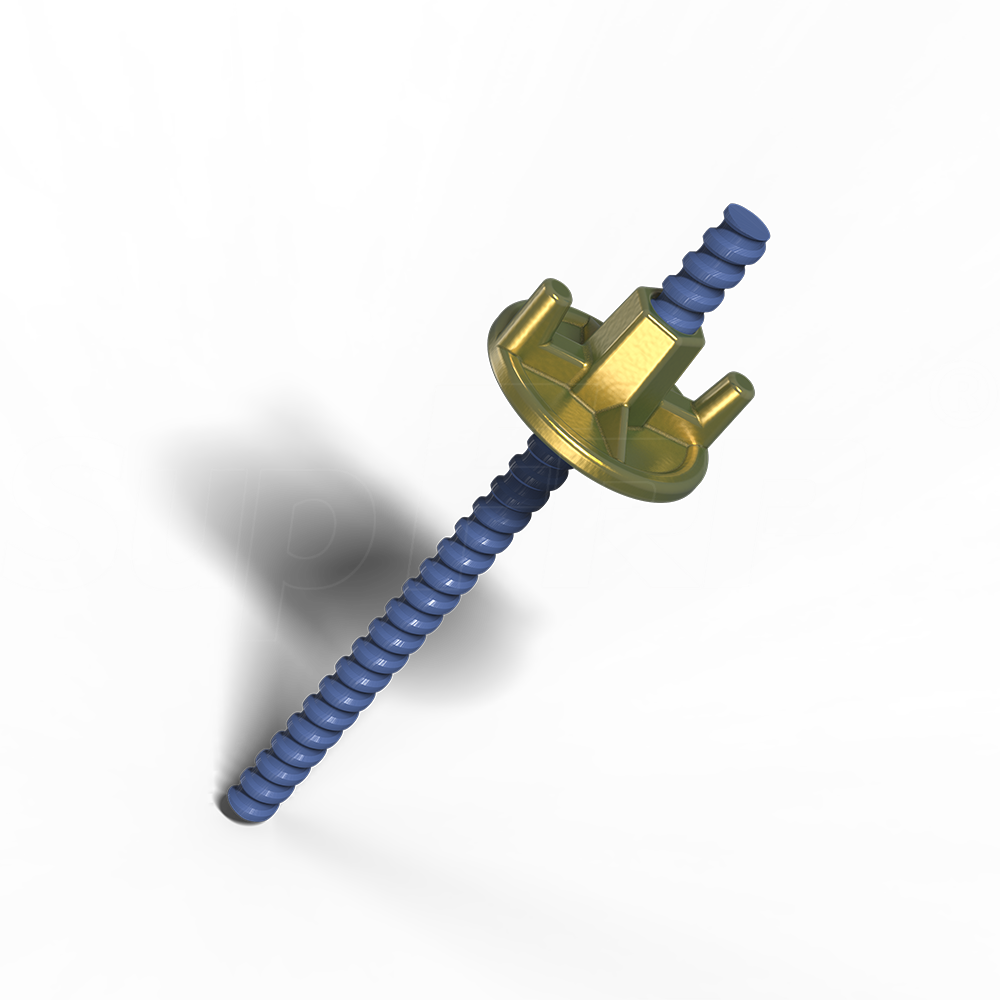
The SupFRP® GFRP Tie Rod represents a significant shift from traditional steel tie rods, offering permanent application that eliminates the need for removal upon project completion. This not only slashes transportation and storage costs but also reduces labor-intensive processes, making it a game-changer for construction teams. By integrating seamlessly with standard accessories due to its thread profile compatibility, the product ensures easy adoption across various formwork scenarios, enhancing overall project timelines and safety.
SupAnchor's GFRP tie rod is engineered to meet rigorous construction standards, with key parameters tailored to solve common engineering challenges. For instance, in tunneling projects where corrosion can compromise structural integrity, the high corrosion resistance of this product provides long-term reliability. The technical data highlights its robustness, with models like T15/130 and T20/250 offering guaranteed tensile loads of 130 kN and 250 kN, respectively, alongside a tensile E-Modulus of 45 GPa, ensuring stability under stress.
To illustrate its capabilities, here is a detailed table comparing the key specifications:
| Model | Outside Diameter (mm) | Guaranteed Tensile Load (kN) | Weight (kg/m) | Length Options (m) |
|---|---|---|---|---|
| T15/130 | 17 | 130 | 0.37 | 1x2 to 1x11 |
| T20/250 | 22 | 250 | 0.71 | 1x2 to 1x11 |
These features, including high strength, cuttability, and non-conductive properties, make the SupFRP® GFRP Tie Rod ideal for diverse formwork needs. For example, in mining applications, its non-magnetic nature prevents interference with equipment, while in geotechnical reinforcement systems, it enhances bond force for secure anchoring. This adaptability stems from SupAnchor's commitment to innovation, as the product aligns with ISO certifications and rigorous R&D processes.
The SupFRP® GFRP Tie Rod finds extensive use in formwork for infrastructure projects such as bridges, tunnels, and high-rise buildings. Its permanent application reduces lifecycle costs, making it a preferred choice in geotechnical safety initiatives. In tunneling, where drill-and-grout bolts are common, this tie rod complements hollow bar anchor systems by providing reliable support without corrosion risks. Similarly, in coastal construction, its high corrosion resistance ensures longevity, addressing challenges posed by saline environments.
Beyond formwork, the product contributes to broader geotechnical reinforcement systems, supporting soil nail system manufacturers and ground anchor bolt factories in delivering safer structures. As global infrastructure investments rise, particularly in Europe and America, the demand for efficient solutions like this self drilling anchor system grows. SupAnchor's product not only meets this demand but also sets new standards for sustainability, as its lightweight design (e.g., 0.37 kg/m for T15/130) reduces carbon footprint during transport and installation.
SupAnchor's launch of the GFRP tie rod underscores its role as a pioneer in the construction industry. With a focus on professional, innovative, and collaborative approaches, the company has leveraged advanced materials to enhance geotechnical reinforcement systems. Key benefits include:
The brand's influence is evident in its global projects, where ISO-certified products like this tie rod have been deployed in high-profile infrastructure works. By integrating keywords such as self drilling anchor bolt and geotechnical reinforcement system naturally into its offerings, SupAnchor ensures visibility while avoiding keyword stuffing. This strategic positioning helps drive market value, as industries seek reliable partners for durable solutions.
Looking ahead, SupAnchor continues to invest in R&D to expand its product line, including advancements in self drilling anchor systems and related technologies. The GFRP tie rod exemplifies this commitment, offering a practical response to evolving construction needs while reinforcing the brand's message of innovation and collaboration. As infrastructure projects become more complex, products like this will play a crucial role in ensuring stability and efficiency.
In conclusion, the SupFRP® GFRP Tie Rod marks a significant milestone in formwork technology, providing a cost-effective, durable alternative to steel. Its technical prowess and broad applicability make it a valuable asset for engineers and contractors worldwide, cementing SupAnchor's reputation as a leader in geotechnical solutions. For more details, users can explore demonstration videos and technical resources on the SupAnchor website.
SupAnchor introduces its new SupFRP® GFRP Reinforcement Rebar, offering high tensile strength and corrosion resistance for concrete structures in aggressive environments.
SupAnchor’s self-drilling anchor system played a pivotal role in a major European alpine tunnel project, overcoming complex geology with advanced hollow bar anchor technology. Learn how the drill-and-grout bolt enhanced ground stabilization.
SupAnchor launches the SupFRP® GFRP Tie Rod, a corrosion-resistant, non-conductive solution that remains in structures, reducing costs and enhancing safety in formwork projects.
Discover how SupAnchor's self drilling anchor system provided robust ground stabilization for a steep slope highway expansion, ensuring safety and efficiency in tough geology.
SupAnchor's innovative SupShell expansion rock bolt system provides immediate anchorage and efficient grouting for geotechnical reinforcement in mining and tunneling, ensuring safety and cost savings.