
In a hillside district of a major European city, the latest extension of the metropolitan rail network is threading new tunnels and stations through a geological puzzle. The terrain is a patchwork of heavily fractured schist, weathered granite lenses, and unexpected groundwater channels. For contractors, the risks were immediate: tunnel face instability, slope failures along access ramps, and the potential for costly delays. Yet the project is advancing ahead of schedule, thanks in part to a robust self drilling anchor system supplied by SupAnchor, a specialist in advanced anchoring technologies.
This project—part of a €2.3 billion investment in sustainable urban transit—demanded foundation and retention solutions that could adapt to variable ground conditions while minimizing vibration and noise. The answer lay in SupAnchor’s hollow bar anchors, which combine drilling, grouting, and anchoring in a single pass. This drill-and-grout bolt methodology eliminates the need for casing in collapsing soils, slashing installation time and improving safety.
The geology along the 4.2-kilometer alignment is notoriously unpredictable. Boreholes revealed a melange of schistosity planes dipping steeply, interspersed with quartzite boulders and clay-filled fissures. In some stretches, the rock mass rating (RMR) swung from fair to very poor within a few meters. Groundwater, perched in weathered zones, created additional hydrostatic pressures on temporary retaining structures.
“Conventional rock bolts or soil nails would have required multiple stages and constant adjustments,” explained Dr. Elena Voss, the project’s chief geotechnical engineer. “We needed a system that could drill through obstructions, grout immediately to bind loose material, and provide immediate load-bearing capacity. The self drilling anchor bolt concept offered exactly that synergy.”
The contractor opted for SupAnchor’s SDA series, a range of fully threaded hollow bar anchors that serve as both drill rod and tendon. Each anchor consists of a seamless steel tube with a continuous ISO-threaded profile, a sacrificial drill bit, and a central bore for simultaneous grout injection. The system is widely recognized as a leading geotechnical reinforcement system for tunneling and deep excavation.
At the northern portal of the tunnel, workers installed a canopy of 12-meter-long hollow bar anchors to presupport the crown. Using a hydraulic drilling rig, the crew rotated the anchors through the weathered facies, injecting cementitious grout from the bit tip outward. The grout not only bonded the anchor to the ground but also permeated surrounding fissures, creating a grout‑soil nail effect that consolidated the tunnel periphery.
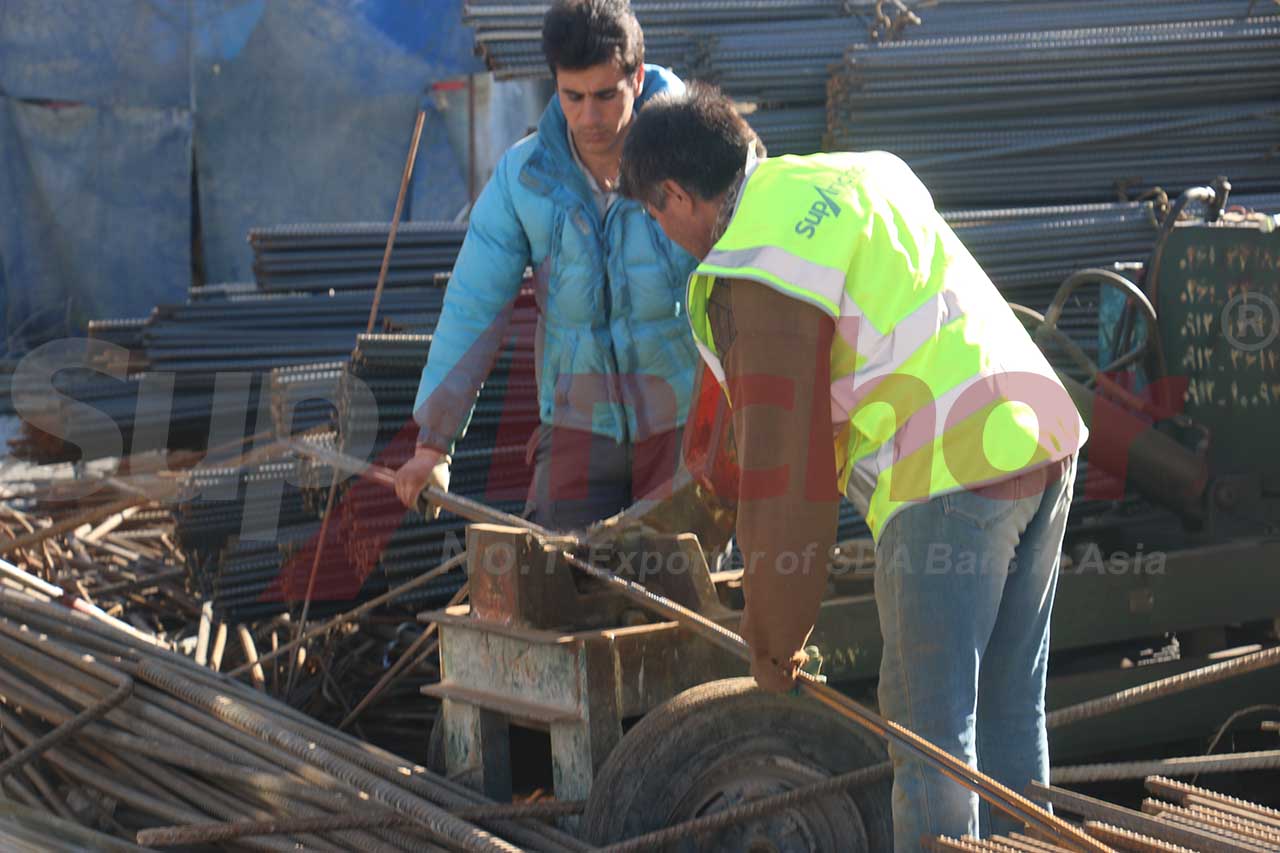
The image captured on site shows a technician connecting a new anchor segment to a coupler. Behind him, the sloped excavation face is densely patterned with installed anchors, each bearing a steel faceplate and nut. This systematic approach produced a composite reinforced mass that reduced deformations by more than 60% compared to original predictions.
“The anchor bolt system for geotechnical engineering from SupAnchor allowed us to install up to 30 anchors per shift, even in the most raveling ground,” said site foreman Matteo Rossi. “The integrated drill-and-grout process meant we never had to stop to clean out holes or fight with collapsed boreholes.”
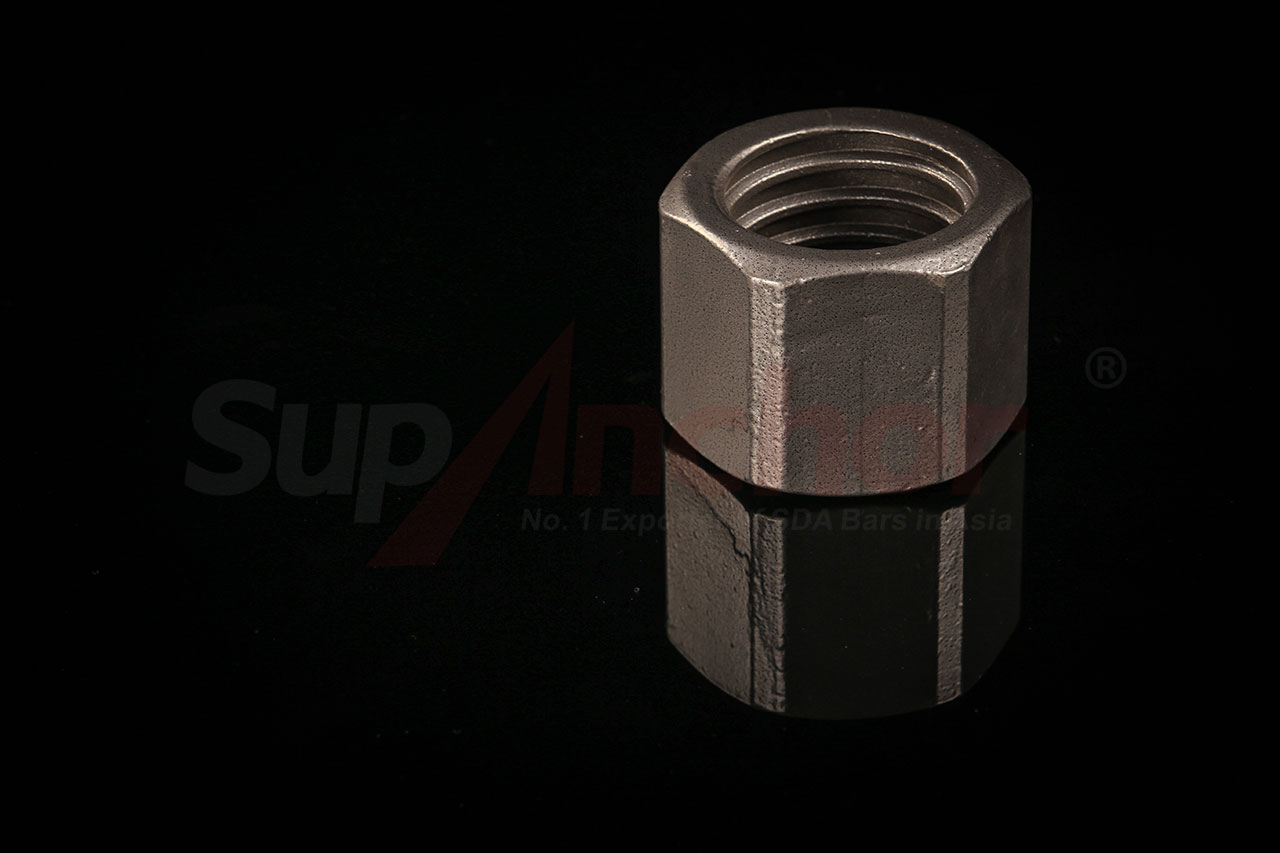
SupAnchor’s self drilling anchor for retaining walls and underground works draws on a class of steel with a minimum yield strength of 660 MPa and an ultimate tensile strength of 800 MPa. The fully threaded profile enables cutting and coupling at any point, preserving the full cross‑section strength. Key specifications of the anchors deployed in this project are summarized in the table below.
| Parameter | Value / Range | Project Significance |
|---|---|---|
| Outer diameter | 25 – 52 mm (commonly 32 mm used) | Balanced drillability and grout flow rate; suitable for rock sockets and soil nail walls. |
| Section length / coupler | 3 – 6 m per section, connected via forged couplers | Adapts to height‑restricted portals and stop‑and‑go traffic conditions. |
| Tensile strength (ultimate) | 800 MPa | Provides high safety margin against bolt rupture under dynamic loading from blasting or seismic events. |
| Yield strength | 660 MPa | Ensures elastic behavior under design loads; minimizes long‑term creep in permanent retaining walls. |
| Elongation A5 | ≥ 15% | Critical for energy absorption in tunnels and slopes subject to settlement or convergence. |
| Corrosion protection | Hot‑dip galvanizing ≥ 70 µm (dual barrier available) | Meets 100‑year service life requirement for permanent underground structures in aggressive environments. |
| Grout bore diameter | ≥ 15 mm internal | Allows consistent grout flow at low pressure, reducing washout in fractured zones. |
In addition to these properties, the anchors are tested in accordance with EN 14490 and ASTM standards. SupAnchor’s in‑house metallurgical laboratory subjects every production lot to proof loading and yield‑strength verification, ensuring reliability when used as a rock bolt for underground mining or urban tunneling.
The project’s just‑in‑time schedule demanded a responsive supply chain. SupAnchor, operating as a SDA bolt factory direct supply, shipped 18,000 linear meters of anchors within four weeks of order placement. The company’s European distribution hub pre‑assembled anchor sections with sacrificial drill bits and delivered them in weather‑protected bundles, ready for immediate use.
“Having a supplier that truly understands anchor bolt system for geotechnical engineering meant we could focus on the installation,” noted Rossi. “Technical specialists from SupAnchor visited the site weekly, helped calibrate drill parameters, and even trained our crews on efficient coupling techniques.”
This collaborative approach reflects SupAnchor’s commitment to partnership, moving beyond a simple ground anchor bolt factory transaction to a full engineering support model.
The success on this metro line is emblematic of a global trend. As municipalities expand public transit networks, the need for reliable ground stabilization anchor system solutions escalates. Projects routinely encounter karstic limestone, glacial tills, and urban fill—ground that defeats conventional drilling methods. The self drilling bolt for civil engineering has become an essential tool in the modern geotechnical toolkit.
In North America, the Infrastructure Investment and Jobs Act has unlocked funds for light‑rail extensions that cross earthquake‑prone zones. The micropile hollow bar anchor, often installed as foundation support for viaducts and station boxes, offers high‑capacity, small‑diameter options compatible with low‑headroom rigs. Similarly, European TEN‑T corridors demand slope stabilization measures that can be installed quickly without closing vital road arteries.
“Whether it’s a retaining wall in soft ground or a rock mass in a deep mine, the principle remains the same: integrate drilling and anchoring to save time and reduce risk,” said SupAnchor’s chief technical officer, Lars Bergström. “Our systems are designed to operate as a true soil nail system manufacturer solution—predrilled, grouted, and load‑tested in one shift.”
The lineage of the self drilling anchor system traces back to underground mining, where speed and safety are paramount. Miners have long used hollow bar anchors to support drifting tunnels and stopes. By adding a sacrificial bit, the same bars become a drill‑and‑grout bolt that installs in minutes, even in high‑stress, squeezing ground. These techniques have migrated seamlessly to civil construction.
In the current project, the contractor also used a temporary soil nail wall for an access ramp. Using a self drilling anchor for retaining walls, workers installed rows of 9‑meter nails at 1.5‑meter spacing. The nails’ high elongation capability allowed the wall to deform slightly, relieving earth pressure, while the galvanized coating protected against the mildly acidic groundwater. This temporary structure is designed to transition into a permanent cut‑and‑cover station wall, illustrating the versatility of the geotechnical reinforcement system.
Elsewhere, the same technology is being applied as micropile hollow bar anchor foundations for a bridge pier on a congested city street. The micropiles transfer load through the fill to competent rock at 20 meters depth, all within a 2.5‑meter headroom. The ability to use the same hollow bar for both drilling and reinforcement simplifies inventory—a single bar type serves multiple roles.
Permanent underground structures demand durability. SupAnchor’s double‑corrosion‑protection (DCP) system applies a fusion‑bonded epoxy layer over the galvanized bar, then encases the anchor in a corrugated sheathing filled with grout. In this project, critical anchors for the station diaphragm walls received DCP, ensuring a design life exceeding 100 years even in a chloride‑rich environment. The anchors are continuously monitored through load cells linked to a remote data logger; so far, load relaxation has been less than 3% over nine months.
“The ground stabilization anchor system we built here will outlast the very concrete it supports,” said Voss with a hint of satisfaction. “That’s the kind of resilience infrastructure investors expect.”
Behind the smooth installation lies a manufacturing ecosystem finely tuned to quality. SupAnchor’s production facilities, certified to ISO 9001, ISO 14001, and ISO 45001, rely on induction‑hardened threading lines that produce consistent profiles with micron‑level accuracy. Each bar undergoes ultrasonic and eddy‑current testing to detect any material flaw. The firm’s R&D team has recently introduced a new generation of carbide bits that increase penetration rates by 40% in abrasive quartzite, directly benefiting this project’s most demanding sections.
“As a ground anchor bolt factory, we don’t just sell products; we co‑engineer solutions,” Bergström emphasized. “Our engineers work with contractors to select the right bit geometry, coupler type, and grouting pressure for each lithology. That’s the ‘Collaborative’ part of our ethos.”
This innovation extends to digital tools: SupAnchor now offers a mobile app that calculates anchor load capacity, spacing, and grout take based on real‑time drilling data. On the current site, the app helped optimize anchor patterns, reducing the total number of anchors by 12% while maintaining the required factor of safety.
The metro expansion itself is a sustainability investment, projected to cut carbon emissions by 180,000 tons annually. But the choice of anchoring technology also contributed to a smaller environmental footprint. The drill‑and‑grout bolt method generates significantly less spoil than cased boreholes, and the use of a single hollow bar for drilling and anchoring cuts steel consumption by roughly 15% compared to separate drill string and tendon systems. Moreover, the elimination of open‑hole operations reduced disturbance to a protected groundwater aquifer, helping the project maintain strict environmental compliance.
For nearby residents, the benefit was tangible: low‑vibration drilling meant no property damage and minimal nuisance. “We’ve received positive feedback from the community, something rare for tunneling work,” said site community liaison officer Anna Kowalski. “The self drilling anchor bolt system truly made a difference in public acceptance.”
As the industry pushes toward digitalization and automation, the anchor bolt system for geotechnical engineering will increasingly rely on smart components. SupAnchor is currently piloting anchors with embedded fiber‑optic sensors that measure strain and temperature along the entire length, providing a distributed health map of the reinforced soil mass. Such technologies will enable true performance‑based design and predictive maintenance for critical infrastructure.
“We see a future where every soil nail system manufacturer offers diagnostics, not just hardware,” said Bergström. “The data from thousands of instrumented anchors will feed machine‑learning models that predict slope failure or tunnel convergence before it becomes dangerous.”
In the shorter term, the successful application on this metro line is already influencing specifications for upcoming high‑speed rail projects in neighboring countries. The combination of speed, adaptability, and proven long‑term performance makes the self drilling anchor system a compelling choice for any project where ground conditions defy conventional logic.
The metro extension is on track for commissioning in 2026, two quarters earlier than the baseline schedule. While many factors contributed—skilled labor, careful planning—the geotechnical team consistently points to the self drilling anchor for retaining walls as a critical enabler. “Without the hollow bar anchor technology, we would still be fighting the ground,” said Voss. “SupAnchor didn’t just supply a product; they provided peace of mind.”
This project underscores the value of selecting a partner with deep domain expertise. As a leading ground anchor bolt factory, SupAnchor combines manufacturing precision with field‑proven engineering. Their commitment to the core values of Professional, Innovative, Collaborative shines through every phase—from initial design support to on‑site troubleshooting.
For the global infrastructure community, this case study serves as a powerful reminder: in geotechnics, the right anchoring system isn’t just a component; it’s the foundation of success.
Disclaimer: Project details have been generalized to protect client confidentiality. Product specifications are representative and may vary by region.
SupAnchor's self drilling anchor system played a pivotal role in stabilizing steep slopes during a major highway expansion in the Alps, demonstrating advanced geotechnical reinforcement capabilities.
SupAnchor introduces the SupFRP GFRP Tie Rod, a corrosion-resistant, non-removable formwork solution that cuts costs and improves safety. Learn about its technical advantages and global impact.
SupAnchor's self drilling anchor system plays a critical role in a challenging European infrastructure project, providing efficient ground stabilization and geotechnical reinforcement in difficult soil conditions.
SupAnchor introduces the SupHulk PM series friction rock bolts, offering immediate load-bearing capacity and full-column friction support for mining and tunneling applications. The system features high yield loads and adapts to varied rock conditions.
SupAnchor's self drilling anchor system was deployed in a European alpine tunnel project, solving complex geological challenges with a single-pass drill-and-grout solution, highlighting the strength of hollow bar anchors.