
In a major infrastructure undertaking that highlights the importance of advanced geotechnical solutions, the Highway 7 expansion project through the rugged Carpathian Mountains has reached a key milestone. The tunneling segment, which traverses a highly fractured rock formation with heavy water ingress, has successfully stabilized its excavation front thanks to the deployment of a high-performance self drilling anchor system. Manufactured and supplied by SupAnchor, a leading soil nail system manufacturer and ground anchor bolt factory, these innovative anchors have proven instrumental in ensuring both worker safety and project timeline adherence. The $1.4 billion project, funded in part by the European Regional Development Fund, aims to create a crucial transport corridor linking two economic zones, reducing travel time by over two hours and alleviating congestion on winding mountainous roads that have claimed dozens of lives in the past decade.
The project, commissioned by the state road authority, involves the construction of a 2.8-kilometer dual-lane tunnel that will significantly reduce travel time across the mountainous region. However, early geological surveys revealed a mixed face of heavily jointed schist, loose cobbles, and unexpected water-bearing fissures, conditions that posed substantial risks of face collapse and delayed settlement. Traditional anchoring methods, such as driven soil nails or pre-grouted anchor bolts, were considered unsuitable due to the need for rapid installation in collapsing ground. It was at this juncture that the engineering consortium turned to SupAnchor’s self-drilling anchor technology. With a daily advance rate of just 1.2 meters in some sections, the project teetered on the brink of costly delays until the new system was approved.
The above construction site image captures a typical scene inside the tunnel heading. A crew of specialized miners and geotechnical engineers is seen positioning a hydraulic drill rig equipped with a self drilling anchor bolt. The hollow bar anchor is being simultaneously drilled and grouted, eliminating the need for a separate casing and drastically reducing installation time. The dusty environment, dimly lit tunnel arch, and systematic layout of previously installed anchors in the crown and sidewalls underscore the continuous, repetitive nature of the reinforcement process. In this high-risk zone, every minute counts, and the SupAnchor system’s ability to function as a drill-and-grout bolt is a game-changer. Workers rely on the instant bonding of the cement grout with the surrounding rock, creating a composite reinforcement that transforms loose, friable material into a self-supporting arch.
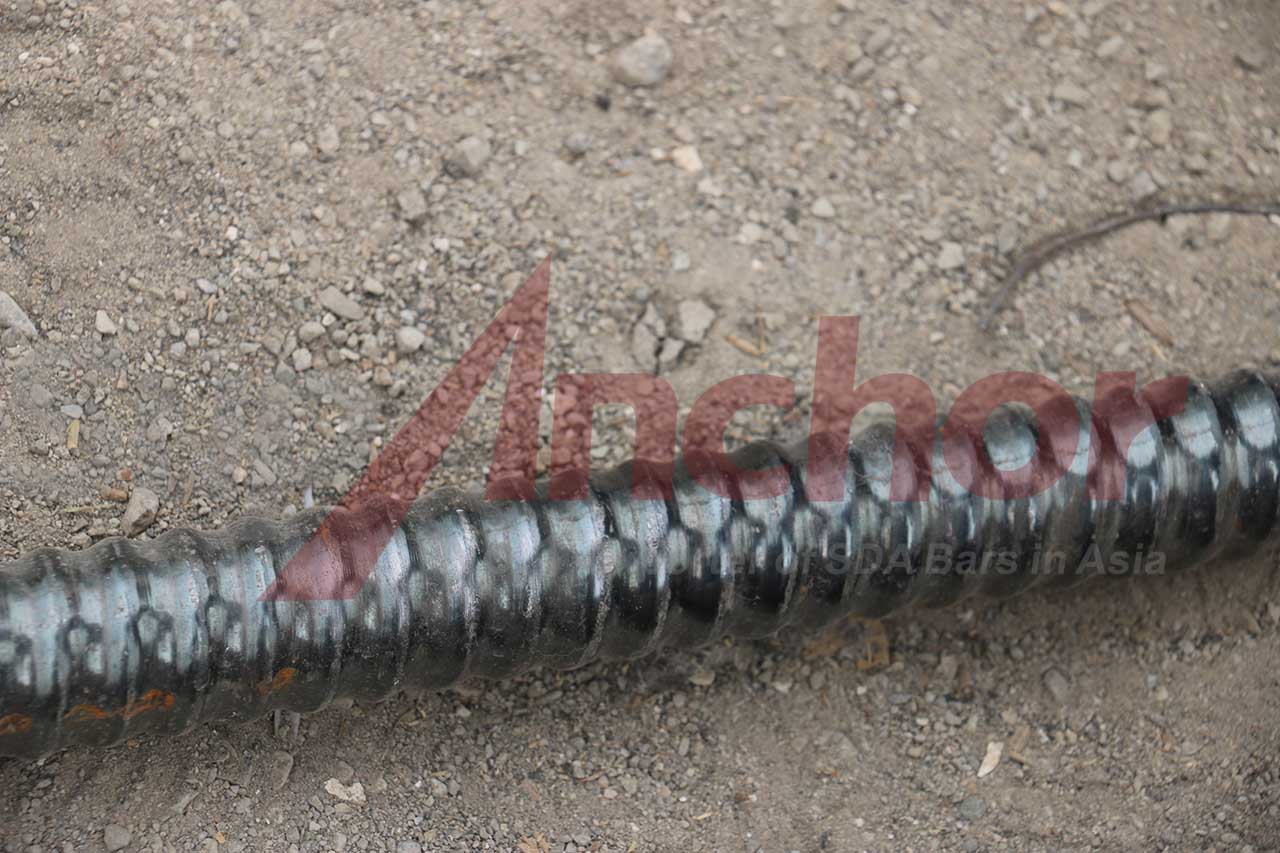
Success in such adverse conditions hinges on precise engineering. The SupAnchor geotechnical reinforcement system deployed here is not a one-size-fits-all product; it is tailored to the site’s specific demands. Below are the key technical specifications of the hollow bar anchor units used in the tunnel project, chosen after a rigorous series of pull-out tests and compatibility trials:
| Parameter | Specification |
|---|---|
| Anchor Type | R32-380 Hollow Bar Anchor |
| Outer Diameter | 32 mm |
| Inner Diameter (Hollow Core) | 18 mm |
| Length (per section) | 3.0 m / 4.0 m (connectable) |
| Tensile Strength (Yield) | ≥ 380 MPa |
| Ultimate Load Capacity | ≥ 550 kN |
| Corrosion Protection | Hot-dip galvanized (≥ 70 μm) + optional epoxy coating |
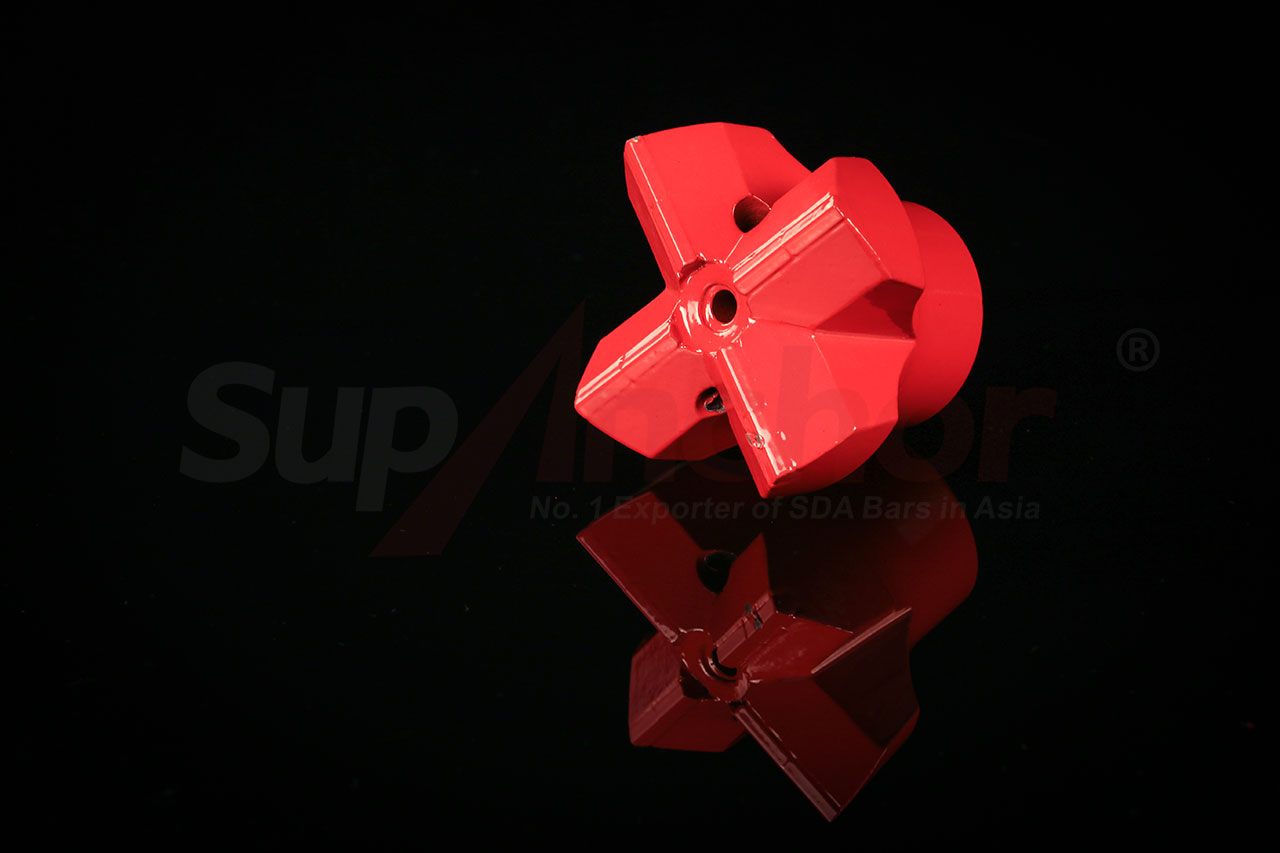
| Drill Bit | Carbide cross-cut bit, ∅ 64 mm |
| Grout | Cement-based, water/cement ratio 0.40–0.45 |
These parameters are not merely numbers on a datasheet; they directly address the site’s formidable challenges. The 550 kN ultimate load capacity provides a robust safety margin against the loose rock mass’s tendency to shift under high overburden pressure. The 32 mm diameter and thick-walled hollow bar ensure sufficient stiffness for drilling through abrasive schist without buckling. Furthermore, the hot-dip galvanization combined with a dense grout cover offers a dual corrosion barrier—essential for a tunnel that will see decades of damp, possibly acidic, groundwater exposure. The connectable sections allow the contractor to achieve lengths of up to 12 meters without sacrificing installation speed. As a micropile hollow bar anchor, these units also function as structural supports for subsequent permanent lining, demonstrating versatility. During installation, a pressure gauge monitors the injection process to guarantee a tight grout-rock bond, and spot-check pull-out tests are conducted every 50 anchors to verify adherence to design values.
Anchoring a tunnel face in real time is a discipline that combines art and science. The process begins with a detailed pattern layout, typically in a spiral or systematic grid determined by rock quality designation (RQD) assessments. Each drill rig mobilizes a self drilling bolt for civil engineering from the SupAnchor inventory. The hollow bar is connected to a swivel adapter that feeds high-pressure grout from a nearby mixing station. As the bar rotates and penetrates the ground, flushing medium (initially air or water) exits through the drill bit’s flushing holes; once the target depth is reached, the pump switches to grout, and neat cement paste is injected under pressure, filling the borehole and surrounding fissures simultaneously. The grout starts setting within 30 minutes, allowing for a continuous work cycle.
The site engineer on duty, interviewed for this report, noted: “We were losing 2–3 hours per anchor using traditional casing methods because the hole would collapse the moment we retracted the drill string. The SupAnchor system eliminates that entirely. We drill, we grout, we move on. Productivity has increased by at least 40%.” The project’s initial 8,000-anchor schedule now appears achievable within the dry season window, a critical factor given the region’s harsh winters. A further advantage is the reduction in equipment fleet: instead of separate drill rigs and grout pumps coordinated with casing crews, two compact rigs with integrated grouting setups can cover the face, cutting fuel consumption and maintenance overhead.
One of the most demanding applications has been the stabilization of the tunnel portal, where a steep cut slope required immediate reinforcement to prevent shallow landslides. Here, the SupAnchor ground stabilization anchor system was used as a self drilling anchor for retaining walls, pre-installed in a fan pattern before bulk excavation. The image above offers a glimpse into this operation: the rust-colored rock face, the orange-clad workers, and the long, slender anchor bars protruding from the grout-filled holes. These anchors tie back the retaining structure, which will later secure the permanent portal structure against lateral earth pressures and seismic loads. Continuous inclinometer monitoring in the first 72 hours after installation confirmed that movements were arrested within the first 2 mm, well below the alert threshold of 10 mm.
Additionally, in sections where the tunnel passes beneath a historic settlement, settlement control was paramount. SupAnchor’s anchor bolt system for geotechnical engineering was used to create an umbrella arch of micropiles ahead of the face. This pre-support canopy, made of 12-meter-long rock bolt for underground mining adapted for civil use, limited surface subsidence to less than 5 mm, well within the contractual tolerance. Residents above the tunnel have reported no perceptible vibrations or damage, a testament to the precise control afforded by the system. Moreover, the hollow core of the anchors, even after grouting, can be used for pressure relief or drainage, a feature that has been exploited in wet zones to lower pore water pressures behind the face.
This project is not an isolated success story; it reflects a broader transformation in underground construction and geotechnical engineering worldwide. The global infrastructure boom, coupled with climate-resilient design mandates, is driving demand for reliable ground stabilization anchor system solutions. Whether it’s high-speed rail tunnels through Alpine strata or metro expansions beneath dense urban centers, the need for fast, safe, and adaptable anchoring technologies has never been greater. The self drilling anchor system has emerged as a standard in such contexts, favored for its efficiency in collapsing ground and its minimal environmental footprint. According to a recent market analysis, the global geotechnical reinforcement market is projected to grow at a CAGR of 5.2% from 2023 to 2030, fueled by investments in transportation and renewable energy infrastructure such as hydropower caverns and wind turbine foundations.
In North America, the Biden administration’s Infrastructure Investment and Jobs Act has unlocked funding for dozens of tunneling and slope stabilization projects. In the European Union, the TEN-T network expansion prioritizes cross-border tunnels that often encounter unpredictable geology. These environments demand products that meet rigorous certification standards—such as CE marking, ASTM, and ISO 9001—all of which are met by the SupAnchor geotechnical reinforcement system range. As industry professionals seek to mitigate risk and shorten construction cycles, integrated drill-and-grout bolt technologies are becoming essential tools in the geotechnical toolbox. The technology also aligns with sustainability goals: fewer drill holes mean less spoil, and the use of low-carbon cementitious grouts is being trialed on several sites.
Moreover, the mining sector, which has historically driven innovation in rock anchoring, is witnessing a convergence with civil infrastructure applications. The rock bolt for underground mining and the hollow bar anchor used in a road tunnel now share a common lineage, and manufacturers like SupAnchor are leveraging this cross-sector synergy to deliver high-capacity, versatile systems. As a soil nail system manufacturer, SupAnchor’s factory direct supply chain ensures that large-scale projects receive consistent quality and delivery, a crucial factor when a single tunneling project can consume over 50,000 anchor meters. Recent catastrophic tunnel collapses in other parts of the world have underscored the need for rigorous quality control; SupAnchor’s ISO-certified factory conducts mill tests on every batch of steel and full-length ultrasonic inspection on critical load-bearing bars, providing an audit trail that gives confidence to project insurers and owners alike.
Behind every successful project is a team dedicated to engineering excellence. SupAnchor, headquartered in China with a rapidly expanding global footprint, has established itself as a trusted ground anchor bolt factory and innovator. The company’s product portfolio spans from self drilling anchor bolt systems to advanced micropile hollow bar anchor and accessories, all manufactured under strict ISO 9001, ISO 14001, and OHSAS 18001 certified processes. Their “SDA” series, the backbone of the Carpathian tunnel project, embodies a philosophy of continuous improvement, with features like patented thread designs for superior energy absorption and easy coupling. The R&D center in Nanjing collaborates with leading universities to push the boundaries of anchoring technology, including the development of corrosion-resistant duplex stainless steel bars for marine environments.
SupAnchor’s reach extends to over 30 countries, with landmark references in the Gotthard Base Tunnel service galleries, metro expansions in Singapore and Doha, and slope stabilization along the Trans-Canada Highway. By offering SDA bolt factory direct supply, the company eliminates intermediaries, delivering cost savings and technical support directly to contractors. On-site training and commissioning by SupAnchor engineers ensure that local crews can achieve the designed performance quickly, a valued service that has led to successful partnerships with major international contractors. As the industry moves toward more mechanized, safer construction methods, SupAnchor’s commitment to innovation—exemplified by its ongoing research into smart anchoring solutions with embedded sensors—positions it at the forefront of the anchor bolt system for geotechnical engineering sector.
In conclusion, the Highway 7 tunnel project is a testament to what can be achieved when the right technology meets the right expertise. The SupAnchor self drilling anchor system has not only overcome some of the most challenging geological conditions but also set a new benchmark for safety and efficiency in infrastructure works. As nations worldwide ramp up investments in resilient transportation networks, the role of advanced geotechnical solutions—backed by companies with a clear vision of professionalism, innovation, and collaboration—will only grow in significance. With its proven performance and global perspective, SupAnchor is poised to remain a key player in shaping the underground landscapes of the future. The Carpathian project, with its complex demands, has become a showcase for how a well-engineered hollow bar anchor solution can turn a high-risk tunnel into a model of modern construction. As the final lining is cast and the boring machine advances, the thousands of anchors silently holding the mountain at bay stand as a quiet tribute to engineering ingenuity.
SupAnchor's self drilling anchor system played a pivotal role in stabilizing steep slopes during a major highway expansion in the Alps, demonstrating advanced geotechnical reinforcement capabilities.
SupAnchor introduces the SupFRP GFRP Tie Rod, a corrosion-resistant, non-removable formwork solution that cuts costs and improves safety. Learn about its technical advantages and global impact.
SupAnchor's self drilling anchor system plays a critical role in a challenging European infrastructure project, providing efficient ground stabilization and geotechnical reinforcement in difficult soil conditions.
SupAnchor introduces the SupHulk PM series friction rock bolts, offering immediate load-bearing capacity and full-column friction support for mining and tunneling applications. The system features high yield loads and adapts to varied rock conditions.
SupAnchor's self drilling anchor system was deployed in a European alpine tunnel project, solving complex geological challenges with a single-pass drill-and-grout solution, highlighting the strength of hollow bar anchors.