
As highway expansion projects push deeper into mountainous terrain, engineers are increasingly confronted with unstable slopes, fractured rock masses, and groundwater inflows that threaten both construction schedules and long-term stability. A recent retaining wall project along a strategic transportation corridor serves as a textbook example of how advanced geotechnical solutions can tame even the most unruly geology. At the heart of this success story lies SupAnchor's self drilling anchor system—a technology that combines drilling, grouting, and anchoring into one seamless operation, drastically cutting installation time while delivering exceptional load-bearing performance.
The project involved constructing a 300-meter-long reinforced concrete retaining wall to support a new highway lane carved into a steep hillside. Initial geotechnical investigations revealed a complex mix of weathered shale, sandstone lenses, and siltstone with pervasive joints and fissures. Groundwater was present at shallow depths, causing rapid deterioration of open boreholes. Early attempts with conventional driven soil nails and cased anchoring systems resulted in hole collapse, grout loss, and inconsistent bond strengths—costly delays that threatened the entire project timeline.
Faced with these setbacks, the project’s geotechnical consultant recommended switching to a self drilling anchor bolt solution that could be installed without a pre-drilled hole. SupAnchor, a recognized soil nail system manufacturer and ground anchor bolt factory, was selected to supply the custom-engineered hollow bar anchors after a rigorous technical evaluation.
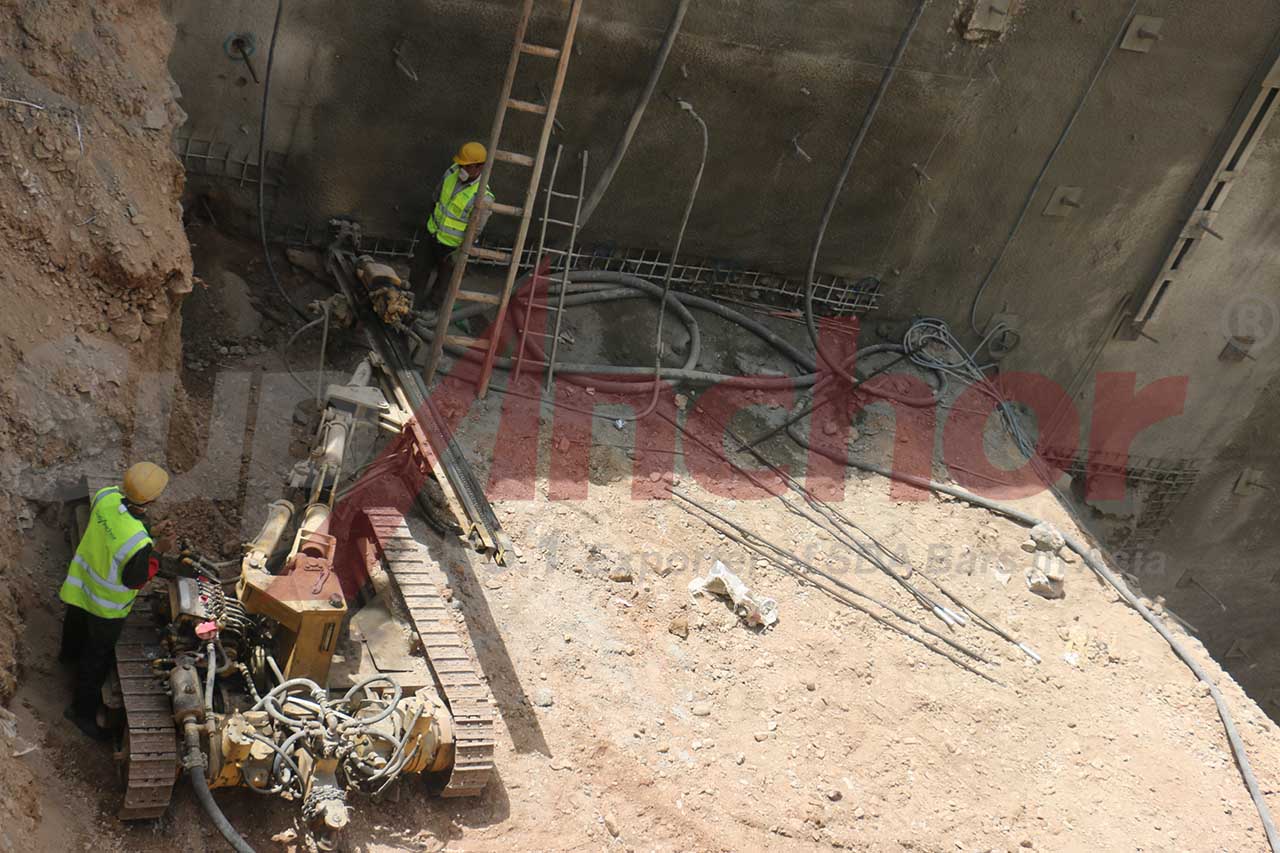
SupAnchor’s field engineers worked closely with the contractor to optimize the anchor design. The chosen configuration consisted of high-strength drill-and-grout bolts with left-hand rope threads, enabling rapid coupling and excellent grout adhesion. Each anchor was installed using a hydraulic rotary-percussive drilling rig, with cement grout injected through the hollow core of the bar while drilling progressed. This “drill-and-grout” method eliminated the risk of hole collapse and ensured full encapsulation of the anchor in a single pass—a critical advantage in the water-charged ground.
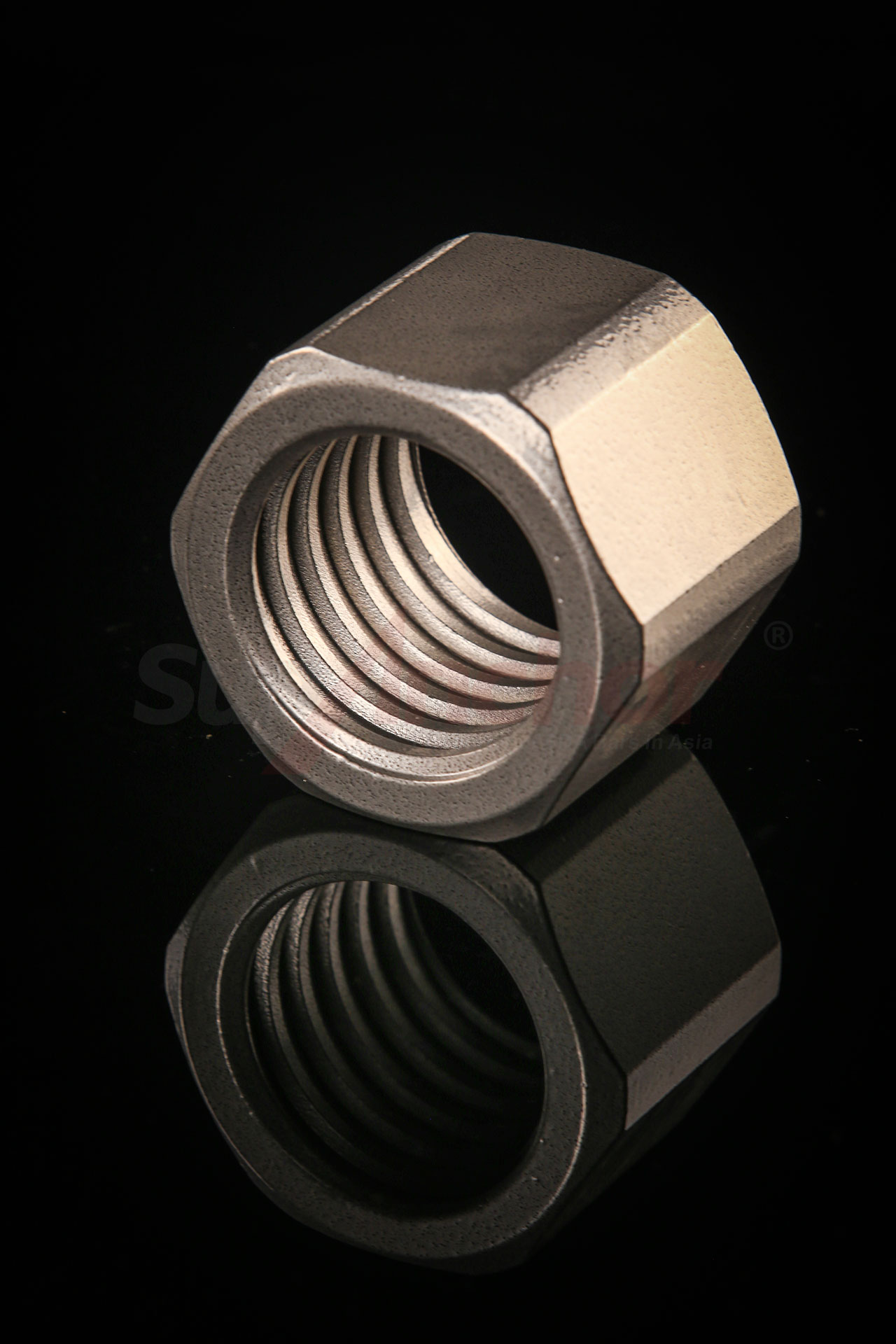
The following table summarizes the key technical parameters of the anchor bolt system for geotechnical engineering deployed on site:
| Parameter | Value |
|---|---|
| Bar Diameter | 32 mm, 40 mm (main load-bearing), 50 mm |
| Steel Grade | S355J2H, S460NH, and custom high-tensile options |
| Tensile Strength | 660 MPa (standard), 830 MPa, 1050 MPa |
| Thread Type | Left-hand rope thread (ISO 10208 compliant) |
| Corrosion Protection | Hot-dip galvanized (≥85 μm) or epoxy-coated (≥200 μm) |
| Coupling System | Energy-absorbing threaded couplers, full-strength connections |
| Anchor Length | Custom up to 12 m per section (extendable with couplers) |
The 40 mm diameter, S460NH grade hollow bars were driven to depths of 9–12 meters and post-tensioned to 80% of their ultimate strength after the grout had cured. Real-time monitoring of grout return pressure and drilling torque ensured that each anchor achieved the design bond length, even in the highly fractured zones. The rapid installation cycle—averaging just 12 minutes per anchor, including drilling, grouting, and coupling—allowed the contractor to install over 1,200 anchors across varying ground conditions without a single failure.
The self drilling anchor for retaining walls proved indispensable for slope stabilization in this project. By eliminating the need for temporary casing, the system reduced spoil generation by up to 60% compared to conventional methods, minimizing environmental disturbance in the sensitive hillside. Furthermore, the immediate bond provided by the rapid-set grout allowed the wall’s facing panels to be partially loaded just days after anchor installation, accelerating the construction sequence by an estimated three weeks.
From a broader perspective, this project underscores the growing importance of geotechnical reinforcement systems in modern civil engineering. As urban centers expand into marginal lands and climate change intensifies rainfall events, the demand for reliable ground stabilization anchor systems has never been greater. SupAnchor’s self drilling bolt for civil engineering exemplifies the industry’s shift toward integrated, one-pass solutions that minimize risk while maximizing productivity. Whether for retaining walls, tunnel forepoling, or slope stabilization, the ability to install anchors in collapsing ground without separate drilling and grouting stages represents a paradigm shift in construction practice.
While the highway project showcased the system’s effectiveness in soil and weathered rock, the same hollow bar anchor technology is equally at home in hard rock environments. SupAnchor’s high-tensile bars serve as rock bolt for underground mining applications, offering immediate support in development headings and stopes. The hollow core allows for simultaneous or subsequent grouting, transforming a simple rock bolt into a fully bonded, corrosion-protected tendon. For deep excavations and urban tunneling, the micropile hollow bar anchor variant provides high-capacity foundation support in constrained access conditions, often replacing bulky drilled shafts.
This cross-sector versatility is what makes SDA bolt factory direct supply an attractive proposition for contractors and engineering firms worldwide. By sourcing directly from SupAnchor’s ISO 9001-certified manufacturing facilities, clients receive consistent quality, traceable mill certificates, and logistical support tailored to project schedules. The company’s in-house research team continuously refines thread geometry, steel chemistry, and corrosion protection systems, ensuring that its ground anchor bolt factory output meets the evolving demands of codes such as Eurocode 7 and ASTM standards.
Behind every successful geotechnical project lies a manufacturer that understands the stakes. SupAnchor has built its reputation on three pillars: professionalism, reflected in its rigorous quality control and onsite technical support; innovation, demonstrated by patented drilling systems that push the boundaries of anchor performance; and collaboration, embodied in its approach to working closely with design engineers to tailor solutions to site-specific challenges. With a portfolio spanning highway retaining walls, hydropower tunnels, metro stations, and open-pit mines, SupAnchor continues to set the benchmark for what a self drilling anchor system can achieve.
For the latest retaining wall project, the results speak volumes: zero anchor failures during load testing, a 25% reduction in overall foundation costs, and full compliance with the strictest deformation criteria. As infrastructure spending grows worldwide, the construction industry is increasingly turning to technologies that deliver certainty in uncertain ground. SupAnchor’s anchor bolt system for geotechnical engineering not only answers that call but redefines what is possible beneath the surface.
SupAnchor's self drilling anchor system played a pivotal role in stabilizing steep slopes during a major highway expansion in the Alps, demonstrating advanced geotechnical reinforcement capabilities.
SupAnchor introduces the SupFRP GFRP Tie Rod, a corrosion-resistant, non-removable formwork solution that cuts costs and improves safety. Learn about its technical advantages and global impact.
SupAnchor's self drilling anchor system plays a critical role in a challenging European infrastructure project, providing efficient ground stabilization and geotechnical reinforcement in difficult soil conditions.
SupAnchor introduces the SupHulk PM series friction rock bolts, offering immediate load-bearing capacity and full-column friction support for mining and tunneling applications. The system features high yield loads and adapts to varied rock conditions.
SupAnchor's self drilling anchor system was deployed in a European alpine tunnel project, solving complex geological challenges with a single-pass drill-and-grout solution, highlighting the strength of hollow bar anchors.