
In the heart of the European Alps, a monumental infrastructure project is underway that promises to reshape transalpine connectivity. The Neue Alpentransversale (NAT) tunnel, a 36-kilometer railway base tunnel, has faced some of the most complex ground conditions in the history of tunneling. At the forefront of the geotechnical solution is the SupAnchor self drilling anchor system, a versatile geotechnical reinforcement system that has proven indispensable in securing unstable rock masses and ensuring worker safety.
The project, scheduled for completion in 2028, will cut travel time between Zurich and Milan by over an hour. However, the mixed geology—ranging from heavily fractured schists to water-bearing fault zones—posed a severe risk of collapse and groundwater ingress. Conventional support methods such as traditional rock bolts and steel sets were deemed insufficient or too time-consuming. After extensive testing, the contractor turned to SupAnchor's self drilling anchor bolt for its unique ability to drill, grout, and anchor in a single operation, even in collapsing ground.
“The conditions were some of the worst we’ve seen,” said Dr. Hans Gruber, the project’s chief geotechnical engineer. “We needed a solution that could provide immediate support and adapt to the rapidly changing ground. The hollow bar anchor from SupAnchor gave us exactly that.”
The Alpine orogeny has created a labyrinth of rock types, fault lines, and water channels. In several sections of the NAT tunnel, the rock quality designation (RQD) dropped below 25%, indicating very poor rock mass. This demanded a ground stabilization anchor system that could be installed quickly and efficiently without destabilizing the surrounding soil or rock. SupAnchor’s self drilling bolt for civil engineering is engineered for such extreme environments.
The principle is elegantly simple: a hollow bar anchor with a disposable drill bit is drilled into the ground using a rotation-percussion hammer. As drilling proceeds, cement grout is pumped through the hollow core, simultaneously flushing the hole and bonding the anchor with the surrounding ground. This drill-and-grout bolt method eliminates the need for a pre-drilled hole and casing, saving time and reducing the risk of borehole collapse. For the NAT project, this meant advancing tunnel support at a rate of up to 12 meters per day in some sections, even through running ground.
At the construction face, workers handle the SupAnchor SDA bolt with precision. The system includes a range of diameters from 25 mm to 40 mm and lengths up to 12 meters, allowing engineers to tailor the support to the specific load requirements. In the NAT tunnel, 32 mm diameter anchors were predominantly used, delivering an ultimate tensile strength of 660 MPa. Corrosion protection was critical due to the aggressive alpine groundwater; thus, a double protection system—hot-dip galvanizing plus a polyethylene (PE) sleeve—was specified for permanent installations.
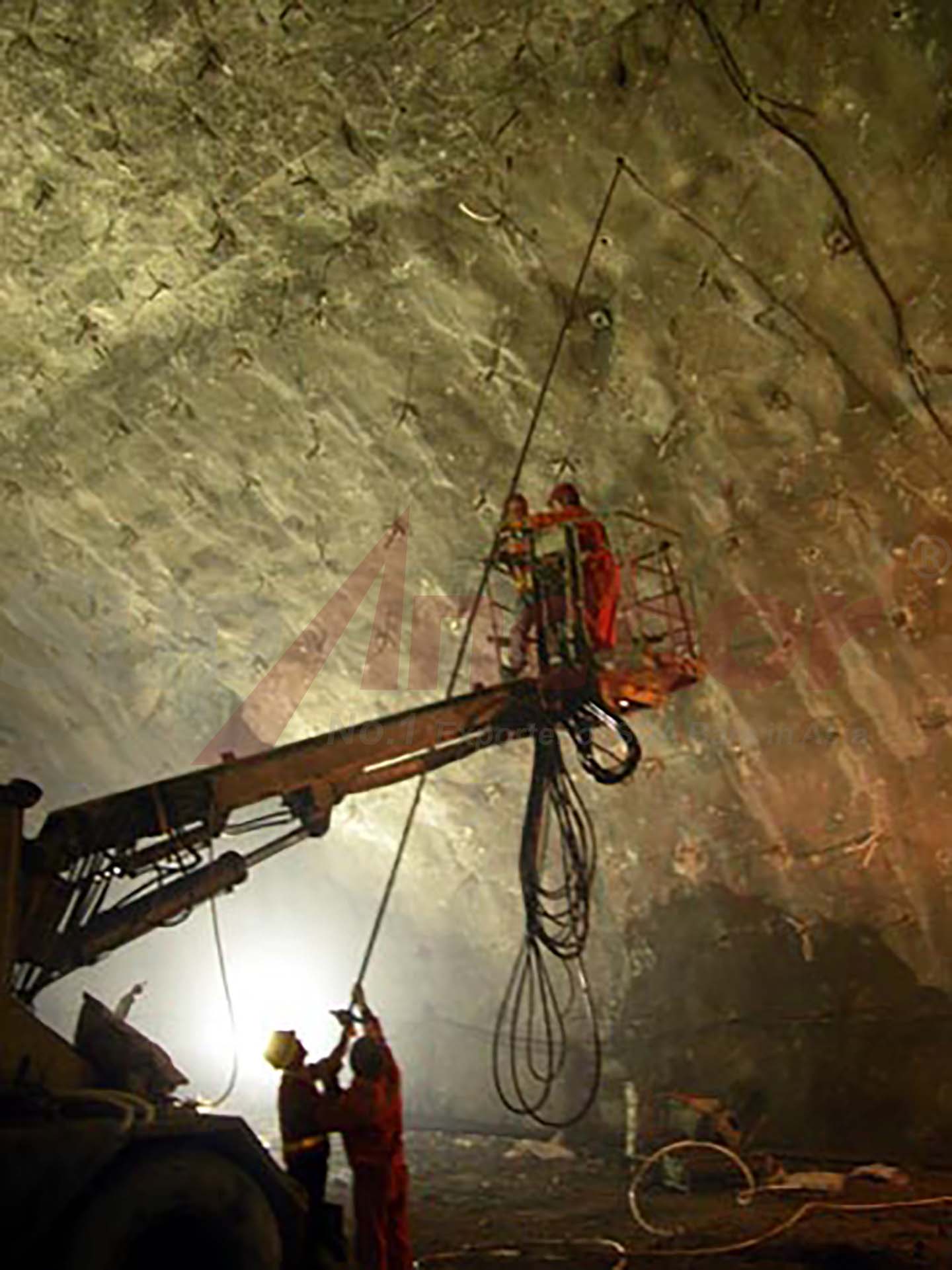
The on-site image captures a typical installation sequence: a drill jumbo positions the anchor, and the grout is injected simultaneously. This seamless integration reduces the number of equipment changes and enhances safety. “The self drilling anchor system significantly reduced our exposure time,” noted the site supervisor. “We could install a full round of support in one-third the time of conventional methods.”
The self drilling anchor bolt stands out for its robust engineering. Below is a summary of the key technical specifications that made it ideal for the NAT project:
| Parameter | Specification |
|---|---|
| Anchor Type | Hollow Bar Anchor (drill-and-grout bolt) |
| Nominal Diameter | 32 mm (also available: 25, 30, 40 mm) |
| Length Options | 2 m, 3 m, 4 m, 6 m, 9 m, 12 m (customizable) |
| Ultimate Tensile Strength | 660 MPa (min. yield strength: 500 MPa) |
| Corrosion Protection | Hot-dip galvanized + PE coating (optional: double corrosion protection) |
| Drill Bit Type | Carbide cross bit or button bit for various ground conditions |
| Thread System | R25, T30, R32, T40 (ISO 10208 compliant) |
| Application | Soil nailing, rock bolting, micropile, ground stabilization anchor system |
These parameters align with the needs of a ground anchor bolt factory that supplies to demanding civil engineering projects. The hollow bar anchor’s ductility and bond strength ensure long-term stability, crucial for a tunnel with a design life of 100 years. SupAnchor, as a soil nail system manufacturer, ensures each batch meets stringent ISO 9001 and EN 14490 standards.
While the NAT tunnel is a flagship project, the self drilling anchor system is equally effective in other sectors. In urban environments, the self drilling anchor for retaining walls has been used to stabilize deep excavations, prevent settlement, and protect adjacent structures. For metro stations and basements, the system’s minimal vibration and noise make it ideal for sensitive locations. In mining, the same rock bolt for underground mining provides reliable support in high-stress environments, enhancing ore extraction safety.
Contractors appreciate the SDA bolt factory direct supply model, which reduces lead times and costs. By sourcing directly from the anchor bolt system for geotechnical engineering manufacturer, project owners gain access to technical support, custom lengths, and rapid delivery, a significant advantage in fast-paced construction schedules.
The success of the NAT project reflects a broader shift in geotechnical engineering. As global infrastructure investment surges—reaching a projected $9 trillion annually by 2025—the demand for efficient, reliable ground reinforcement solutions is skyrocketing. Tunneling projects, in particular, are pushing the boundaries of depth and complexity. Urbanization is driving the need for underground transit in megacities, from the Delhi Metro to the Grand Paris Express. In all these, the self drilling anchor system has emerged as a go-to solution.
The reasons are clear: traditional drilling and anchoring methods often require multiple steps and are prone to delays in loose or water-charged ground. The hollow bar anchor eliminates the risk of hole collapse, reduces grout loss, and provides immediate load-bearing capacity. It is a prime example of a geotechnical reinforcement system that enhances both safety and productivity.
Environmental considerations also favor the drill-and-grout bolt technique. With less spoil generation and reduced cement consumption (thanks to the direct grouting process), the carbon footprint is lower than that of conventional anchor systems. As regulatory frameworks tighten, such advantages become decisive in project approvals.
SupAnchor, headquartered in China with a growing global footprint, has established itself as a trusted partner in ground stabilization anchor system technology. Founded in 2005, the company has steadily expanded its product range to include a full suite of self drilling anchor bolt solutions, micropiles, and soil nails. Its commitment to “Professional, Innovative, Collaborative” values is evident in the continuous improvement of its products.
The company operates state-of-the-art manufacturing facilities that meet international quality standards, including ISO 9001, ISO 14001, and OHSAS 18001. Every self drilling bolt undergoes rigorous tensile testing and dimensional checks. The SDA bolt factory direct supply chain ensures that clients receive certified products without intermediary markups.
Over the years, SupAnchor has contributed to iconic projects worldwide: from high-speed rail tunnels in Italy to hydropower dams in Nepal. The brand’s rock bolt for underground mining has been used in some of the deepest gold mines in South Africa, while its micropile hollow bar anchor has supported skyscraper foundations in Dubai. In each case, SupAnchor’s engineering team collaborates closely with contractors to develop custom solutions, embodying the “Collaborative” spirit.
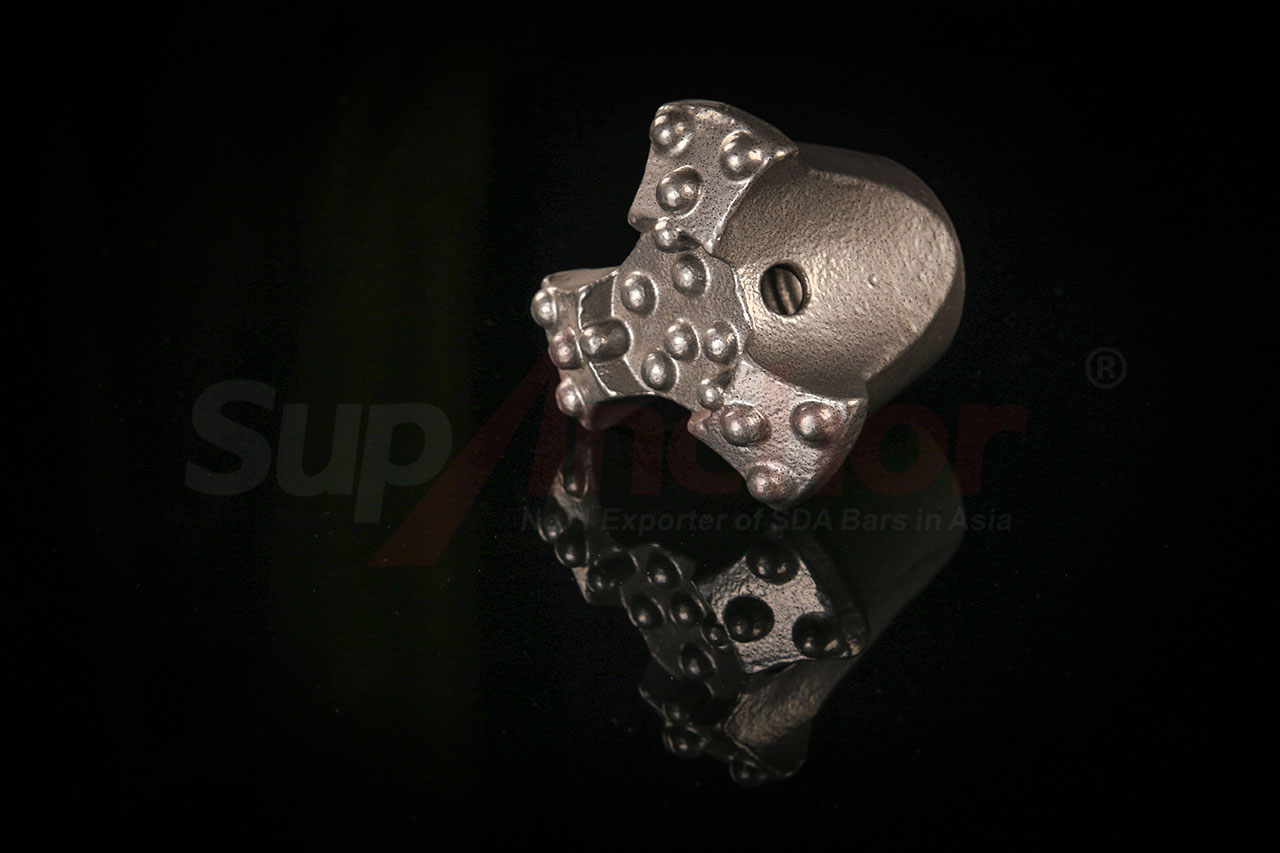
The image of the self drilling anchor bolt illustrates the rugged, dependable design: a high-strength steel bar with a coarse thread for optimal grout bonding, and a carbide bit ready for immediate use. This is the product that has become synonymous with reliability in some of the world’s most challenging environments.
As the NAT tunnel progresses, the lessons learned are being disseminated across the industry. The ability of the self drilling anchor system to handle unpredictable ground conditions without compromising on speed or safety sets a new standard. For emerging markets where infrastructure development is in top gear, adopting such proven geotechnical reinforcement systems will be crucial to avoiding costly delays and accidents.
SupAnchor, as an anchor bolt system for geotechnical engineering leader, is poised to play a pivotal role. With ongoing R&D into higher-yield steels, environmentally friendly grouts, and smart anchor monitoring, the company is driving the next wave of innovation. In a world that demands more from its underground spaces, the self drilling anchor bolt remains a silent but indispensable guardian.
For more information on SupAnchor’s products and projects, visit the official website at www.supanchor.com.
SupAnchor's self drilling anchor system provides efficient ground stabilization in challenging geology, with high-strength hollow bar anchors and corrosion protection for civil engineering projects.
SupAnchor introduces a corrosion-resistant GFRP solid bolt with high tensile strength, lightweight design, and non-conductive properties for slope stabilization, tunnel support, and mining applications.
A European transport project uses SupAnchor's self drilling anchor system to stabilize loose overburden and fractured rock. Hollow bar anchors provide immediate load capacity, corrosion protection, and long-term geotechnical safety.
SupAnchor introduces SupFRP® GFRP reinforcement rebar with high tensile strength, corrosion resistance, and versatile shapes for demanding construction applications across Europe and North America.
SupAnchor introduces a stainless steel self-drilling hollow anchor combining 3-in-1 drilling, grouting, and reinforcing with superior corrosion resistance for marine, chemical, and permanent geotechnical applications.