
The Grand Alpine Rail Link, one of Europe’s most ambitious infrastructure ventures, has reached a critical juncture in its geotechnical stabilization phase. Initiated in 2015 and slated for completion in 2028, this 150-kilometer high-speed rail corridor traverses the heart of the Alps, linking Munich to Verona and forming a vital node in the Trans-European Transport Network. Once operational, it will slash passenger travel times by three hours and shift a significant portion of freight traffic from road to rail, cutting CO2 emissions by an estimated 800,000 tonnes annually. However, the sheer complexity of the alpine geology—characterized by fractured schist, weathered gneiss, and fault zones with high water ingress—has posed formidable challenges that demand the most advanced ground support solutions. As tunnel boring machines (TBMs) advance through these mixed-face conditions, engineers have turned to SupAnchor, a globally recognized ground anchor bolt factory, to supply an innovative geotechnical reinforcement system. The company’s proprietary self drilling anchor system is now supporting the primary lining in unstable sections, enabling safe excavation and long-term tunnel integrity. This self drilling bolt for civil engineering applications has already proven its worth, allowing the project to stay on schedule despite the unpredictable rock mass behavior.
Traditional rock support methods in tunneling often rely on pre-drilled holes, followed by insertion of a grouted rebar or cable anchor. In the Alpine environment, however, such methods can be prohibitively slow and risky: collapsing boreholes, flowing ground, and the need for immediate support make a single-pass solution essential. The project’s geotechnical team therefore specified a hollow bar anchor that could combine drilling, anchoring, and grouting in one continuous operation. This approach not only saves precious time but also enhances worker safety by minimizing exposure to unsupported ground. SupAnchor’s involvement began early in the design phase, with its engineers collaborating on anchor patterns and load capacities tailored to the expected rock mass classifications.
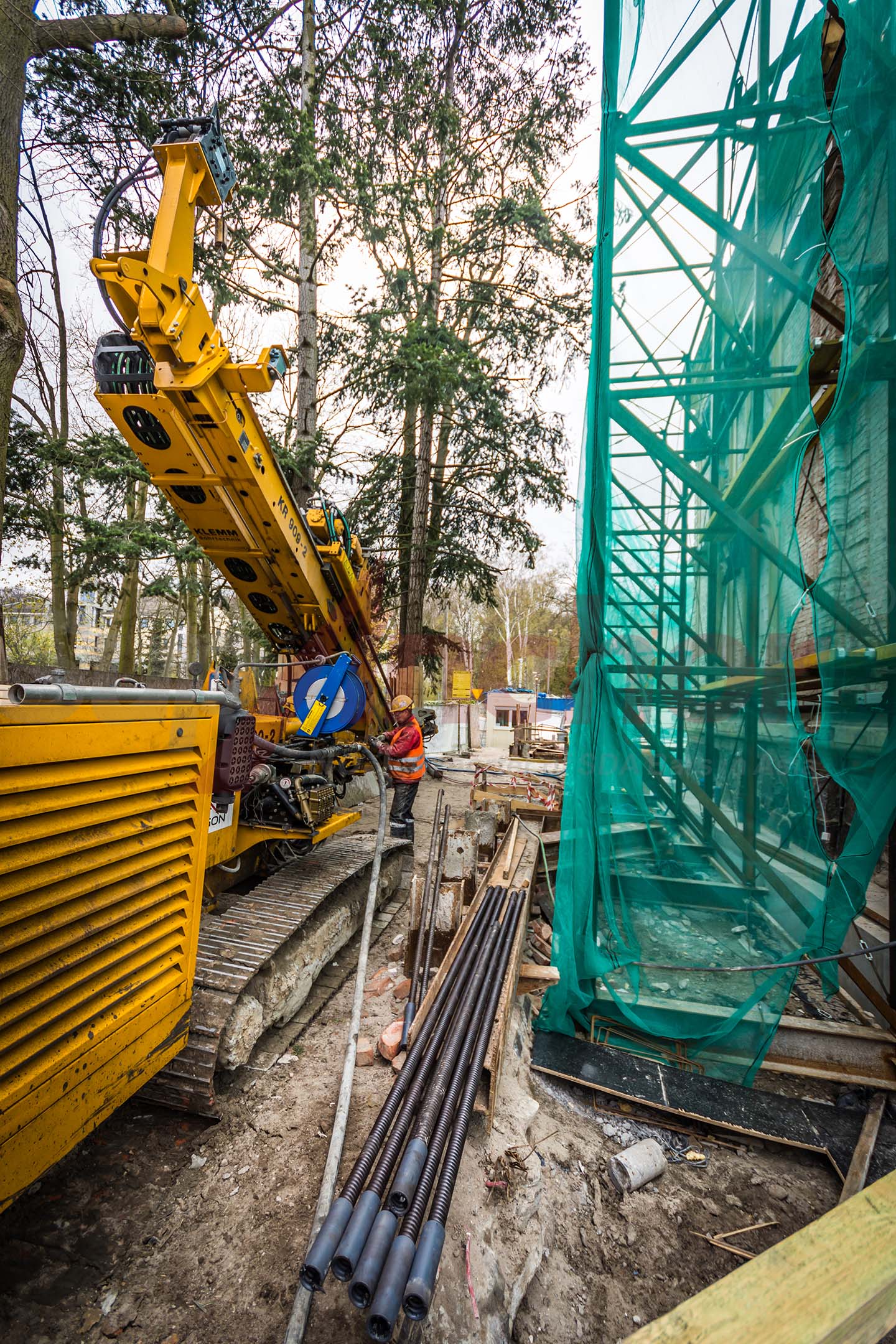
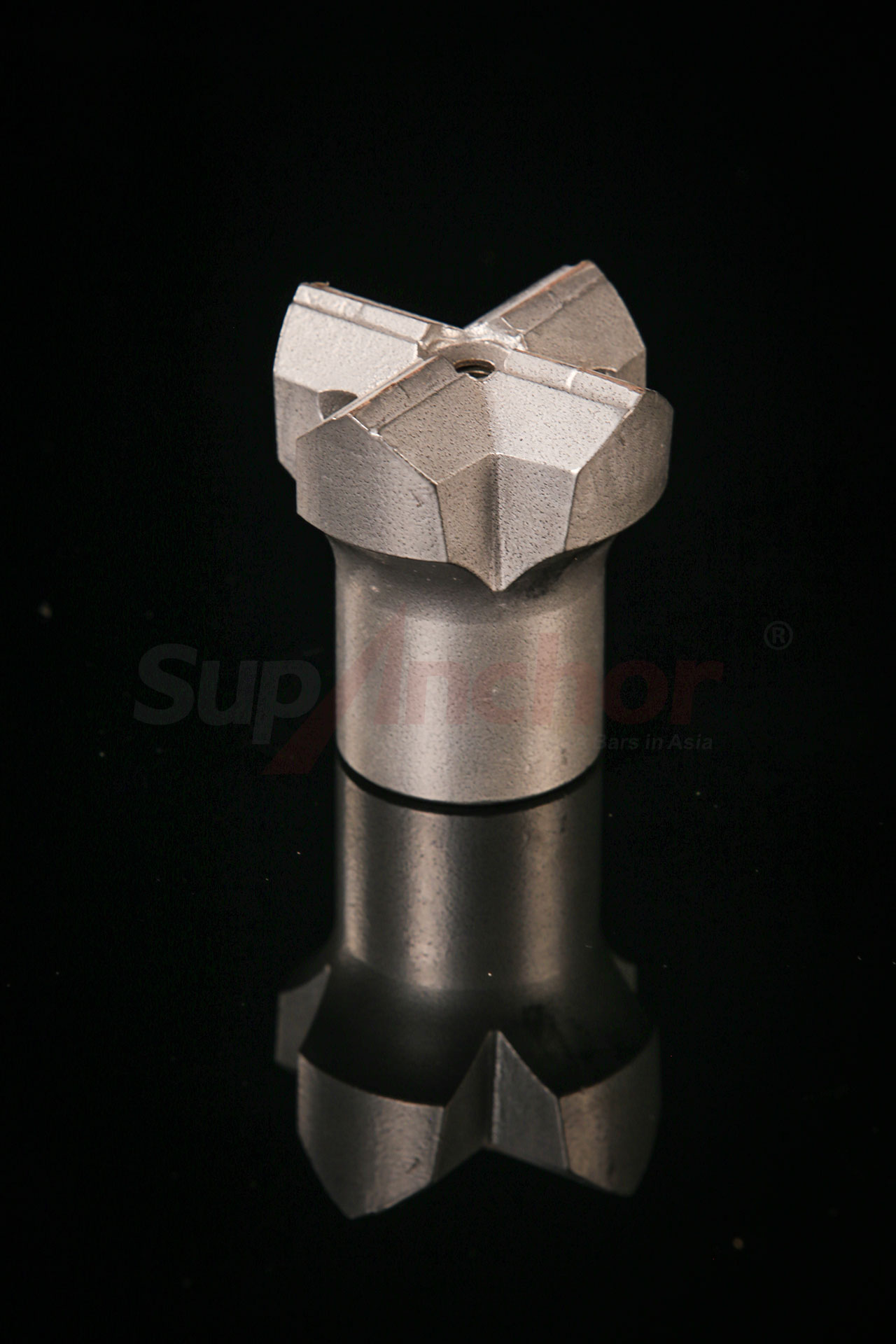
Construction photographs from the site capture the intensity of the work underway. In the image, a crew member in high-visibility gear operates a hydraulic rotary-percussive drill, advancing a 6-meter-long self drilling anchor bolt into the tunnel crown. A fine mist of water suppresses silica dust, while a grout hose stands ready to pump cementitious grout the moment the drill bit reaches the required depth. The anchor’s continuous external left-hand thread, coupled with a sacrificial tungsten-carbide bit, allows it to penetrate the abrasive rock without a temporary steel casing. Pressurized grout is then injected through the hollow core, flowing through radial openings just behind the bit. This fills fractures, consolidates the ground around the bolt, and creates a bond zone that mobilizes skin friction almost instantly. The drill-and-grout bolt technique eliminates the separate steps of drilling, casing removal, anchor insertion, and grouting, thereby compressing a typical 45-minute cycle into just 20 minutes.
“In a project of this scale, every minute counts,” comments Dr. Markus Lehner, senior geotechnical engineer on site. “With conventional methods, we would need separate drilling, extraction, anchor insertion, and grouting steps. The self drilling anchor for retaining walls and tunnel crowns eliminates those intermediate steps, enabling us to install up to 30 anchors per shift, a nearly 40% increase in productivity compared with traditional methods.” The same drill-and-grout bolt principle is being applied in the cross passages and emergency egress tunnels, where confined spaces demand rapid and reliable ground support. The self drilling anchor bolt has demonstrated exceptional versatility, being equally effective in crown support, bench stabilization, and even temporary face reinforcement where running ground is encountered.
Central to the success of the stabilization effort are the hollow bar anchors supplied by SupAnchor. These components are manufactured from high-grade alloy steel at the company’s ISO 9001:2015 certified ground anchor bolt factory, where each batch undergoes rigorous tensile testing, dimensional checks, and coating thickness measurements. The anchor bolt system for geotechnical engineering employed here has been validated through independent pull-out tests to meet the strict requirements of European standard EN 14490. Below are the typical technical specifications for the R32 hollow bar system used on the Alpine project:
| Parameter | Specification |
|---|---|
| Bar Diameter | 32 mm (R32 profile) |
| Ultimate Tensile Load | ≥ 500 kN |
| Yield Strength | 500 MPa |
| Elongation at Failure | ≥ 5% |
| Corrosion Protection | Hot-dip galvanized (≥ 85 µm), optional epoxy coating available |
| Drilled Length | Up to 12 m single pass; extendable via couplers to 24 m or more |
| Grouting Method | Continuous post-grouting through hollow bore, tube-à-manchette compatible |
The high tensile strength and generous elongation ensure that the anchors can accommodate rock deformation without brittle failure, a critical requirement in squeezing ground. Hot-dip galvanizing provides a durable barrier against the acidic groundwater prevalent in the region, while the option for epoxy coating covers areas where stray currents from railway electrification might accelerate corrosion. The ability to couple bars enables reaching anchor lengths of 24 meters or more, which is necessary to tie the primary shotcrete lining back to the competent rock mass behind the plastified zone. The self drilling anchor bolt’s ribbed profile enhances mechanical interlock with the grout, while the hollow core permits the installation of extensometers or the injection of supplementary grout at a later stage. This self drilling bolt for civil engineering complies fully with EN 14490, giving designers confidence in its predictable performance.
As a trusted ground anchor bolt factory, SupAnchor provides SDA bolt factory direct supply to the project site, cutting lead times and enabling just-in-time delivery that matches the TBM’s advance rate. The hollow bar design also facilitates post-grouting verification via tube-à-manchette techniques, giving engineers confidence that the ground stabilization anchor system is performing as designed. In sections where a micropile hollow bar anchor function is needed—such as underpinning the invert in swelling ground—the same product can be adapted by simply altering the grout mix and drilling parameters. Furthermore, SupAnchor offers a complete ground stabilization anchor system that includes couplers, plates, nuts, and centralizers, ensuring compatibility and reliability from a single source.
The successful deployment of the self drilling anchor system in the Alpine tunnel underscores a broader shift in the civil engineering and mining sectors. Where unpredictable ground once forced costly delays, modern self drilling bolt for civil engineering now allows contractors to adapt in real time. Unlike passive rock bolts or conventional grouted bar anchors, these active reinforcement elements can be tensioned immediately after installation, offering immediate ground support—a critical factor in sequential excavation methods (SEM) and NATM tunnelling. The concept is not entirely new: rock bolt for underground mining has long been a staple in South African and Australian hard rock mines, where split sets and friction bolts are common. However, the drill-and-grout bolt integrates the best of both worlds: the speed of a friction bolt with the durability of a fully grouted anchor. Traditional rock bolts for underground mining have long followed a similar philosophy, but the hollow core for simultaneous grouting elevates the performance significantly, especially in weak, water-bearing ground.
According to a recent market study by Frost & Sullivan, the global ground stabilization anchor system market is expected to grow at a compound annual growth rate of 6.2% through 2030, driven by urbanization, aging infrastructure repairs, and the push for resilient transportation networks. Micropile hollow bar anchor applications are also expanding in underpinning and foundation retrofitting, where restricted access and low vibration requirements make the self-drilling technique the preferred choice. For any soil nail system manufacturer, adaptability to diverse ground conditions is a key competitive advantage, and the self-drilling nail has become a fundamental offering. Contractors appreciate the self drilling anchor for retaining walls because it can be installed without temporary shoring, reducing both cost and environmental footprint. In urban settings, where traffic cannot be halted, the ability to drill, grout, and anchor in one pass from a compact drill rig is invaluable.
“We’re seeing a convergence of needs,” observes Dr. Elena Rossi, a geotechnical consultant based in Milan. “Owners demand faster schedules, safer workplaces, and longer asset life. The rock bolt for underground mining has been adapted for civil works and is becoming standard for European infrastructure. The versatility of these anchor bolt system for geotechnical engineering is remarkable: from slope stabilization near motorways to shaft sinking for hydropower projects. Compared to a standard rock bolt for underground mining, the self-drilling version offers far better installation performance in broken ground and eliminates the separate grouting stage.” This trend is driving demand for innovative geotechnical reinforcement systems that can handle complex static and dynamic loads while meeting stringent durability standards.
Behind every reliable ground anchor bolt factory lies a culture of continuous improvement. SupAnchor, established in 2001, has grown into a leading soil nail system manufacturer with a global footprint spanning more than 40 countries. Its production facilities, certified to ISO 9001:2015, employ state-of-the-art cold rolling and hot forging lines, ensuring consistent thread geometry and material properties. The company’s R&D team collaborates with universities and engineering firms to push the performance envelope of hollow bar anchor technology. Recent innovations include left-hand thread couplers that prevent unwinding during drilling, sacrificial bits coated with tungsten-carbide for extended penetration in abrasive rock, and corrosion-resistant alloys for marine environments. As a testament to its design excellence, the self drilling anchor for retaining walls and underground chambers have been employed in some of the world’s largest infrastructure works, from the metro expansions in Singapore to the hydropower caverns of the Himalayas. These projects consistently demonstrate that a well-engineered geotechnical reinforcement system can deliver both short-term productivity gains and long-term reliability, even under the most extreme conditions.
SupAnchor operates under the guiding philosophy “Professional, Innovative, Collaborative.” This is reflected in its end-to-end technical support, which spans from pre-tender design and numerical modeling to on-site pull-out testing and training. For the Alpine tunnel project, engineers from SupAnchor worked alongside the main contractor to develop a customized SDA bolt factory direct supply program that integrated real-time torque-and-grout monitoring, ensuring every soil nail system manufacturer product met the strict 100% pull-out test criterion. The company’s SDA bolt factory direct supply model eliminates intermediaries, reducing cost and lead time while maintaining traceability from the production line to the tunnel face. Reliability is paramount for any soil nail system manufacturer, and SupAnchor delivers through rigorous material testing, CE certification, and a responsive engineering support team. From micropile hollow bar anchor solutions in dense urban centers to long roof support bolts in cavernous mines, the product range reflects a deep understanding of ground behavior and a commitment to solving the toughest anchor bolt system for geotechnical engineering challenges.
As the Grand Alpine Rail Link progresses toward its 2028 completion, the lessons learned from its most difficult sections will likely reshape design standards for future transalpine crossings. For the wider industry, the message is clear: innovative ground support solutions like the drill-and-grout bolt are no longer niche alternatives but essential components of the modern engineer’s toolkit. With firms like SupAnchor driving forward manufacturing excellence, the self drilling anchor system is set to anchor the next generation of resilient, safe, and efficient underground works. From deep tunnels to urban excavations, the era of integrated drilling, anchoring, and grouting has arrived, and it promises to make infrastructure not only faster to build but also safer and more durable for generations to come.
SupAnchor's self drilling anchor system provides efficient ground stabilization in challenging geology, with high-strength hollow bar anchors and corrosion protection for civil engineering projects.
SupAnchor introduces a corrosion-resistant GFRP solid bolt with high tensile strength, lightweight design, and non-conductive properties for slope stabilization, tunnel support, and mining applications.
A European transport project uses SupAnchor's self drilling anchor system to stabilize loose overburden and fractured rock. Hollow bar anchors provide immediate load capacity, corrosion protection, and long-term geotechnical safety.
SupAnchor introduces SupFRP® GFRP reinforcement rebar with high tensile strength, corrosion resistance, and versatile shapes for demanding construction applications across Europe and North America.
SupAnchor introduces a stainless steel self-drilling hollow anchor combining 3-in-1 drilling, grouting, and reinforcing with superior corrosion resistance for marine, chemical, and permanent geotechnical applications.