
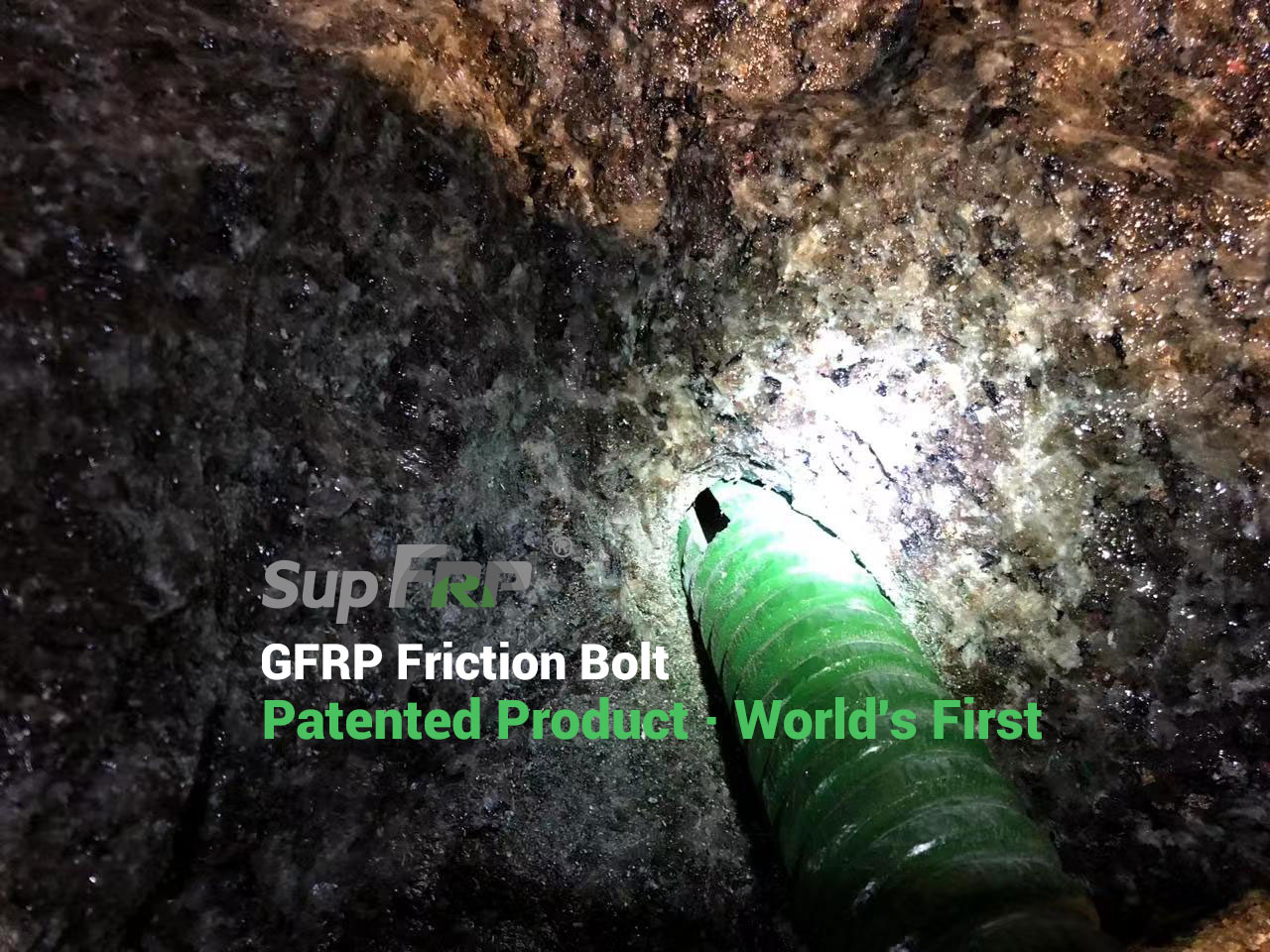
Underground construction and mining face an enduring challenge: corrosion of steel support elements. In aggressive ground conditions, conventional steel friction bolts degrade rapidly, compromising structural integrity and escalating maintenance. SupAnchor, an internationally recognized ground anchor bolt factory and geotechnical reinforcement system innovator, has engineered a breakthrough—the SupFRP® GFRP Friction Bolt. This patented, world-first glass fiber reinforced polymer friction bolt is set to transform rock support across corrosive, spark-sensitive, and high-insulation environments.
The GFRP Friction Bolt leverages advanced composite materials to outmatch traditional steel in critical metrics. Engineered for direct-installation without grout, it delivers immediate anchorage through a friction-fit mechanism. Key parameters underscore its superiority:
| Property | Steel Friction Bolt | GFRP Friction Bolt |
|---|---|---|
| Corrosion Resistance | Low | High |
| Density (g/cm³) | 7.8 | 2.0 |
| Heat Conductivity (w/m) | 64 | 0.75 |
| Electroconductibility | Yes | No |
| Tensile Elongation (GPa) | 200 | 55 |
| Tensile Strength (MPa) | 390 | 1000 |
| Working Temperature | <1000°C | -50°C – 100°C |
With a density only one-quarter of steel, the bolt drastically reduces handling fatigue and transport costs. Its non-conductivity and spark-free installation are vital for mines with explosive atmospheres or tunnel boring near existing utilities. The high tensile strength of 1000 MPa, coupled with an ultimate load capacity of 350 kN (for the FB-48 model), ensures robust ground control. The bolt's low heat conductivity adds fire-resistance benefits, while its ease of cutting and crushing permits direct ore mixing without damaging crushers or conveyors—an operational game-changer for mining operations.
Corrosion Resistance: Unlike steel that rusts when exposed to humidity and acidic water, GFRP is inherently inert. This eliminates secondary maintenance and prolongs support life beyond 50 years in most environments. Density: The 2.0 g/cm³ density not only eases manual handling but also reduces the dead load on support systems. In high-seismicity areas, lighter reinforcement can improve dynamic response. Electro-conductibility: Non-conductivity prevents electrolytic corrosion and makes the bolt safe for railways and power installations. Tensile Strength: At 1000 MPa, the GFRP bolt surpasses many high-strength steels, while its strain compatibility with rock mass avoids stress concentration. Working Temperature: Suitable for permafrost (-50°C) and moderate heat (100°C), the composite remains stable where steel embrittlement or softening would occur.
Installation Efficiency: The bolt is installed using standard friction bolt drivers. Its low weight allows one-person handling, and the absence of sparks and heat simplifies work in explosive atmospheres. The bolt's smooth surface and optimized taper enable rapid driving, often reducing bolting cycles by 30% compared to steel alternatives. Visual indicators on the bolt collar confirm correct installation torque, ensuring consistent quality.
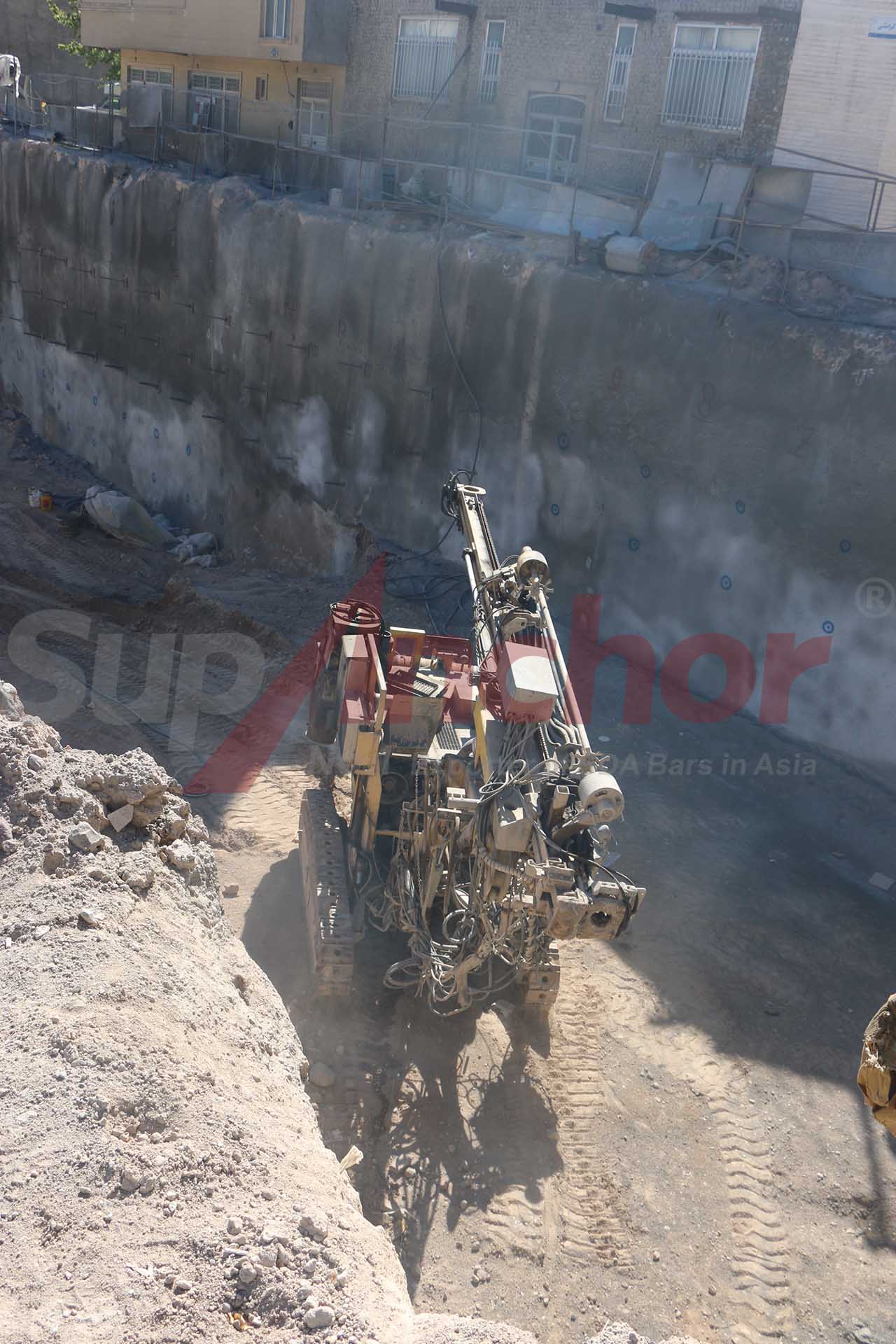
The GFRP Friction Bolt excels where steel falter. In highly acidic mine waters, coastal slope stabilization, or underground excavations in chemically aggressive formations, corrosion is a non-issue. For open-pit mines, the bolt's light weight speeds up installation cycles; its non-magnetic nature avoids interference with sensitive equipment. Tunnel rehabilitation projects benefit from the bolt's insulation, eliminating stray current corrosion risks. Moreover, the working temperature range (-50°C to 100°C) makes it suitable for permafrost tunnels and moderate thermal environments. Although its tensile elongation is lower than steel's, the design accommodates ground movement through controlled deformation, a feature engineered for dynamic rock masses.
Standard SupFRP® GFRP Friction Bolts are offered in diameters from 33 mm to 50 mm, with various lengths to match drilling patterns. The FB-48 example provides a 350 kN ultimate load, 70 kN end load, and a weight of only 1.7 kg/m—metrics that reduce logistical burdens without sacrificing support capacity. Whether deployed as temporary roof reinforcement or permanent secondary support, this bolt integrates into existing drilling and installation workflows with minimal adjustment.
Mining: In underground gold mines with high chloride groundwater, GFRP bolts have demonstrated zero corrosion after five years, whereas steel bolts required replacement. Their easy crushing saves millions in crusher maintenance annually. Tunneling: For tunnel boring machine (TBM) bored tunnels, the non-conductivity of GFRP eliminates stray current corrosion, a common problem near DC rail systems. Slope Stabilization: On coastal highway slopes, the bolt's resistance to salt spray ensures long-term performance without protective coatings. Emergency Repair: Due to its lightweight, GFRP bolts can be airlifted to remote sites, enabling rapid deployment after landslides. The bolt also meets the strict fire-safety standards required for road and railway tunnels, as it does not produce toxic fumes when exposed to fire.
Globally, aging infrastructure and new mega-projects demand cost-effective, durable ground support. According to industry analysts, the geotechnical reinforcement system market is shifting toward composite materials to combat corrosion-related failures. The GFRP Friction Bolt directly addresses this trend, cutting maintenance cycles and enhancing long-term safety. Its ability to be left in blasted ore without compromising mineral recovery—thanks to low density (easy flotation separation)—adds direct value to mine operators. In tunneling, the avoidance of friction sparks during installation is a decisive safety advantage, aligning with strict EU and North American regulations.
SupAnchor's innovation stands to redefine the hollow bar anchor and drill-and-grout bolt sectors by providing an instant, corrosion-free alternative that requires no cementitious grout. This reduces installation time and uncertainty related to grout curing, particularly in cold or wet conditions. As a soil nail system manufacturer with a full portfolio, SupAnchor now offers a complete range from self drilling anchor systems to this new-generation friction bolt, enabling engineers to select the optimal ground control scheme.
While the initial unit cost may be higher than steel, the total lifecycle cost is dramatically lower. A comparative study in a copper mine showed a 40% reduction in support-related expenses over a decade, factoring in maintenance, downtime, and ore processing penalties. The push for sustainable mining practices also favors GFRP, as its production has a lower carbon footprint per unit strength compared to steel. Furthermore, the elimination of chemical anti-corrosion coatings contributes to environmental compliance.
Founded on principles of professionalism and collaboration, SupAnchor holds ISO 9001, ISO 14001, and OHSAS 18001 certifications. The company operates state-of-the-art manufacturing facilities and an accredited testing laboratory, ensuring every product meets rigorous international standards. Their self drilling anchor bolt system has been employed in landmark projects across Europe, the Americas, and Asia, from high-speed rail tunnels to deep mine shafts. The GFRP Friction Bolt represents the latest milestone in R&D investment, backed by field trials in Chile, Australia, and Scandinavia.
SupAnchor's in-house development team includes polymer chemists and geotechnical engineers who collaborated to tailor the composite's modulus and surface texture. ISO 17025 accredited testing validates every batch. The company has supplied over 5 million meters of self drilling anchor system products for projects such as the Gotthard Base Tunnel and the Los Bronces mine. Their round-the-clock technical support and global distribution network ensure responsive service.
Engineers and procurement specialists may contact SupAnchor's global network for on-site support, customization, and technical consulting. By merging material science with underground engineering expertise, SupAnchor continues to deliver solutions that are Professional, Innovative, Collaborative.
For more information on the SupFRP® GFRP Friction Bolt or to request a technical data sheet, visit www.supanchor.com.
SupAnchor's self drilling anchor system provides efficient ground stabilization in challenging geology, with high-strength hollow bar anchors and corrosion protection for civil engineering projects.
SupAnchor introduces a corrosion-resistant GFRP solid bolt with high tensile strength, lightweight design, and non-conductive properties for slope stabilization, tunnel support, and mining applications.
A European transport project uses SupAnchor's self drilling anchor system to stabilize loose overburden and fractured rock. Hollow bar anchors provide immediate load capacity, corrosion protection, and long-term geotechnical safety.
SupAnchor introduces SupFRP® GFRP reinforcement rebar with high tensile strength, corrosion resistance, and versatile shapes for demanding construction applications across Europe and North America.
SupAnchor introduces a stainless steel self-drilling hollow anchor combining 3-in-1 drilling, grouting, and reinforcing with superior corrosion resistance for marine, chemical, and permanent geotechnical applications.