
A transformational railway project in the European Alps has once again highlighted the indispensable role of advanced geotechnical solutions in modern civil engineering. The Alpine Rail Corridor – Lot 3, a 15‑kilometer twin‑tube tunnel designed to slash travel times between northern and southern Europe, encountered geological conditions that pushed conventional construction methods to their limits. Amid high overburden, fractured rock, and persistent water inflows, the project turned to SupAnchor’s self drilling anchor system as a reliable and efficient means of ground stabilization.
The self drilling anchor bolt, a hollow bar that doubles as a drill rod and permanent anchor, proved to be the linchpin of the excavation support strategy. This innovative geotechnical reinforcement system allowed crews to install anchors rapidly while simultaneously grouting, thereby securing the face immediately and preventing collapses. The result was a marked improvement in safety and a significant acceleration of the tunneling cycle.
The economic stakes were enormous: the Alpine Rail Corridor is part of a pan‑European transport network, with an estimated total cost exceeding €8 billion. Delays caused by ground instability could have cost millions per day. Thus, the selection of a robust ground stabilization anchor system was not merely a technical choice but a strategic one.
The tunnel alignment traverses a sequence of highly deformed metamorphic rocks, primarily schists and phyllites, intersected by fault zones and shear seams. Overburden depths reach up to 1,300 meters, generating in‑situ stresses that often exceed 20 MPa. Additionally, the rock mass exhibited a pervasive foliation dipping at unfavorable angles, leading to potential wedge failures. Groundwater, fed by melting snow and glacial aquifers, flowed through open joints, reducing rock mass quality and increasing the risk of running ground. Such conditions are classic candidates for a self drilling anchor for retaining walls and tunnel support, where immediate stabilization is paramount.
Conventional rock bolts and cable anchors would have required pre‑drilling, casing in collapsing sections, and multiple post‑grouting steps. In such difficult ground, the hollow bar anchor offered a single‑pass solution. The drill‑and‑grout bolt technique not only provided immediate support but also sealed water paths, a critical advantage in reducing water inflow. The self drilling anchor system performed excellently, maintaining face stability even in sections where the rock mass rating (RMR) dropped below 20.
The project’s chief geotechnical engineer, Dr. Markus Hofer, explained: “We evaluated several anchor bolt systems for geotechnical engineering. The hollow bar self drilling anchor was the only system that consistently met our requirements for immediate load capacity, ease of installation, and long‑term durability. The ability to grout through the bar while drilling sealed the water paths and stabilized the rock mass almost instantly. It was a game‑changer.”
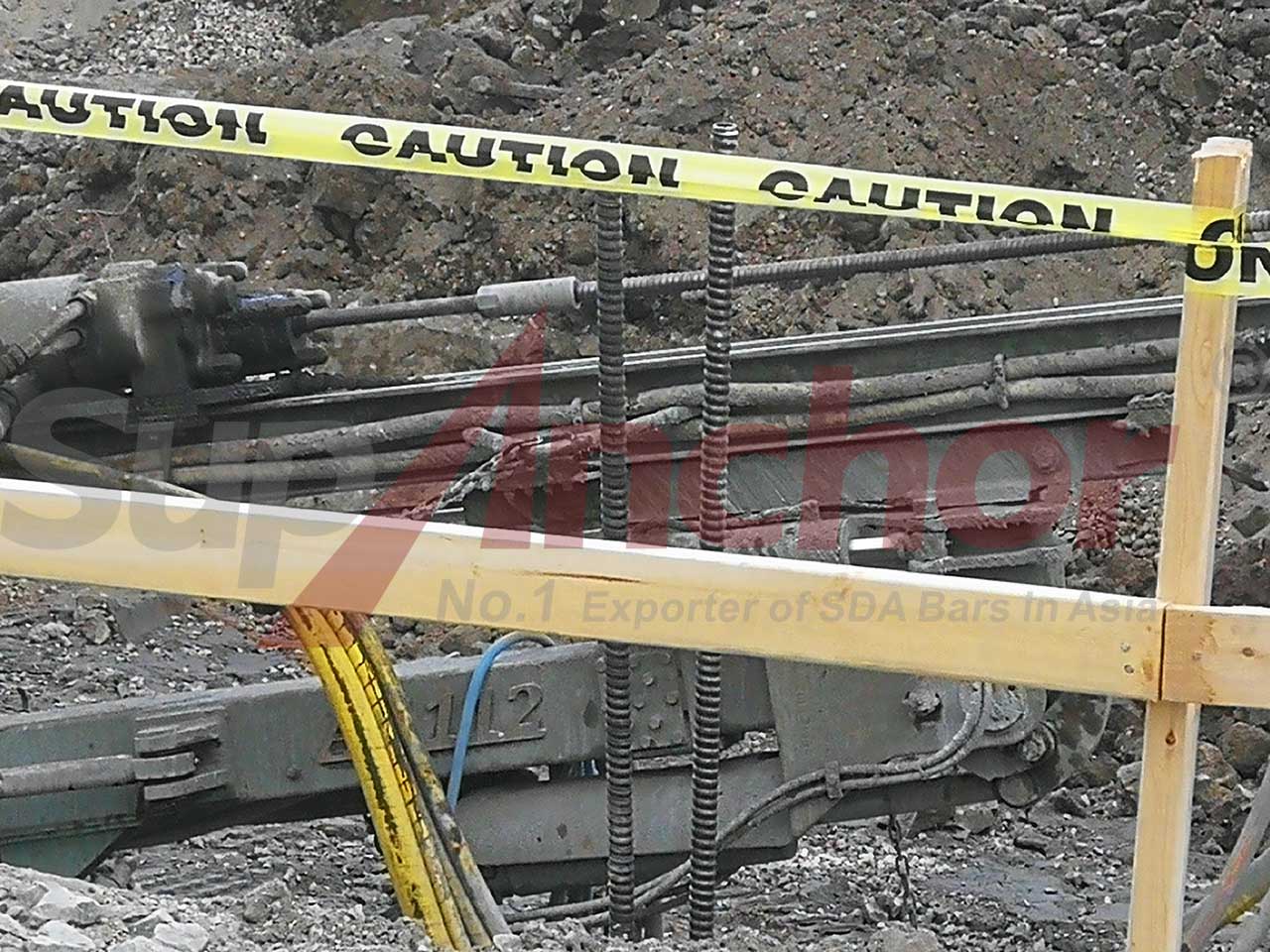
The construction photographs taken during a critical support phase show a drilling jumbo positioning a self drilling anchor bolt at the tunnel face. The hollow bar, typically supplied in 3‑meter segments and coupled on site, is rotated and percussed until it reaches the designed length — often 6 to 9 meters. Simultaneously, a high‑fluidity cement grout is pumped through the hollow core, filling the annulus and the surrounding rock fractures. This drill‑and‑grout bolt technique creates a composite body that immediately begins to carry load. Unlike traditional methods, there is no separate casing to remove, no waiting for grout to set before tensioning; the anchor is ready for immediate loading.
Installation crews worked in shifts to maintain the excavation sequence, which demanded 50 to 60 anchors per round. With conventional methods, such a rate would be unattainable. The system reduced the per‑anchor installation time to as little as 3 minutes, a productivity leap that kept the project on schedule. Moreover, the elimination of separate drill steels and casings meant less handling and fewer safety hazards for the crew.
The technical parameters of the SupAnchor self drilling hollow bar system, summarized in Table 1, were specifically selected for the demanding conditions of the Alpine tunnel. These specifications reflect the rigorous requirements of the self drilling bolt for civil engineering applications.
| Parameter | Specification |
|---|---|
| Nominal Outer Diameter | 32 mm (also available in 25, 38, 51 mm) |
| Inner Diameter | 18 mm |
| Thread Type | R‑thread or T‑thread, rolled for high fatigue resistance |
| Steel Grade | 550 MPa yield, 850 MPa ultimate tensile |
| Minimum Tensile Load | 500 kN for 32 mm bar |
| Minimum Yield Load | 400 kN |
| Elongation | ≥8%, ensuring ductile failure |
| Corrosion Protection | Hot‑dip galvanized (ISO 1461) min. 85 µm; epoxy coating or double corrosion protection (DCP) with corrugated sheathing available |
| Standard Lengths | 2 m, 3 m, 4 m, 6 m; connectable to any required length via full‑strength couplers |
| Coupling System | Upset‑forged couplings maintain full bar strength and stiffness |
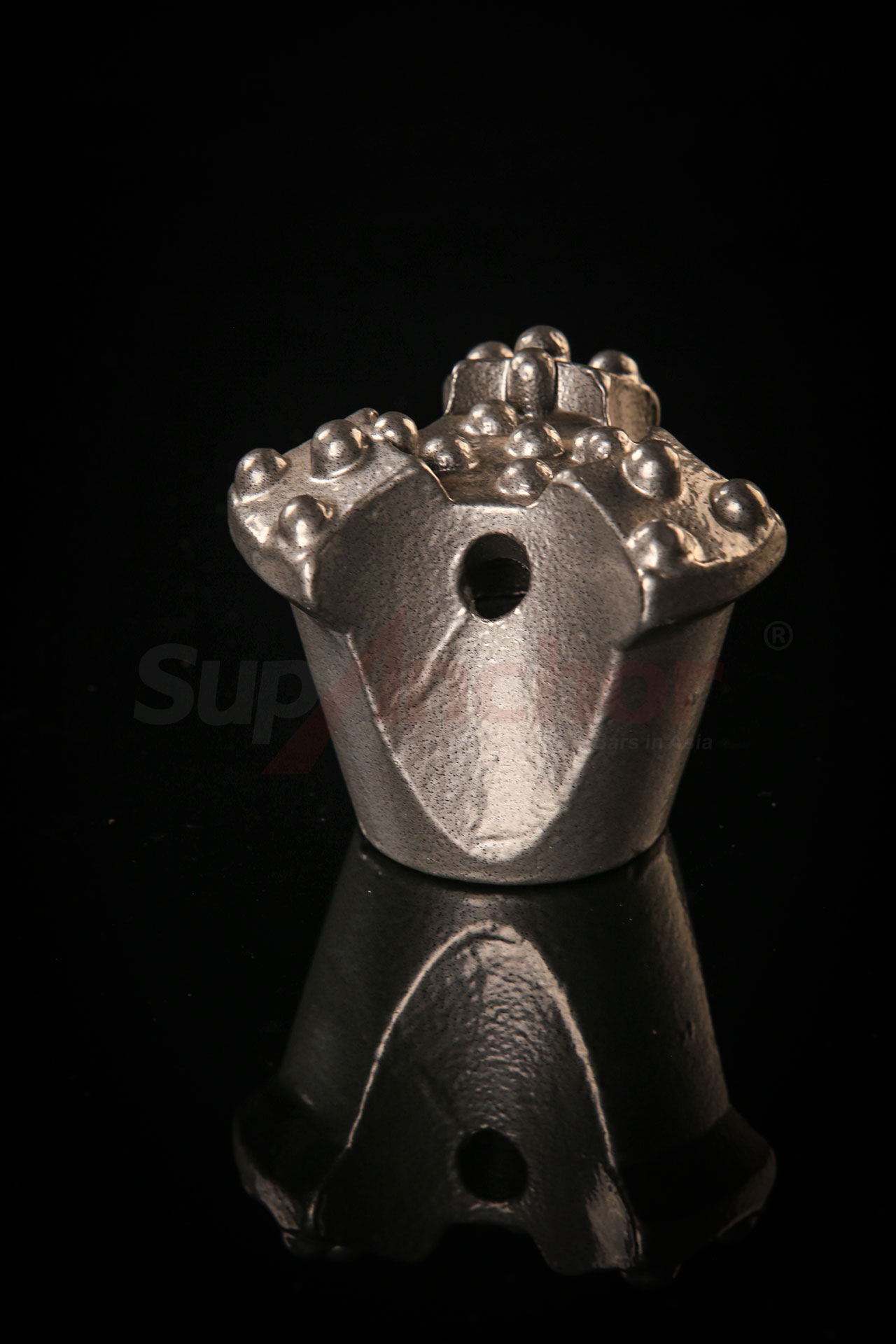
| Drill Bit Types | Cross‑cut, button, or clay bits for different ground conditions |
These parameters allowed the self drilling bolt for civil engineering to function as both temporary and permanent support. The high elongation guaranteed that the anchors could absorb rock mass deformations without brittle failure, a critical safety feature in squeezing ground. The corrosion protection options ensured compliance with the project’s 120‑year durability requirement, a common standard for major European infrastructure.
Beyond tensile and yield strength, the system’s bond strength with the surrounding grout and rock was a key performance indicator. Pull‑out tests conducted on site consistently exceeded the 500‑kN design load, with failure often occurring in the rock mass rather than the anchor‑grout interface, confirming the excellent mechanical interlock. The self drilling anchor bolt thus acted as a micropile hollow bar anchor, transferring load deep into competent rock. This capability is particularly valuable in rock bolt for underground mining and tunneling, where the anchor must withstand dynamic and high‑stress environments.
The success of this Alpine project reflects broader trends in the global construction industry. Urbanization, aging infrastructure, and climate resilience are driving demand for reliable ground stabilization anchor systems. Tunnels, deep excavations, retaining walls, and slope stabilization works increasingly rely on self drilling anchors to reduce risk and improve efficiency.
In North America, the self drilling anchor system has found favor in projects ranging from the Seattle Light Rail tunnels to the California High‑Speed Rail retaining walls. In these applications, the ground stabilization anchor system not only reinforces but also consolidates the ground, reducing the need for additional measures like dewatering or freezing. The micropile hollow bar anchor variant is also gaining traction for underpinning existing structures and constructing new foundations in restricted spaces. Its ability to be installed in low‑headroom conditions and in difficult soils makes it a preferred choice for urban geotechnical engineers.
In the mining sector, the hollow bar anchor serves as a rock bolt for underground mining, providing immediate reinforcement in development headings and stopes. The ability to install without casing in broken ground makes it invaluable for safety‑critical applications. Several major gold and copper mines in Canada and Australia have adopted the hollow bar anchor as part of their standard ground support regime.
The versatility of the system is also evident in slope stabilization. Along highways in mountainous regions, a self drilling anchor for retaining walls is often the only feasible solution for securing unstable slopes. The drill‑and‑grout bolt method allows installation from limited‑access areas, and the immediate load capacity prevents movement during construction.
Environmental considerations are reshaping construction practices. The self drilling anchor system inherently contributes to sustainability by reducing spoil generation — there is no separate drill casing to remove — and by enabling rapid installation, which cuts on‑site energy consumption. The long service life, assured by comprehensive corrosion protection, reduces the need for future interventions, aligning with lifecycle assessment (LCA) principles. Moreover, the hollow bar design minimises steel usage compared to solid bar and separate tendon systems, offering a lower embodied carbon solution.
Looking ahead, the integration of digital monitoring with ground anchors will enhance safety. Some projects now embed fiber‑optic sensors in the hollow core to measure strain, temperature, and grout curing in real time. SupAnchor is actively involved in developing such smart anchor bolt systems for geotechnical engineering, further cementing its role as an innovator.
Based in Asia with a global supply network, SupAnchor has established itself as a premier soil nail system manufacturer and SDA bolt factory direct supply partner. The company’s self drilling anchors and accessories are produced in ISO 9001, CE EN 14490, and BS certified facilities, ensuring consistent quality and traceability. SupAnchor’s engineers work hand‑in‑hand with clients from design through execution, offering tailored solutions that optimize performance and cost. This collaborative approach has earned the trust of leading contractors and engineering consultants worldwide.
“We see ourselves as a technology partner, not just a ground anchor bolt factory,” said Lucas Wang, SupAnchor’s global technical director. “Our SDA bolt factory direct supply model means we can respond quickly to project needs, whether it’s a standard order or a specialized anchor for a unique geological challenge. Every project teaches us something new, and we continuously refine our products.”
SupAnchor’s portfolio includes successful deployments in over 30 countries: from the construction of hydropower caverns in the Himalayas to the stabilization of coastal cliffs in Scandinavia. Each project reinforces the reliability of SupAnchor’s hollow bar anchors and their derivatives. The company’s commitment to the anchor bolt system for geotechnical engineering drives ongoing R&D into materials, coatings, and smart technologies. As a leading soil nail system manufacturer, SupAnchor not only supplies products but also provides training and on‑site support, embodying the values of professionalism, innovation, and collaboration.
The Alpine Rail Corridor – Lot 3 tunnel breakthrough was celebrated in late 2024, with the self drilling anchors having performed flawlessly under extreme conditions. As the world’s infrastructure demands grow, the partnership between visionary engineering firms and innovative suppliers like SupAnchor will be pivotal in delivering safe, efficient, and enduring structures. The self drilling anchor bolt, once a niche tool, has proven itself a cornerstone of modern geotechnical practice.
SupAnchor's self drilling anchor system provides efficient ground stabilization in challenging geology, with high-strength hollow bar anchors and corrosion protection for civil engineering projects.
SupAnchor introduces a corrosion-resistant GFRP solid bolt with high tensile strength, lightweight design, and non-conductive properties for slope stabilization, tunnel support, and mining applications.
A European transport project uses SupAnchor's self drilling anchor system to stabilize loose overburden and fractured rock. Hollow bar anchors provide immediate load capacity, corrosion protection, and long-term geotechnical safety.
SupAnchor introduces SupFRP® GFRP reinforcement rebar with high tensile strength, corrosion resistance, and versatile shapes for demanding construction applications across Europe and North America.
SupAnchor introduces a stainless steel self-drilling hollow anchor combining 3-in-1 drilling, grouting, and reinforcing with superior corrosion resistance for marine, chemical, and permanent geotechnical applications.