
Alpine Region, Europe – Deep in the heart of the Alps, a vital highway expansion project has successfully tamed a notoriously unstable slope using advanced ground reinforcement technology. The undertaking, part of the European Union’s Trans-European Transport Network (TEN-T) modernization, required stabilizing a 400-meter-long rock face that had long threatened the safety of the A12 mountain corridor. Engineers faced fractured schist, intermittent clay seams, high groundwater pressures, and severe winter conditions that made traditional anchoring methods impractical. The solution came in the form of an innovative self drilling anchor system supplied by SupAnchor, a globally recognized manufacturer of geotechnical reinforcement products. By integrating drilling, grouting, and anchoring into a single, continuous operation, the system not only met the project’s demanding geotechnical requirements but also trimmed months from the construction schedule.
The Alpine highway, carrying over 25,000 vehicles per day including freight between Italy and Austria, had been plagued by rockfalls and slow slope movement for decades. Previous remedial efforts, including wire mesh and rock bolts, provided only temporary relief. A 2023 geotechnical investigation for the planned widening from two to four lanes revealed a far more complex subsurface: weathered gneiss and mica-schist interspersed with swelling clay layers at depths of up to 15 meters. Groundwater seepage from snowmelt further reduced the rock mass’s effective strength. According to Dr. Johanna Meier, chief geologist on the project, “Traditional cased drilling would have been extremely difficult here—the fractured rock would collapse the borehole before we could install a tendon. We needed a method that provided immediate borehole support while allowing grout permeation into the joints.” The design called for a permanent geotechnical reinforcement system capable of resisting both static forces and dynamic loads from traffic vibrations and potential seismic events. A factor of safety of 1.5 under the most adverse conditions was mandated, pushing the design load per anchor to over 350 kN.
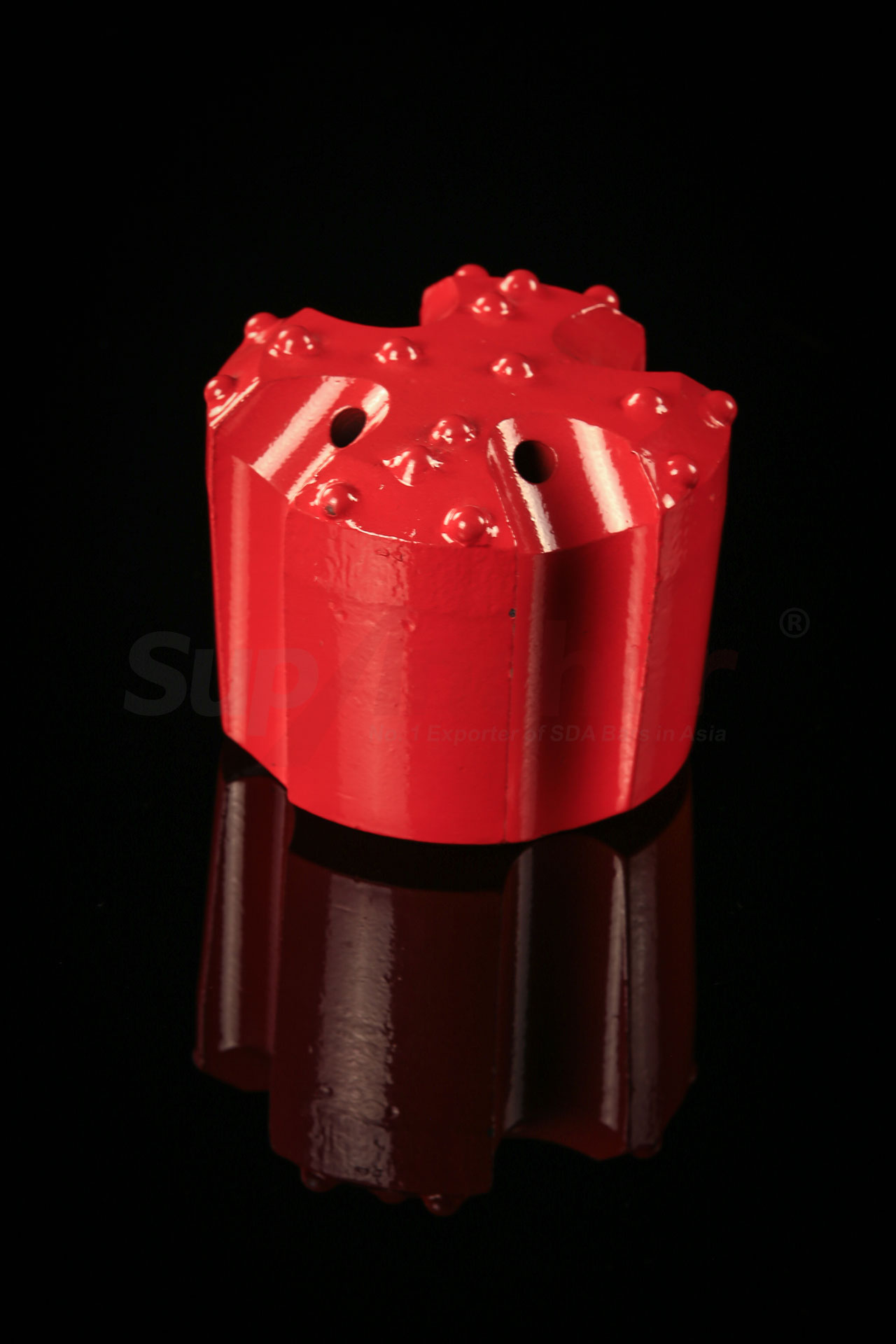
After evaluating multiple options, the construction consortium selected the SupAnchor SDA (Self-Drilling Anchor) bolt, a hollow bar anchor that uses a sacrificial drill bit and simultaneous pressure grouting. Unlike conventional drill-and-grout bolt systems that require separate drilling and grouting stages, the SDA bolt is advanced through the unstable ground while high-strength cement grout is injected through its hollow core. This grout fills voids, consolidates loose material, and bonds the bar to the surrounding soil and rock, eliminating the risk of borehole collapse. The system also eliminates the need for temporary casing, a major logistical headache on sloping terrain where crane access is limited. The project’s lead contractor, AlpenBau GmbH, highlighted that the self drilling anchor bolt allowed a single mast track rig to install 12- to 18-meter long anchors at an average speed of 8 minutes per meter, even in the most challenging zones. This remarkable productivity stemmed from the anchor’s ability to drill, grout, and tension in one continuous process—a hallmark of modern ground stabilization anchor system technology.
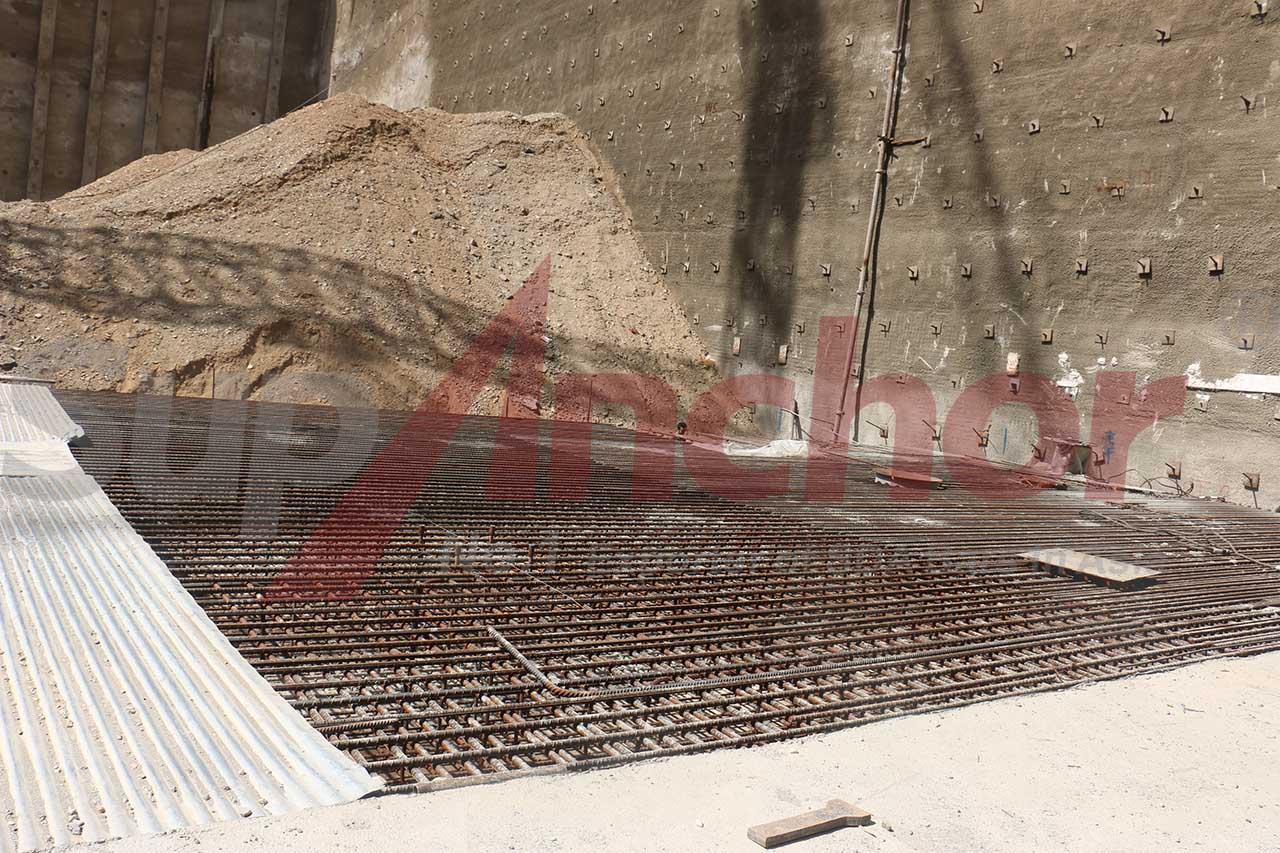
The on-site construction image shows a Mast MEWP positioned on a narrow mountain bench, with crews meticulously aligning the self drilling anchor for retaining walls into pre-determined positions. Each anchor hole was started with a sacrificial cross-cut bit, which was drilled through the weathered overburden and into the bedrock beneath. As the hollow bar advanced, grout was pumped from a portable mixing station at the roadside, following a strict water-cement ratio of 0.45 to ensure optimal fluidity and strength. Pressure sensors monitored the grout front, ensuring uniform filling of the annular space and permeation into surrounding fissures. After the grout set to 25 MPa (typically 24 hours), the anchors were tensioned to 70% of their ultimate capacity and locked off against a reinforced concrete reaction block. The facing system comprised a 15 cm shotcrete layer embedded with double-twisted steel mesh, creating a composite that could withstand local punching loads and freeze-thaw cycles.
Key technical parameters of the SupAnchor anchor bolt system for geotechnical engineering used are presented below. These specifications underscored the system’s ability to handle the required loads and corrosive alpine environment.
| Parameter | Specification |
|---|---|
| Anchor Type | R32 & R38 Hollow Bar Anchor (SDA bolt) |
| Nominal Outer Diameter | 32 mm / 38 mm |
| Ultimate Tensile Strength (Rm) | ≥ 280 kN (R32) / ≥ 450 kN (R38) |
| Yield Load (Re) | ≥ 230 kN (R32) / ≥ 380 kN (R38) |
| Length (customizable with couplers) | 3 – 18 meters |
| Corrosion Protection | Double corrosion protection: hot-dip galvanized (min 85 µm) + fusion-bonded epoxy coating (min 350 µm) |
| Grouting Method | Hollow core simultaneous grouting; max pressure 2.0 MPa |
| Drill Bit Type | Sacrificial cross-cut tungsten carbide bit |
| Thread Standard | ISO 10208-1 compatible rope thread |
The selection of R32 and R38 diameters allowed designers to differentiate anchor types based on slope zones. In areas with deeper clay pockets, longer 18-meter R38 units served as micropile hollow bar anchor elements, transferring loads beyond the active wedge into competent rock. The double corrosion protection proved critical given the aggressive environment—road de-icing salts and frequent freeze-thaw cycles would rapidly degrade unprotected steel. By using these self drilling bolt for civil engineering, the project achieved a design life of 100 years in accordance with Eurocode 7 requirements.
To validate the design, an extensive instrumentation plan was implemented. Inclinometers and ShapeAccelArrays were installed along five critical cross-sections to detect any subsurface movement. Twenty load cells on selected anchors transmit real-time data via a LoRaWAN network to the control center. After one full seasonal cycle (including record spring rains and two major snowmelt events), the recorded anchor loads have remained below 60% of the design lock-off load, and slope deformations are negligible—less than 2 mm cumulative displacement. These results affirm the effectiveness of the geotechnical reinforcement system under real-world conditions and provide a valuable reference for future projects in similar terrain. The monitoring data also allowed a reduction in the factor of safety from 1.5 to 1.35 for adjacent sections, further optimizing anchor quantities and reducing material use by approximately 10%.
While this highway stabilization project demonstrated the system’s surface capabilities, the same hollow bar anchor technology has become a go-to solution for a wide range of geotechnical challenges. As a leading soil nail system manufacturer, SupAnchor has supplied its rock bolt for underground mining deployments in Scandinavia, where 8-meter-wide mine drifts in metamorphic rock require dependable overhead support. In urban environments, the ground anchor bolt factory produces temporary tiebacks for excavations where vibration-sensitive structures preclude hammer drilling. The hollow bar truly excels as a self drilling anchor for retaining walls in loose, saturated soils, where conventional drilling would cause extensive erosion. The ability to act as a drill-and-grout bolt without a separate grouting stage minimizes overhead costs and enhances safety, particularly on congested worksites.
The Alpine project also benefited from the system’s inherent environmental advantages. By shunning temporary steel casing and reducing the total number of anchors through higher unit capacities, the carbon footprint of the stabilization works was estimated to be 25% lower than a conventional micro-pile wall. This aligns with the EU’s Green Deal goals for infrastructure projects and underscores the sustainability of modern ground stabilization anchor system solutions.
Behind every anchor lies a stringent quality assurance protocol. SupAnchor operates a fully automated SDA bolt factory direct supply line that integrates induction heating, thread rolling, and coating application, ensuring consistency across thousands of units. The company holds ISO 9001:2015 (quality management) and ISO 14001:2015 (environmental management) certifications, and all products are CE marked under EN 14490 for execution of special geotechnical works—soil nailing. Regular third-party audits and full material traceability (from steel mill heat number to final bolt serial) give contractors confidence in product reliability. For the Alpine project, SupAnchor’s technical support team provided on-site launch assistance, training three drilling crews and optimizing grout mix designs to match the variable ground conditions. This collaboration minimized the learning curve and helped achieve the record installation rates reported.
The global market for ground anchors is expanding rapidly, fueled by urbanization, aging infrastructure rehabilitation, and the construction of renewable energy foundations in challenging soils. A recent industry report forecasts the ground anchor sector to reach USD 1.8 billion by 2030, with hollow bar systems growing at the fastest clip. The reasons are clear: these anchor bolt system for geotechnical engineering variants reduce construction times by up to 40%, require fewer pieces of equipment, and provide immediate support—crucial factors when working in remote or constrained environments. As Dr. Elena Vasquez of the Polytechnic University of Milan noted at the International Geosynthetics Conference, “The integration of drilling and grouting functions into a single bar not only improves productivity but also opens possibilities for real-time stiffness monitoring via fiber optic sensors embedded in the grout, advancing the concept of intelligent ground support.”
SupAnchor’s success on the Alpine highway slope reinforces the value of collaborative engineering. By working closely with the design team and contractor, the solution was tailored precisely to the project’s needs, resulting in a durable, cost-effective stabilization system. As Europe and North America ramp up investments in climate-resilient infrastructure, the demand for reliable self drilling anchor system technology will only intensify. With its proven track record and commitment to innovation, SupAnchor is well positioned to play a central role in shaping the next generation of geotechnical reinforcement system solutions worldwide.
For more information about SupAnchor’s products and case studies, visit www.supanchor.com.
A major infrastructure project used SupAnchor's self drilling anchor system to address complex geotechnical challenges, ensuring safety and efficiency in slope stabilization and foundation support.
SupAnchor introduces SupFRP® GFRP dowel bars, offering 100+ year service life, no-rust performance, and high load transfer efficiency for concrete joints in pavements, embankments, and MSE walls.
A European infrastructure project has deployed SupAnchor's self-drilling anchor bolts to stabilize weak slopes and secure deep foundations, highlighting advanced geotechnical reinforcement solutions.
SupAnchor launches SupHulk friction rock bolt system, offering high yield loads up to 240 kN and 10% elongation for immediate ground support in tunneling and mining projects.
A major infrastructure project in the European Alps leverages SupAnchor's self drilling anchor system to overcome fractured rock and high groundwater, enhancing slope stabilization and tunneling safety.