
On a crisp morning high in the Alps, tunnel workers advance a massive jumbo drill toward the rock face. The ground here is treacherous—fractured, water-soaked, and prone to collapse. Traditional rock bolts would be useless in such conditions, but the crew is equipped with a different tool: SupAnchor's self drilling anchor system. As the hydraulic drifter roars, a self drilling anchor bolt with a sacrificial drill bit cuts into the schist, simultaneously injecting cement grout through its hollow core. Within minutes, the bolt is installed, grout is flooding the fissures, and the face is secure. This scene, repeated thousands of times along the 64-kilometer Brenner Base Tunnel alignment, is a testament to how modern geotechnical reinforcement systems are redefining underground construction.
The Brenner Base Tunnel, slated to become the world's longest railway tunnel upon completion, represents a €10 billion investment in European connectivity. Traversing the main chain of the Alps between Innsbruck, Austria, and Fortezza, Italy, the project confronts some of the most challenging geology ever encountered in tunneling. Rock formations range from competent granite to heavily tectonized fault zones with Q-system values below 0.1. In these 'squeezing' sections, conventional support methods fail. The project's engineering team required a drill-and-grout bolt that could be installed without pre-drilling and that would provide immediate radial support. After evaluating multiple systems, they turned to SupAnchor, a global soil nail system manufacturer and hollow bar anchor specialist.
The Brenner corridor is a vital trans-European transport axis, currently served by a century-old railway with steep gradients and limited capacity. The new base tunnel will slash travel times between Munich and Verona, shifting freight from road to rail. However, the geology presents a formidable obstacle. The tunnel route crosses the Periadriatic Seam, a major tectonic boundary where the African and European plates collided millions of years ago. The result is a melange of sheared rock, fault gouge, and high-pressure groundwater pockets. In several headings, probe drilling revealed water pressures exceeding 10 bar and rock mass quality so poor that it behaved more like soil than rock.
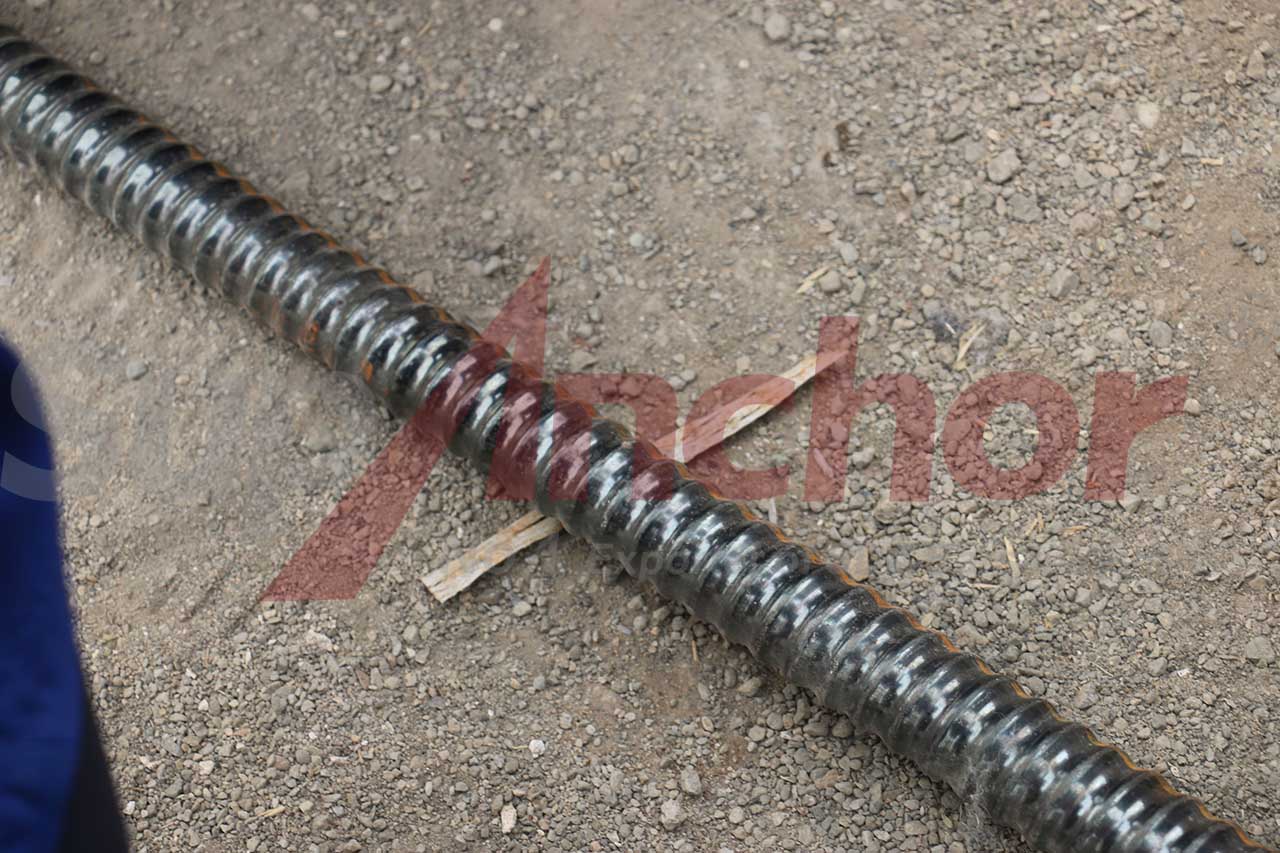
Conventional untensioned rock bolts and shotcrete shells were insufficient. The project team needed an anchor bolt system for geotechnical engineering that could be drilled and grouted in one pass, even through running ground. The self drilling anchor bolt, also called a hollow bar anchor, meets these demands. Its continuous hollow profile allows grout to flow to the tip and backfill the annulus, bonding the bolt to the ground over its full length. This turns the bolt into a rough-surfaced micropile hollow bar anchor, creating a reinforced composite around the tunnel perimeter. Unlike pre-drilled anchors, there is no risk of borehole collapse, and the system can be installed with standard drifting equipment.
SupAnchor, as a leading soil nail system manufacturer, was selected based on its extensive track record in similar projects, including metro tunnels in Singapore and mine development in Canada. The company's ability to deliver as an SDA bolt factory direct supply ensured that the tight project schedule would not be compromised by logistical delays. The anchors were shipped with full material certifications and test reports, meeting the stringent requirements of EN 14490 and the project-specific specifications.
The construction image captures the essence of the operation: a state-of-the-art Sandvik jumbo equipped with a self drilling anchor bolt in action. The operator controls the feed, rotation, and grouting from the comfort of an enclosed cab, while the self drilling anchor bolt penetrates the face. The bolt's left-hand rope thread profile is visible, designed to maximize mechanical interlock with the grout. As the bolt advances, grout exits through a port near the bit, filling the borehole and penetrating fractures. The result is an immediate composite anchor column that can bear load as soon as the grout reaches initial set.
Technical data for the anchors used in the tunnel are summarized below. These hollow bar anchors were selected to match the ground conditions and required support intensity.
| Parameter | Value / Range |
|---|---|
| Bolt Outer Diameter | 32 mm (R32 series); 40 mm available for portal walls |
| Ultimate Tensile Strength | 650 MPa (EN 10080-2) |
| Yield Strength | 500 MPa |
| Design Working Load | 400 kN (for 32 mm); 600 kN (for 40 mm) |
| Standard Bolt Lengths | 3 m, 4 m, 6 m (extendable via couplers to 12 m) |
| Corrosion Protection | Hot-dip galvanized (85 μm zinc); duplex coating (galvanized + epoxy) for aggressive water |
| Grout Type | Cementitious grout, W/C 0.4–0.5, with accelerator as needed |
Installation was performed in a sequenced pattern after each advance. The drill-and-grout bolts were placed at 1.2 m spacing around the crown and walls, with lengths varying from 4 m to 9 m depending on the deformation zone. In the most challenging sections, overlapping bolts formed a rock bolt for underground mining-style support, creating a reinforced rock arch. Pull-out tests conducted on site consistently exceeded the design working load of 400 kN, with some anchors reaching capacities above 500 kN before plate failure. The effectiveness of this drill-and-grout bolt technology was confirmed by continuous convergence monitoring.
For the self drilling anchor for retaining walls at the tunnel portals and cut-and-cover sections, 40 mm diameter bolts with a working load of 600 kN were used. These anchors reinforced shotcrete walls up to 15 m high against lateral earth and rock pressures. The micropile hollow bar anchor was also employed for foundation underpinning of an existing bridge near the northern portal, where limited headroom precluded large piling rigs. The compact drilling equipment and the ability to install the anchors at almost any angle made them the ideal solution.
The ground stabilization anchor system not only provided structural support but also acted as a drainage medium. Water seeping from the ground traveled along the rough bolt-grout interface to the surface, reducing pore pressures and improving stability. This dual function is a hallmark of this innovative system, distinguishing it from traditional grouted anchors. The project demonstrates the importance of certified geotechnical reinforcement system components in ensuring long-term safety.
The Brenner project is emblematic of a global shift toward smarter, more resilient ground support. As urbanization pushes infrastructure deeper underground, and as climate adaptation demands more robust slope stabilization, geotechnical reinforcement systems like SupAnchor's self drilling anchor bolt are becoming indispensable. The days of depending on multiple sequential processes—drilling, casing extraction, bar insertion, grouting—are giving way to a single-step, safer alternative.
Civil engineering firms across Europe, North America, and Asia are increasingly specifying hollow bar anchors for their projects. A recent report by Industry Insights projects the global ground anchor market to grow at 4.8% CAGR through 2030, driven by tunnel and mining expansion. The self drilling anchor for retaining walls segment is seeing particularly strong uptake due to its efficiency in urban excavations and highway widening projects. For instance, on a recent metro station project in Seattle, engineers employed over 2,000 self drilling anchors to stabilize a deep excavation adjacent to an operational transit tunnel, eliminating the need for noisy and vibration-prone impact driving. Engineers are increasingly specifying self drilling anchor for retaining walls for such urban projects.
In underground mining, the rock bolt for underground mining has long been the standard for ground control. However, the dynamic nature of deep mines—where stress redistribution can cause instantaneous rockbursts—demands a more adaptive solution. SupAnchor's SDA bolt, with its immediate load-bearing capability and the ability to be gas- or water-flushed, is gaining acceptance in major mining districts in Ontario and Western Australia. A case study from a nickel mine in Sudbury demonstrated a 40% reduction in rehabilitation costs after switching to a self drilling anchor system from conventional cable bolts. The superior rock bolt for underground mining performance of the SupAnchor system was evident.
The versatility of the micropile hollow bar anchor is another driver. These elements are used for everything from wind turbine foundations to seismic retrofitting of bridges. A recent bridge underpinning project in the Netherlands used 110 mm diameter micropile hollow bar anchors to transfer loads to a deeper sand layer, avoiding the groundwater drainage issues associated with traditional auger piles. The anchor bolt system for geotechnical engineering, when designed as a self drilling bolt for civil engineering, offers the benefit of instantaneous installation verification through torque and drilling speed monitoring—data that feeds into modern Building Information Modeling (BIM) platforms. A self drilling bolt for civil engineering must be versatile enough for various ground types, a requirement that SupAnchor consistently meets.
As a ground anchor bolt factory, SupAnchor has contributed to these industry advances by continuously refining its manufacturing processes. The company's products are tested at independent laboratories to verify properties such as fracture elongation (≥14%), impact toughness (≥27 J at -20°C), and coating durability under salt spray (≥1,000 hours for duplex systems). This data is made available to designers, fostering confidence in the self drilling bolt for civil engineering applications. The company's reputation as a certified ground anchor bolt factory ensures compliance with the highest standards.
Behind every successful project lies a reliable supply chain, and as an SDA bolt factory direct supply, SupAnchor ensures that quality is baked into every batch. From its advanced production lines in China to its distribution hubs in Rotterdam and Houston, the company maintains a lean manufacturing philosophy that reduces lead times without compromising on quality. All self drilling anchor bolts undergo 100% thread inspection and random tensile testing per lot, with full traceability back to the steel mill. The benefit of an SDA bolt factory direct supply is reduced cost and lead time, a critical advantage for large-scale projects.
SupAnchor's commitment to innovation is evidenced by its growing patent portfolio, which includes designs for self drilling bolt for civil engineering with integrated sensors for load and corrosion monitoring. These 'smart' bolt systems will enable future infrastructure to self-report condition, aligning with the industry's digital transformation. The company's R&D pipeline also focuses on low-carbon cement grouts and recyclable steel to meet sustainability goals.
In the Brenner Base Tunnel, SupAnchor's team of application engineers was present at the site for the critical first installations, training the contractor's crews and overseeing the pull-out test program. This hands-on approach reflects the company's core values of professionalism, innovation, and collaboration. As a respected soil nail system manufacturer, SupAnchor understands that the success of a geotechnical reinforcement system depends not just on the product but on the support ecosystem around it. This ground stabilization anchor system is designed for long-term reliability, backed by extensive testing.
The project is now in its final phases, with over 500 kilometers of self drilling anchor bolts installed—a figure that underscores the scale and reliability of this technology. For the engineers and workers who navigate the challenging ground everyday, the SupAnchor system is more than a product; it's a trusted partner in the quest to connect Europe safely and efficiently.
Looking ahead, the lessons from the Alps will be applied to upcoming mega-projects like the High Speed 2 Chiltern tunnels in the UK, the Fehmarnbelt immersed tunnel between Denmark and Germany, and the Atlanta water tunnel in the United States. In each, the demands for ground stabilization anchor systems will be extreme, and the industry will turn to proven solutions. As a premier ground anchor bolt factory, SupAnchor is ready to meet the challenge with its full range of self drilling anchor bolts and bespoke engineering support.
The successful deployment of the anchor bolt system for geotechnical engineering at the Brenner Base Tunnel reaffirms that when ground conditions are at their worst, innovation and experience make the difference. It's a story of partnership between visionary infrastructure development and the advanced engineering that makes it possible—literally, bolt by bolt.
SupAnchor's self drilling anchor system provides efficient ground stabilization in challenging geology, with high-strength hollow bar anchors and corrosion protection for civil engineering projects.
SupAnchor introduces a corrosion-resistant GFRP solid bolt with high tensile strength, lightweight design, and non-conductive properties for slope stabilization, tunnel support, and mining applications.
A European transport project uses SupAnchor's self drilling anchor system to stabilize loose overburden and fractured rock. Hollow bar anchors provide immediate load capacity, corrosion protection, and long-term geotechnical safety.
SupAnchor introduces SupFRP® GFRP reinforcement rebar with high tensile strength, corrosion resistance, and versatile shapes for demanding construction applications across Europe and North America.
SupAnchor introduces a stainless steel self-drilling hollow anchor combining 3-in-1 drilling, grouting, and reinforcing with superior corrosion resistance for marine, chemical, and permanent geotechnical applications.