
In a mountainous region where a critical highway expansion project faces severe geological challenges, engineers have turned to an advanced ground stabilization anchor system to ensure safety and durability. The project, involving the widening of a key transportation corridor, required deep excavation into steep slopes composed of fractured rock and loose soil. Traditional anchoring methods proved inefficient and risky, prompting the adoption of a self drilling anchor system that combines drilling, grouting, and anchoring in one streamlined operation. At the heart of this solution lies the SupAnchor self drilling anchor bolt, a product that exemplifies the integration of innovation and reliability in modern geotechnical engineering.
The highway, which serves as a vital artery for commercial and commuter traffic, had reached capacity, and widening was essential. However, the adjacent slopes exhibited a history of instability, with several minor landslides during previous rainy seasons. Geotechnical investigations revealed a complex subsurface consisting of a weathered rock layer overlying a more competent bedrock, interspersed with zones of completely decomposed granite. This heterogeneous ground posed significant risks for excavation and slope support. Conventional driven or drilled anchors were problematic: pre-drilling required casing to prevent collapse, grout injection was often imperfect due to voids, and installation times were prolonged, leading to traffic disruptions and increased costs.
During the design phase, geotechnical engineers performed extensive subsurface investigations, including borehole logging, geophysical surveys, and lab testing. The data confirmed that the slope’s factor of safety was below acceptable levels for a permanent cut, necessitating a robust geotechnical reinforcement system that could provide immediate and long-term support. The design called for over 800 soil nails and ground anchors, with lengths ranging from 9 to 18 meters, to form a reinforced soil mass capable of withstanding seismic events and heavy rainfall. The selection of the self drilling anchor bolt as the primary reinforcement stemmed from its ability to overcome the ground’s inconsistency without the need for temporary casing, thereby significantly reducing risk and schedule delays.
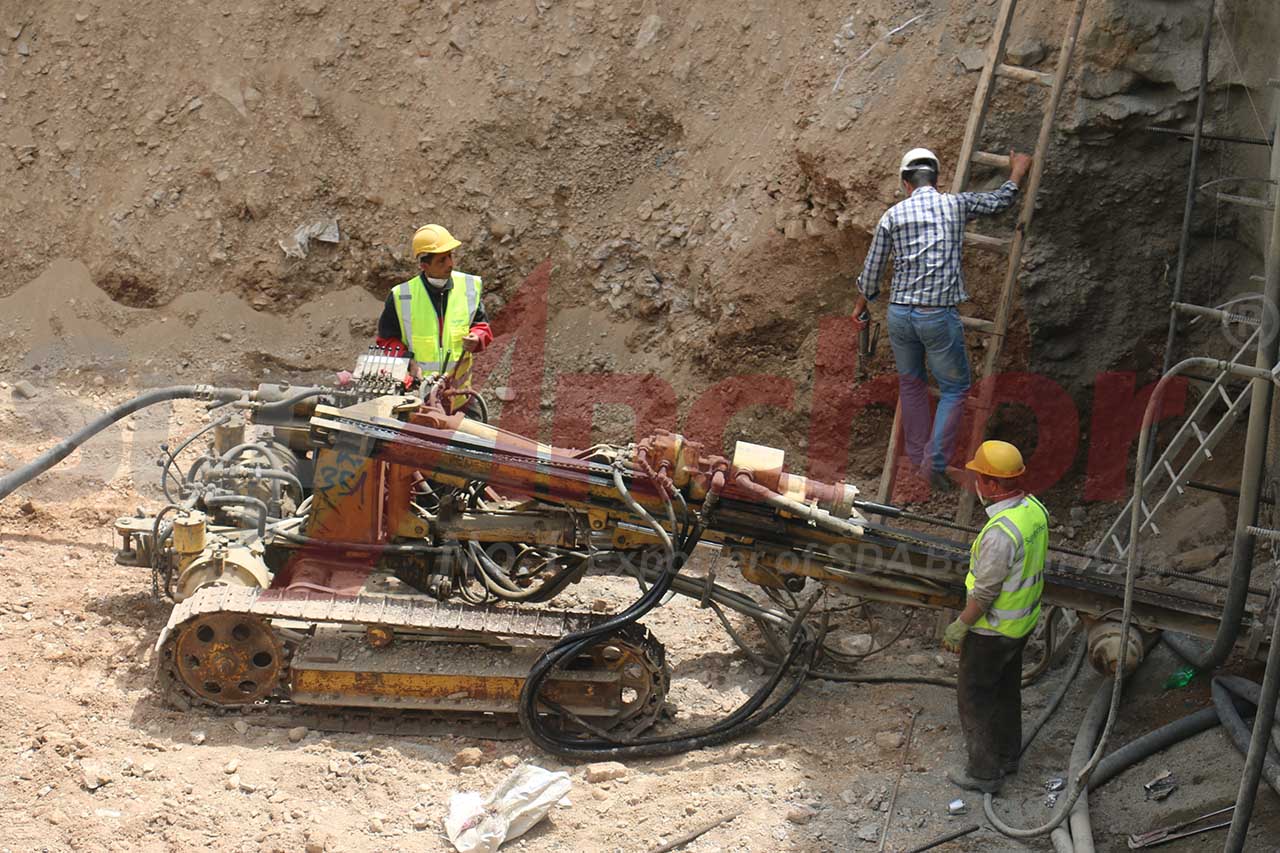
On the construction site, crews can be seen operating compact rigs that install the self drilling anchor bolt at pre-designated locations along the cut slope. The image from the site (above) shows a typical working bench where a drill mast is positioned on a steep incline. The operator maneuvers the rod into the ground with precision, while grout hoses and control panels manage the mix and flow. Since the process is near-continuous, each anchor is completed in a fraction of the time required for cased drilling. Moreover, the real-time grout delivery fills cracks and fissures, effectively stabilizing the ground mass around the borehole. This is particularly important in the project’s weathered granite layer, where water infiltration had historically triggered slope movements.
The installation process begins with the coupling of extension sections as depth increases; the system’s ISO-compatible buttress threads ensure a secure, high-strength connection between rods. The sacrificial drill bit, selected based on ground conditions—typically a tungsten carbide cross-cut or button bit—cuts through soft soil, rock fragments, and even boulders. Once the targeted length is achieved, the grout is allowed to set, and a bearing plate and nut are fitted to tension the anchor against the slope face. The result is a tensioned ground anchor that not only reinforces the slope but also compresses the soil mass, improving overall stability. The hollow core design also allows for post-installation grouting if necessary, providing an additional assurance of complete encapsulation.
The SupAnchor self drilling anchor bolt used on this project features specifications tailored to the demanding conditions. Key parameters are summarized in the table below:
| Parameter | Specification |
|---|---|
| Anchor Type | Hollow bar anchor (drill-and-grout bolt) |
| Nominal Diameter | 32 mm (other diameters available from 25 mm to 50 mm) |
| Ultimate Tensile Strength | ≥ 500 MPa |
| Yield Strength | ≥ 400 MPa |
| Connection Thread | ISO 10208 compliant left-hand rope thread, coupler compatible |
| Corrosion Protection | Hot-dip galvanized (Grade 80 µm min.) or epoxy coating (FBE) for enhanced durability |
| Anchor Length | Sectional lengths of 3 m, connectable to total lengths exceeding 18 m |
| Grout Port | Internal flushing duct with lateral outlets at the bit |
These technical attributes directly address the site’s most critical challenges. The high tensile strength and robust thread design allow the anchor to withstand the substantial lateral earth and hydrostatic pressures exerted by the saturated ground behind the slope. The hot-dip galvanized coating provides long-term corrosion protection, essential for a permanent structure exposed to changing groundwater chemistry. The sectional length system enables flexibility in varying slope geometries and minimizes waste. Furthermore, the precise grout delivery through the hollow core ensures full encapsulation, a key factor in preventing corrosion and achieving high pull-out resistance. The result is a reliable geotechnical reinforcement system that meets the project’s 100-year design life requirement.
Pull-out tests conducted on-site confirmed the design assumptions, with the self drilling anchor system consistently exceeding the required bond strengths. The average ultimate load reached 350 kN, well above the design working load of 200 kN, providing a comfortable safety margin. This performance underscores the effectiveness of the drill-and-grout bolt in providing superior ground interaction.
The adoption of the self drilling anchor system has yielded remarkable efficiency gains. Installation rates have averaged 15–20 anchors per shift per rig, compared to barely 5–8 with traditional cased methods. This speed is critical for the project, which remains partially open to traffic during construction. Reduced time also means lower labor costs and less equipment idling. Additionally, the smaller footprint of the drilling equipment—thanks to the elimination of a separate casing drive—allows work on tight benches, a common constraint in mountainous road widening projects.
Environmental benefits are equally compelling. The drill-and-grout process generates minimal vibration and dust, crucial near residential areas and sensitive ecosystems. Because the system uses grout as the flushing medium rather than air or water with additives, there is no need for sedimentation ponds or contaminated water disposal. This aligns with the project’s sustainability goals and regulatory permits. Safety records have improved as well, with fewer manual handling tasks and reduced exposure to unstable borehole conditions. The continuous grout flush stabilizes the hole immediately, preventing collapses that could endanger workers or equipment.
The successful application of SupAnchor’s self drilling anchor bolt on this highway project reflects a broader trend in civil engineering: the growing reliance on soil nail system manufacturer products and advanced ground anchor bolt factory solutions to address increasingly complex site conditions. As urbanization pushes infrastructure into unstable terrains—whether mountain slopes, soft urban deposits, or offshore settings—the demand for versatile, high-capacity anchoring technologies has never been greater.
According to industry analysts, the global geotechnical reinforcement system market is projected to grow at a compound annual rate of 6.2% over the next five years, driven by investments in transportation, energy, and water management. Within this market, self drilling anchors are gaining preference due to their ability to perform under conditions where conventional methods fail. Applications extend far beyond highway slopes: they are widely used as rock bolt for underground mining, micropile hollow bar anchor for foundation underpinning, and self drilling anchor for retaining walls in urban excavations. In tunneling, especially in soft ground and mixed-face conditions, the drill-and-grout bolt provides immediate support, reducing the risk of face collapse. For instance, in the Crossrail project in London, hollow bar anchors were utilized to stabilize excavations in difficult London Clay, and in Alpine regions, they secure tunnel portals against avalanches and rockfalls.
For contractors and specifying engineers, selecting the right anchor bolt system for geotechnical engineering requires careful evaluation of load requirements, corrosion environment, and installation logistics. The trend is toward integrated systems that combine mechanical strength with ease of use, and SupAnchor has positioned itself as a key player by offering a comprehensive range of self drilling anchor systems, from design assistance to factory-direct supply. The SDA bolt factory direct supply model ensures consistent quality control, traceability, and responsive technical support—advantages that are critical when projects are high-stakes and schedules are tight.
Behind the technology is a company rooted in a culture of excellence. SupAnchor has earned a reputation as a reliable ground anchor bolt factory, serving clients across Europe, the Americas, Asia, and Oceania. With ISO 9001, 14001, and 45001 certifications, the company adheres to rigorous quality, environmental, and occupational health standards. Its manufacturing facilities are equipped with automated CNC threading machines, forging lines, and advanced testing apparatus to ensure that every anchor bolt meets or exceeds international specifications.
Innovation is at the core of SupAnchor’s product development. The company’s R&D team continually refines thread geometries, corrosion protection systems, and bit designs to optimize performance in specific soil and rock types. Recent advancements include a two-step corrosion protection system that combines epoxy internal coating with hot-dip galvanizing for aggressive marine environments, and a new coupling system that reduces rod change time by 30%. These innovations are born from close collaboration with contractors, consultants, and research institutions. Notable installations include the Gotthard Base Tunnel access adit, where SupAnchor’s self drilling anchor bolts were used to overcome squeezing ground conditions, and a slope stabilization project along a major South American highway that withstood a 7.2 magnitude earthquake without distress. SupAnchor’s approach is not merely to supply a product but to partner on solutions—a philosophy embodied in its motto “Professional, Innovative, Collaborative.”
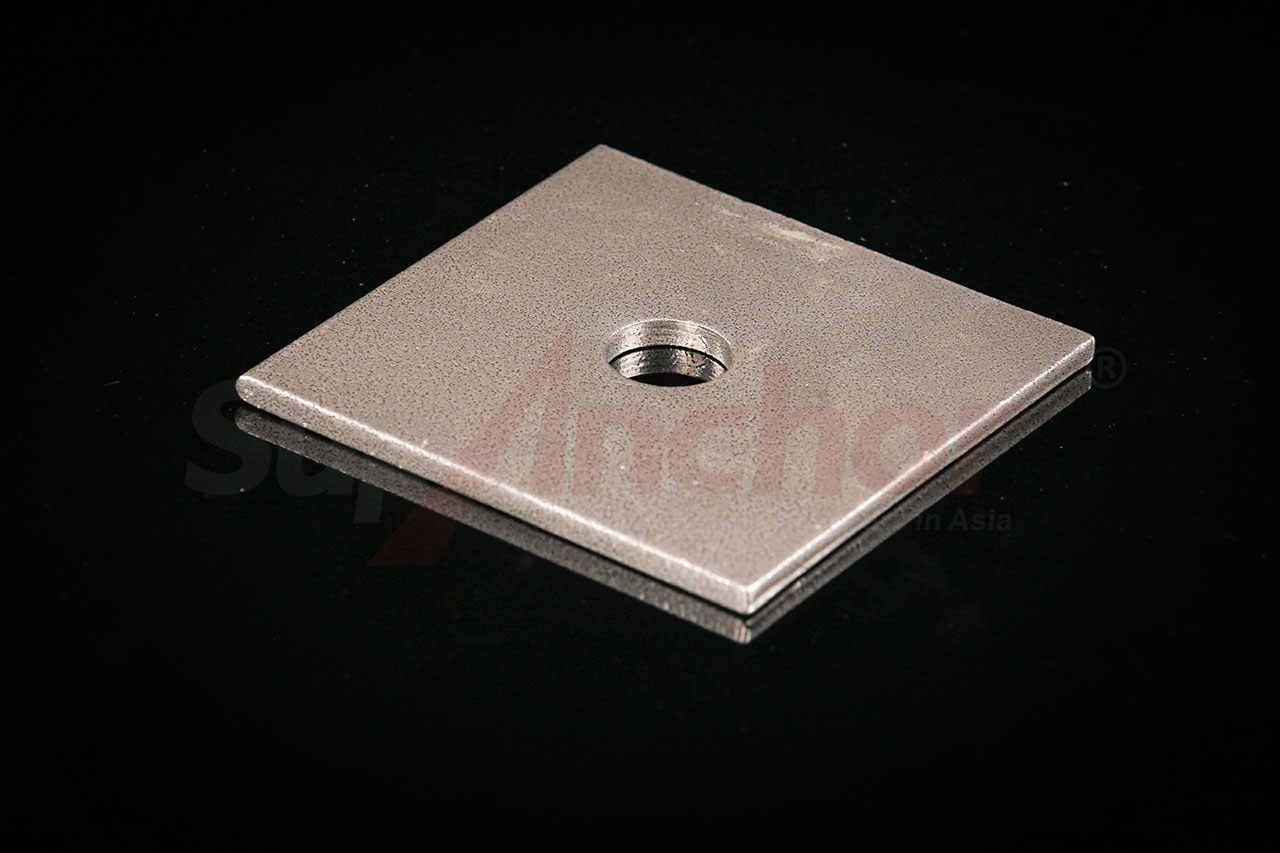
The product image above illustrates the typical SDA bolt, with its continuous thread, chamfered tip for drill bit attachment, and protective coating. This elegant simplicity belies the engineering that goes into its production and the vital role it plays in safeguarding infrastructure.
As the highway expansion project enters its final stages, the stabilized slopes stand as a testament to the efficacy of modern geotechnical engineering. The self drilling anchor system has not only prevented potential landslides but also enabled the project to stay on schedule and within budget. For the local community, the widened road will mean improved safety and reduced congestion, with the confidence that the slopes will remain stable for decades.
The success of this project is likely to influence future infrastructure developments in geologically challenging regions. Engineers and owners are taking note of the speed, reliability, and long-term durability provided by hollow bar anchor technology. In an era where climate change is increasing the frequency of extreme weather events, such robust ground stabilization anchor systems are more crucial than ever.
SupAnchor, as a forward-thinking soil nail system manufacturer and ground anchor bolt factory, is poised to meet the rising demand. By continuously improving its anchor bolt system for geotechnical engineering and expanding its global reach, the company is helping to build a safer, more resilient world—one anchor at a time.
SupAnchor's self drilling anchor system provides efficient ground stabilization in challenging geology, with high-strength hollow bar anchors and corrosion protection for civil engineering projects.
SupAnchor introduces a corrosion-resistant GFRP solid bolt with high tensile strength, lightweight design, and non-conductive properties for slope stabilization, tunnel support, and mining applications.
A European transport project uses SupAnchor's self drilling anchor system to stabilize loose overburden and fractured rock. Hollow bar anchors provide immediate load capacity, corrosion protection, and long-term geotechnical safety.
SupAnchor introduces SupFRP® GFRP reinforcement rebar with high tensile strength, corrosion resistance, and versatile shapes for demanding construction applications across Europe and North America.
SupAnchor introduces a stainless steel self-drilling hollow anchor combining 3-in-1 drilling, grouting, and reinforcing with superior corrosion resistance for marine, chemical, and permanent geotechnical applications.