
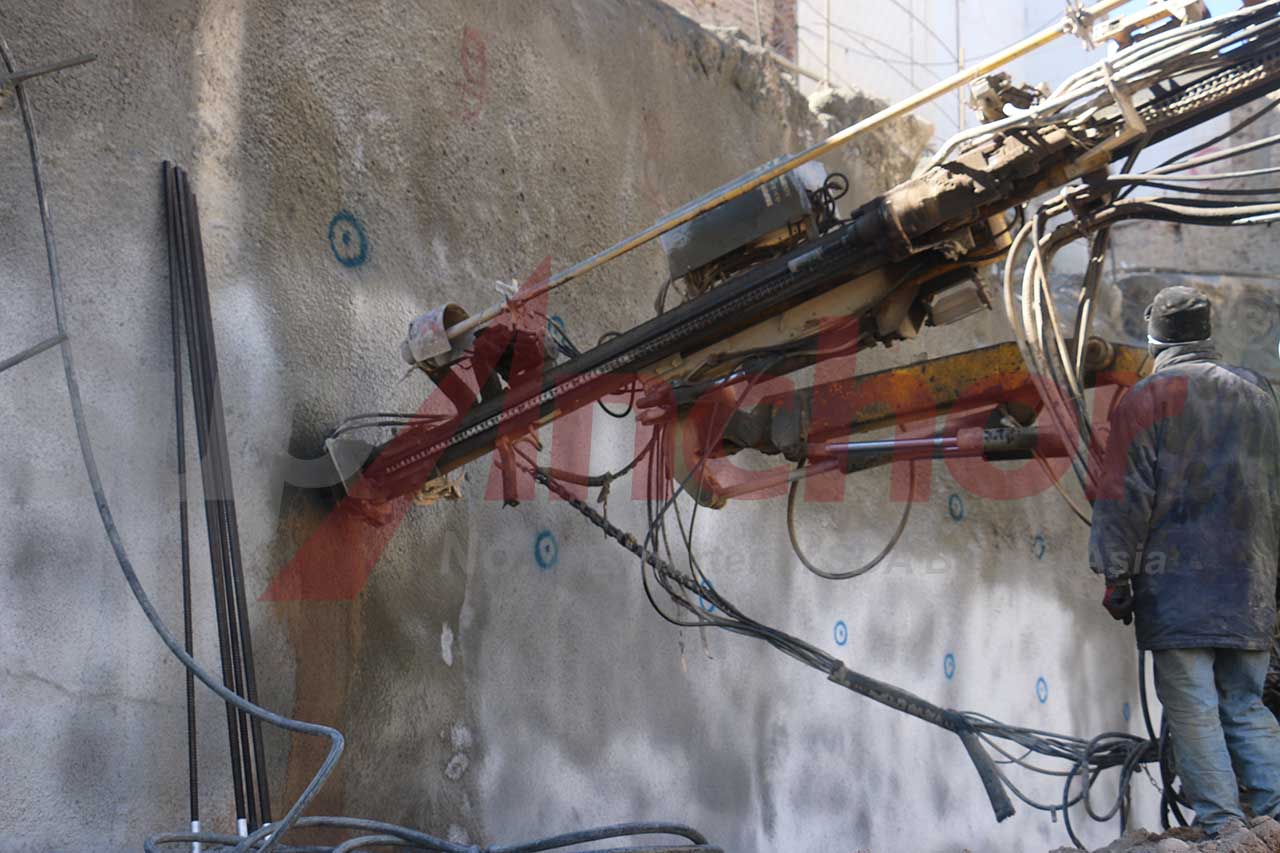
A 14.5-kilometer highway expansion through the fractured sedimentary rock of the Carpathian Mountains has become a benchmark for modern geotechnical reinforcement systems. The project, part of a trans-European transport corridor, required stabilization of cut slopes up to 38 meters high, support of reinforced earth retaining walls, and underpinning of bridge abutments in zones of active landslide movement. Site engineers selected a self drilling anchor system supplied by SupAnchor, a leading soil nail system manufacturer and ground anchor bolt factory, after conventional drilling methods resulted in repeated hole collapse and grout losses. The construction site image below shows a typical work area where crews installed hollow bar anchors into a weathered flysch face.
The alignment traverses three distinct geological units: an upper sequence of highly fractured limestone, a middle band of clayey shale with interbedded sandstone, and a lower formation of loose colluvium and residual soil. Groundwater was encountered at depths of 3 to 7 meters, saturating the shale layers and reducing shear strength to near-residual values. Early excavation attempts produced frequent over-break and ravelling failures, with some slope sections losing up to 1.5 meters of face material within hours of cutting. The design team recognized that a conventional soil nail or ground anchor would require cased drilling, which is slow and costly in this terrain.
Instead, the contractor adopted a drill-and-grout bolt approach using SupAnchor's self drilling anchor bolt. These hollow bar anchors combine a sacrificial drill bit, a continuously threaded hollow steel bar, and a central grouting channel. The system eliminates the need for casing because the hollow bar itself transmits torque and percussive energy to the bit while simultaneously acting as the reinforcement element. This allowed crews to install anchors in collapsing ground without first stabilizing the hole, reducing cycle times by 40% compared to conventional methods. The same ground stabilization anchor system served for both temporary slope stabilization during excavation and permanent support after final grading.
Key site constraints included limited bench space, steep terrain requiring rope access in some areas, and strict environmental restrictions on spoil disposal. The lightweight, modular nature of the self drilling anchor for retaining walls allowed hand-held and mini-excavator-mounted drills to operate on narrow benches, avoiding the need for large crawler rigs. Each 3-meter bar segment could be coupled quickly, enabling anchor lengths of 9 to 12 meters without specialized handling equipment.
The anchor bolt system for geotechnical engineering deployed on this project comprised R32 and R38 hollow bars made from high-strength steel. The table below summarizes the primary technical parameters and their relevance to site conditions.
| Parameter | Specification | Site Benefit |
|---|---|---|
| Anchor type | Self drilling anchor bolt, R32 / R38 hollow bar | Allows drilling, grouting, and anchoring in one operation; works in collapsing ground |
| Tensile yield strength | ≥ 500 MPa (R32); ≥ 660 MPa (R38) | Provides high load capacity for long anchors and retaining walls |
| Ultimate tensile strength | ≥ 660 MPa (R32); ≥ 830 MPa (R38) | Ensures safety margin under dynamic and seismic loading |
| Outer diameter / inner diameter | 32 mm / 18 mm; 38 mm / 20 mm | Inner bore permits efficient cement grout injection at pressures up to 5 MPa |
| Standard lengths | 2, 3, 4, 6 m segments; coupled to 12 m or more | Modular design suits restricted bench access and varied slope heights |
| Corrosion protection | Hot-dip galvanized (ISO 1461) or double corrosion protection (DCP) with corrugated sheath | Matches 75-year design life in aggressive mountain groundwater |
| Thread profile | Continuous ISO rope thread | Enables couplers and accessories at any point without cutting |
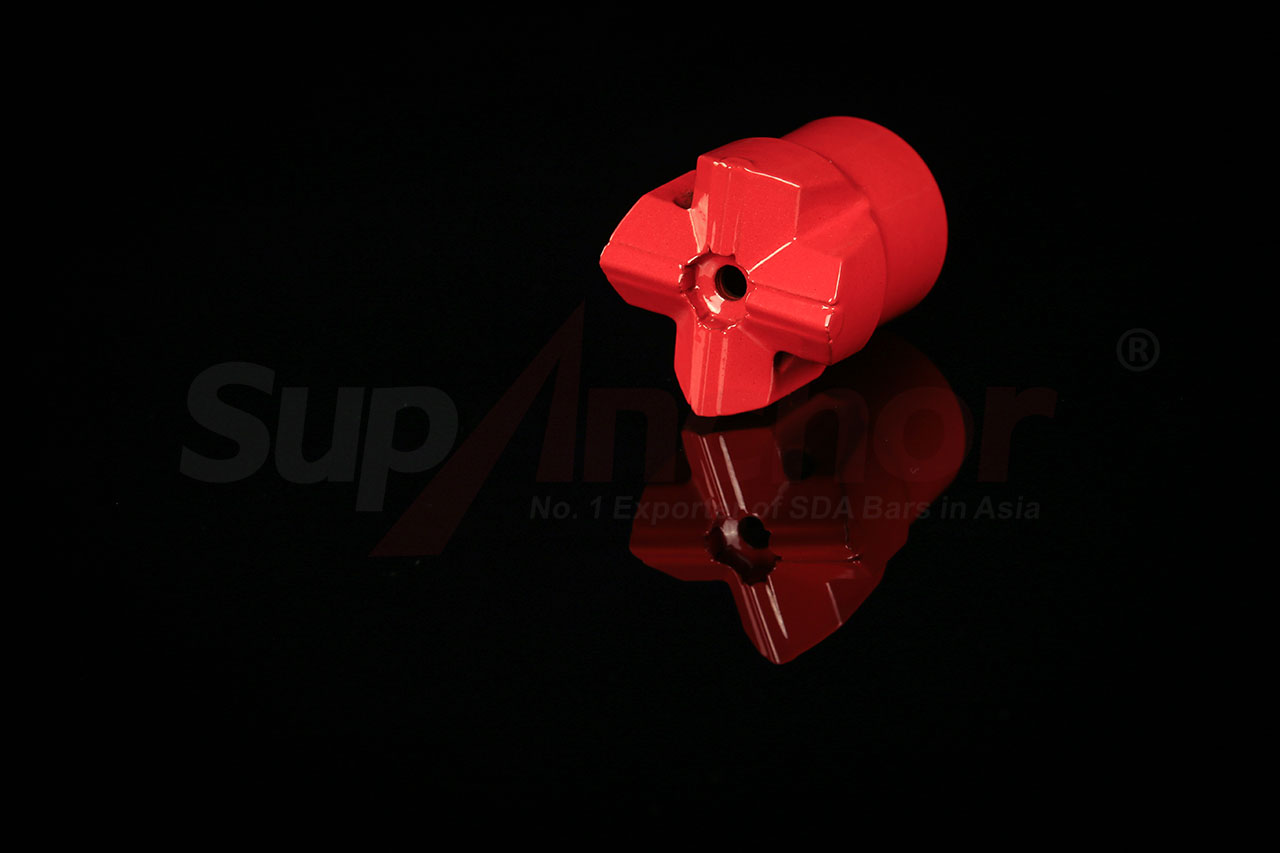
Installation followed a strict quality protocol. First, a sacrificial drill bit compatible with the ground type—cross-cut for rock or clay bit for soil—was attached to the leading hollow bar section. The drill rig advanced the bar while flushing with air or water, depending on groundwater control requirements. Once the design depth was reached, neat cement grout (water/cement ratio 0.4–0.5) was pumped through the hollow core. The grout filled the annular space around the bar and permeated the surrounding fractures, creating a bonded zone that transferred tensile loads from the slope face into stable ground. As the construction site image shows, multiple anchors were installed in a grid pattern to form a continuous geotechnical reinforcement system.
An important technical advantage was the ability to post-grout through the hollow bar after initial set. In areas with highly fractured limestone, secondary grouting at 2–4 MPa significantly increased anchor bond capacity by filling remaining voids. This drill-and-grout bolt technique proved essential for achieving the required 300 kN design load in weathered shale zones where conventional anchors would have required much longer bond lengths.
The successful application of hollow bar anchor technology on this highway project underscores a broader shift in global infrastructure construction. Aging transportation networks, expanding urban areas, and new renewable energy projects are pushing contractors to build on marginal ground—steep slopes, weak rock, and high-seismicity zones. According to industry analysts, the global ground anchor market is growing at over 6% annually, driven by demand for slope stabilization, deep excavation support, and tunnel pre-support.
Self drilling anchor systems are increasingly specified for their speed and reliability in difficult drilling conditions. Unlike traditional rock bolts or soil nails, a self drilling bolt for civil engineering does not require a pre-drilled hole. This makes it the method of choice for landslide repair, railway and highway widening, and foundation piling in karst or boulder-rich ground. The same product family includes micropile hollow bar anchors capable of supporting heavy column loads in weak soils, and rock bolt for underground mining applications where rapid installation and immediate load transfer are critical.
As a recognized soil nail system manufacturer, SupAnchor has positioned itself to serve these trends with a broad product range. The company's hollow bar anchor portfolio covers diameters from R25 to R51, with custom lengths, thread types, and corrosion protection options. Procurement teams also benefit from SDA bolt factory direct supply, which reduces lead times and ensures consistent quality control. For geotechnical contractors, working with a ground anchor bolt factory that offers technical engineering support can lower project risk and improve compliance with ISO and Eurocode standards.
The Carpathian highway project demonstrates the value of integrated anchor bolt system for geotechnical engineering. By combining drilling, grouting, and anchoring into a single system, the contractor eliminated casing, reduced waste, and achieved installation rates of up to 25 anchors per day per drill rig. This productivity gain, along with lower material handling costs, made the self drilling anchor for retaining walls economically competitive with conventional soil nailing, despite the higher unit cost of the hollow bar itself.
SupAnchor, the manufacturer behind the anchors used on this project, operates from a certified production base with an annual output exceeding 5 million meters of hollow bar. The company holds ISO 9001:2015 quality management certification, CE marking for construction products, and multiple national approvals for geotechnical applications. Its products have been used in over 40 countries, including high-profile tunneling projects in the Alps, subway expansions in the Middle East, and open-pit mining operations in South America and Australia.
Three core values define SupAnchor's approach: Professional, Innovative, Collaborative. Professionalism is reflected in rigorous material testing—each batch of steel is verified for chemical composition, mechanical properties, and thread geometry before dispatch. Innovation drives ongoing development of new corrosion protection systems, such as double corrosion protection (DCP) anchors for 100-year service life, and smart anchor sensors that monitor load in real time. Collaboration means the company's engineers work directly with design consultants and contractors to optimize anchor layouts, select drilling parameters, and troubleshoot difficult ground conditions.
The project's geotechnical instrumentation program has recorded no anchor loads above 85% of design capacity after six months of monitoring, and slope inclinometers show movements well within acceptable limits. This performance validates the self drilling anchor system as a robust solution for large-scale infrastructure in challenging geology.
Looking ahead, the contractor plans to extend the use of hollow bar anchor technology to the next section of the corridor, which involves a twin-tube tunnel portal in highly weathered granite. The proven compatibility of the self drilling anchor bolt with both percussion and rotary drilling makes it adaptable to a range of ground conditions, from soft clays to medium-hard rock. As global infrastructure investment accelerates, particularly in transportation and renewable energy, the role of advanced ground stabilization anchor systems will only grow.
SupAnchor's self drilling anchor system provided slope stabilization and retaining wall support on a 14.5-km highway expansion in fractured rock, delivering fast installation and high load capacity.
SupAnchor launches the SupShell Expansion Rock Bolt System, a self-drilling anchor system that offers immediate anchorage and efficient grouting for tunnels, mines, and slopes.
SupAnchor's self drilling anchor system and hollow bar anchors provide effective geotechnical reinforcement in a demanding construction project, showcasing innovation and reliability.
SupAnchor introduces SupFRP GFRP rebar with 1000 MPa tensile strength and superior corrosion resistance for marine, underground, and infrastructure projects.
SupAnchor's self drilling anchor system deployed on an Alpine slope stabilization project, showcasing efficient installation and high-performance geotechnical reinforcement in challenging conditions.