

SUPANCHOR self-drilling anchor bars and accessories are being supplied for the Wiślane Quay reconstruction project at the Port of Gdańsk, Poland. The project combines waterfront structural works with improvements to transport and utility infrastructure, supporting the long-term development of the port’s Inner Port.
For infrastructure projects of this scale, the work below ground is an essential part of the redevelopment. Ground anchoring helps transfer structural loads into the surrounding ground, providing support for the structures above. SUPANCHOR’s supply of hollow anchor bars and compatible accessories contributes to this important stage of construction.
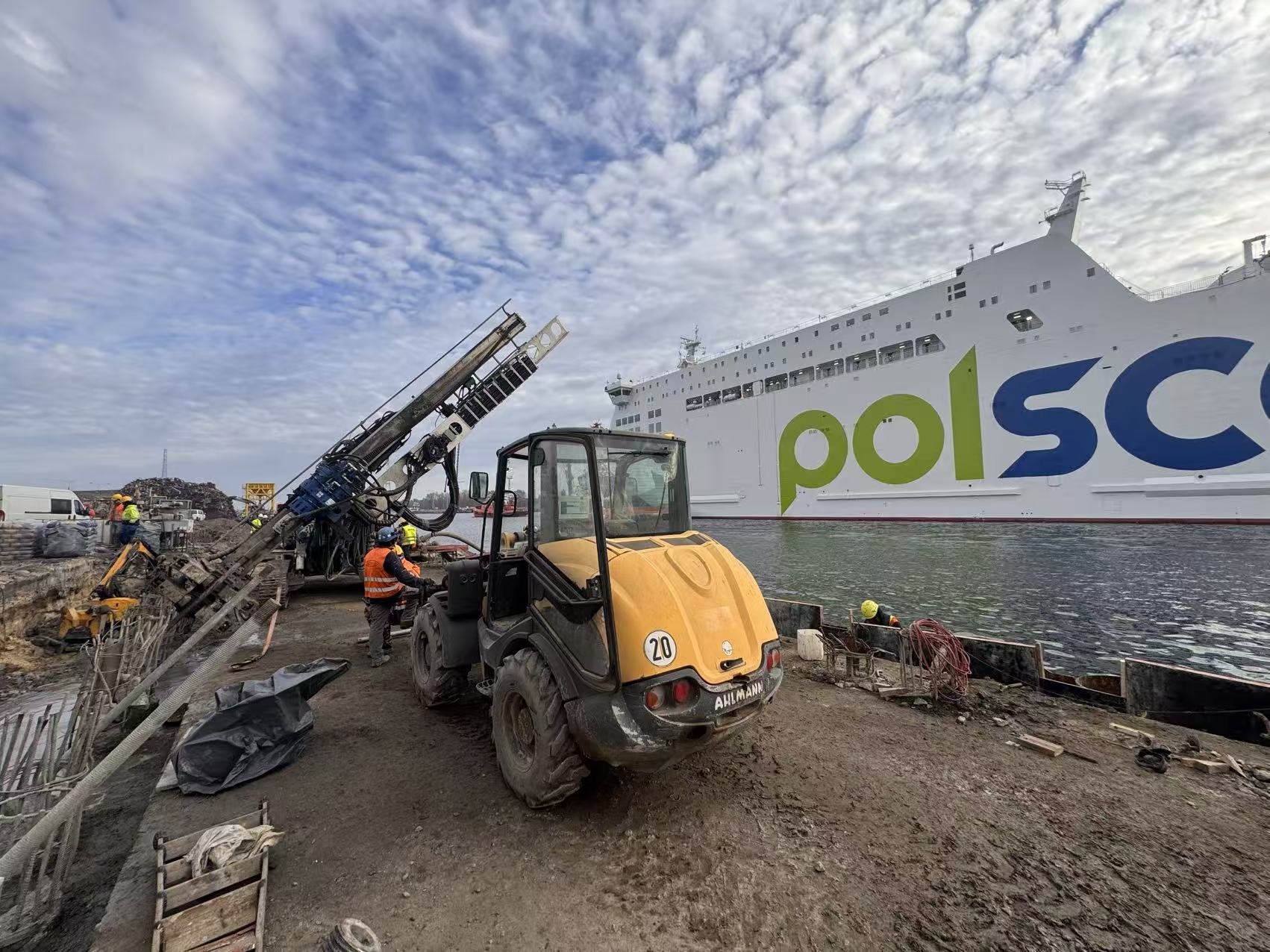
The redevelopment involves approximately 920 metres of quay, together with associated road, rail and utility infrastructure. The overall investment is valued at PLN 351 million, including VAT. Under the programme announced when the construction contract was signed in July 2025, completion is scheduled for the second quarter of 2028.
Planned works include rebuilding the quay structure and deepening the adjacent water to a technical depth of 12 metres. The project also includes new fendering and mooring equipment, crane rails, paving, lighting and utility networks. Once completed, the upgraded quay is intended to accommodate vessels of up to 100,000 tonnes deadweight and support modern cargo-handling equipment.
Construction is being organised in stages to maintain cargo handling and storage activities around the quay. Working within an operating port requires coordination between construction equipment, material deliveries, waterfront access and ongoing logistics.
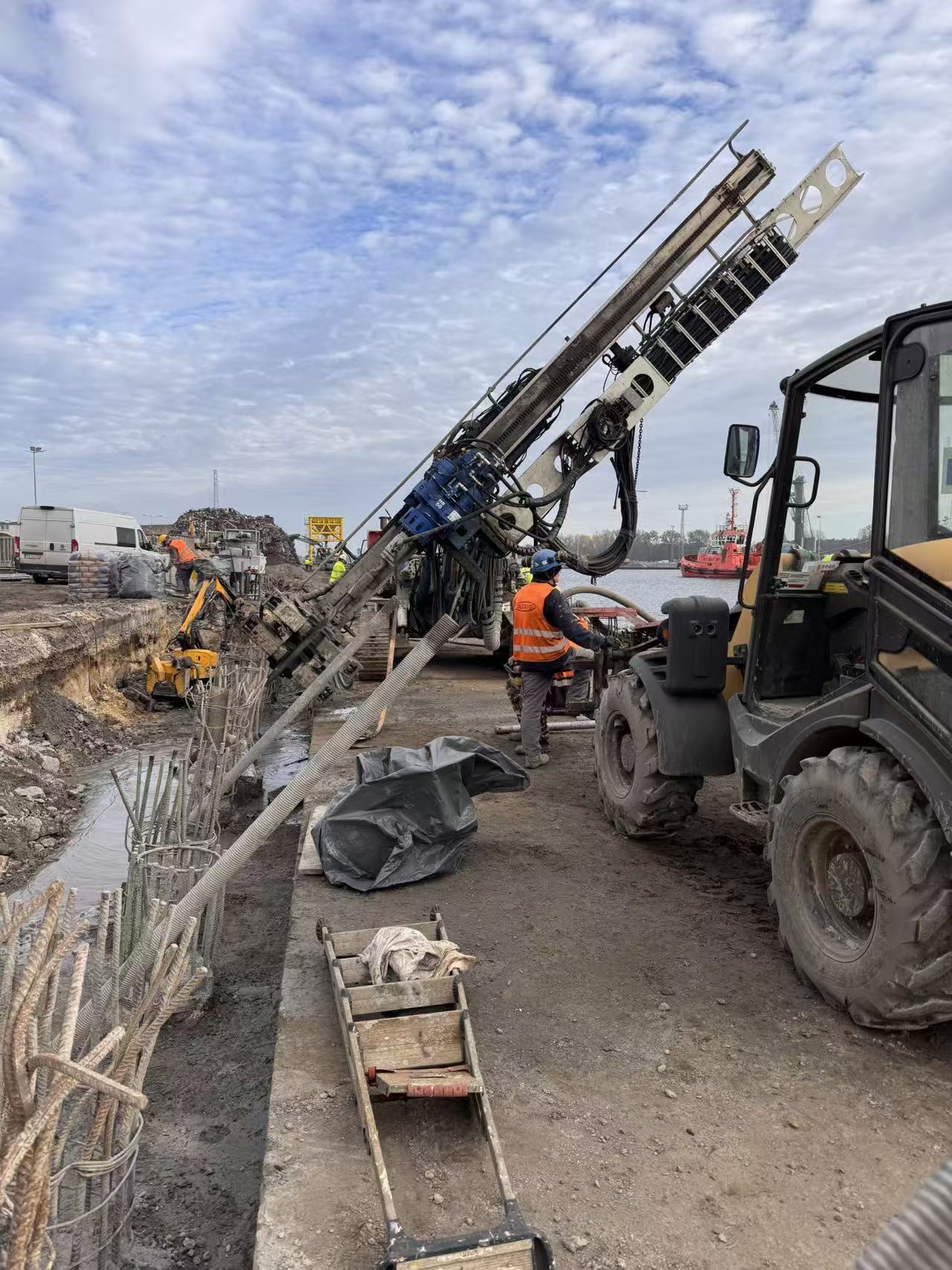
SUPANCHOR’s supply for the project includes self-drilling hollow anchor bars and associated accessories. A hollow bar anchor system combines a load-bearing steel element with a central passage that can be used for flushing and grout injection during installation.
In a typical self-drilling installation, the hollow bar serves as the drill string and remains in the ground as reinforcement. Compatible couplers allow bar sections to be connected to reach the required installation length, while other accessories complete the system according to the engineering design.
Ground anchors provide a means of transferring tensile loads from a supported structure into a designed anchorage zone in the ground. In a grouted anchor system, the steel bar, grout and surrounding ground work together to provide load transfer. Depending on the structural arrangement, anchors can help restrain movement and support retaining structures subjected to lateral loads.
These functions are relevant to quay reconstruction and other waterfront infrastructure works, where the interaction between the structure and the ground must be carefully considered. Anchor length, inclination, spacing, corrosion protection and testing requirements are determined by the project design and site conditions.
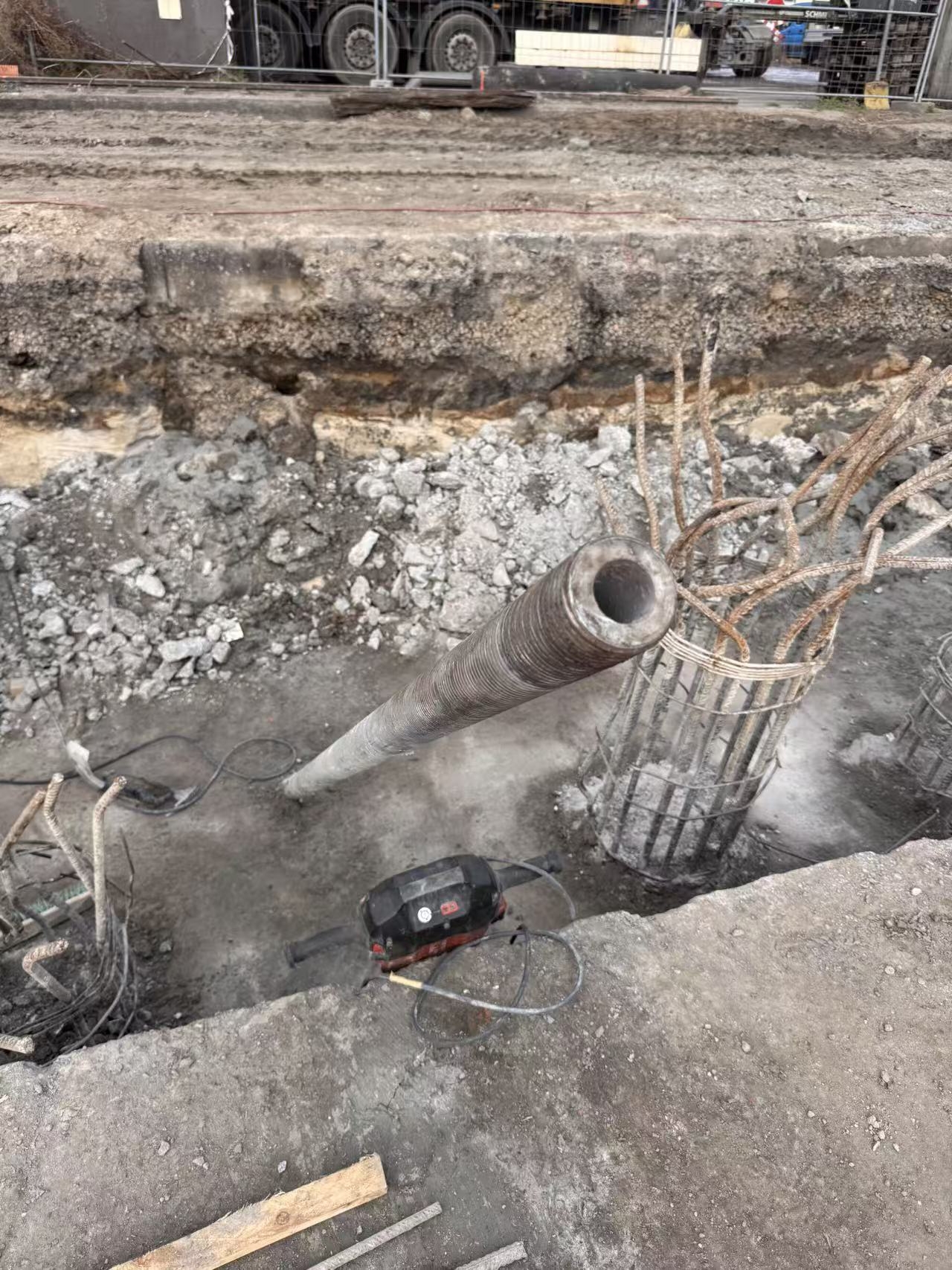
The anchor bar remains in place after drilling, avoiding the separate step of withdrawing a drill string and inserting a reinforcement bar. This integrated approach can simplify the installation sequence, particularly where maintaining an open borehole is difficult.
The central passage provides a route for grout injection. Grout surrounding the installed bar forms the bond needed to transfer loads between the steel reinforcement and the ground. Grouting procedures and pressures are selected to suit the ground conditions and the specified installation method.
Threaded bars can be connected in sections using compatible couplers. This allows the installation length to be built up progressively, offering practical flexibility where equipment access, handling space or available headroom is limited.
With an appropriate drilling and grouting method, self-drilling anchor systems can be used in a range of ground conditions, including formations where conventional boreholes may be unstable. System selection remains dependent on geotechnical assessment and the required structural performance.
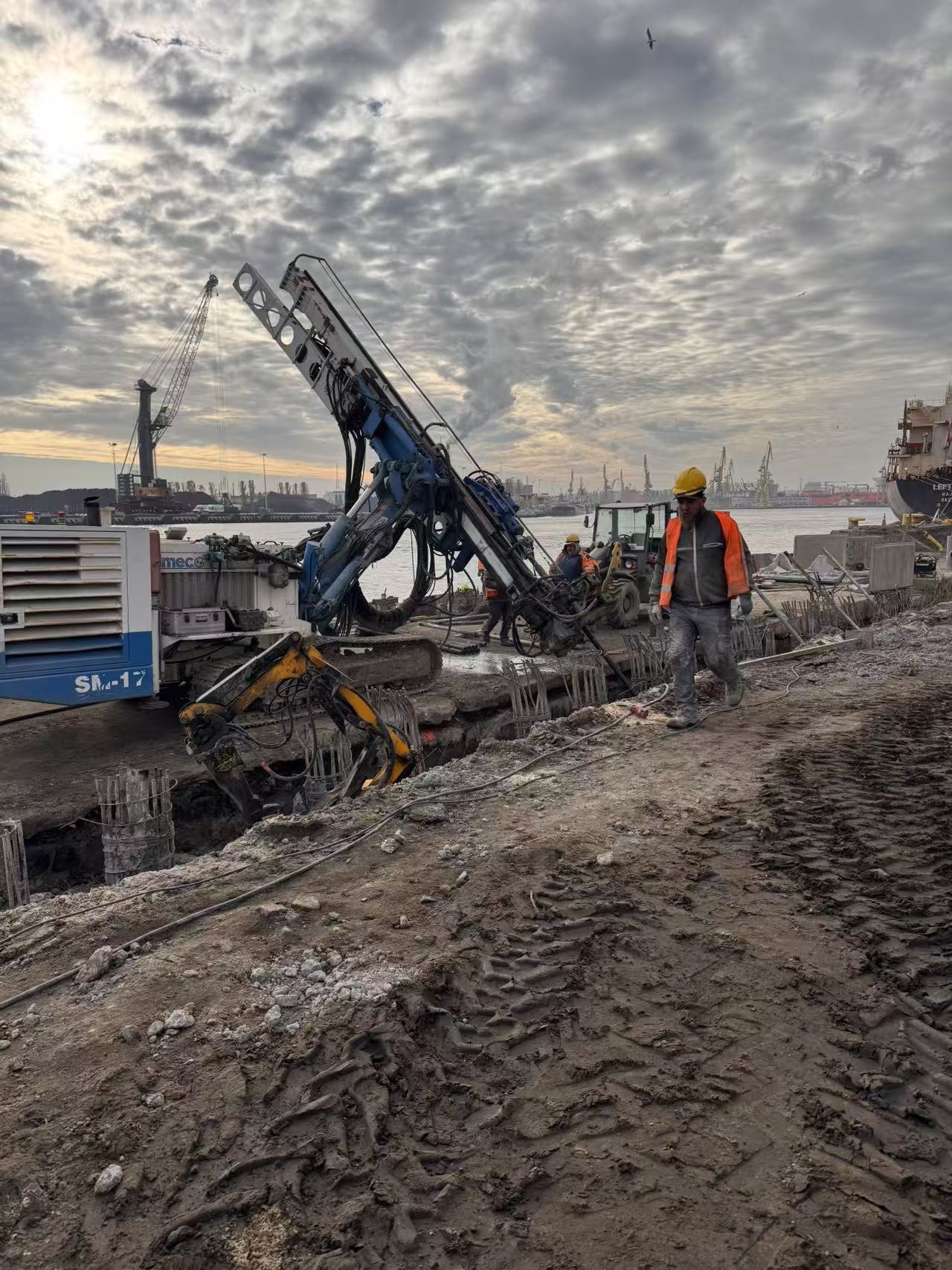
The Wiślane Quay project illustrates the role of ground anchoring within a wider port modernisation programme. While the completed quay will support vessel berthing and cargo handling, the ground engineering works form part of the infrastructure that makes this redevelopment possible.
By supplying self-drilling anchor bars and accessories for this project, SUPANCHOR is contributing to the reconstruction of an important waterfront facility at the Port of Gdańsk and adding to its international experience in infrastructure supply.
SUPANCHOR self-drilling anchor bars and accessories are being supplied for the Wiślane Quay reconstruction project at the Port of Gdańsk, Poland.
European slope project uses SupAnchor self drilling anchor system to stabilize fractured ground with simultaneous drilling and grouting.
SupAnchor's T thread self-drilling hollow anchor revolutionizes geotechnical reinforcement in challenging tunneling projects, delivering high load capacity, corrosion resistance, and rapid installation.
SupAnchor's self drilling anchor system successfully addressed challenging weathered rock conditions in a European highway slope stabilization project, demonstrating high efficiency and reliability.
SupAnchor launches high-performance GFRP reinforcement rebar with high corrosion resistance, tensile strength up to 1000 MPa, and wide applications in bridges, seawalls, and precast elements.