In the rugged terrain of the European Alps, a major infrastructure project is underway to expand a critical transportation corridor connecting two economic hubs. The project, which includes the construction of retaining walls, tunnel portals, and slope stabilization measures, faces some of the most demanding geological conditions in the region: fractured rock masses, variable overburden, and high groundwater levels. Traditional anchoring methods, such as driven piles or conventional grouted anchors, have proven inefficient and costly due to the need for pre-drilling, casing, and separate grouting operations. To overcome these challenges, the project consortium turned to a proven geotechnical reinforcement system: the self drilling anchor system supplied by SupAnchor, a globally recognized manufacturer of advanced anchoring solutions.
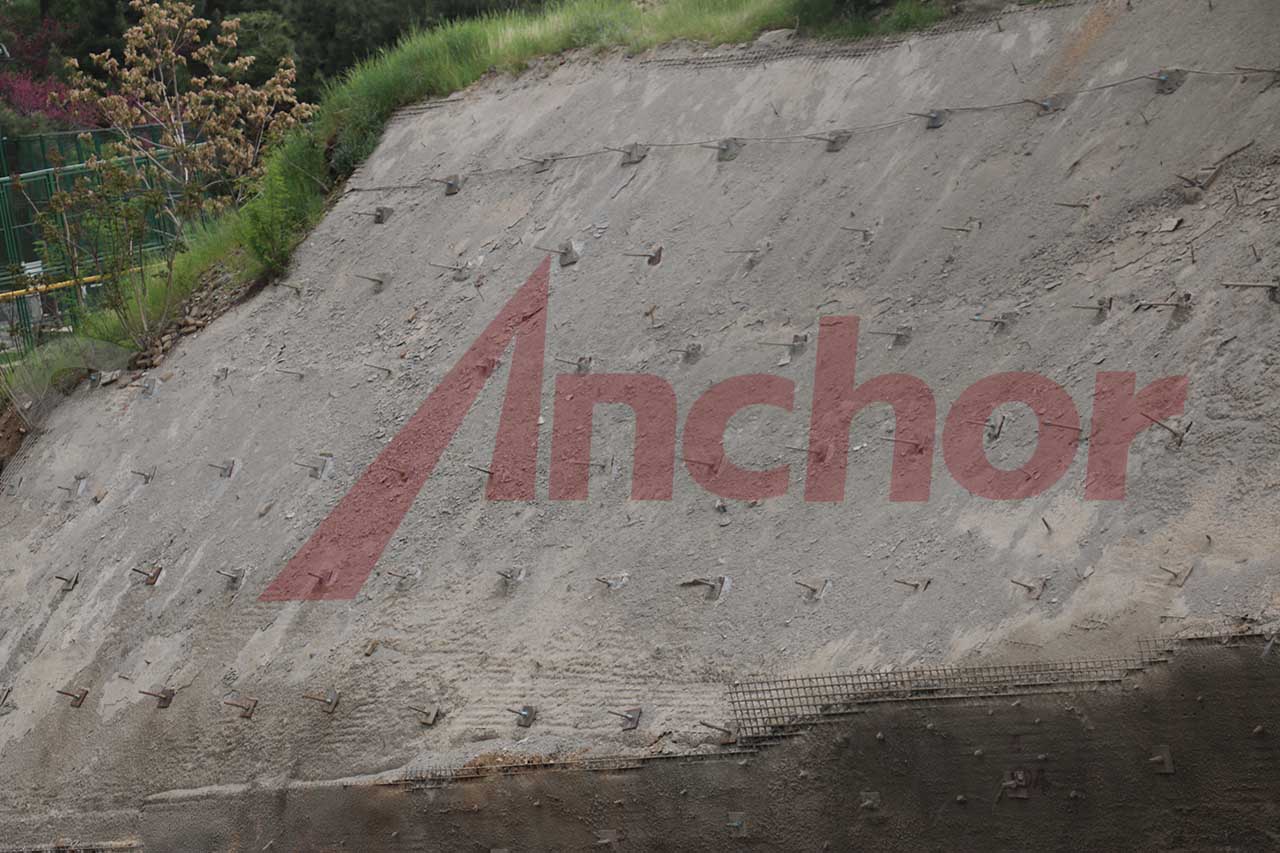
SupAnchor, known as a leading soil nail system manufacturer and ground anchor bolt factory, has deployed its self drilling anchor bolt technology to stabilize slopes, support excavation faces, and reinforce foundations across the project's multiple work zones. The system's ability to drill and grout in a single pass has significantly reduced installation time and improved bond strength in the difficult ground conditions, making it an ideal choice for this Alpine environment.
The expansion project encompasses approximately 15 kilometers of highway, including three tunnels, five major retaining wall sections, and numerous slope cuts up to 40 meters in height. The geology varies from strongly weathered gneiss and schist to glacial till and boulder deposits. In many areas, groundwater seepage has caused local instability, requiring immediate reinforcement to prevent landslides. The project owner and general contractor sought a cost-effective and reliable anchoring solution that could be installed rapidly without compromising safety or long-term performance.
Traditional anchor systems often require a two-step process: first, a borehole is drilled and cased, then the anchor is inserted and grouted. In collapsing or water-bearing ground, maintaining borehole stability is difficult, and additional casing may be needed. The self drilling anchor system eliminates these issues by integrating the drill bit, hollow bar, and grouting channel into a single component. During installation, the anchor is rotated and advanced into the ground while grout is simultaneously pumped through the hollow core, filling the annular space and creating a strong bond with the surrounding soil or rock. This method is particularly effective in loose or caving formations where conventional drilling would fail.
The project's geotechnical engineers specified a range of self drilling anchor bolts to accommodate varying load requirements and ground conditions. The system's versatility allowed for rapid adaptation across different work zones, reducing the need for multiple anchor types and simplifying logistics. Additionally, the project's environmental constraints, including strict noise and vibration limits near residential areas, favored the low-impact drilling method of the self drilling system. The compact drilling rigs produce minimal disturbance compared to traditional piling methods, and the continuous drilling process reduces the number of equipment moves.
Another critical factor was the project's tight schedule. The construction window in the high Alps is limited to the summer months due to snow and freezing temperatures. The self drilling anchor system's ability to be installed quickly, even in frozen ground with appropriate grout additives, enabled the contractor to maximize productivity during the short season. These combined advantages made the self drilling anchor system the obvious choice for the project's geotechnical reinforcement needs.
The construction site image shows a crew installing self drilling anchor bolts on a steep slope above the highway. A compact drilling rig, equipped with a rotary head and grout pump, advances the hollow bar anchor into the ground. The operator monitors the drilling parameters in real-time to ensure proper penetration and grout flow. The anchors are installed at predetermined angles and spacings to create a grid that stabilizes the slope and distributes loads evenly.
SupAnchor's self drilling anchor system is available in a wide range of diameters and lengths to suit various applications. For this project, the following technical parameters were utilized:
| Parameter | Specification |
|---|---|
| Anchor Diameter | 32 – 76 mm (R32, R38, R51, T76) |
| Tensile Strength | Up to 800 kN (depending on diameter and steel grade) |
| Anchor Length | Customizable, typically 3 – 12 m (extendable with couplings) |
| Corrosion Protection | Hot-dip galvanized or duplex coating (epoxy over galvanizing) for aggressive environments |
| Drill Bit Type | Carbide cross or button bit, replaceable for hard rock conditions |
| Grout | Cementitious grout with water/cement ratio 0.4–0.5, typically 30–40 MPa compressive strength |
These parameters were selected to meet the project's structural requirements. For example, the R51 hollow bar anchors with a tensile capacity of 550 kN were used for the tallest retaining walls, while smaller R32 anchors were sufficient for temporary slope stabilization. The corrosion protection system, consisting of hot-dip galvanizing plus a sacrificial anode in critical areas, ensures a service life of at least 75 years, aligning with the highway's design life.
The on-site installation process is remarkably efficient. A single drill-and-grout bolt can be installed in under 30 minutes, including drilling, grouting, and tensioning. This compares favorably with conventional methods that may take several hours per anchor. The project team reported a 40% reduction in installation time and a 25% cost saving compared to the original design using traditional anchors.
Quality control is rigorous. After installation, selected anchors undergo pull-out testing to verify load capacity. The project specifications required that each anchor achieve a minimum of 1.5 times the design load for a specified period. SupAnchor's system consistently exceeded these requirements, with test anchors showing minimal creep and high residual strength. The grout quality is monitored through cube tests, and the anchor alignment and inclination are checked with inclinometers. These measures ensure that the ground stabilization anchor system performs as designed over the long term.
Beyond the primary slope stabilization, the self drilling anchor system was also used for the construction of temporary access roads and working platforms. In these applications, the anchors were installed as micropiles, providing foundation support for heavy equipment. The ability to use the same drilling equipment and materials for both soil nailing and micropiling streamlined the project's operations and reduced equipment costs.
The successful application of this self drilling anchor system on the Alpine project underscores a broader shift in the geotechnical industry toward more integrated and efficient ground reinforcement technologies. As global infrastructure investment continues to grow—particularly in transportation, renewable energy, and urban development—the demand for reliable geotechnical reinforcement systems is rising. According to a recent market report, the global ground anchor market is expected to reach $2.5 billion by 2030, driven by the need for slope stabilization, tunneling, and foundation support in challenging terrains.
Self drilling anchors, also known as hollow bar anchors or micropile hollow bar anchors, are increasingly specified for projects where conventional drilling is problematic. Their ability to be installed without casing, even in collapsing soils, makes them ideal for landslide repair, retaining wall construction, and underground mining. In the mining sector, these systems serve as rock bolt for underground mining applications, providing immediate support to tunnels and stopes. The versatility of the system allows it to be used as a soil nail, tension anchor, or micropile, depending on the design requirements.
For civil engineering projects, self drilling bolts offer a reliable ground stabilization anchor system that can be adapted to various ground conditions. They are particularly valuable for self drilling anchor for retaining walls, where lateral earth pressures must be resisted. The Alpine project's retaining walls, some reaching 12 meters in height, relied on a grid of these anchors to maintain stability. The system's performance has been validated through extensive field testing and long-term monitoring, confirming minimal creep and high load retention.
The use of these systems is not limited to Europe. SupAnchor, as an experienced SDA bolt factory direct supply manufacturer, has exported its products to over 50 countries, including projects in North America, Australia, and the Middle East. The company's commitment to quality is evidenced by its ISO 9001:2015 certification and CE marking, ensuring that every anchor bolt system for geotechnical engineering meets rigorous international standards.
In North America, the demand for self drilling anchors has surged due to the need to repair aging infrastructure and mitigate landslide risks along highways and railways. In Australia, mining companies rely on these systems for ground support in deep underground mines, where high stress conditions demand robust anchoring solutions. In the Middle East, the anchors are used for foundation support in sandy and corrosive soils, where corrosion protection is critical. SupAnchor's global presence and technical expertise have made it a trusted partner for these diverse applications.
Furthermore, the sustainability aspect of self drilling anchors is gaining attention. The single-pass installation method reduces drilling spoils and grout waste compared to conventional methods, contributing to a smaller environmental footprint. The anchors' high load capacity allows for fewer anchors to be installed, reducing material consumption. These factors align with the growing emphasis on sustainable construction practices worldwide.
SupAnchor's involvement in this Alpine infrastructure project highlights its core values: professional, innovative, and collaborative. The company's technical team worked closely with the project's geotechnical consultants during the design phase, providing detailed calculations, anchor selection guidance, and on-site training for the installation crews. This collaborative approach ensured that the self drilling anchor system was optimized for the specific ground conditions and load requirements.
Innovation is at the heart of SupAnchor's product development. The company invests heavily in research and development to improve the performance and durability of its anchoring solutions. Recent innovations include a new generation of self drilling anchor bolts with enhanced thread profiles for better grout bond, and corrosion protection systems using advanced polymers for highly aggressive environments. These advancements have positioned SupAnchor as a preferred supplier for complex geotechnical projects worldwide.
SupAnchor's manufacturing facility is equipped with state-of-the-art production lines, including automated CNC machining, heat treatment, and coating systems. This vertical integration ensures consistent quality and allows for custom fabrication to meet specific project requirements. The company's quality management system, certified to ISO 9001:2015, covers every stage from raw material sourcing to final inspection. Products undergo rigorous testing, including tensile, shear, and fatigue tests, to guarantee performance under extreme conditions.
Professionalism extends to SupAnchor's customer service. The company maintains a global network of distributors and technical support teams who provide on-site assistance, installation training, and after-sales service. This comprehensive support ensures that contractors can maximize the benefits of the self drilling anchor system, even in remote or challenging locations. The Alpine project benefited from SupAnchor's dedicated project engineer who visited the site regularly to monitor installation quality and address any technical issues promptly.
The collaborative spirit of SupAnchor is further demonstrated through its partnerships with research institutions and industry associations. The company actively participates in the development of international standards for ground anchors and contributes to technical conferences and publications. By sharing knowledge and best practices, SupAnchor helps advance the geotechnical engineering profession as a whole.
The Alpine project's success is a testament to the reliability and versatility of the self drilling anchor system. By choosing SupAnchor, the project team benefited from a single source for all anchoring needs, from design support to after-sales service. As the infrastructure sector continues to evolve, the demand for efficient, safe, and sustainable ground reinforcement methods will only increase. SupAnchor remains dedicated to advancing geotechnical engineering through continuous innovation and customer collaboration.

For more information about SupAnchor's products and project case studies, visit www.supanchor.com.
SupAnchor's self drilling anchor system played a pivotal role in stabilizing slopes for a major European transportation project, combining innovative hollow bar technology with rigorous quality standards.
Discover how SupAnchor's R Thread self-drilling hollow anchor integrates drilling and grouting, offering high strength and corrosion resistance for tunneling and ground engineering projects.
SupAnchor's self drilling anchor bolts provide reliable geotechnical reinforcement for a European highway slope stabilization, overcoming fractured rock and water ingress.
SupAnchor's new GFRP dowel bars provide corrosion-free load transfer in concrete slabs, offering 100+ year service life and superior performance for pavements and infrastructure.
SupAnchor's self drilling anchor system proved its technical value in a complex geotechnical project, combining rapid installation with high load capacity for foundation and slope stabilization.