
In the heart of the Swiss Alps, a challenging infrastructure project is drawing the attention of geotechnical engineers across Europe. The A13 Highway expansion near Thusis confronts notoriously fractured rock masses and colluvial soils, posing a severe risk of slope instability. To anchor a series of reinforced concrete retaining walls and micropile foundations, the consortium turned to a proven hollow bar anchor technology and systematic on-site execution delivered a robust ground stabilization anchor system under demanding alpine conditions.
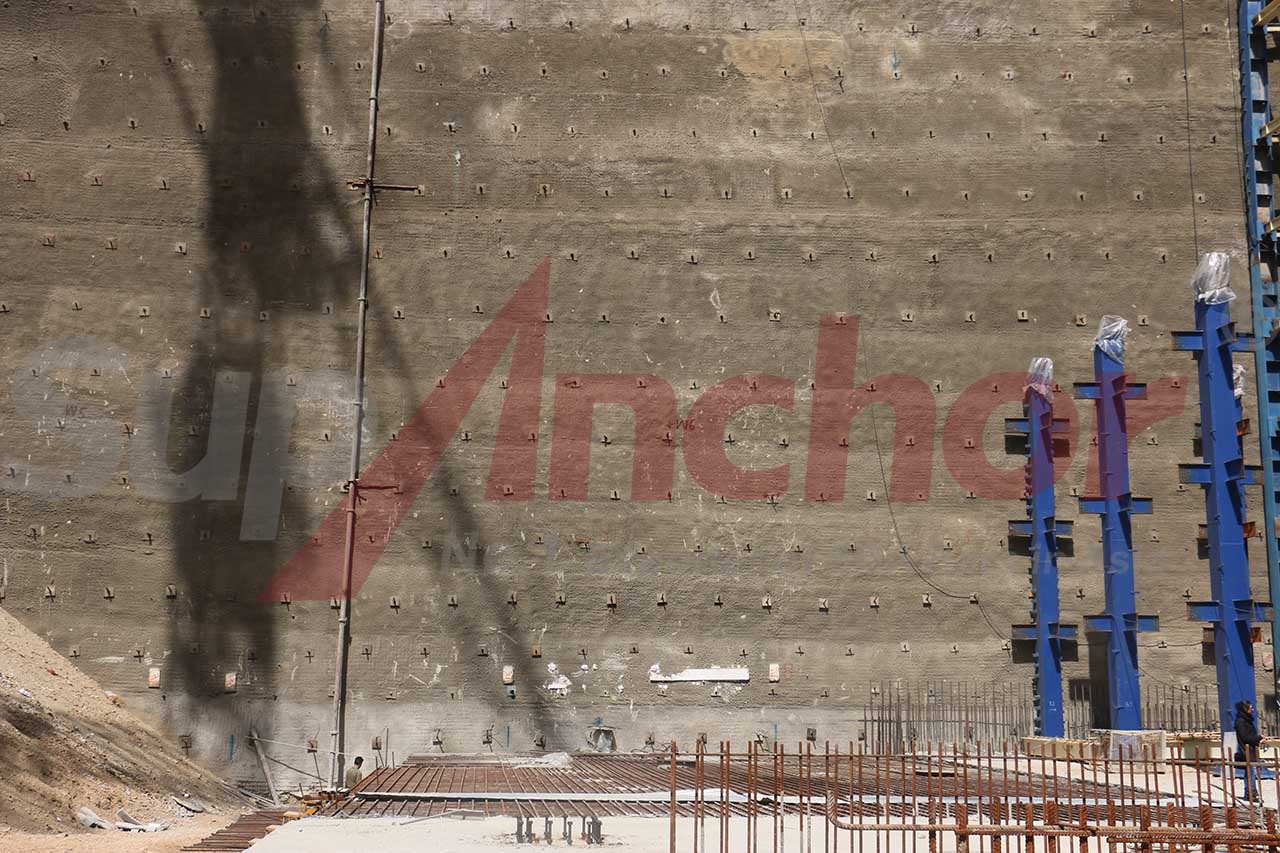
The project is part of a multi-year federal initiative to improve transalpine transport corridors. Given the sensitive mountainous environment, minimizing excavation, spoil, and vibration was paramount. Traditional rock bolt installation methods required pre-drilling and casing that often collapsed in the weak ground, leading to costly delays and material waste. SupAnchor’s drill-and-grout bolt offered a decisive advantage: a single-pass anchor that simultaneously advances the hole, injects cement grout, and leaves a fully integrated anchor tendon. The result was a 60% faster installation cycle and a virtually zero void ratio in grouted bond zones.
The A13 expansion includes a 2.3 km mountainous section where the existing road is being widened by up to 8 meters. This requires cutting into a steep hillside composed of highly weathered gneiss, schist interbeds, and pockets of loose talus. A geotechnical investigation revealed RQD values as low as 25% and frequent groundwater seepage, conditions that would cause conventional boreholes to collapse within minutes. The design called for 12-meter-long permanent anchors with a working tensile load of 450 kN to support the new retaining structures. After a field trial comparing several ground anchor bolt factory systems, the SpecConsult engineering firm selected SupAnchor’s self drilling anchor for retaining walls due to its robust connection systems and corrosion protection.
The installation process captured in the accompanying photograph illustrates the heart of the technique. A hydraulic crawler drill rig equipped with a rotation-percussion head was used to drive a 32 mm hollow bar anchor. The hollow bar, pre-conditioned with a sacrificial drill bit, served as both the drilling rod and the final anchor. As the drill advanced, cement grout was pumped continuously through the hollow core and expelled at the bit, stabilizing the hole wall instantly. The double O-ring couplers, visible at each joint, prevented grout bypass and ensured a consistent internal pressure—a key feature of the anchor bolt system for geotechnical engineering.
“Once the hollow bar anchor reaches the design depth, the grout flow is maintained until clean cement returns to the surface, confirming full annular grouting,” explained site supervisor Markus Keller. “There is no waiting for separate tendon insertion. This single-pass drill-and-grout bolt dramatically reduces the risk of borehole collapse and mitigates the risk of worker injury from falling ground.” The project deployed over 1,800 individual anchors across four walls, with daily installation rates averaging 22 anchors per rig.
The self drilling anchor bolt used on this project is part of SupAnchor’s SDA series, known for its high-tensile steel grade and Europe-compliant mechanical properties. Below are the core parameters that met the project’s strict performance specifications:
| Parameter | Specification |
|---|---|
| Outer Diameter (nominal) | 32 mm |
| Inner Diameter | 18 mm |
| Tensile Strength (Rm) | ≥ 660 MPa |
| Yield Strength (ReH) | ≥ 530 MPa |
| Elongation at Break | ≥ 16% |
| Corrosion Protection | Hot-dip galvanized to EN ISO 1461, average coating ≥ 70 µm |
| Thread Profile | Continuous left-hand rope thread (ISO 10208 compliant) |
| Coupling Type | Forged sleeve with double O-ring grout seal |
| Section Lengths | 2 m, 3 m, 4 m, 6 m (customizable) |
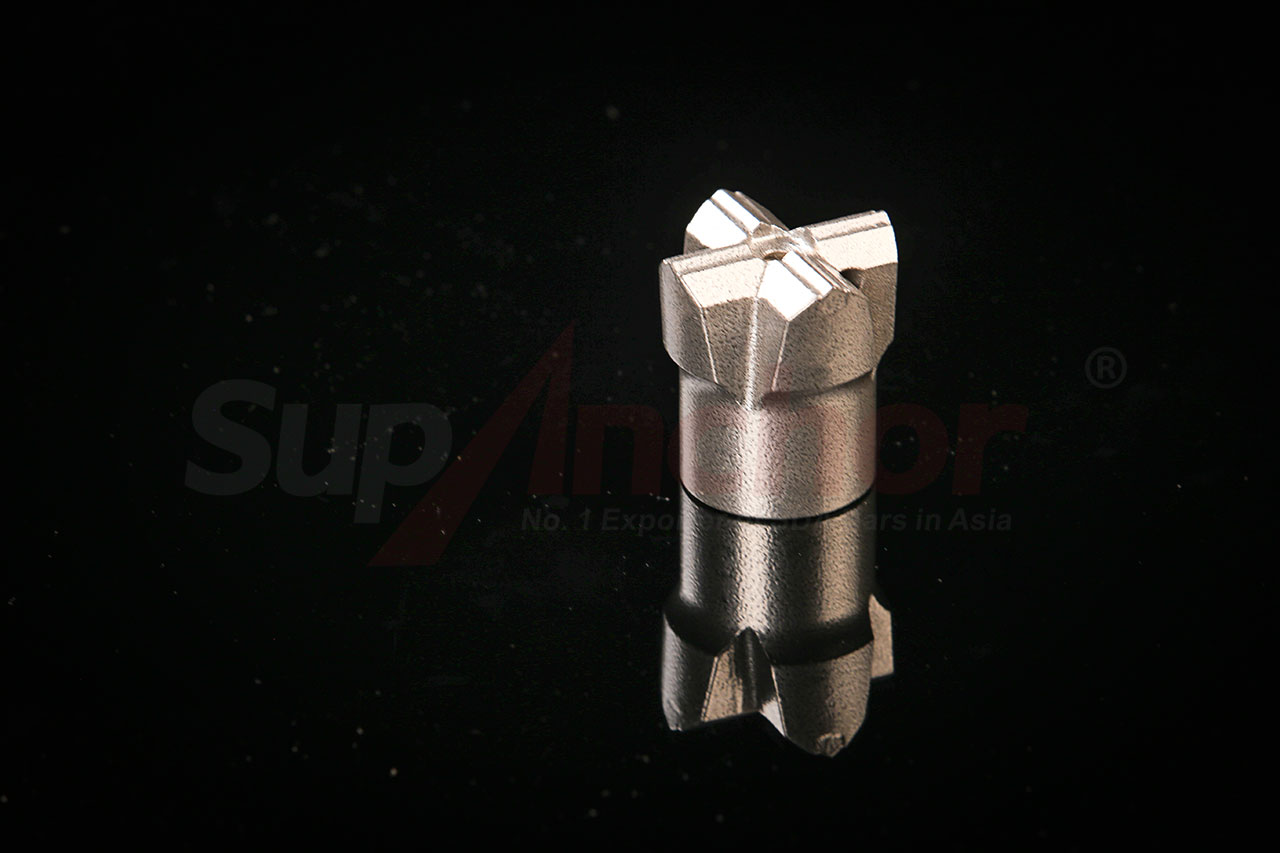
| Drill Bit Types | Cross-cut, button, or clay bits for various ground conditions |
The 660 MPa tensile strength provided a generous safety margin over the required 450 kN load, while the hot-dip galvanized layer offered a 100-year design life against corrosion—critical in the aggressive alpine environment where freeze-thaw cycles accelerate steel degradation. The continuous rope thread eliminated stress concentrations at joint sections, a common failure point in weaker threaded systems. Moreover, the double O-ring coupling prevented grout pressure loss, which was essential for maintaining grout column continuity behind the retaining walls.
The Swiss project is emblematic of a global trend toward more efficient and reliable geotechnical reinforcement systems. As highway and railway authorities invest in upgrading aging transportation networks, the demand for hollow bar anchors has surged. According to market data, the self drilling anchor system segment is growing at 6.1% annually, fueled by its versatility in both soil nail and micropile applications. In Europe alone, upcoming projects such as the Brenner Base Tunnel, the Fehmarnbelt tunnel, and the HS2 rail network will require thousands of kilometers of ground stabilization anchors.
Regulatory changes are also driving adoption. The new Eurocode 7 revision places greater emphasis on observational methods and rapid response, which aligns with the real-time feedback that a drill-and-grout bolt provides. Contractors appreciate that the drilling penetration rate and grout pressure directly indicate ground conditions, enabling fine-tuning without extra investigation holes. This reduces rock bolt for underground mining exploration costs and accelerates construction timelines.
Environmental considerations are equally compelling. A self drilling bolt for civil engineering projects like this one minimizes the ecological footprint by eliminating the need for separate casing or temporary support. Fewer drilling passes mean less fuel consumption and lower CO₂ emissions. The reduction in cement waste from collapsed boreholes also contributes to sustainability goals sought by many EU-funded projects. “Our ground stabilization anchor system saved over 30% in material compared to conventional alternatives,” noted the project’s environmental engineer.
SupAnchor, a trusted soil nail system manufacturer and ground anchor bolt factory, has been at the forefront of the self drilling anchor industry for over 15 years. The company’s factory in China operates under ISO 9001 and CE certification, producing up to 1.2 million meters of hollow bar anchors annually. Each batch undergoes rigorous pull-out, tensile, and fatigue testing to validate parameters before dispatch. With a global distribution network spanning Europe, the Americas, and Oceania, SupAnchor positions itself as a reliable SDA bolt factory direct supply partner, offering logistics flexibility and on-time delivery.
The firm’s innovation culture is rooted in collaborative engineering. During the A13 project, SupAnchor’s technical team worked on-site with Swiss geologists to custom-design a micropile hollow bar anchor variant for the bridge foundations. By adjusting the grout mix and adding sacrificial bits optimized for schist, they achieved a 20% increase in bonding efficiency. Such adaptability is a hallmark of an anchor bolt system for geotechnical engineering that evolves with real-world feedback.
Beyond mountains, the company’s products have been successfully deployed in metro tunnels under London, slope stabilization along California’s seismic fault lines, and deep excavations in Sydney. In each case, the self drilling anchor for retaining walls eliminated the need for temporary casing and reduced overall project costs by an average of 18% according to internal post-project analyses.
“We see ourselves not just as a supplier but as a geotechnical partner,” said Dr. Lin Zhang, SupAnchor’s CTO. “Each project teaches us something new about ground behavior, and that knowledge feeds directly into our R&D process. Our aim is to make every self drilling anchor bolt a smarter, safer element of the foundation system.”
Looking ahead, SupAnchor is investing in smart sensing technology for its product range. Prototype self drilling anchors embedded with fiber-optic strain sensors are being tested to provide real-time load monitoring over the structure’s lifecycle. This development promises to revolutionize asset management for critical infrastructure, offering early warning of potential failures and allowing predictive maintenance schedules. As the world’s construction projects grow more ambitious, the hollow bar anchor technology from SupAnchor remains a cornerstone of safe, efficient, and sustainable ground engineering.
From the steep slopes of the Swiss Alps to bustling urban excavation sites, the drill-and-grout bolt is proving that innovation in geotechnical engineering is not just about hardware but about rethinking the entire installation process. SupAnchor’s contribution to the A13 highway project exemplifies how a well-designed anchor system, supported by a professional and collaborative supply chain, can turn the most daunting geological challenges into routine successes.
A major infrastructure project used SupAnchor's self drilling anchor system to address complex geotechnical challenges, ensuring safety and efficiency in slope stabilization and foundation support.
SupAnchor introduces SupFRP® GFRP dowel bars, offering 100+ year service life, no-rust performance, and high load transfer efficiency for concrete joints in pavements, embankments, and MSE walls.
A European infrastructure project has deployed SupAnchor's self-drilling anchor bolts to stabilize weak slopes and secure deep foundations, highlighting advanced geotechnical reinforcement solutions.
SupAnchor launches SupHulk friction rock bolt system, offering high yield loads up to 240 kN and 10% elongation for immediate ground support in tunneling and mining projects.
A major infrastructure project in the European Alps leverages SupAnchor's self drilling anchor system to overcome fractured rock and high groundwater, enhancing slope stabilization and tunneling safety.