
As part of a landmark infrastructure initiative linking northern and southern Europe, a new base tunnel through the Swiss Alps has required innovative geotechnical solutions. The 15-kilometer tunnel, driven at depths exceeding 1,500 meters, encountered a complex mix of squeezing ground, high in-situ stresses, and intrusive groundwater flows. Traditional rock bolting methods proved inefficient, with frequent drillstring jamming and incomplete grout encapsulation. Engineers turned to SupAnchor’s self-drilling anchor system, an integrated drill-and-grout bolt technology that eliminates the need for a pre-drilled hole and separate casing. This news report examines how the system performed under the most demanding conditions and what it signifies for the future of tunneling and ground stabilization.
The Gotthard-Alptransit expansion project, managed by joint venture AlpineTunnel AG, involves twin single-track tunnels designed for high-speed rail. Early reconnaissance revealed variable geology comprising micaschists, phyllites, and quartzitic veins, with RQD values often below 30%. The presence of fault zones and karstic features heightened the risk of sudden water inflow and face instability. Initial trials with conventional rock bolts and mesh reinforcement led to delays, as boreholes collapsed before insertion of the steel bar and grout could be injected effectively. “We needed a system that could cope with caving ground without sacrificing installation speed,” said chief geotechnical engineer Dr. Markus Lehmann. The search led to SupAnchor’s hollow bar anchor technology, already proven in similar Alpine projects and renowned for its ability to drill, grout, and anchor simultaneously.
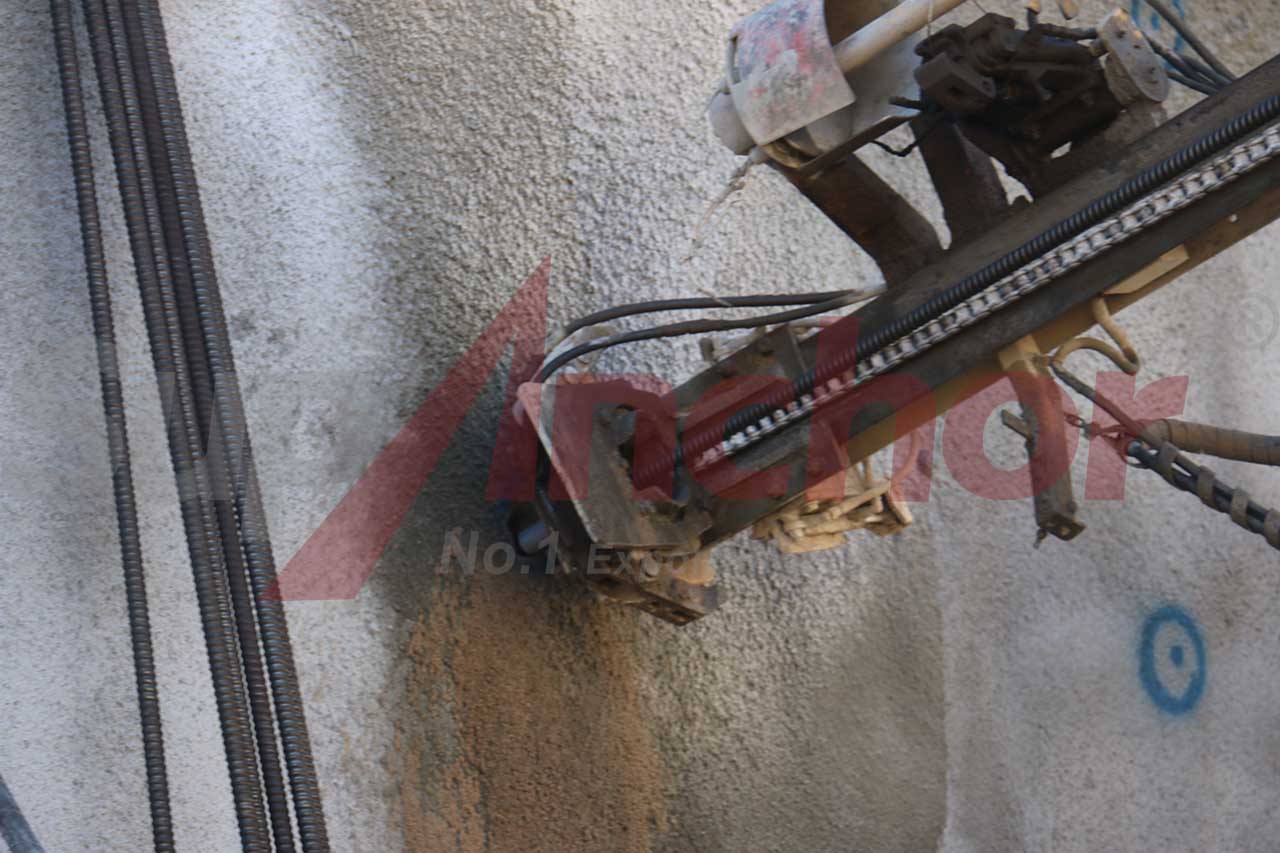
The on-site photograph (top) captures the installation phase near the tunnel portal. Workers are seen operating a hydraulic bolting rig equipped with a rotary-percussion drifter. The SupAnchor self-drilling anchor bolts, distinguished by their continuous hollow core and sacrificial drill bit, are being driven into the face. The grout is pumped through the bar’s central channel, emerging at the bit to flush cuttings and immediately fill the annular space. This process creates a bond between the bar and the ground before relaxation of the rock mass can occur—a key advantage in squeezing conditions.
For this project, SupAnchor supplied two configurations of its SDA series selfdrilling anchor bolts, selected after systematic pull-out tests and numerical modeling. The table below summarizes the main technical characteristics.
| Anchor Type | Outer Diameter (mm) | Inner Diameter (mm) | Steel Grade | Tensile Capacity (kN) | Bond Length (m) | Corrosion Protection |
|---|---|---|---|---|---|---|
| SDA R32N Hollow Bar | 32 | 18 | S550 | 280 | 4.0 | Hot-dip galvanized (85 µm) |
| SDA R51N Hollow Bar | 51 | 35 | S550 | 630 | 6.0 | Hot-dip galvanized + epoxy coating |
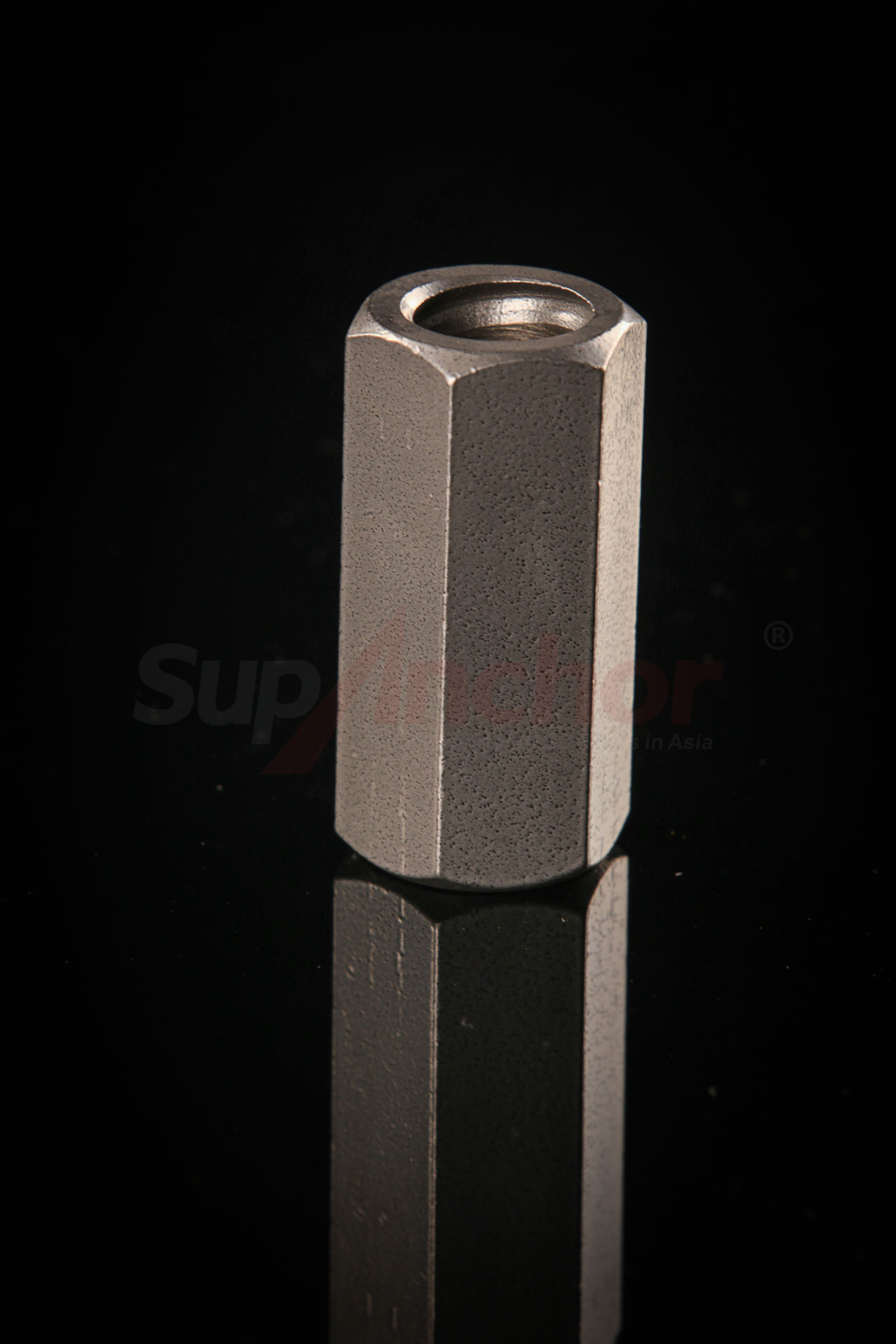
The R32N anchors, deployed for systematic support in moderately fractured sections, offered a tensile strength of 280 kN—more than enough to counteract the estimated plastic zone radius of 1.2 meters. In fault gauge zones, the larger R51N anchors were used as self-drilling micropiles, delivering 630 kN capacity and bridging loose blocks up to 2 meters in diameter. Both types feature a left-hand thread profile that allows coupling of multiple rods to reach extended bond lengths. The hollow bar anchor design ensures continuous grout flow, and the integrated coupling minimizes energy loss during percussion drilling.
Corrosion protection was a critical design requirement given the aggressive groundwater with pH values as low as 5.2 and high sulfate content. SupAnchor provided a double-layer protection: a minimum 85-micron hot-dip galvanizing, supplemented on the R51N bars with an epoxy barrier coating applied over the entire length. This geotechnical reinforcement system has been tested to resist a corrosion rate of less than 50 µm/year in similar chemical environments, ensuring a service life exceeding 80 years.
Installing the selfdrilling anchor bolts followed a strict quality-control protocol. First, a surveyor marked the drill points according to the rock class support pattern. The bolting rig then drilled the bar with simultaneous water injection to cool the bit and suppress dust. Once the target depth was reached, the grout mix—a high-early-strength cement with a water-cement ratio of 0.4—was pumped through the hollow core at 2–5 bar. Because the drill bit remains permanently in the hole, no retraction is necessary, eliminating the risk of borehole collapse. An end plate with a spherical nut and a 150×150 mm bearing plate was then tightened to pre-stress the anchor, typically to 50% of the yield load.
Field pull-out tests conducted on 5% of the installed ground anchor bolts showed an average ultimate load 15% above design requirements, with minimal creep under sustained loading. The system proved particularly effective in water-bearing zones; the pressurized grout successfully displaced water from the annulus, creating a full encapsulation that is often unattainable with traditional post-grouted bars. This self-drilling anchor for retaining walls and tunnel faces thus addressed the project’s twin demands of speed and reliability.
Compared to conventional pre-drilled anchors, the self-drilling method reduced installation time per bolt by 40%, from 22 minutes to 13 minutes on average. Over the course of the primary support phase, this amounted to a saving of approximately 2,800 man-hours. The immediate load-bearing capacity also allowed the next excavation round to begin sooner, shortening the overall construction timeline by an estimated three months.
The success in the Swiss Alps underscores a broader shift in geotechnical engineering toward integrated, mechanized support methods. According to a 2024 report by Global Infrastructure Analysis, the worldwide demand for ground stabilization anchor systems is growing at 6.8% annually, driven by expanding metro networks, hydroelectric caverns, and highway tunnels. The self-drilling anchor bolt market segment is gaining share because it reduces both cycle time and the environmental footprint of construction. In Norway, the Netherlands, and Canada, similar hollow bar anchor solutions have been adopted for urban excavation support, slope stabilization, and micropile foundations. SupAnchor’s drill-and-grout bolt technology is also increasingly used in underground mining operations, where speed of installation and immediate support capacity are critical for safety.
Moreover, regulations such as Eurocode 7 and the upcoming ISO 22477-5 standard emphasize durability and real-time monitoring, creating a need for robust anchor bolt system for geotechnical engineering that can be instrumented. SupAnchor’s design facilitates the insertion of optical strain gauges inside the hollow core, enabling remote monitoring of axial force and displacement. Such capabilities align with the digital twin initiatives that major infrastructure clients now mandate.
Behind this project’s smooth execution stands SupAnchor, a specialist soil nail system manufacturer and ground anchor bolt factory headquartered in China. The company holds ISO 9001, ISO 14001, and OHSAS 18001 certifications, and its products meet or exceed international standards such as EN 14490 and ASTM F432. With an annual production capacity of 5 million meters of hollow bar anchors, SupAnchor operates an SDA bolt factory direct supply chain that cuts intermediary costs and ensures traceability from steel melt to final coating.
“Our R&D department works closely with contractors to adapt the thread geometry, steel chemistry, and corrosion protection to site-specific conditions,” said SupAnchor’s Senior Technical Engineer. “For the Alpine project, we modified the drill bit carbide grade to improve penetration in abrasive quartzite while maintaining reaming capability.”
SupAnchor’s portfolio includes rock bolts for underground mining, self-drilling anchor systems for slope stabilization, and micropile hollow bar anchors for foundation underpinning. Recent projects range from the Cairo Metro Line 3 to a coastal retaining wall in Singapore, each demonstrating the versatility of the geotechnical reinforcement system. The company’s focus on collaboration and customer-centric innovation has made it a trusted partner for contractors and design consultants worldwide.
The Swiss Alpine tunnel project exemplifies how advanced ground stabilization anchor systems can overcome severe geological obstacles while delivering schedule and safety benefits. SupAnchor’s self-drilling anchor bolts proved to be a reliable, high-performance solution, marrying the functions of a drill rod, injection pipe, and permanent anchor. As the industry pushes towards more sustainable and efficient construction methods, the self drilling bolt for civil engineering will likely become a standard tool in the geotechnical engineer’s kit. For more information on SupAnchor’s full range of anchor bolt system for geotechnical engineering, visit their official website or contact their regional distributors.
A European highway project overcame fractured rock and groundwater challenges using SupAnchor's self drilling anchor system. The hollow bar anchors provided rapid installation and high load capacity, showcasing innovation in geotechnical reinforcement.
SupAnchor introduces the SupFRP® GFRP Friction Bolt, a world-first corrosion-resistant, lightweight, and non-conductive ground support solution for mining and tunneling.
A major mountain highway expansion in the European Alps utilized SupAnchor's self drilling anchor system to overcome fractured rock and loose soil, ensuring long-term slope stability and construction safety.
SupAnchor's Grade 75 self-drilling hollow anchor bars deliver high bond strength, ASTM A615 compliance, and full compatibility with R/T thread systems for demanding geotechnical projects.
A self drilling anchor system from SupAnchor has been deployed in a challenging mountain infrastructure project, overcoming fractured rock and unstable slopes while reducing installation time and improving long-term ground stabilization.