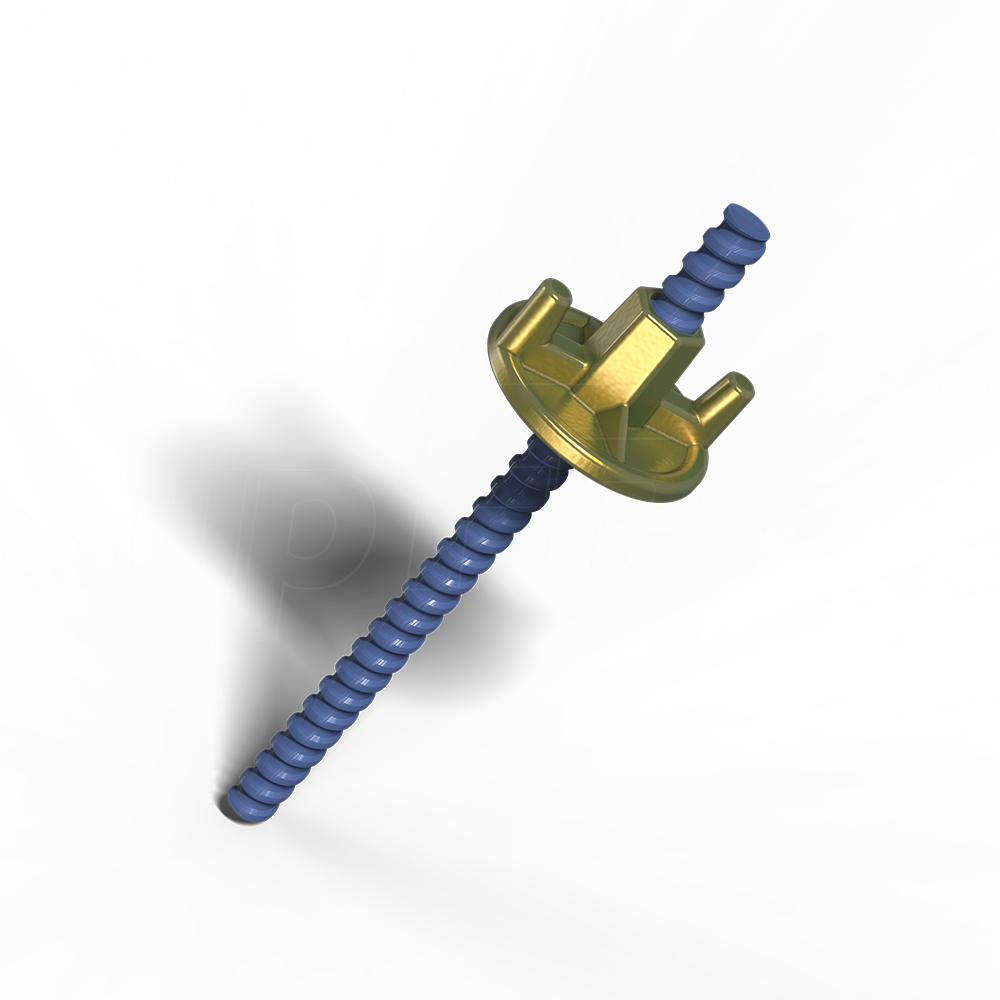
As global infrastructure projects demand faster construction cycles and lower lifecycle costs, formwork systems are under increasing pressure to reduce labor, logistics, and material waste. SupAnchor, a recognized soil nail system manufacturer and ground anchor bolt factory, has responded with the SupFRP® GFRP Tie Rod—a glass-fiber-reinforced polymer tie rod engineered for permanent formwork applications. Unlike conventional steel tie rods that must be extracted after concrete curing, the GFRP tie rod remains embedded in the structure, eliminating removal operations, reducing transportation and storage costs, and improving overall project efficiency.
Manufactured to match the thread profile of standard steel rods, the SupFRP® GFRP Tie Rod integrates seamlessly with existing formwork accessories, allowing contractors to adopt this advanced material without retooling. Its high corrosion resistance, non-conductive and non-magnetic properties, and excellent bond force make it particularly suited for aggressive environments such as marine structures, chemical plants, and underground works. According to SupAnchor, the product has been tested for guaranteed tensile loads of 130 kN and 250 kN in two standard sizes, with ultimate strain of 2.0% and a tensile E-modulus of 45 GPa.
The SupFRP® GFRP Tie Rod is available in two primary configurations: T15/130 and T20/250. The table below summarizes the key technical data provided by SupAnchor:
| Property | T15/130 | T20/250 |
|---|---|---|
| Outside Diameter (mm) | 17 (incl. waved thread structure) | 22 (incl. waved thread structure) |
| Nominal Cross Sectional Area (sq. m) | 130 | 250 |
| Guaranteed Tensile Load (kN) | 130 | 250 |
| Tensile E-Modulus (GPa) | 45 | 45 |
| Ultimate Strain | 2.0% | 2.0% |
| Weight (kg/m) | 0.37 | 0.71 |
| Length (m) | x2, x3, x4, x5, x6, x7, x8, x9, x10, x11 | x2, x3, x4, x5, x6, x7, x8, x9, x10, x11 |
The waved thread structure on the outside diameter enhances mechanical interlock with concrete, contributing to the product's high end loading capacity. At a weight of only 0.37 kg/m for the T15/130 and 0.71 kg/m for the T20/250, the GFRP tie rod is significantly lighter than steel equivalents, reducing manual handling fatigue and transportation costs. Its cuttability allows on-site trimming without special tools, further streamlining installation.
In typical formwork applications, the tie rod is installed through the formwork panels and left in place after concrete pouring. Because it does not corrode, there is no risk of long-term degradation that could compromise the structural integrity of the concrete cover. The non-conductive and non-magnetic properties are critical for projects near sensitive electronic equipment, railway lines, or MRI facilities. The good bond force ensures that the embedded rod works compositely with the surrounding concrete, improving crack control and load distribution.
SupAnchor positions the SupFRP® GFRP Tie Rod for a wide range of formwork applications, including:
The permanent application eliminates the need for post-tensioning or grouting of tie rod holes, which is a common source of water ingress and durability issues in steel tie rod systems. Contractors can achieve smoother finishes without patching holes, reducing labor and material costs. Moreover, the product's compatibility with standard steel thread profiles means existing formwork hardware—such as wing nuts, plates, and cones—can be used without modification, lowering the barrier to adoption.
SupAnchor has integrated this product into its broader geotechnical reinforcement system portfolio, which includes self drilling anchor systems, hollow bar anchors, and drill-and-grout bolts. These products already serve as reliable solutions for soil nailing, rock bolting, and micropiling in challenging ground conditions. The introduction of the GFRP tie rod extends the company's reach from ground engineering into structural formwork, leveraging its expertise in high-strength, corrosion-resistant materials.
The global construction industry is under pressure to reduce embodied carbon and improve resource efficiency. Steel tie rods, although reusable, require extraction, cleaning, and transportation back to the supplier—activities that consume energy and add logistics costs. By leaving the GFRP tie rod in place, projects save on labor, crane time, and fuel, while also avoiding the risk of damage to the concrete surface during extraction. This aligns with the growing adoption of permanent formwork systems in Europe and North America, where speed and durability are paramount.
Furthermore, the high corrosion resistance of GFRP is particularly valuable in aggressive environments. Traditional steel tie rods, even when galvanized or epoxy-coated, can initiate corrosion at cut ends or damaged coatings, leading to concrete spalling and expensive repairs. The SupFRP® GFRP Tie Rod eliminates this failure mode entirely, contributing to longer service life and reduced maintenance for bridges, marine structures, and chemical containment facilities.
From a safety perspective, the non-conductive nature of GFRP reduces electrical hazards on sites where power lines or stray currents are present. Its non-magnetic property is essential for projects near MRI suites, particle accelerators, or sensitive instrumentation, where steel components would interfere with magnetic fields.
SupAnchor has built a reputation as a forward-thinking manufacturer in the geotechnical and construction supply sector. With ISO 9001-certified production facilities and a dedicated R&D team, the company continuously develops products that address real-world engineering challenges. The SupFRP® GFRP Tie Rod is the result of extensive material testing and field validation, ensuring that it meets the rigorous demands of modern construction.
In addition to the GFRP tie rod, SupAnchor supplies self drilling anchor bolts, hollow bar anchors, and drill-and-grout bolts to projects worldwide, from European high-speed rail tunnels to North American mine stabilization programs. The company's ability to provide integrated geotechnical reinforcement systems—from soil nails to formwork tie rods—makes it a one-stop partner for contractors and engineers seeking reliable, certified products.
For detailed installation guidance, SupAnchor has released a demonstration video: SupFRP® GFRP Tie Rod Application Video, available on the company's official channels. This resource illustrates the straightforward installation process and compatibility with standard accessories, reinforcing the product's ease of use.
As infrastructure investment accelerates globally, the demand for durable, low-maintenance formwork solutions will continue to rise. The SupFRP® GFRP Tie Rod addresses this need with a combination of permanent installation, corrosion immunity, and mechanical performance that traditional steel cannot match. With its strong technical pedigree and application versatility, this product is poised to become a standard component in modern formwork engineering.
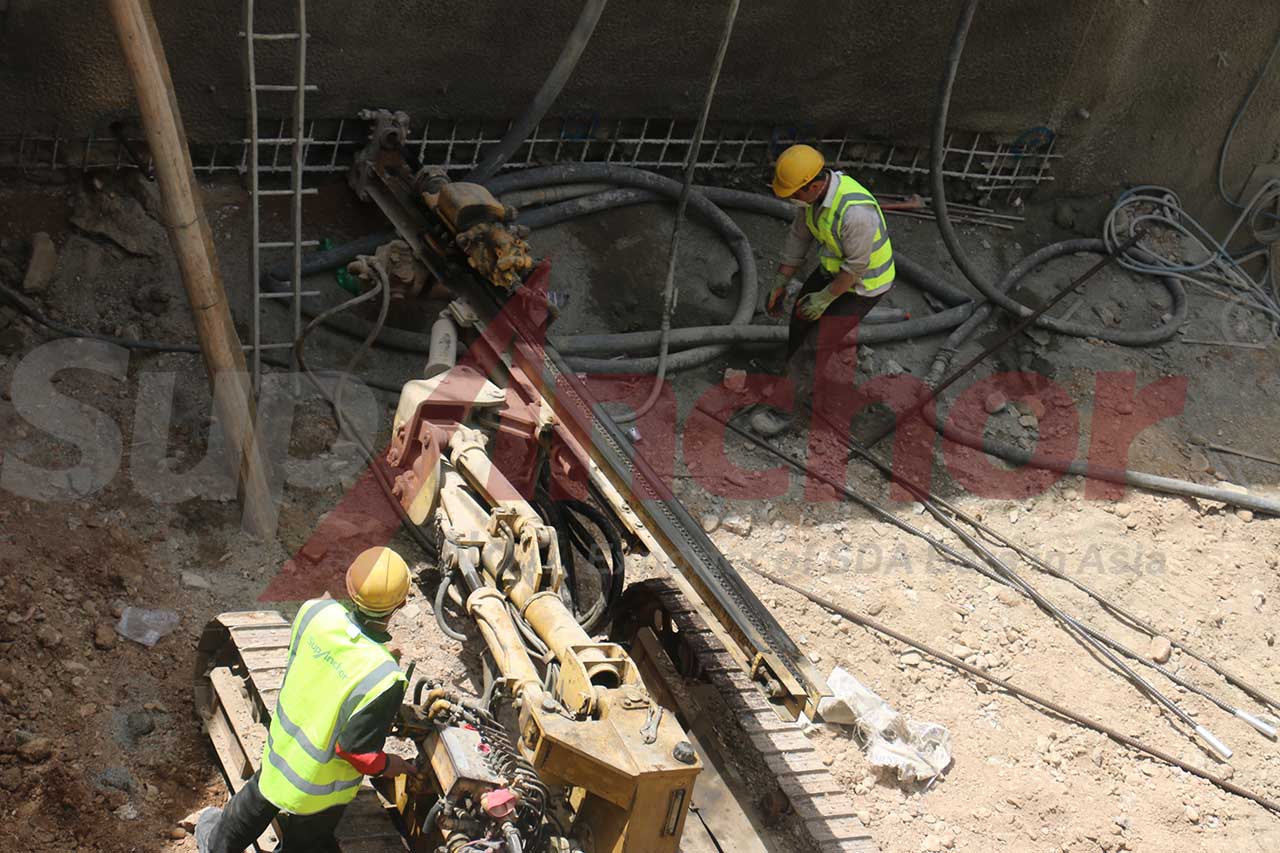
A major infrastructure project overcame unstable ground conditions using SupAnchor's self drilling anchor bolts, featuring hollow bar technology, high tensile strength, and rapid installation for slope stabilization and retaining structures.
SupAnchor's new SupFRP® GFRP tie rod eliminates removal costs, offers high corrosion resistance, non-conductivity, and compatibility with standard steel accessories for efficient formwork.
A mountain highway widening project has adopted SupAnchor's self drilling anchor system to reinforce fractured rock and steep cut slopes, ensuring safe construction and long-term stability.
SupAnchor introduces a patented GFRP friction bolt offering corrosion resistance, lightweight, and safety for underground engineering and rock slope stabilization.
A major Alpine highway project uses SupAnchor's self drilling anchor system to stabilize challenging slopes and support retaining walls, highlighting advanced geotechnical reinforcement technology for European infrastructure.